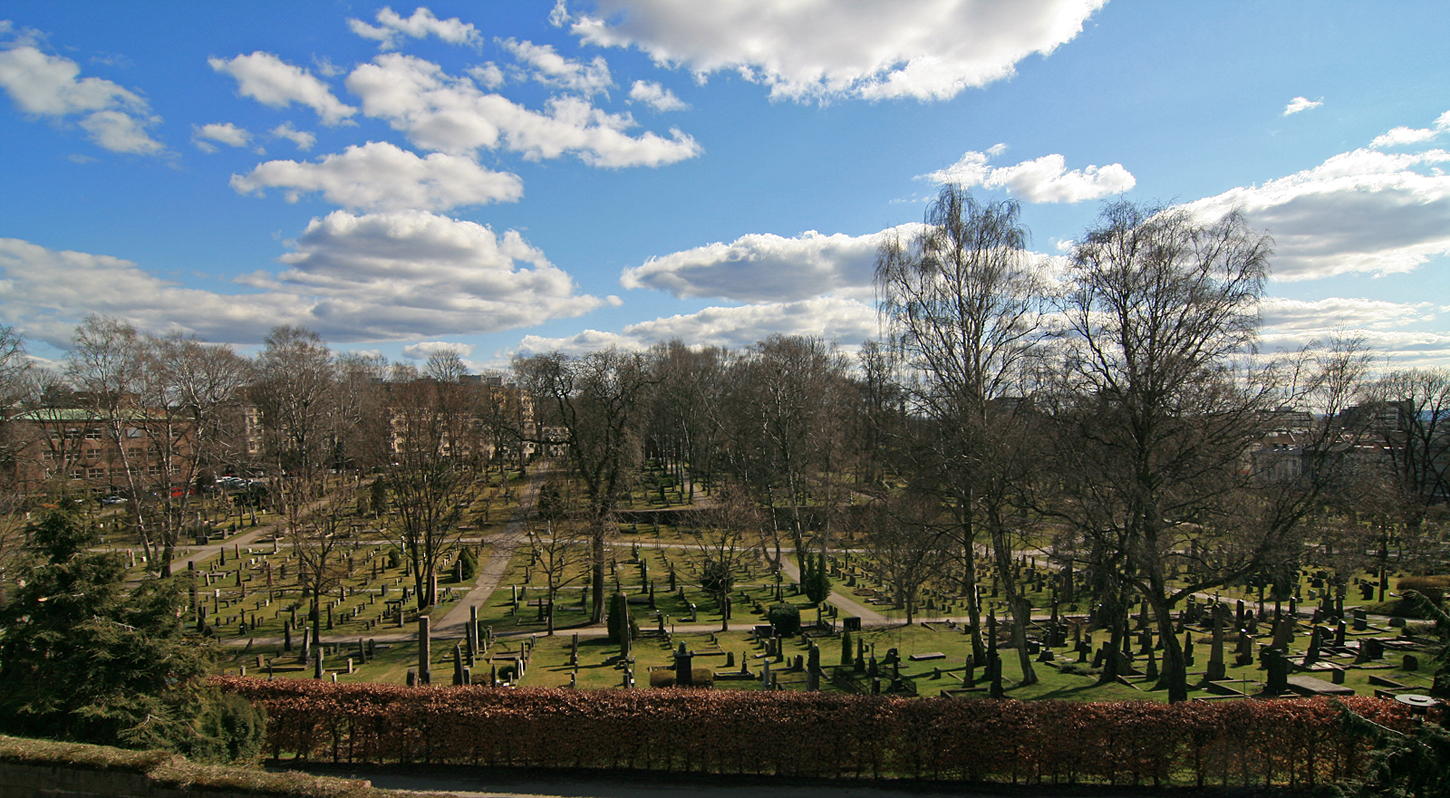
About this place
Cemetery of Our Saviour in Oslo (Norwegian: Vår Frelsers gravlund) is one of the most significant burial grounds in Norway, set in the historic centre of the capital in the Gamle Aker district. Founded in the early 19th century, it is the final resting place of many people who shaped Norwegian culture and public life.
When was the cemetery founded?
The year 1808 is the commonly cited founding date, although the Oslo municipality says the ground was laid out in 1807 and first used that summer. It was created during the hard years of the Napoleonic Wars, marked by famine and disease, when the city needed a new place to bury its dead. At first it served mostly wealthier residents, since only they could buy a plot before their death.
What is the Garden of Honour?
In the late 1890s the idea emerged of setting aside a section for people of special national importance. This became the Garden of Honour (Æreslunden). The painter Hans Gude was the first person buried there, in 1903. Not every prominent Norwegian lies within its boundaries, though, and many famous graves are just outside it.
Who is buried here?
For many visitors, the main draw is the list of great names:
- Henrik Ibsen – the playwright behind "Brand" and "Peer Gynt", Scandinavia's best-known and most controversial writer.
- Edvard Munch – the painter whose works "The Scream" and "Madonna" brought him worldwide fame.
- Bjørnstjerne Bjørnson – author and poet; the graves of Ibsen, Bjørnson and Munch lie only a few metres apart.
- Others buried here include composers Rikard Nordraak and Johan Halvorsen, painter Christian Krohg, politician Martin Tranmæl and writer Alf Prøysen.
How to visit
The cemetery is open to everyone and feels like a calm park in the middle of the city. Take a slow walk along the paths, look for the headstones of famous figures and admire the sculpted monuments. Remember that this is still a working cemetery where funerals take place and families come to visit loved ones, so keep a respectful tone.
Frequently asked questions
Are new burials still held here? Burials are heavily restricted. The Garden of Honour is closed to new graves, and burials mostly concern existing family graves.
Can I see the graves of Ibsen and Munch? Yes, both are in the Garden of Honour, close to each other.
Who is this place for? Readers and art lovers, history fans, and anyone who wants a peaceful walk in central Oslo.
How much time should I plan? About an hour is usually enough for an unhurried walk and finding the most famous graves.
Nearby places

Earn badges for the places you visit
Download NextOnTrip, discover new places and check off your trails.