About this place
Gamlebyen gravlund is a cemetery in Oslo's Gamlebyen (Old Town) district, on Ekebergveien. It layers two chapters of local history: a nineteenth-century city burial ground and a much older section that reaches back to the mid-1500s. For anyone curious about Oslo's past, it is a quiet place for a short, respectful walk.
How did the cemetery begin?
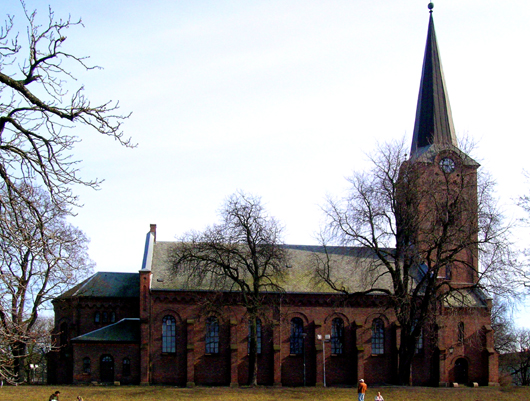
The cemetery was consecrated on 14 October 1874 under the name Anefeltløkkens kirkegaard. In 1894 it became Oslo gravlund, and since 1925 it has carried its present name. A burial chapel went up in 1877 and was rebuilt in 1934–1935. The grounds were extended in 1939.
What is the oldest part?
The oldest section visible today dates from around 1550. It first belonged to a Franciscan monastery. After Oslo Hospital took over the monastery in 1538, the land passed to the hospital, and in 1624 it was laid out afresh as the hospital's cemetery. The City of Oslo bought this plot, about 0.8 hectares, in 1961 and merged it into Gamlebyen gravlund.
Who is buried here?
Burials include bishops Jens Lauritz Arup and Frederik Julius Bech, Christian Magnus Falsen, a delegate at the Eidsvoll constitutional assembly, the painter Adolph Tidemand and the writer Jon Bing. There are also graves of railway employees, and a separate field holds sailors' graves.
Is it open to all faiths?
Yes. A Muslim burial field was laid out in 1972, and anyone may be buried here regardless of religion. Options include urn graves, coffin graves and an anonymous memorial grove.
How many graves are there?
The city reports about 7,000 graves, roughly 200 of which are regarded as worth preserving.
Why visit?
The cemetery shows how Oslo changed over time. Traces of a medieval monastery, a seventeenth-century hospital and the nineteenth-century city sit side by side. The names on the headstones tell of politicians, clergy, artists, sailors and railway workers, a cross-section of the capital's society. The Muslim field is a reminder that the city has long been multicultural. Photographers and local-history fans will find plenty of detail: the late-1870s chapel, weathered headstones and well-kept greenery. Many people use it as a calm green space, though it remains first and foremost a place of remembrance.
How to visit
This is a working cemetery, so keep voices low and give mourners room. Pair the visit with a stroll around Gamlebyen, the oldest part of Oslo, where the medieval town once developed.
Frequently asked questions
When was the cemetery founded? The main part was consecrated in 1874, while the oldest sections go back to around 1550.
Can I see the graves of famous people? Yes, including the painter Adolph Tidemand and Eidsvoll delegate Christian Magnus Falsen.
Is it open to all religions? Yes. A Muslim field dates from 1972, and anyone may be buried here.
How many graves are there? About 7,000, of which around 200 are considered worth preserving.
Nearby places

Earn badges for the places you visit
Download NextOnTrip, discover new places and check off your trails.