Culture and art in Spain
A guide to 354 Culture and art in Spain — with descriptions, photos and traveler visits from the NextOnTrip community. Locations spread across 167 cities and towns. Most visited by the community: Casa Núñez, Centro de Documentación de las Artes Escénicas de Andalucía, Centre de Documentació i Museu de les Arts Escèniques.
-
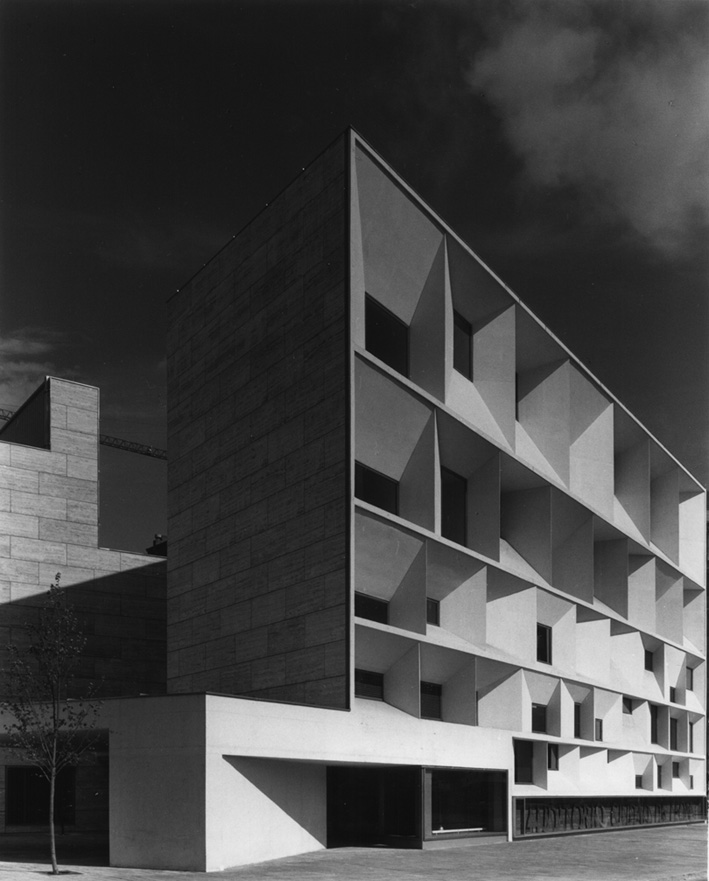
Auditorio Ciudad de León
León
Auditorio Ciudad de León is the municipal concert and performance hall of León, a city in the Castile and León region of northwestern Spain. It stands right next to MUSAC, the Museum of Contemporary Art of Castile and León, and together the two buildings form one of the most notable clusters of contemporary architecture in the city. When was it built, and who designed it? The auditorium opened on 3 May 2002. It was designed by the Madrid-based studio Mansilla + Tuñón Arquitectos, the same team that later built the neighbouring MUSAC. A year after opening, the building received the Premio de Arquitectura Española 2003, and in the same year it was named a finalist for both the EU Mies van der Rohe Award, given to the best buildings across the European Union, and the VII Bienal Española de Arquitectura y Urbanismo. What does the building look like? The complex is split into two separate volumes: the main body contains the performance hall, while a second, smaller structure houses exhibition spaces. The facades are built from Roman travertine combined with white concrete, and their most distinctive feature is a set of flared, trumpet-shaped window openings. The choice of materials is a deliberate nod to León's Roman past, echoing the stone used in the city's ancient structures, while the building's orientation references the nearby San Marcos monastery. How many people does the hall seat? The hall is bifocal in layout and has a variable capacity of 600 to 1,200 seats depending on configuration. Adjustable acoustics let the space switch between very different formats, from intimate recitals to large-scale opera productions. What kind of events take place here? The programme includes classical and popular music concerts, opera, theatre, dance performances, as well as congresses and conferences. Thanks to its flexible stage and seating setup, the venue hosts both local cultural events and larger touring productions. Why is it worth visiting? Auditorio Ciudad de León has become one of the symbols of the city's modern architecture. Paired with the neighbouring MUSAC, it draws visitors interested in design as much as in the performances themselves. The awards it collected shortly after opening confirm its standing as a notable work in early 21st-century Spanish architecture, and its form — blending historical references with contemporary construction — still stands out against the rest of the city. Frequently asked questions Where is Auditorio Ciudad de León located? It stands in León, in the Castile and León region, right next to MUSAC. When did it open, and who designed it? The auditorium opened on 3 May 2002, designed by the studio Mansilla + Tuñón Arquitectos. How many seats does the hall have? The bifocal hall has a variable capacity of 600 to 1,200 seats, depending on the configuration used. What awards has the building received? In 2003 it won the Premio de Arquitectura Española and was a finalist for the Mies van der Rohe Award and the VII Bienal Española de Arquitectura y Urbanismo. What kind of events are held here? Concerts, opera, theatre and dance performances, plus congresses and conferences.
-
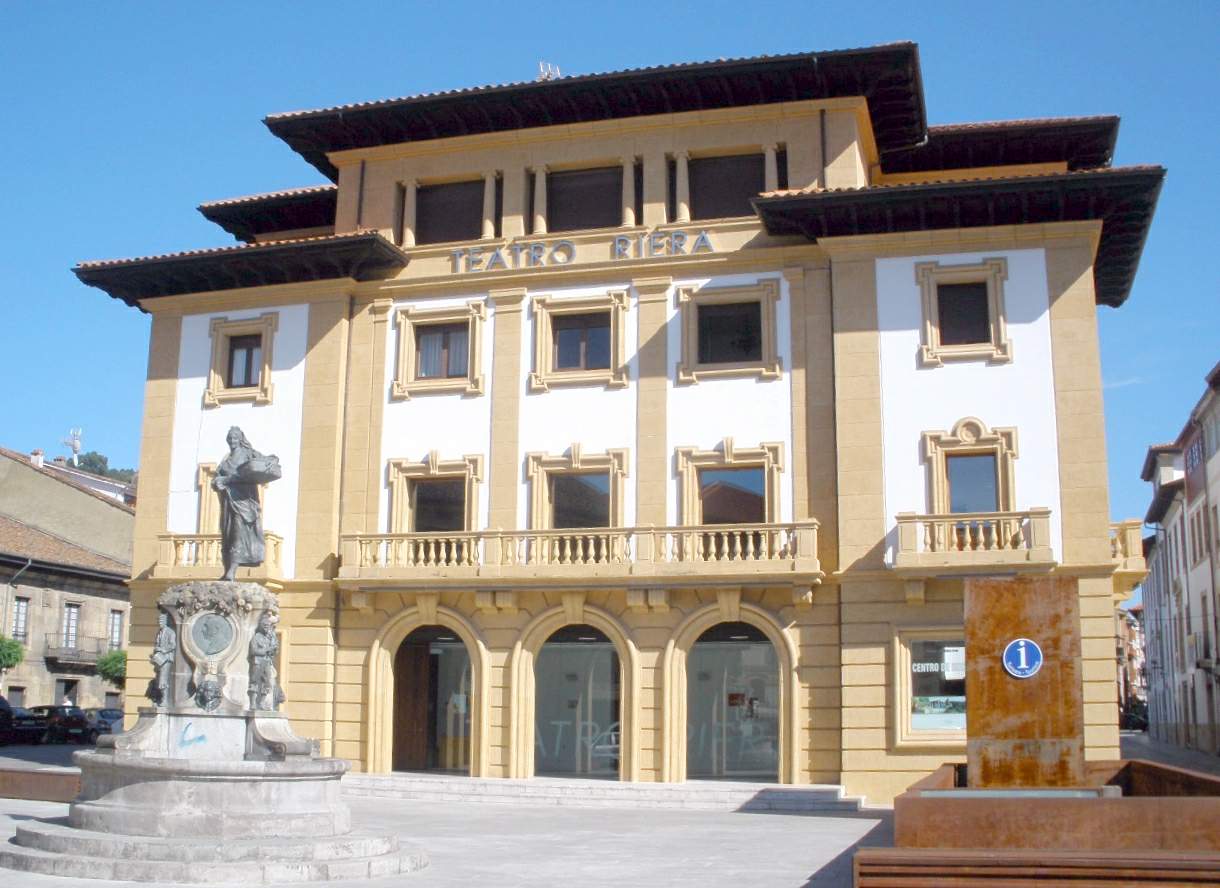
Teatro Riera
Teatro Riera stands right in the heart of Villaviciosa, in Asturias, on Plaza del Ayuntamiento — locally also known as Plaza de Obdulio Fernández. Built in the 1940s, this historic theatre and cinema remains the main cultural venue for the town and the wider Comarca de la Sidra region. What is the history behind Teatro Riera? Construction started in 1942 and wrapped up in 1945. The project was driven by Laureano Riera García, a local industrialist who gave the building its name and funded the undertaking. The design came from architect Fernando Cavanilles Batalla, who gave the theatre a regionalist, historicist look typical of Asturian civic architecture from that era. The grand opening took place in 1945. The José Alba theatre company staged the very first performance, while the first film shown on screen was "La tragedia de la Bounty" (1935). In 2025 the town marked the theatre's 80th anniversary with a tribute to Cándido Cambiella and a screening of period films. What made the building unusual for its time? Unlike most venues of the period, Teatro Riera combined cinema, theatre, and residential and office space under a single roof. That mixed-use layout was an uncommon approach for a town of Villaviciosa's size back in the 1940s. What does the auditorium look like? The hall seats 270 people across two levels: the main floor (platea) and a general balcony above. That layout made the space equally suited to film screenings and larger stage productions. What happens at Teatro Riera today? The building now belongs to the municipality of Villaviciosa and operates as a working cultural centre. Throughout the year it hosts plays, concerts, film screenings, exhibitions and festivals put on by local performing groups. Every summer, the "Noches de Teatro" (Theatre Nights) series brings both professional productions and shows by local theatre companies to the stage. Do you need tickets to attend? Many events at Teatro Riera are free to attend, though some plays and concerts require a ticket. Tickets are typically sold at the box office, which opens an hour before each show, and the current programme is published by the town's cultural department. Where is Teatro Riera and how do you get there? The theatre sits on Plaza del Ayuntamiento s/n, right in central Villaviciosa, just a short walk from the town hall and the main sights of the old town. Its central location makes it easy to combine a visit with exploring the historic quarter. Frequently asked questions Who financed the construction of Teatro Riera? Local industrialist Laureano Riera García was the main promoter, and the building was designed by architect Fernando Cavanilles Batalla. When was the theatre built? It was built between 1942 and 1945, opening to the public in 1945. How many seats does the theatre have? The auditorium seats 270 people, split between the main floor and a general balcony. What kind of events take place there today? Plays, concerts, film screenings, exhibitions and festivals, including the summer "Noches de Teatro" series. Who owns the building now? The municipality (Ayuntamiento) of Villaviciosa has owned the theatre for a long time. Where exactly is it located? On Plaza del Ayuntamiento s/n, in the centre of Villaviciosa, in the Comarca de la Sidra region of Asturias.
-
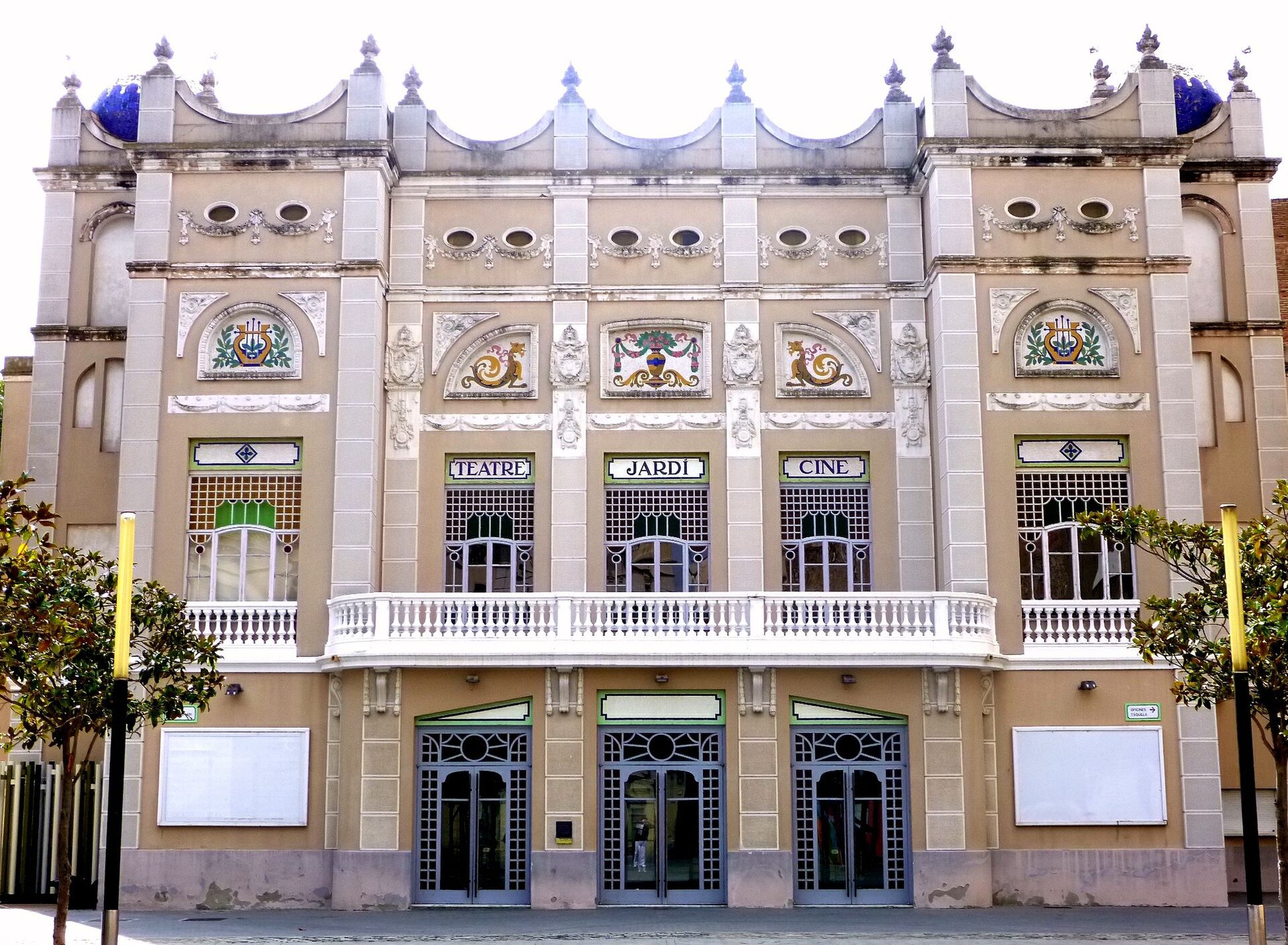
Teatre Municipal El Jardí
Figueres
Teatre Municipal El Jardí is a historic theatre-and-cinema building in Figueres, in the Girona province of Catalonia, and one of the city's oldest surviving cultural venues. When was the building built? Construction dates back to 1914, designed by architect Llorenç Ros i Costa. The project was driven by local businessman Pau Pagès, who in 1915 asked the Figueres town council for permission to build a theatre-cinema on a plot then known as Horta de Gayolà — today's plaça Josep Pla, right in the heart of the city. The venue, originally named Teatre Cinema El Jardí, opened on 29 April 1916 during the Fires i Festes de Santa Creu, the city's traditional spring fair. The opening night featured the Liceu company from Barcelona performing the opera "La Gioconda," instantly establishing the new hall as Figueres' leading stage. What does the building look like? The facade is notable for its central balustraded balcony and decorative reliefs combining theatrical, floral and animal motifs. Two small domes crown the corners of the building, a distinctive touch rarely found on other theatres along this stretch of the Costa Brava. How did the theatre shape local cultural life? Through the 1920s, El Jardí was the busiest entertainment venue in Figueres, hosting theatre, opera, zarzuela and film screenings side by side. The balance shifted in the 1950s and 1960s, when cinema screenings came to dominate the programme — a boom that also spurred the opening of two further cinemas in the city, the Juncària and the Las Vegas. Why is it called "Teatre Municipal" today? The turning point came when the Figueres town council purchased the building outright. Since 1983 it has operated as the city's municipal theatre, and public ownership has allowed for a steady, year-round schedule of plays, concerts and festivals that continues today. Is it worth visiting? For travellers exploring Figueres — best known as Salvador Dalí's home town — the theatre offers a quieter cultural detour away from the Dalí museum crowds. Its more-than-century-old walls have hosted opera, silent film, talkies and modern theatre alike, a small but telling record of how entertainment in a Catalan provincial town evolved across the 20th century. Frequently asked questions When did Teatre Municipal El Jardí open? It opened on 29 April 1916, during the Fires i Festes de Santa Creu, with a performance of the opera "La Gioconda" by the Liceu company. Who designed the building? The architect was Llorenç Ros i Costa; the project was financed by businessman Pau Pagès. Since when has it been a municipal theatre? Since 1983, when the Figueres town council bought the building from its private owners. Did it only stage theatre performances? No — it began as a theatre-cinema, screening films and hosting opera and zarzuela as well as plays; cinema dominated its programme through the 1950s and 1960s. Where is the theatre located? On plaça Josep Pla in the centre of Figueres, in the province of Girona, Catalonia.
-
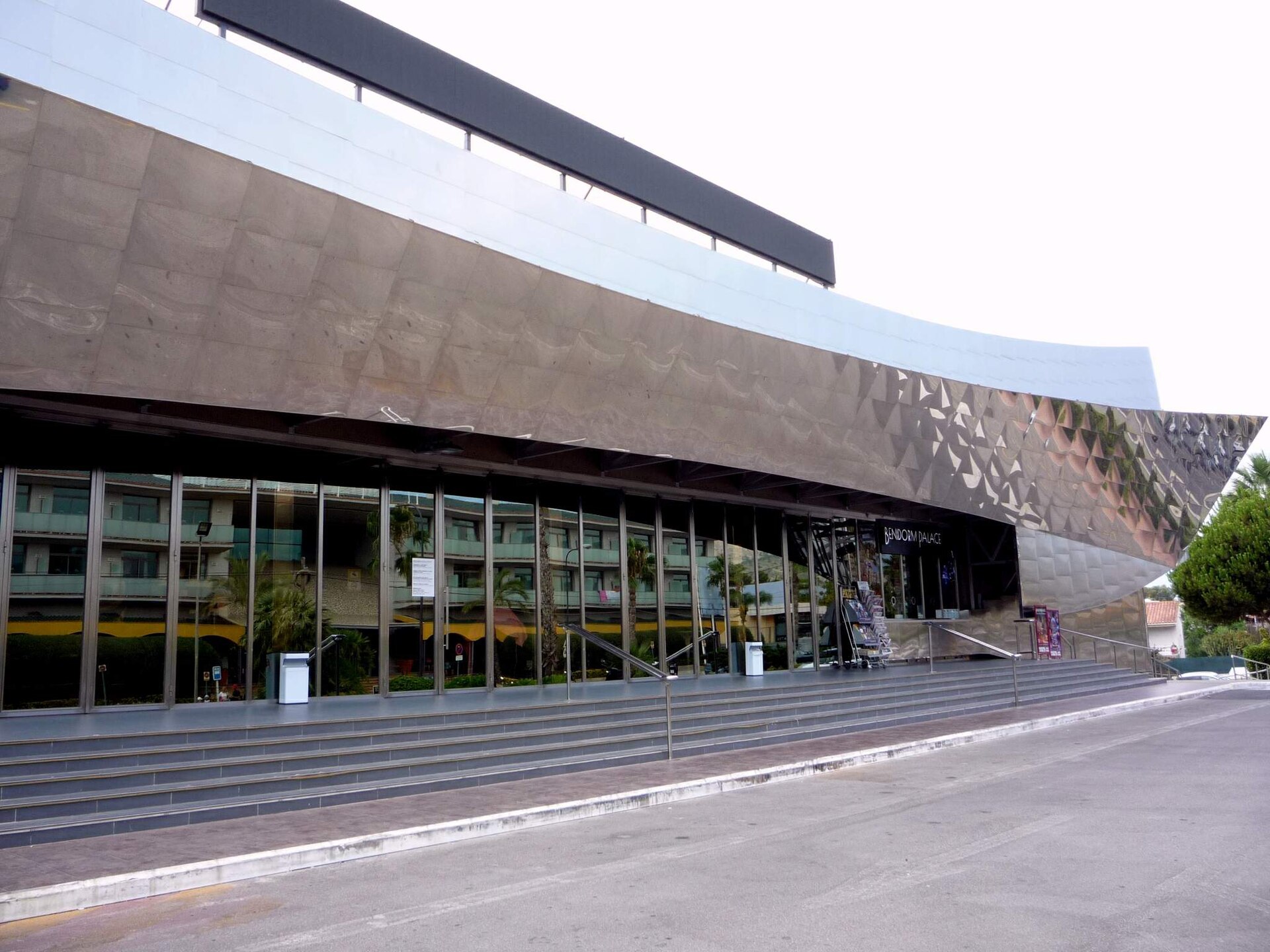
Benidorm Palace
Benidorm
Benidorm Palace is one of the best-known dinner-show venues on Spain's Costa Blanca, operating in Benidorm since 1977. The auditorium seats close to 1,700 guests and has combined theatre, cabaret and dining under one roof for nearly five decades. What kind of venue is Benidorm Palace? It stages evening "dinner and show" performances that pair a full meal with a large-scale stage production. Over its history the venue has hosted more than 5,000 performances, making it one of the longest-running entertainment attractions on this stretch of coast. How has the venue evolved over the years? Benidorm Palace opened in 1977 as a classic nightlife spot. A turning point came in the 1990s, when the Climent family took over its management, first as tenants and then, in 1997, as full owners. Under family ownership the concept shifted away from straightforward nightlife toward a more polished dinner-and-show format. What does an evening at Benidorm Palace include? The stage program blends Spanish dance, acrobatics, illusion, live music and classic cabaret numbers. Guests can choose between several ticket types: admission with a drink, admission with the four-course Gran Palace set menu (wine included), or the more elaborate Gran Palace Plus menu. Dinner is served before the show begins, so the performance itself can hold the audience's full attention. When can you catch a show? The venue runs year-round, with regular performances on Tuesdays, Thursdays, Fridays and Saturdays, plus additional special gala nights added to the calendar. This schedule makes it a convenient evening option for both individual travellers and organised groups visiting Benidorm. Who is this attraction suited for? Because dinner and entertainment are bundled into one ticket, Benidorm Palace appeals to visitors who want an evening out without arranging a restaurant and a separate show. The mix of dance, music and acrobatics also works well for families and groups, since the performance relies mainly on movement and music rather than dialogue, so no Spanish is needed to follow it. Frequently asked questions Since when has Benidorm Palace been open? The venue has operated since 1977, and since 1997 it has been owned outright by the Climent family, who previously managed it as tenants. How many people does the auditorium hold? Benidorm Palace seats close to 1,700 guests, making it one of the larger show venues on the Costa Blanca. Is dinner included in the ticket price? That depends on the ticket type chosen — options range from show-plus-drink to the four-course Gran Palace menu or the extended Gran Palace Plus menu, both served with wine. On which days are performances held? Regular shows run on Tuesdays, Thursdays, Fridays and Saturdays, with extra gala nights scheduled throughout the year. What does the show itself include? The program combines Spanish dance, acrobatics, illusion and live music in a classic cabaret format.
-
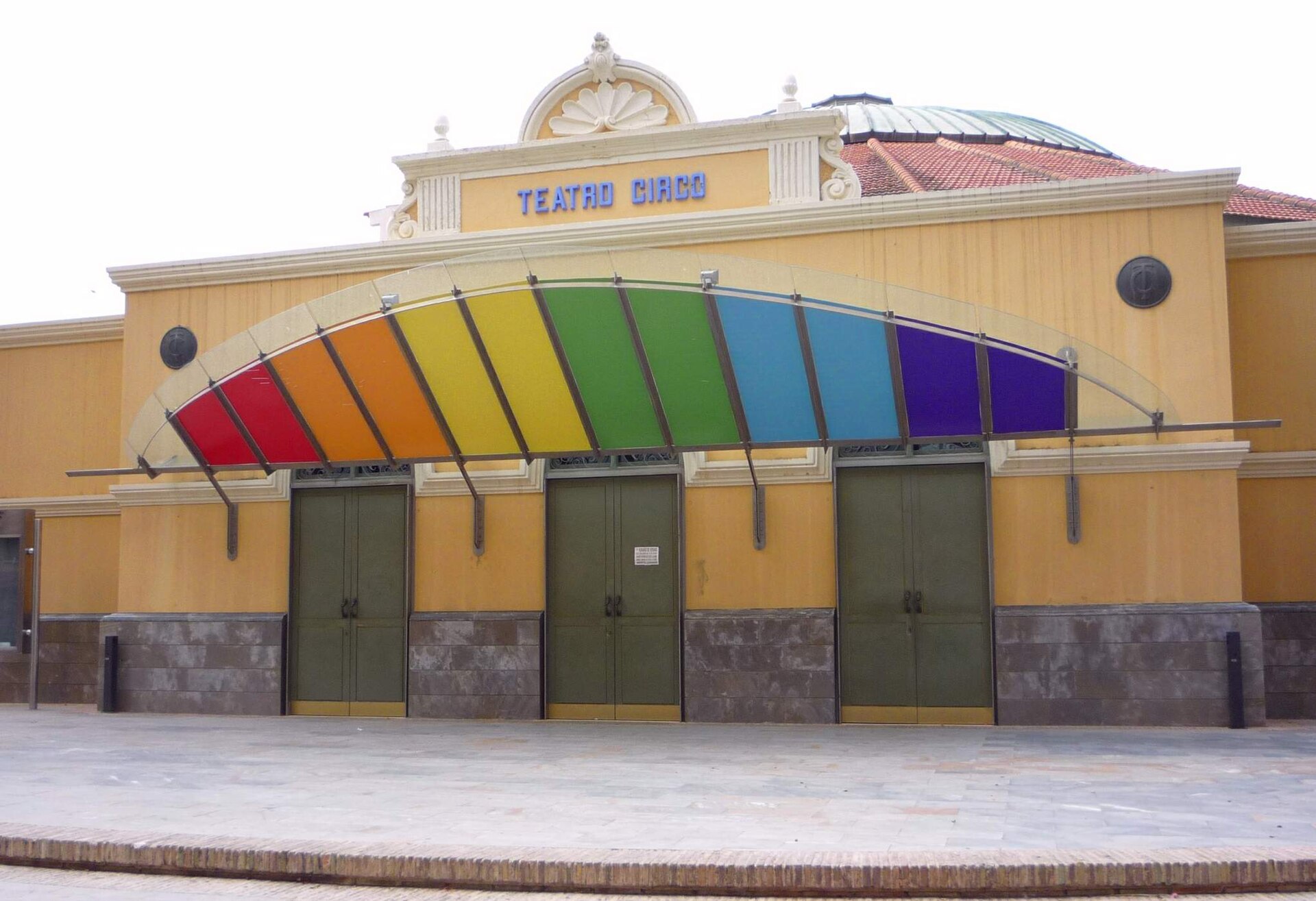
Teatro Circo Atanasio Díe Marín
Orihuela
Teatro Circo Atanasio Díe Marín is a historic theatre in Orihuela, a town in the province of Alicante within Spain's Valencian Community. Standing on the Plaza del Poeta Sansano, the building belongs to a rare architectural type still found in only a handful of places across Europe today: the French-style theatre-circus, designed to host both stage plays and circus-style performances in the same auditorium. Where did such an unusual building come from? The story does not actually begin in Orihuela but in nearby Alicante, where the structure first opened its doors in May 1892. In its earliest years it served as a venue for acrobatic shows, boxing matches and other circus-type entertainment, typical of the light, semi-permanent timber constructions built for touring spectacles at the time. The move to Orihuela In the early 20th century, city authorities decided to relocate the entire structure to Orihuela. The building was dismantled piece by piece and rebuilt on its new site between 1907 and 1908. It reopened on 25 April 1908 with a seating capacity of around two thousand — a striking figure for the era, reflecting how much importance the town placed on its new venue. An early-20th-century showcase of modern engineering The theatre's electrical installation was carried out under the involvement of Isaac Peral, the Spanish engineer best remembered for designing one of the world's first practical military submarines. Two decades later, in 1929, the building was upgraded with a cinema projector, turning the former circus arena into a working movie house and opening a new chapter in its history. How did the theatre survive to the present day? After decades of activity, the building eventually fell into disuse and disrepair. It took a major restoration project in the 1990s to bring it back to life. The renovated theatre was officially reopened on 6 November 1995, in a ceremony attended by Queen Sofía of Spain, underlining the significance of the occasion for the wider region. A new name honouring a local playwright In 2017, the Orihuela city council gave the theatre its current name in tribute to Atanasio Díe Marín, a local playwright closely tied to the venue's history. Since then, it has operated under its full title, Teatro Circo Atanasio Díe Marín. What should visitors know before stopping by? The theatre sits right in the heart of Orihuela, close to other landmarks of the historic old town, making it easy to combine a visit with a stroll through the city centre. Thanks to its rare theatre-circus layout, the building stands out as a notable example of late-19th and early-20th-century entertainment architecture, and its stage still hosts theatre productions and cultural events organised by the town. Frequently asked questions When was the theatre built? The building first opened in Alicante in 1892 and was relocated to Orihuela between 1907 and 1908, reopening there on 25 April 1908. Why does the name include the word "Circo"? Because the building follows the French theatre-circus typology, designed for both stage drama and circus-style acts such as acrobatics and boxing. Where does the theatre's current name come from? The name Atanasio Díe Marín was added in 2017 to honour a local playwright connected to the venue's history. Is the theatre still in use today? Yes. Following its restoration and official reopening in 1995, the building continues to operate as an active theatre and cultural venue in central Orihuela.
-
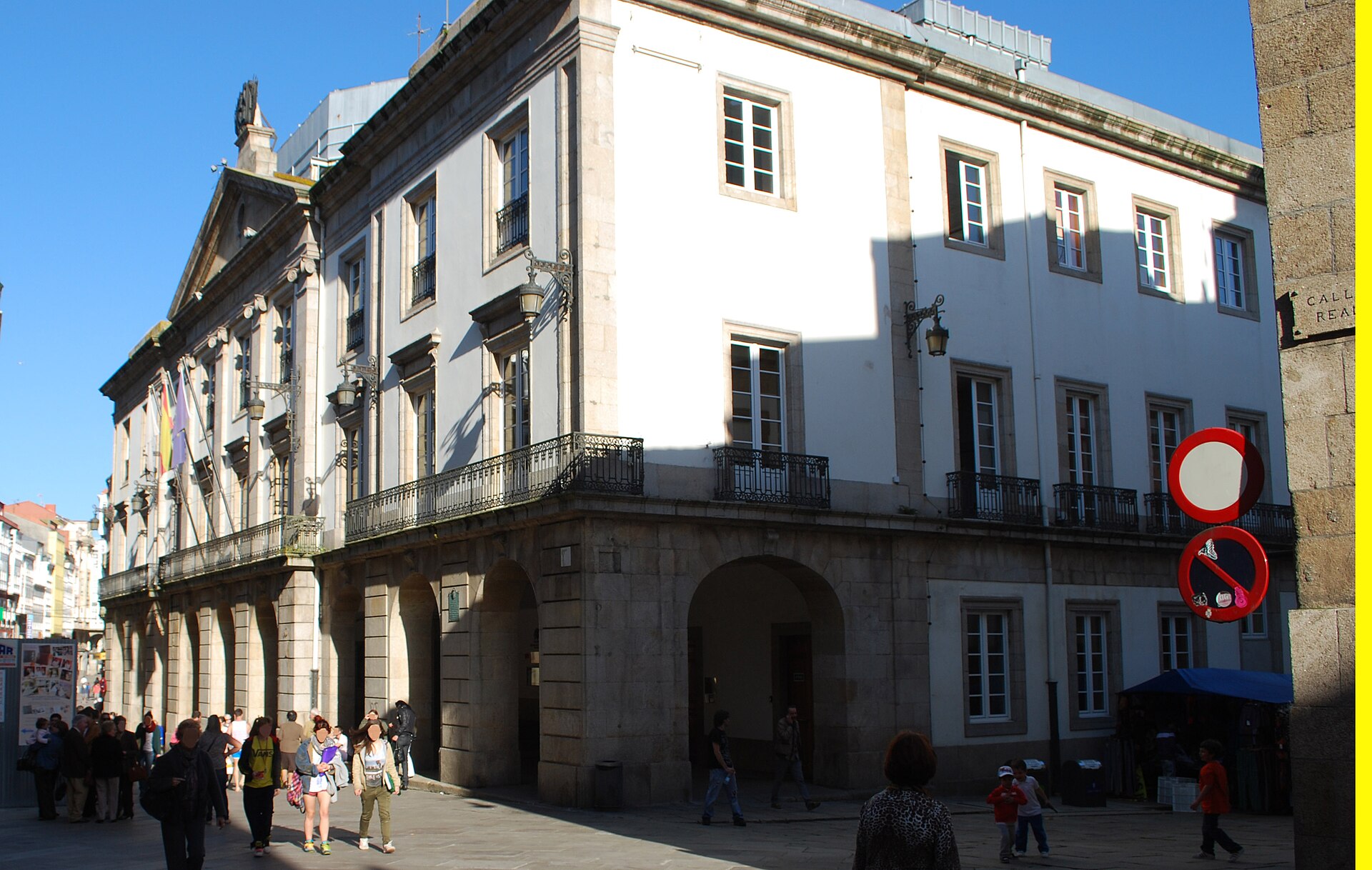
Teatro Rosalía de Castro
A Coruña
Teatro Rosalía de Castro in A Coruña Teatro Rosalía de Castro is a historic theatre in A Coruña, Galicia, and one of the oldest working theatres in the region. It carries the name of Rosalía de Castro, Galicia's most important 19th-century poet, though it only took that name in the early 20th century — before that it went through several identities, starting life as a coliseum and later being rebuilt after a fire. How did the building's name and history change over time? The theatre was designed by architect José María Noya, with construction finishing in 1840; it opened on Christmas Day that year under the name Coliseo San Jorge. After its formal inauguration in 1841 it operated as Teatro Nuevo, also known locally as Teatro Principal. On the night of 3–4 January 1867 a fire badly damaged the building, and the reconstruction was completed the following year, in 1868. The theatre took its current name, honoring Rosalía de Castro, in 1909. A year later, in 1910, the hall was also fitted out for film screenings, allowing it to combine stage performances with cinema. What does the interior look like, and how many people can it seat? The building follows the eclectic architectural style typical of 19th-century Spanish municipal theatres. Its stage covers roughly 150 square metres, while the auditorium — spread across the stalls and four further tiers of boxes and balconies — seats somewhere between about 628 and 712 people, depending on the seating configuration for a given event. That capacity makes it one of the larger theatre venues in Galicia. What artistic events is the venue associated with? Among the notable moments in the theatre's history is a performance by the Spanish violinist Pablo Sarasate, who played here in 1851, while the building still carried its earlier name. Since then it has hosted generations of performers, and once it was adapted for film projection in 1910 it also became one of the city's early cinema venues. What else shares the same building? Since 20 May 1994, the building has also housed the Biblioteca Pública Provincial (Provincial Public Library). That means the venue today combines two cultural functions, performance and library services, under one roof, making it a notable stop on A Coruña's cultural map alongside the city's other institutions. Frequently asked questions Where is Teatro Rosalía de Castro located? The theatre stands in A Coruña, in Galicia, in northwestern Spain. Where does the theatre's current name come from? Since 1909 the building has carried the name of Rosalía de Castro, the 19th-century Galician poet; earlier it was known as Coliseo San Jorge and Teatro Nuevo, among other names. How many people can the auditorium hold? Depending on the seating layout, between roughly 628 and 712 people, across the stalls and four tiers of boxes and balconies. Did the building ever suffer a fire? Yes, on the night of 3–4 January 1867 it was badly damaged by fire and was rebuilt by 1868. Does the building house anything besides the theatre itself? Yes, since 1994 the same building has also housed the Biblioteca Pública Provincial.
-
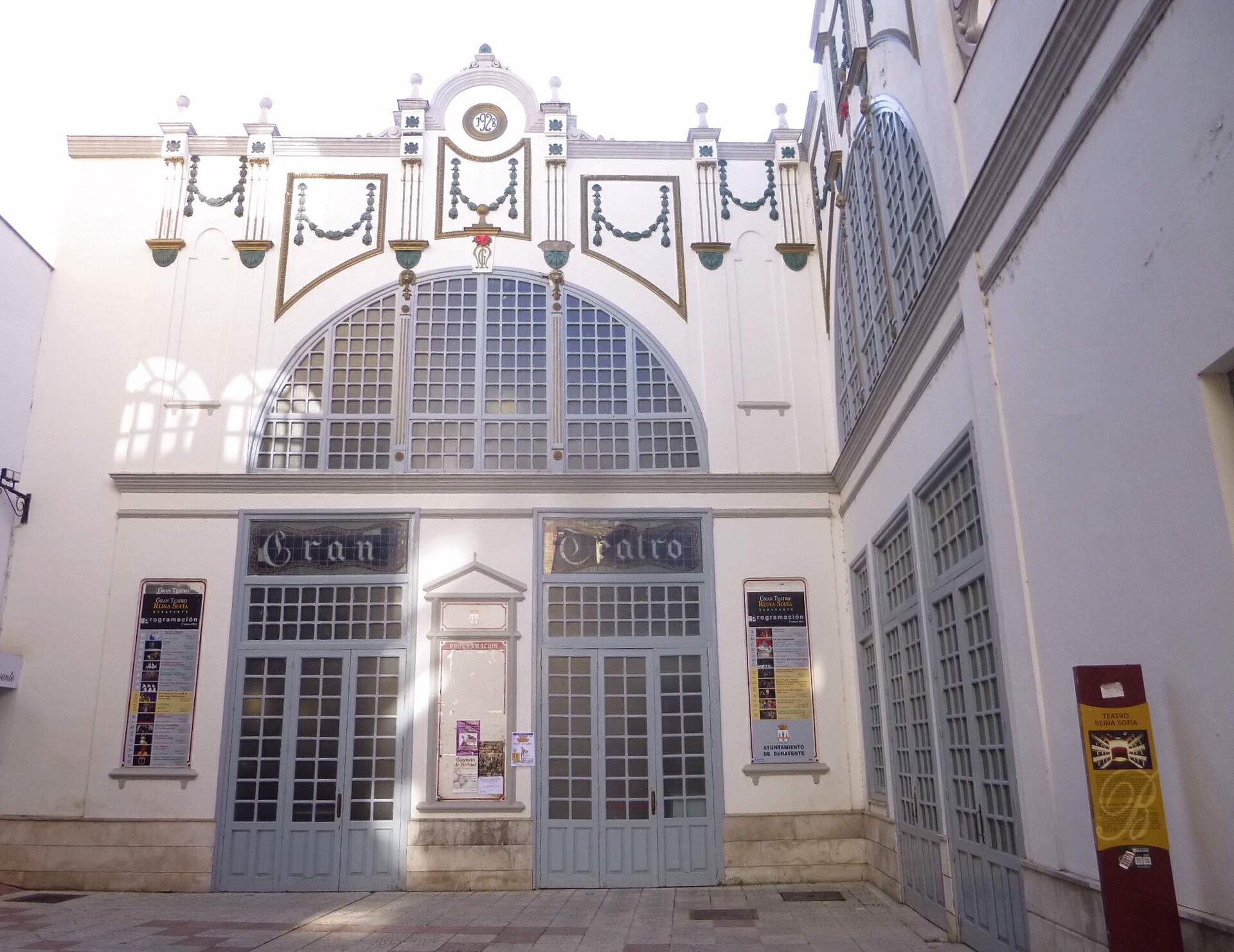
Gran Teatro Reina Sofía
Benavente
Gran Teatro Reina Sofía is a historic theatre in Benavente, a town in the province of Zamora, in Spain's Castile and León region - a cultural landmark that draws visitors interested in the town's architecture and 20th-century history. Where did the theatre come from? The building dates back to 1928, designed by architect Antonio García Sánchez-Blanco and commissioned by local patron Manuel Guerra Hidalgo. It was built to replace an older, Isabelline-style theatre standing nearby, the Teatro del Jardinillo. The new hall rose on the grounds of the former Convent of Santo Domingo, a Dominican monastery that had been disentailed - traces of the convent's decorative work and noble coats of arms are still visible on parts of the structure today. What happened to it over the following decades? As cinema grew in popularity through the 20th century, live theatre lost its audience, and performances became occasional rather than regular, largely limited to the September fairs and other town festivities. Without steady use, the building gradually fell into disrepair. How was it brought back to life? The turning point came in 1984, when Benavente's town council purchased the building, aiming to save an important piece of the town's architectural heritage. Restoration work began two years later and eventually returned the venue to full theatrical and musical use. The restored auditorium seats 504 people, split between stalls and boxes. Where does the name "Reina Sofía" come from? The renovated theatre reopened on 5 April 1991 in a ceremony led by Queen Sofía of Greece, consort of King Juan Carlos I. In her honour, the building was renamed Teatro Reina Sofía, the name it still carries. What should visitors know before going? The theatre sits in the centre of Benavente, at coordinates 42.00169, -5.67945. It remains the town's main stage, regularly hosting plays, concerts and other cultural events - worth checking the local events calendar before a visit. Frequently asked questions When was the Gran Teatro Reina Sofía built? It was built in 1928, designed by architect Antonio García Sánchez-Blanco. Why is it called "Reina Sofía"? It was named after Queen Sofía of Greece, who personally reopened the restored building on 5 April 1991. How many seats does the theatre have? The auditorium holds 504 seats, combining stalls-level armchairs and boxes. What stood on this site before the theatre? The theatre was built on the grounds of the former, disentailed Convent of Santo Domingo, a Dominican monastery whose decorative traces and coats of arms partly survive. Was the building always used as a theatre? No - through much of the 20th century, as cinema rose in popularity, the theatre saw only occasional use and fell into disrepair, until the town council bought and restored it starting in 1984.
-
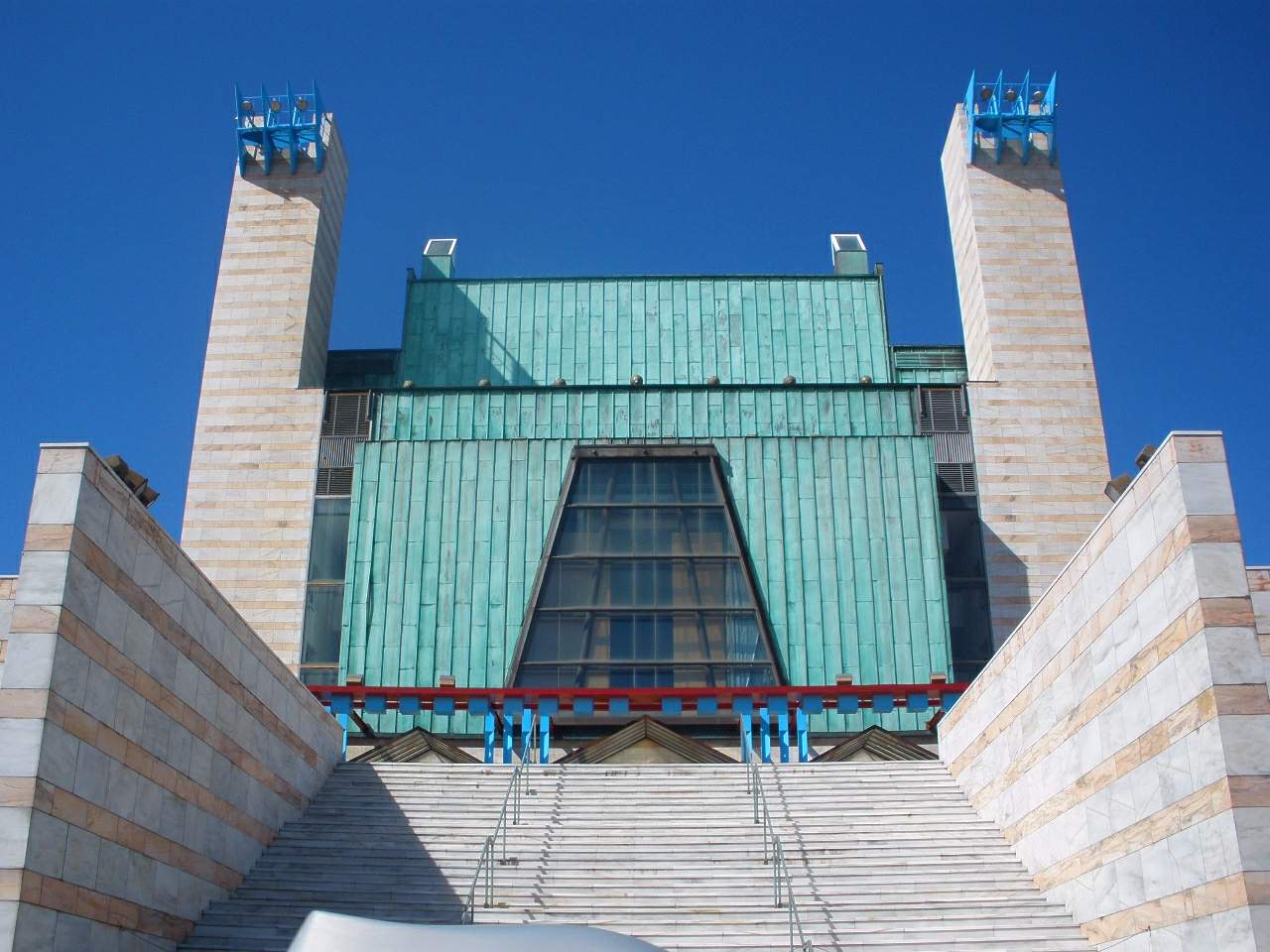
Palacio de Festivales de Cantabria
Palacio de Festivales de Cantabria is Santander's flagship cultural venue, standing right on the edge of the bay with the water and surrounding hills as a backdrop. For more than three decades it has combined the roles of theatre, concert hall and congress centre, and every summer it becomes the main stage of the International Festival of Santander. Where does its distinctive shape come from? The building was the winning entry in an architectural competition, chosen from several proposals, submitted by the Navarrese architect Francisco Javier Sáenz de Oiza. Construction was completed in 1990. Sáenz de Oiza took his cue from the ancient theatre of Epidaurus in Greece, built more than two thousand years ago, borrowing its semicircular seating and the idea of opening the stage toward a natural backdrop — here, instead of Peloponnesian hills, the audience looks out over the bay of Santander through an enormous trapezoidal window set behind the main stage. Four towers roughly 50 metres tall complete the silhouette, their shape recalling the masts of ships moored in the harbour below. The project was not without controversy: costs rose well beyond the original budget, a fact widely reported in the local press at the time. Despite that rocky start, the building quickly became one of the city's architectural landmarks. What is inside? The Palacio houses several auditoriums built for different purposes. The largest, Sala Argenta, seats around 1,670 people and has a stage of more than 500 square metres equipped with full lighting, projection and stage-machinery systems — the venue for large-scale opera, symphonic concerts and major touring productions. The smaller Sala Pereda holds about 570 spectators and has a more modest stage (roughly 150 square metres), better suited to chamber productions, plays and conferences. A third, more intimate room — known as the Sala Griega or Sala María Blanchard — is used for talks, screenings and smaller gatherings. What happens here throughout the year? Since opening in 1990, the Palacio has served as the permanent home of the International Festival of Santander, a programme of concerts, opera, ballet and theatre that previously, from 1952 onward, had been staged provisionally in the city's Plaza Porticada. Outside the festival season, the building doubles as a congress and conference centre, hosting business events, trade meetings and conventions, while its halls continue to host concerts, plays and film screenings all year round. Frequently asked questions Which city is the Palacio de Festivales de Cantabria in? It stands in Santander, the capital of Cantabria in northern Spain, directly on the city's bay. Who designed the building and when was it completed? It was designed by architect Francisco Javier Sáenz de Oiza and completed in 1990 after winning an architectural competition. How many people can the main hall seat? Sala Argenta, the largest of the venue's auditoriums, seats approximately 1,670 people. What event is the venue best known for? It hosts the International Festival of Santander every year, one of Spain's oldest and most prestigious cultural festivals. Does the building serve purposes beyond culture? Yes — alongside concerts and theatre, it regularly hosts congresses, conferences and business events.
-
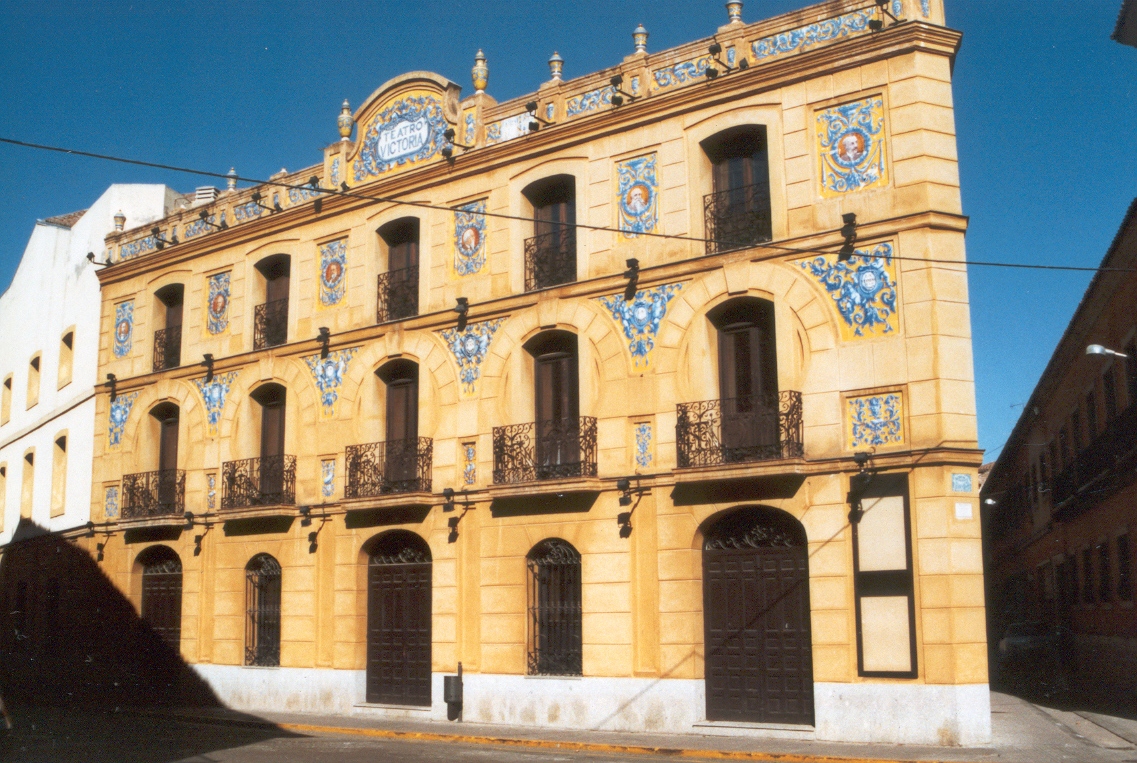
Teatro Victoria
Talavera de la Reina
Teatro Victoria is a historic municipal theatre in Talavera de la Reina, in the province of Toledo, standing at Calle del Teatro 7 in the heart of the old town. It is one of the few surviving early twentieth-century performance venues in the region, and it is best known for the elaborate ceramic decoration covering its facade. Where does the name come from? A corral de comedias - the open-air courtyard theatres typical of Spain in that era - had occupied the site since the early seventeenth century. By the eighteenth century the venue was known as Teatro Principal, and it was pulled down in the late nineteenth century because of its poor condition. The building standing today was put up in 1912 by local businessman Miguel Fernández Santamaría, who named it after his daughter Victoria. It formally opened in April 1914. Has it always carried this name? No. When the building later passed to a new owner, Félix Moro, he renamed it Teatro Mariana, honouring Father Juan de Mariana, a Talavera-born historian and Jesuit from the turn of the sixteenth and seventeenth centuries. The theatre operated under that name for decades before eventually reverting to its original name, Teatro Victoria. What does the building look like? The facade is done in a modernist style and stands out for its ornate wrought-iron balconies. Its real signature, though, is the ceramic panelling created by Juan Ruiz de Luna, a celebrated local ceramicist whose work decorates several buildings around town. The tiles depict allegories of music and theatre, portraits of playwrights and composers, and the titles of well-known zarzuelas. Inside, the decoration follows a French-influenced style, with plaster ornamentation, wrought-iron railings and metal columns supporting the auditorium. What happened to the theatre in 1988? Overnight between Thursday and Friday, on 1 July 1988, part of the building's structure collapsed after years of damp and deteriorating materials had weakened it. The theatre had been in poor structural condition for some time, and the collapse kept it out of use for years afterward. How was it restored? Talavera's town council took ownership of the building in 1991, and the restoration and repair works that followed were funded by the regional government of Castilla-La Mancha. The project aimed to preserve the original layout of the interior along with the historic ceramic decoration on the facade. The theatre reopened to the public in 1994, at which point it also recovered its earliest name, Teatro Victoria. What is the building used for today? Teatro Victoria now serves as Talavera de la Reina's municipal theatre, hosting plays and other cultural events organised by the city. For visitors, it also stands as one of the town's most striking examples of decorative ceramic architecture, a craft tradition for which Talavera is widely known. Frequently asked questions Where exactly is Teatro Victoria located? At Calle del Teatro 7 in Talavera de la Reina, in the province of Toledo. Where does the theatre's name come from? From Victoria, the daughter of Miguel Fernández Santamaría, the businessman who built the theatre in 1912. Did the theatre always have this name? No - for many years, after a change of ownership, it was known as Teatro Mariana, honouring historian Father Juan de Mariana. What is the most distinctive feature of the building? The ceramic facade decoration by Juan Ruiz de Luna, showing allegories of music and theatre along with portraits of playwrights and composers. Why was the theatre closed for so long? Part of its structure collapsed in July 1988 due to damp and years of structural deterioration. When did the theatre reopen to the public? In 1994, after restoration work funded by the regional government of Castilla-La Mancha, once again under the name Teatro Victoria.
-
Teatro Federico García Lorca
Fuente Vaqueros
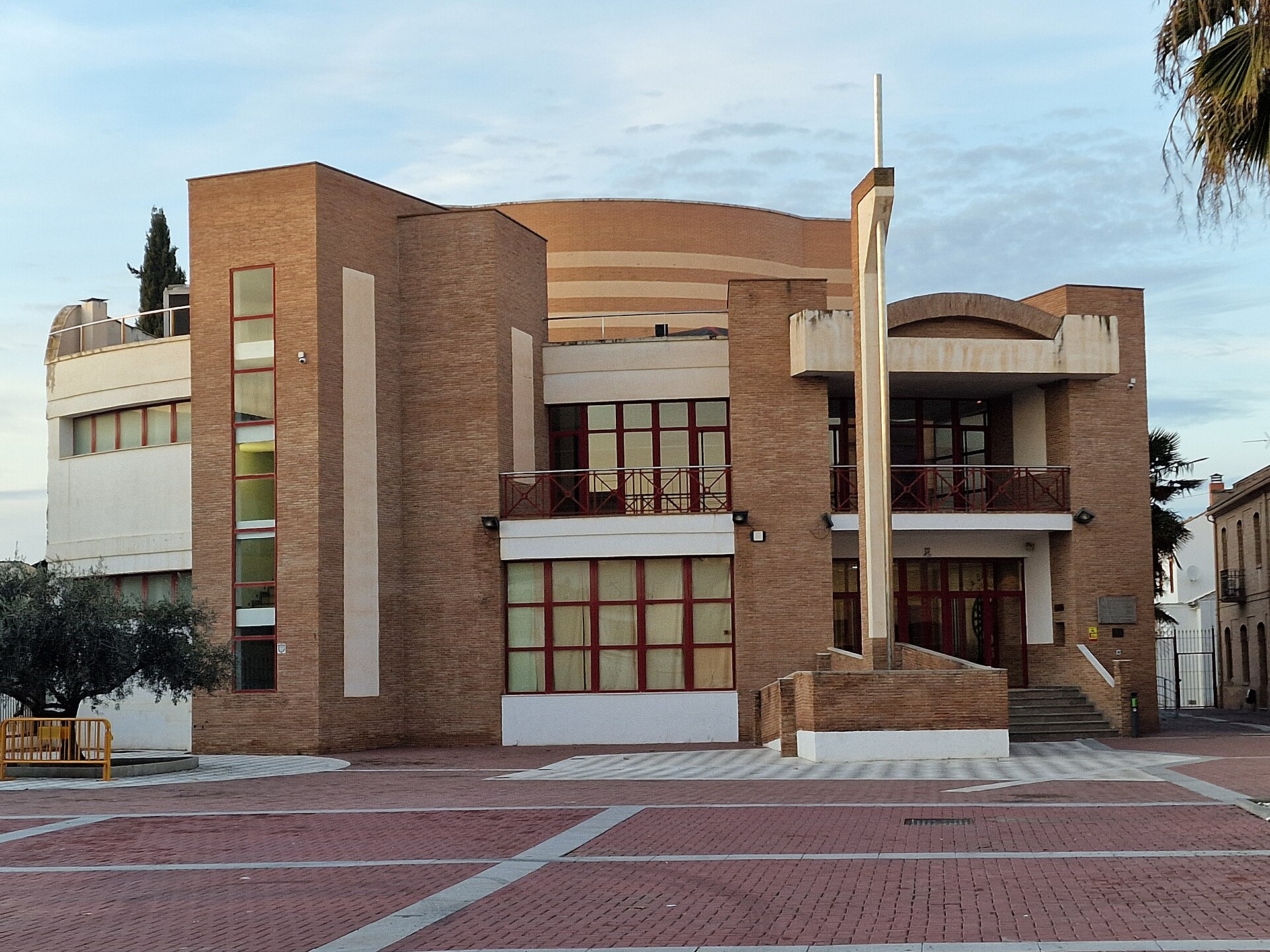
Teatro Federico García Lorca is the municipal theatre of Fuente Vaqueros, the small town near Granada where Federico García Lorca — one of Spain's most celebrated poets and playwrights — was born on 5 June 1898. Sitting on Calle Manuel de Falla, the venue has spent the past quarter century as the town's main stage for the performing arts. Why was it built here, and why this name? The theatre opened on 5 June 2000, deliberately timed to mark the 102nd anniversary of Lorca's birth. The ribbon was cut by Carmen Calvo Poyato, at the time Andalusia's regional culture minister. Naming the hall after Lorca was an obvious choice given the setting: this is the village where he spent his early childhood before his family moved to Granada, and the rhythms of rural Vega life he absorbed here would later surface throughout his plays and poetry. What kind of shows does it host? With 354 seats, the auditorium is sized well beyond what a town of a few thousand residents would typically need — a sign of how central the venue is meant to be to local cultural life. The programme mixes stage drama, flamenco evenings, film screenings, concerts, talks and exhibitions. In June 2025 the theatre marked its 25th anniversary with a commemorative gala reviewing two and a half decades of programming. Does it actively keep Lorca's memory alive? Even though the building itself dates from long after the poet's death, its calendar regularly circles back to him: the theatre hosts Cultural Week events and anniversary programmes dedicated to local heritage. Together with Lorca's birth house nearby — now a museum — it forms the second stop on any tour tracing the poet's footsteps through Fuente Vaqueros. Is it worth a visit alongside the birth house? For travellers exploring the Vega de Granada, the theatre is a natural add-on to a visit to Lorca's childhood home: it shows how his legacy is kept alive through living culture rather than museum displays alone. It's worth checking the programme in advance, since flamenco nights and local festivals here tend to draw audiences from across the wider Vega. Frequently asked questions When did the theatre open? On 5 June 2000, the 102nd anniversary of García Lorca's birth. How many people does it seat? 354. Where exactly is it located? On Calle Manuel de Falla 2, in the centre of Fuente Vaqueros, Granada province. What kind of events are staged there? Theatre, flamenco, film screenings, concerts, talks and exhibitions. Is this the same place as Lorca's family home? No — it's a separate building. The poet's birth house, now a museum, is also in Fuente Vaqueros, a short walk away. When can visitors check show times or buy tickets? The theatre's office typically operates Thursday to Sunday, mornings and afternoons; it's best to check the current schedule before visiting, since programming changes seasonally.
-
Teatro Castelar
Elda
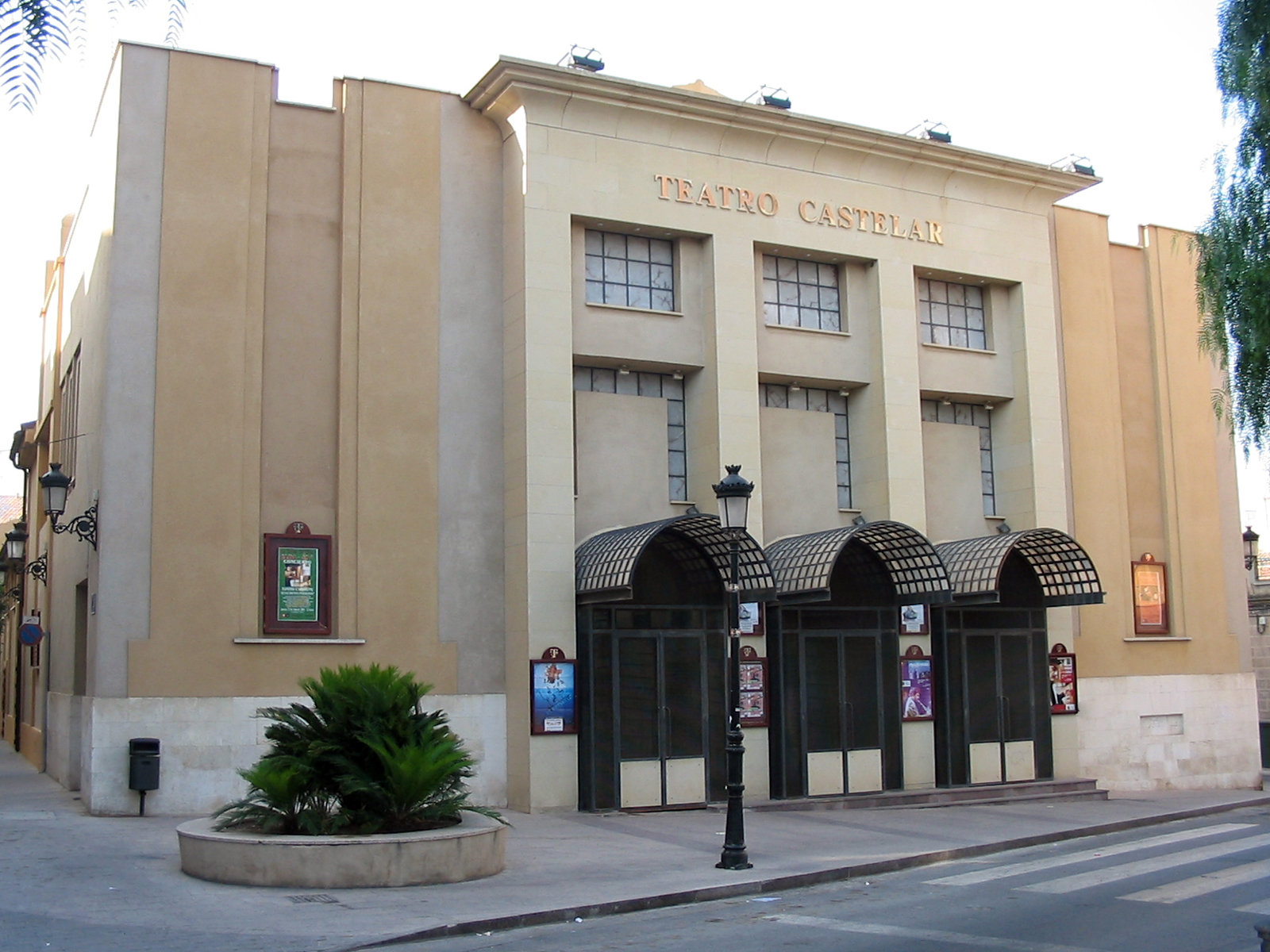
Teatro Castelar is a historic theatre in the centre of Elda, a small city in the province of Alicante best known for its footwear industry. For more than a century the building has remained the city's main cultural venue and one of its most recognisable landmarks, making it a natural stop for anyone exploring the Valencian region. Where does the theatre's name come from? The theatre is named after Emilio Castelar, a Spanish politician and writer who served as president of the First Spanish Republic in 1873. The choice was not arbitrary: Castelar spent part of his childhood and youth in Elda, and locals chose to honour him by naming the new stage after him. When was Teatro Castelar built? The project was driven by La Eldense, a local cultural and recreational society that wanted to give the city its own representative theatre. Construction began in 1902 to a design by architect Enrique Sánchez Sedeño, and the finished building opened to the public on 11 September 1904. From that point on, the theatre became a gathering place for the people of Elda for performances, concerts and civic celebrations. How has the building changed over time? Less than two decades after opening, in 1921, the theatre underwent its first major renovation, designed by architect Alfonso García. The interior gained boxes, a stalls area and an amphitheatre, improving both audience comfort and the overall look of the hall. In the following decades, as sound cinema spread during the 1930s, Teatro Castelar also began screening films alongside its traditional stage productions. After decades of use, the building eventually needed a thorough restoration. The renovation work was completed in 1999, and the theatre reopened its doors to the public on 7 April of that year. The restoration brought back the venue's original character while equipping it with the modern technical infrastructure needed for contemporary cultural events. What can visitors see at Teatro Castelar today? Teatro Castelar now functions as Elda's leading cultural institution. It hosts theatre performances, concerts, film screenings and municipal events throughout the year. Thanks to its preserved historic structure and restored interiors, the building itself is also a draw for anyone interested in turn-of-the-century architecture. The theatre sits right in the city centre, making it an easy stop while walking around Elda. Frequently asked questions Why is the theatre called Castelar? It is named after Emilio Castelar, president of the First Spanish Republic, who spent part of his childhood and youth in Elda. When did Teatro Castelar open? Construction began in 1902 and the theatre officially opened on 11 September 1904. Who designed the building? The original design was by architect Enrique Sánchez Sedeño; the 1921 renovation was designed by architect Alfonso García. Was the theatre ever used as a cinema? Yes, from the 1930s onward, as sound cinema became popular, films were screened there alongside stage performances. Has the theatre been restored? Yes, following a thorough restoration the building reopened to the public on 7 April 1999. Where is Teatro Castelar located? It is located in the centre of Elda, in the province of Alicante, in the Valencian Community.
-
Teatre Zorrilla
Badalona
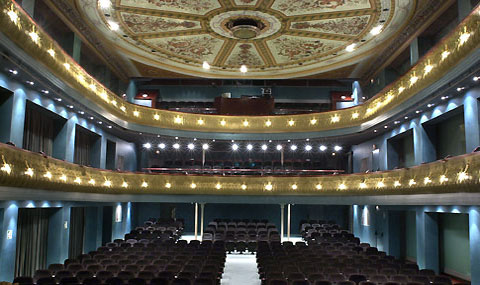
Teatre Zorrilla is one of three municipal theatres in Badalona, a Catalan city on the coast just outside Barcelona. The building has been in continuous use for more than a century and a half, though its role has shifted several times over the decades — from playhouse, to cinema, to today's performing arts centre. Where does the theatre's name come from? The building was named after the Spanish playwright José Zorrilla, best known for "Don Juan Tenorio." According to local accounts, Zorrilla himself gave his blessing for the use of his name, during a meeting arranged by Francesc Amigó i Farreras and Francesc Planas i Casals with the journalist Joaquín Asensio de Alcántara. That personal endorsement is why the theatre carried his name from the very start, while the writer was still alive. Who built it, and how? The project was driven by two partners, Miquel Perejoan i Lladó and Martí Amigó i Banús, who between 1843 and 1868 gradually bought up plots totalling around 1,400 square metres. The design came from master builder Martí Botey, who modelled the hall on Italian Baroque theatre architecture — giving the auditorium its distinctive horseshoe shape, typical of opera houses of that era. When did it open? The theatre opened its doors on 31 October 1868, becoming only the second theatre in Badalona's history. The opening production was, fittingly, Zorrilla's own drama "Traidor, inconfeso y mártir," staged by Antonio Mallí de Brignole's company. What happened to the building over the following decades? Across the years, well-known performers took to the Zorrilla's stage, including actor Enric Borràs and Margarida Xirgu, one of the most celebrated Catalan actresses of the 20th century. From 1905 the building doubled as a cinema, and from 1954 it operated under the name "Cine Aya" — a chapter that only closed in 1970. How did it reach its current form? In 1986 ownership passed to the Badalona city council. After decades adapted mainly for film screenings, the building underwent a thorough restoration and reopened on 21 January 1999 as the Centre d'Arts Escèniques de Badalona (Badalona Centre for Performing Arts). What is the theatre used for today? Today the Teatre Zorrilla is one of Badalona's three municipal theatres, alongside the Teatre Margarida Xirgu and the Teatre Blas Infante. It runs a year-round programme of theatre, music and dance, and the building also houses a rehearsal room and offices used by local cultural organisations. Current listings are published on the theatre's own website and on the Badalona city council's site. Frequently asked questions When was Teatre Zorrilla built? The building went up between 1843 and 1868 on land bought by Miquel Perejoan and Martí Amigó, with the grand opening held on 31 October 1868. Why is it called Teatre Zorrilla? It was named for the Spanish playwright José Zorrilla, who is said to have personally approved the use of his name. Which play opened the theatre? The opening performance was Zorrilla's own "Traidor, inconfeso y mártir," staged by Antonio Mallí de Brignole's company. Was it always used as a theatre? No — between 1905 and 1970 it operated mainly as a cinema, known from 1954 as "Cine Aya," before returning to live theatre in 1999. Is the theatre still active? Yes, since 1999 it has run as the Centre d'Arts Escèniques de Badalona, one of the city's three municipal theatres, with a year-round programme of theatre, music and dance.
-
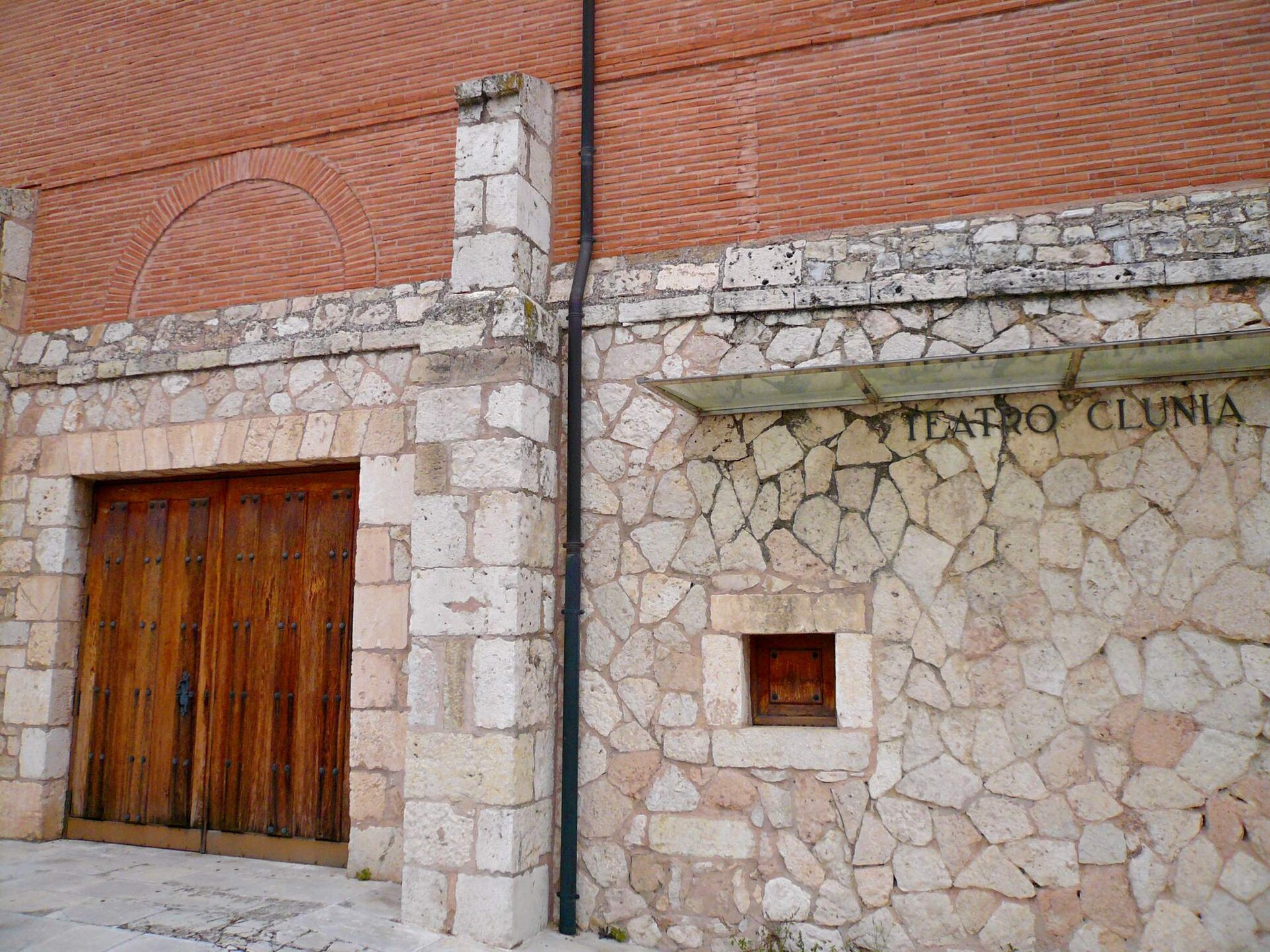
Teatro Clunia
Teatro Clunia is a theatre and cultural venue housed in a centuries-old building right in the historic centre of Burgos, in northern Spain. Officially known as the Centro Cultural Francisco de Salinas – Teatro Clunia, it combines a working stage with the role of the city's cultural hub. What is the history behind the building? The structure dates back to 1514, when it was built as an alhóndiga — a municipal grain exchange and storehouse that regulated the wheat supply for Burgos. Buildings of this kind were essential infrastructure in Spanish towns of the period, and this one served its original purpose for more than three centuries, until 1853. From prison to playhouse In the mid-19th century the former grain store was converted into the provincial prison, a role it kept for decades. It wasn't until 1982 that the building underwent a major renovation, led by architect Rafael Fernández Rojas, which gave it its current identity as a theatre and cultural centre. What happens at Teatro Clunia today? The auditorium seats 611 people and is used mainly for theatre productions and dance performances. The venue also regularly hosts concerts and film screenings, making it one of the key cultural addresses in Burgos. Why is it worth a visit? Beyond its programme, the building is a striking example of adaptive reuse — from grain storage, to incarceration, to the arts. It sits within the compact historic centre, within easy walking distance of the city's main sights. For visitors exploring Burgos, a city best known for its Gothic cathedral, Teatro Clunia offers a glimpse of how the city blends its historical fabric with contemporary cultural life. Frequently asked questions Where is Teatro Clunia located? It stands in the historic centre of Burgos, Spain (approximate coordinates 42.3403, -3.7086). How old is the building? The building dates from 1514, making it over five hundred years old, although its current use as a theatre only began after the 1982 renovation. What was the building originally used for? It was originally an alhóndiga, a municipal granary regulating the city's grain trade, and later served as the provincial prison from 1853 onward. How many seats does the theatre have? The auditorium has 611 seats. What kind of events are held there? Theatre plays, dance performances, concerts and film screenings. Does the name "Clunia" refer to the Roman city? Yes, it echoes the name of the ancient Roman city of Clunia in the province of Burgos, famous for its own Roman theatre — a separate, much older site from this modern venue in the city centre.
-
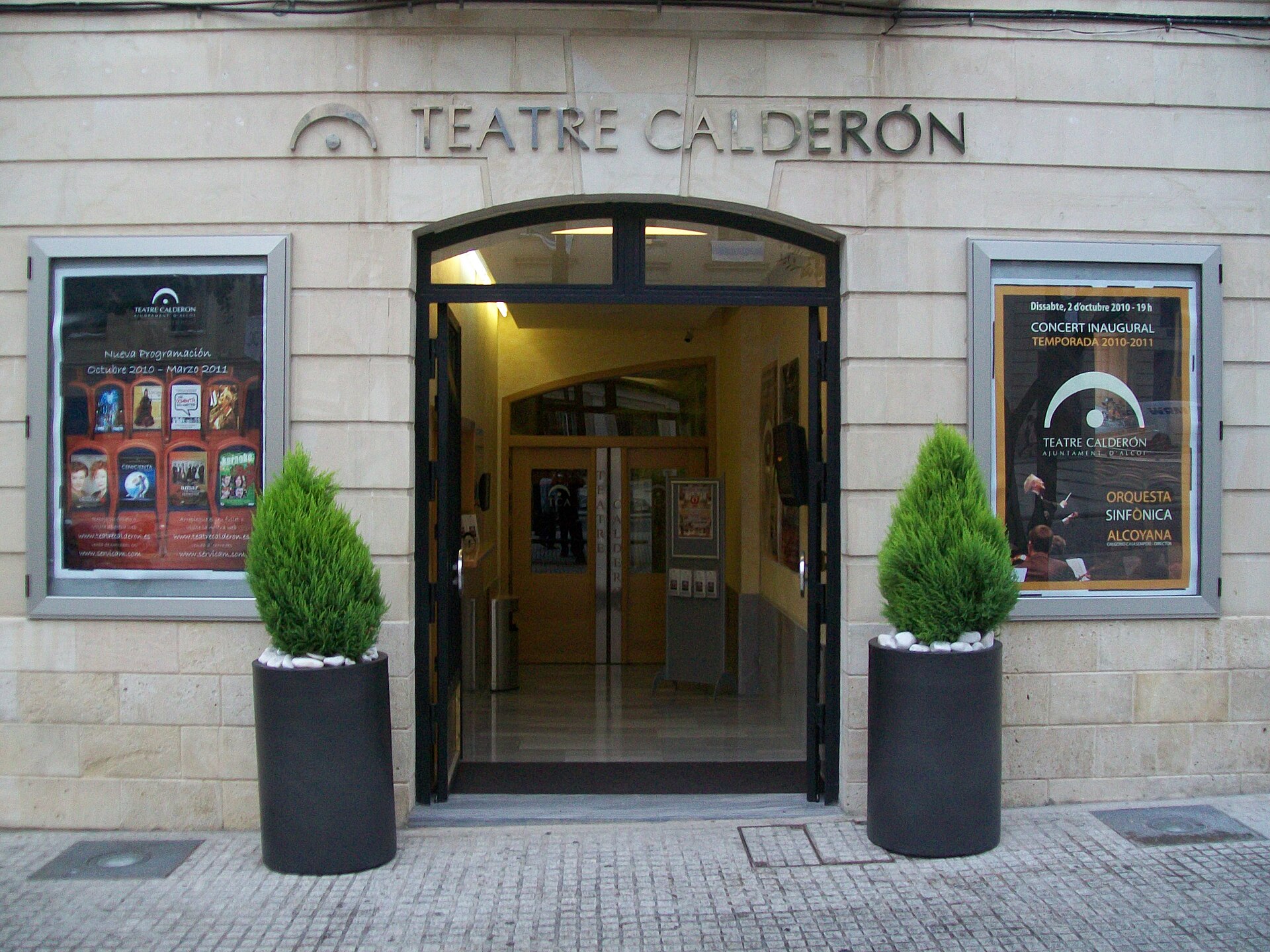
Teatre Calderón
Teatre Calderón stands as one of Alcoy's principal stages for the performing arts, a theatre with more than a century of history in the heart of this town in the province of Alicante, Spain. Where is the Teatre Calderón located? The building sits on Plaza de España 14, right across from Alcoy's town hall, in the historic centre of the city (postcode 03801). Its coordinates place it at roughly 38.698°N, 0.472°W. How did the theatre come to be? The venue opened its doors on 2 December 1902, built and run by the Catholic Circle of Workers. The opening night featured a staging of the zarzuela "La tempestad". Within a few months, locals had already started calling it Teatro Calderón, after the Spanish Golden Age playwright Pedro Calderón de la Barca. Thanks to its size and the depth of its stage, the theatre soon overtook the other venues in Alcoy and became the city's leading stage. A major renovation followed in 1944: the ceiling was raised, the pillars that had blocked sightlines were removed, the electrical wiring was replaced throughout, hot-air heating was installed, the seating area was enlarged with new chairs, and the lobby and lounge were refurbished. For much of the twentieth century the building operated mainly as a cinema. It closed in 2000, after which the municipality of Alcoy took ownership. A complete rebuild followed, and the theatre reopened in 2007 fitted out with modern stage technology. What kind of shows does it host today? The theatre is owned and run by the city council of Alcoy, which curates its programme. Its calendar mixes drama, opera, orchestral concerts, dance performances and amateur theatre festivals, ranging from classical opera productions to contemporary comedy and family-friendly shows. How many people can it seat? The auditorium holds 750 seats, and the orchestra pit is large enough for up to 80 musicians, which allows the venue to stage full-scale opera and symphonic productions. Frequently asked questions Where exactly is the Teatre Calderón? On Plaza de España 14 in Alcoy, in the province of Alicante, directly opposite the town hall. When was the theatre built? It opened on 2 December 1902, originally as the theatre of the Catholic Circle of Workers. Why is it called Calderón? It was named after Pedro Calderón de la Barca, one of the leading playwrights of Spain's Golden Age theatre. How many seats does it have? 750, with an orchestra pit that can accommodate up to 80 musicians. Did it ever operate as a cinema? Yes — for much of the 20th century it functioned mainly as a cinema, before closing in 2000 and being taken over by the municipality. When was it last renovated? After its 2000 closure, the building underwent a complete rebuild and reopened in 2007 as a municipal theatre. Who runs the venue today? The Alcoy city council owns and manages the theatre, setting its artistic programme of drama, opera, music and dance.
-
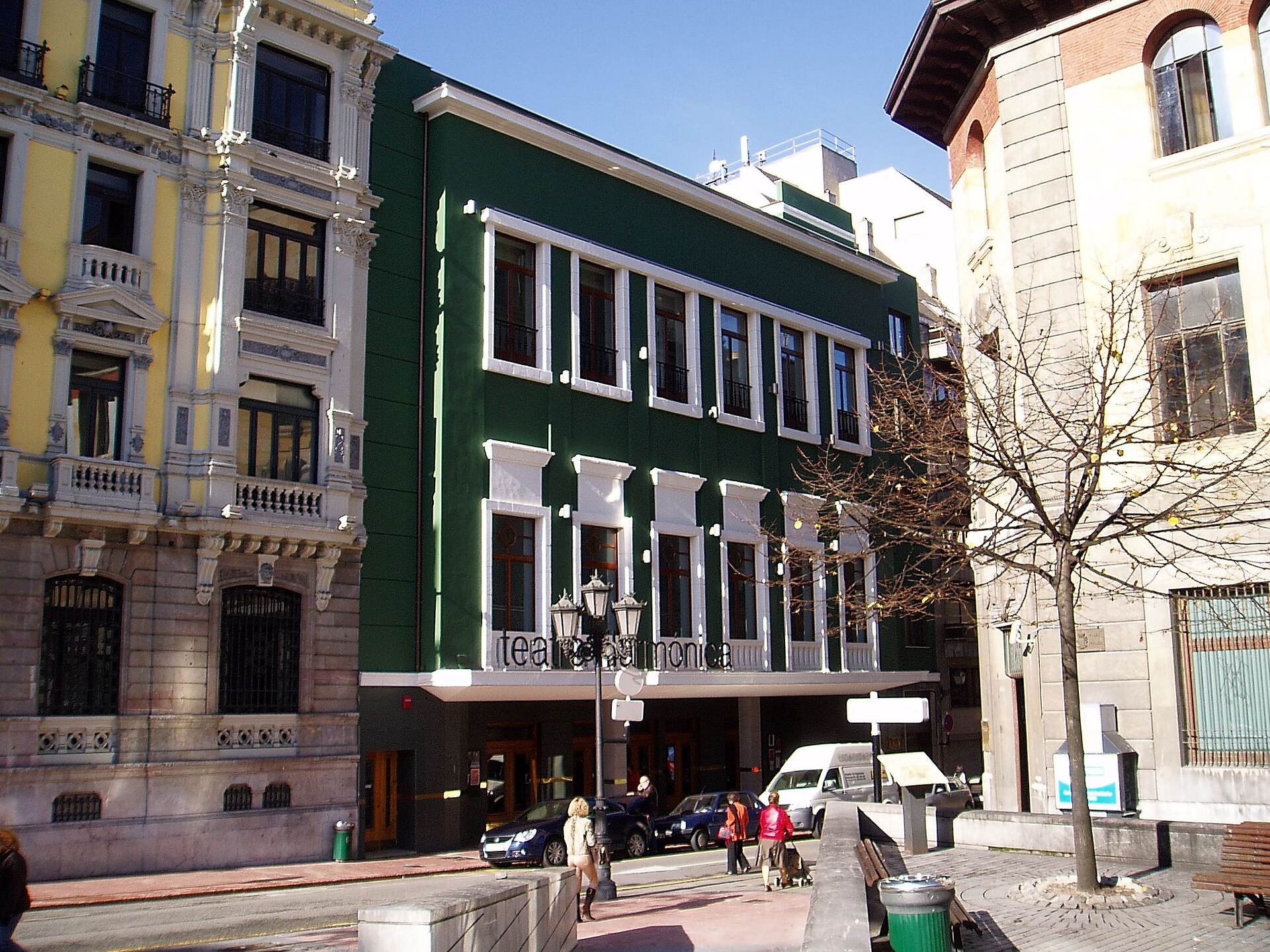
Teatro Filarmónica
Oviedo
Teatro Filarmónica is a historic concert theatre in the heart of Oviedo, the capital of Asturias in northern Spain, standing on Calle Mendizábal just steps from Plaza Porlier. The building serves as the home of the Sociedad Filarmónica de Oviedo, one of Spain's oldest music societies, and has anchored the city's classical music scene for generations. When was the theatre built? The building opened on 17-18 May 1944, with the Berlin Philharmonic performing the inaugural concerts. It gave the Filarmónica de Oviedo society a permanent home after years of hosting concerts in other venues around the city, including the Teatro Campoamor. The society itself is considerably older, tracing back to 1907, when it was founded under the name Agrupación Musical Ovetense with the aim of bringing chamber and symphonic music to the local public. Who has performed here? Over the decades the society's programme has featured some of the era's leading musicians. Pianist and composer Manuel de Falla appeared in 1908 and 1917, while guests over the years included Arthur Rubinstein, Sergei Rachmaninoff, Wanda Landowska, and pianist Emil Sauer. Activity was twice interrupted by turbulent history: the October 1934 uprising in Asturias paused concerts until December that year, and the Spanish Civil War halted the programme entirely from the summer of 1936 until October 1939. What does the inside look like? The auditorium follows a traditional layout, with a stalls section on the ground floor and a single tier of boxes and a gallery above. The stage itself is relatively modest in size, which from the start limited how large an orchestra or how elaborate a set the venue could host — but it suits the chamber-music format the society was built around. Did the building always operate as a concert hall? For a stretch of its history the theatre doubled as a commercial cinema, a common arrangement for Spanish theatres of the twentieth century that combined film screenings with a concert calendar. In 2004 the building underwent a significant renovation and reopened to the public the following year, in 2005, in its refurbished form. Why is it worth a visit? The theatre ties together Asturian musical patronage with an active concert schedule that continues today — the Sociedad Filarmónica still runs full seasons here, drawing music lovers who pass through Oviedo. In 2007 the society marked its centenary with a celebratory concert featuring Mahler's Symphony No. 3, held at the nearby Auditorio Príncipe Felipe, a sign of how central the institution remains to the region's musical life. For visitors exploring Oviedo, the Teatro Filarmónica makes for an interesting stop that links the city's historic centre with the story of classical music in Spain — it's worth checking the local concert listings, since the hall still serves its original purpose. Frequently asked questions Where is the Teatro Filarmónica located? The theatre stands in central Oviedo, on Calle Mendizábal, close to Plaza Porlier. When was the theatre building constructed? It officially opened on 17-18 May 1944 with concerts by the Berlin Philharmonic. What is the Sociedad Filarmónica de Oviedo? It's a music society founded in 1907, one of the oldest in Spain, which has organised chamber and symphonic concerts in this theatre for decades. Can you still attend concerts there today? Yes, the hall continues to operate as the society's home and hosts regular concert seasons. Has the building been renovated? Yes, it underwent a renovation in 2004 and reopened to the public in 2005.
-
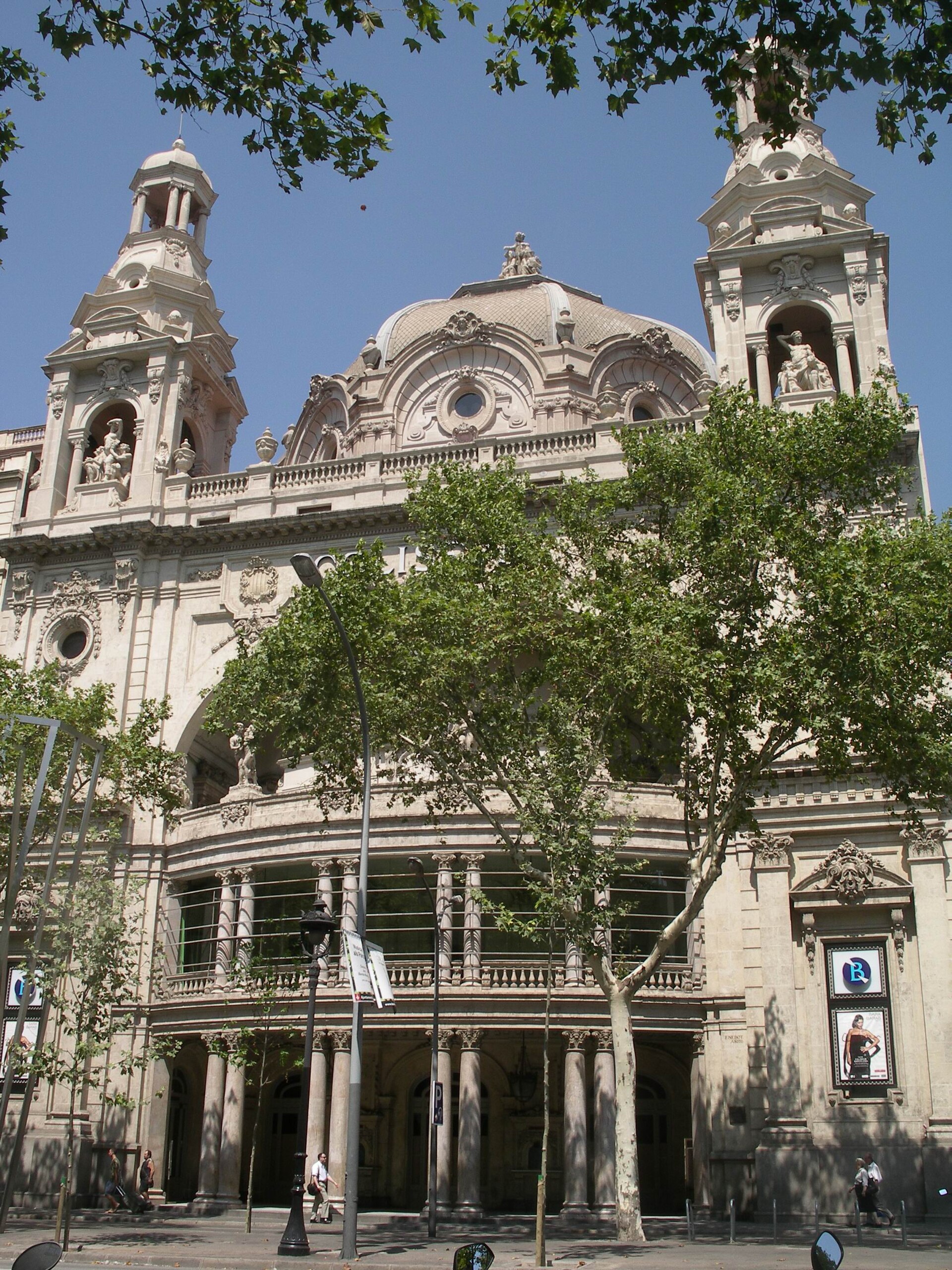
Coliseum
Coliseum is one of the most recognizable performance venues along Gran Via de les Corts Catalanes in Barcelona. Opened in October 1923, the building spent decades operating as a cinema before its permanent conversion into a theatre in 2007, and today it hosts musicals, concerts, comedy shows and dance performances. Why does the building look the way it does? The venue was built for a group of investors tied to Barcelona's early 20th-century entertainment business. Its design follows an eclectic style, drawing clear inspiration from French Beaux-Arts architecture and the look of the Paris Opera Garnier — which explains the building's monumental facade, still one of the most striking along the whole avenue. The interior features elaborate sculptural and plaster decoration, the work of several artists who specialized in theatre interiors of that era. How did Coliseum operate as a cinema? The formal opening took place in October 1923, with a French production starring Maurice Chevalier as the first film screened. For decades afterward, the hall ran as one of the city's largest cinemas, mixing film screenings with live performances — a common format for big Barcelona entertainment venues at the time. In the 1950s, ownership passed to the Balañá group, a company known for running several other historic theatres and cinemas across the city. Over the years, Coliseum hosted film premieres attended by well-known figures from world cinema, cementing its place as one of Barcelona's key cultural landmarks. When did Coliseum become a theatre? The shift happened in the mid-2000s: from 2006 the venue began hosting stage productions more regularly, and in 2007 it was officially turned into a permanent theatre, opening with "Cómeme el Coco, Negro" performed by the Catalan company La Cubana. Since then, Coliseum has steadily built up its theatrical program, welcoming large-scale musical productions alongside concerts, stand-up comedy and dance events. What should visitors know before going? The auditorium seats roughly 1,500 to 1,700 people across three floors, and the interior keeps a distinctive blue color scheme on both the walls and the seats. A bar on the first floor overlooks the busy Gran Via, making it a popular spot for a drink before a show. The facade, with its illuminated lettering spelling out the venue's name, is easy to spot from a distance and has become one of the visual landmarks of this stretch of the avenue. Its location on Gran Via de les Corts Catalanes puts Coliseum within easy reach of the rest of the city, close to other cultural and shopping spots along this major Barcelona boulevard. Frequently asked questions Is Coliseum still a cinema? No. Although the building opened in 1923 as a cinema, since 2007 it has operated exclusively as a theatre, staging live performances, concerts and other events. Where exactly is Coliseum located? The building stands on Gran Via de les Corts Catalanes, one of Barcelona's main avenues, in an easily accessible part of the city. How many people can the auditorium hold? The theatre seats between roughly 1,500 and 1,700 people across three floors. What can visitors see at Coliseum today? The program mainly features musicals, concerts, comedy shows, dance performances and special events staged in this historic hall.
-
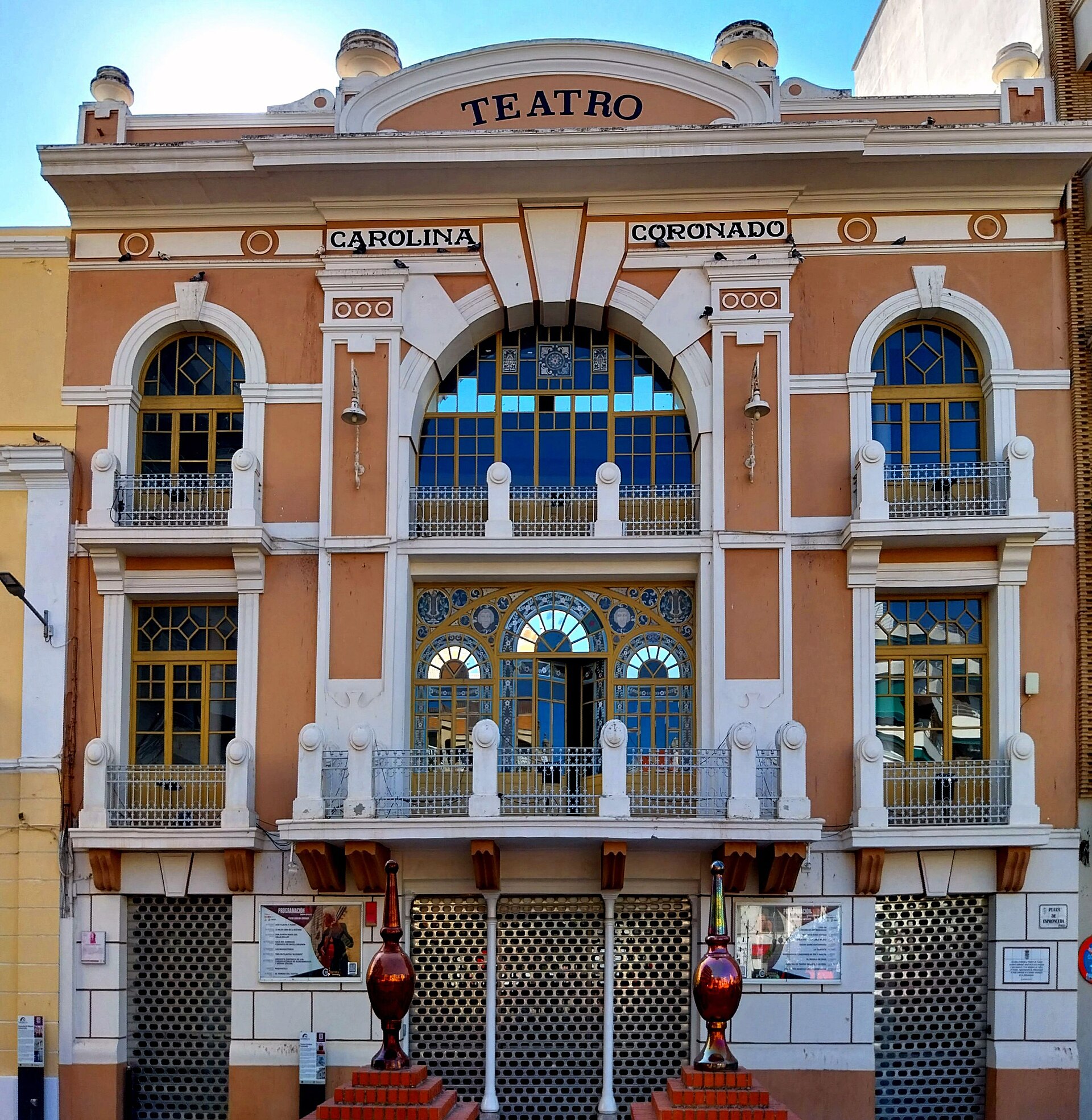
Teatro-cine Carolina Coronado
Almendralejo
Teatro-cine Carolina Coronado is a historic theatre-and-cinema building standing in the heart of Almendralejo, in Spain's Extremadura region. It takes its name from Carolina Coronado, a 19th-century poet born in the city, and its story begins in the early 1900s, a period when Almendralejo was growing fast both in population and in economic weight. Why did Almendralejo need a theatre? Between the mid-1800s and the early 1900s, the town's population roughly doubled and then doubled again, climbing from under 6,000 residents to over 12,000. Farming and trade were booming, and the town had already added several civic landmarks to match its new status: a bullring, the Círculo Mercantil business club, and the Obrero Extremeño workers' association. A proper theatre was the next logical step, giving the growing town a permanent home for stage performances and, before long, for the new medium of cinema. When was it built, and who designed the interior decoration? Construction began in 1916, and the building opened to the public in April 1917. Its layout follows the "teatro a la italiana" model that dominated Spanish theatre design throughout the 19th century, with tiers of boxes wrapped around a central stalls area. The scale is striking: the distance between the ceiling and the stalls floor exceeds 15 metres, and the boxes rest on cast-iron columns beneath two amphitheatre levels. Painter Adelardo Covarsí handled the decorative work, covering the entrance hall and the grand salon, and inside the auditorium itself the ceiling, the proscenium arch, and the side walls. What happened to the building over the following century? During the 1970s, the theatre was converted for exclusive use as a cinema, a change that altered much of its original interior. That lasted until 2003, when a full restoration brought back the building's original look — boxes, proscenium and stalls arranged as they had been for the 1917 opening. The result is a venue that now works as both a protected historic building and an active stage for cultural events in Almendralejo. Frequently asked questions When did the Teatro-cine Carolina Coronado open? Construction started in 1916, and the building had its official opening in April 1917. Why is the theatre named after Carolina Coronado? Carolina Coronado was a 19th-century poet and writer born in Almendralejo; the theatre carries her name in honour of the city's best-known literary figure. Is the building officially protected? Yes. On 5 September 1995 it was declared a Bien de Interés Cultural (Asset of Cultural Interest) in the monument category. Did the theatre ever operate purely as a cinema? Yes, throughout the 1970s the venue ran exclusively as a cinema. The 2003 restoration returned it to its original theatrical layout from 1917. Who created the interior decoration? The decorative painting in the entrance hall, grand salon and auditorium was done by Adelardo Covarsí.
-
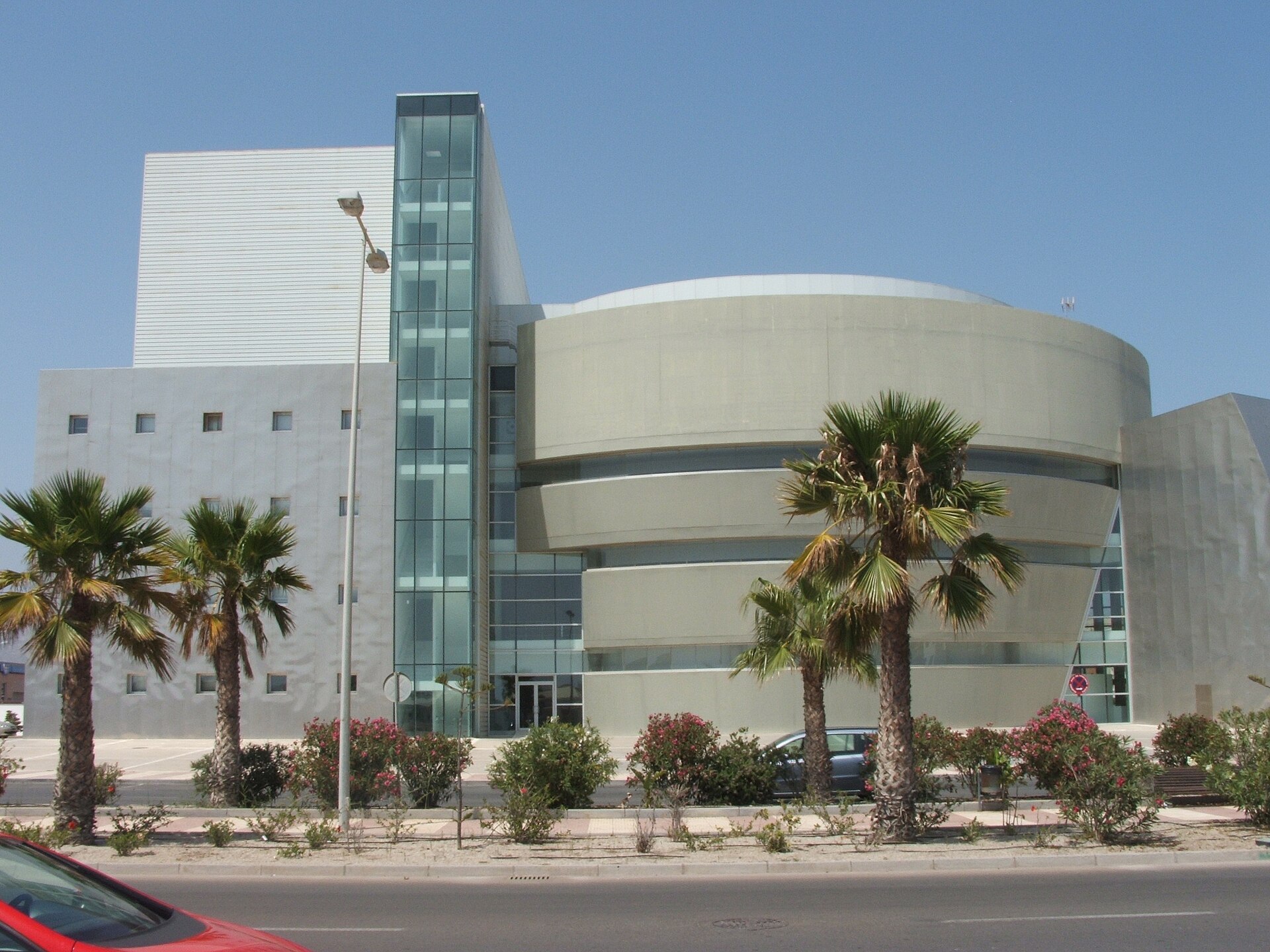
Teatro Auditorio de Roquetas de Mar
Roquetas de Mar
Teatro Auditorio de Roquetas de Mar is the main performance venue of Roquetas de Mar, a coastal town in the province of Almería in southern Spain. The building sits on Avenida Reino de España, one of the town's central streets, and has served for years as the leading cultural stage for the wider area. When was the venue built? The auditorium opened in 2004, designed by architect Miguel A. Morales. His brief was to create a functional, efficient space able to adapt to very different kinds of live performance rather than a single-purpose hall. How many seats does it have? The main hall comfortably seats around 1,300 people. Acoustics were a priority during design, which is why the venue works equally well for orchestral concerts and for shows built around amplified sound. What kind of shows are held here? The programme covers opera, theatre, dance, live concerts, as well as congresses and exhibitions. Performers recognised both in Spain and internationally have appeared on its stage, making the venue one of the cultural landmarks of the Almería province. What facilities are available on site? Audiences and performers benefit from a fairly complete set of amenities: a reception area, a cloakroom for visitors, childcare during events, a press room and a cafeteria. Backstage, artists have access to 16 dressing rooms and a separate rehearsal room, which allows the venue to host large-scale productions without relying on outside resources. Why is it worth a visit? The building's distinctive architecture has turned it into one of the recognisable symbols of Roquetas de Mar. Beyond hosting performances, it functions as a landmark within the town, drawing both local residents and visitors spending their holiday on the Costa de Almería. Frequently asked questions Where exactly is Teatro Auditorio de Roquetas de Mar located? The venue stands on Avenida Reino de España, in the centre of Roquetas de Mar, close to other attractions in town. How many people can the hall seat? The main hall comfortably fits around 1,300 spectators. What kinds of events take place there? The programme includes opera, theatre, dance performances, concerts, congresses and exhibitions. Is the venue significant for the region? Yes — it is one of the main cultural hubs in the Almería province, known for hosting both Spanish and international performers. When was the building constructed? It opened in 2004, designed by architect Miguel A. Morales.
-
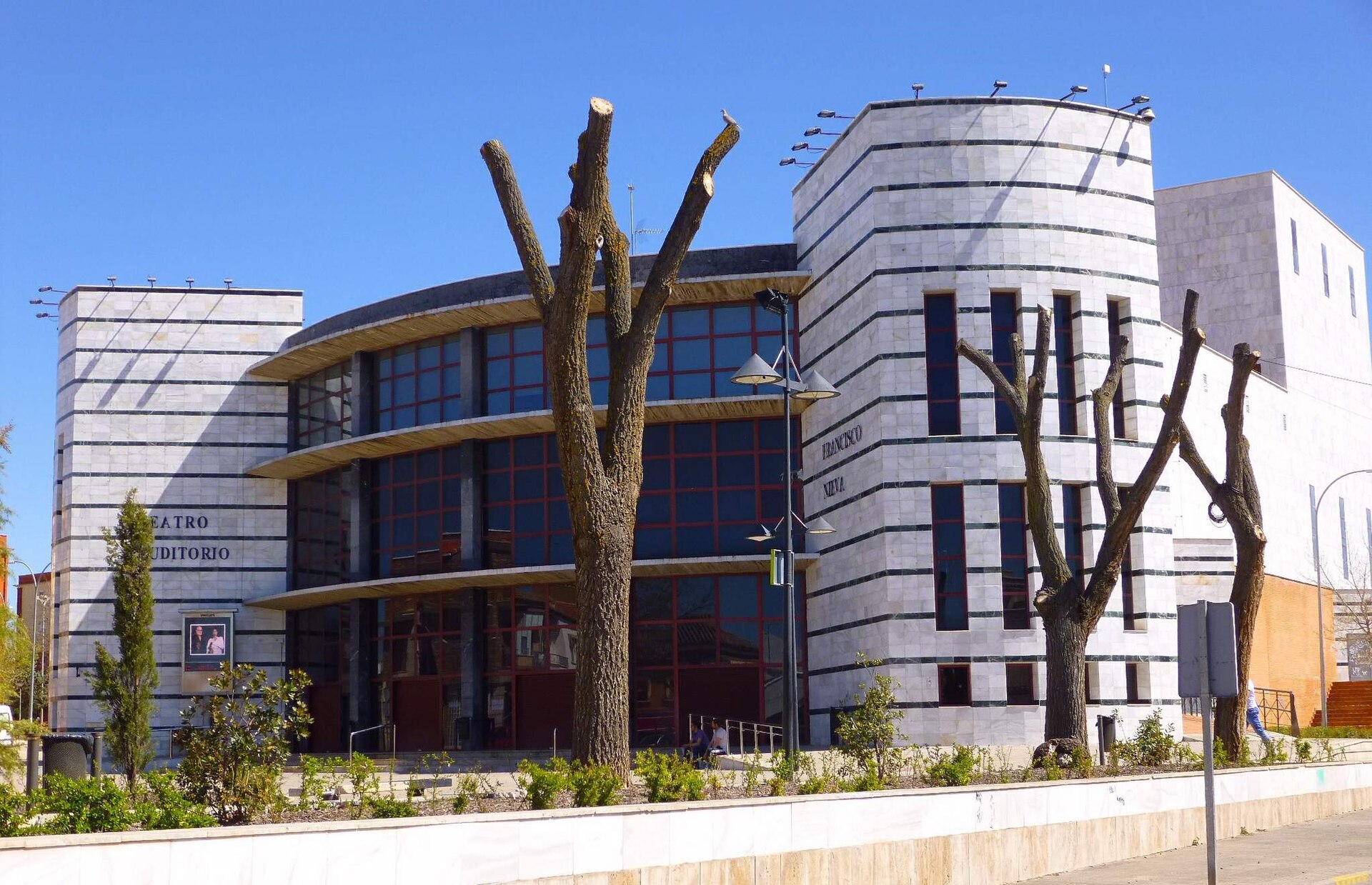
Teatro-Auditorio Francisco Nieva
Teatro-Auditorio Francisco Nieva is the municipal theatre and concert hall of Valdepeñas, a town in the province of Ciudad Real, in the Castilla-La Mancha region of Spain. Standing on Plaza San Nicasio, the building has served as the town's principal stage for theatre, music and other performing arts for close to three decades. Where is the theatre located? The venue sits in the centre of Valdepeñas, on Plaza San Nicasio, one of the town's long-standing social hubs. Its coordinates place it roughly at 38.76 N, -3.38 W, right in the middle of a town best known internationally for its wine production. Visitors touring the vineyards and bodegas of the Ciudad Real wine region can easily fit a stop at the theatre into a wider cultural itinerary. Who was Francisco Nieva, the theatre's namesake? The building takes its name from Francisco Nieva (1924-2016), a playwright, stage and costume designer born in Valdepeñas who became one of the most distinctive voices in Spanish theatre during the second half of the twentieth century. Nieva was also elected a member of the Real Academia Española, Spain's language academy. Naming the town's main cultural venue after him was a way for Valdepeñas to honour its best-known figure from the performing arts. When was the building built and how was it funded? The Teatro-Auditorio opened in December 1995. Construction costs were split evenly between the regional government of Castilla-La Mancha and Valdepeñas town hall, a fifty-fifty arrangement that reflected shared local and regional investment in a venue meant to serve more than just the town itself. How big is the auditorium? The building covers more than 3,000 square metres. The auditorium seats 700 people, with 20 places reserved for visitors with disabilities - an accessibility provision that was still unusual in Spanish cultural venues built in the mid-1990s. The stage itself spans over 450 square metres, making it one of the largest in Castilla-La Mancha, and it sits above an orchestra pit large enough for more than 60 musicians - a scale usually associated with opera houses rather than municipal theatres. What kind of events take place there? The size of the stage and orchestra pit allows the venue to host productions that need large ensembles, including opera and symphonic concerts, alongside smaller drama productions and local events. The building's architecture is often described as plain and modern, with the design kept deliberately unadorned in favour of a multi-purpose performance space. Frequently asked questions Which town is the Teatro-Auditorio Francisco Nieva in? It is located in Valdepeñas, in the province of Ciudad Real, in the Castilla-La Mancha region of Spain. How many seats does the auditorium have? The auditorium has 700 seats, including 20 reserved for visitors with disabilities. When did the theatre open? The building was inaugurated in December 1995. Why is the theatre named after Francisco Nieva? Francisco Nieva, born in Valdepeñas in 1924, was a celebrated Spanish playwright and stage designer, and a member of the Real Academia Española. The town named its main cultural venue after him in recognition of his career. Can you see concerts and opera at the theatre? Yes - the large stage (over 450 square metres) and an orchestra pit for more than 60 musicians make it possible to stage opera and symphonic concerts as well as smaller theatre productions.
-
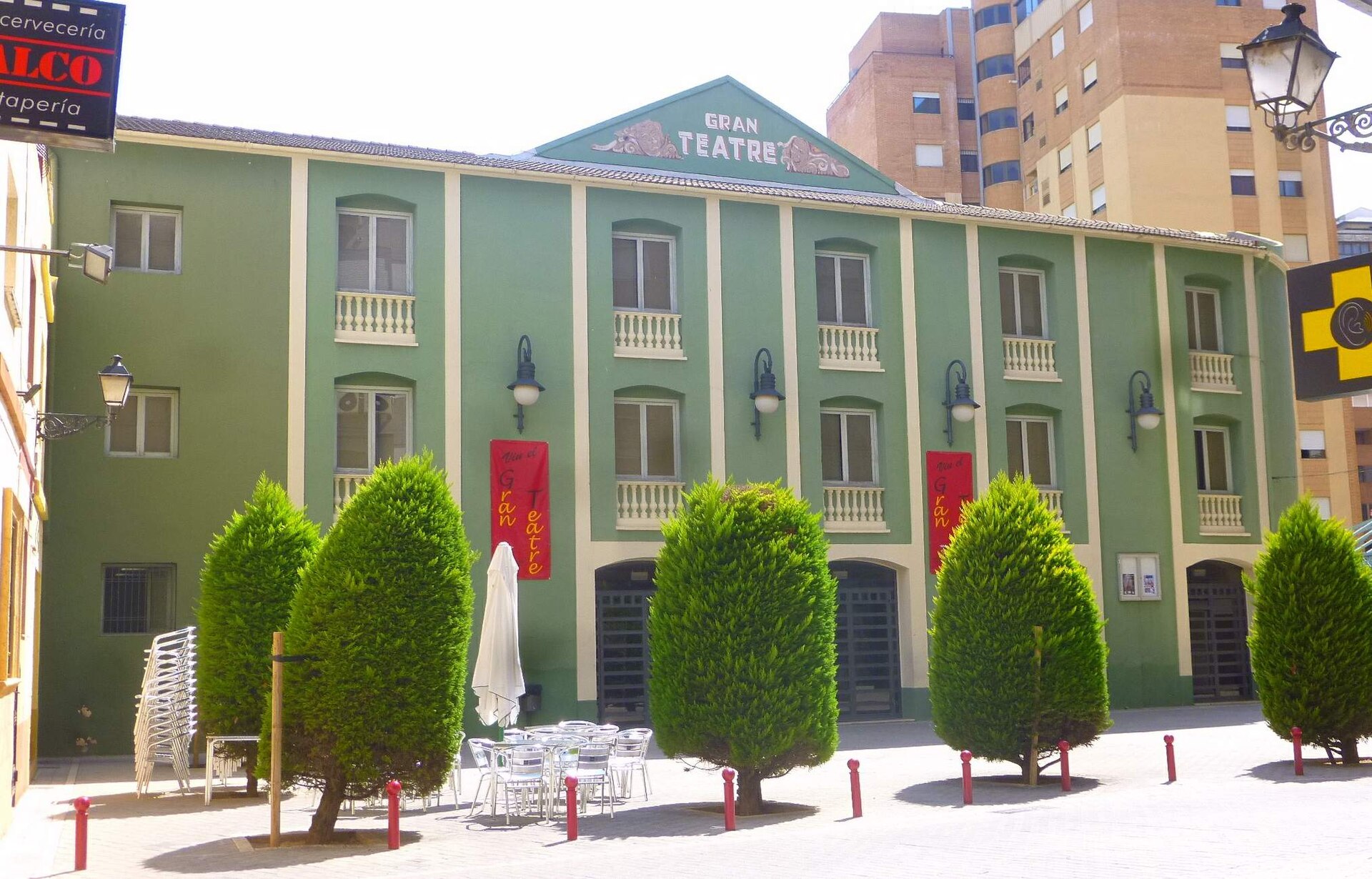
Gran Teatro de Alzira
Alzira
Gran Teatro de Alzira (Gran Teatre d'Alzira in Valencian) is the historic municipal theatre of Alzira, a town in the Valencia region of Spain. Built in the early 1920s as a combined theatre-and-circus venue, it has served as the town's main cultural stage for over a century, hosting everything from opera and zarzuela to concerts and civic gatherings. Who built the theatre, and when? The town council backed the project in the late 1910s, commissioning architect Emilio Ferrer to design the venue at an estimated cost of 75,000 pesetas, a substantial sum for the time. Construction itself was financed and carried out by Carlos Plasencia Contel, a local veterinarian, who in exchange secured the right to operate the theatre for 25 years before ownership would revert to the town. The theatre opened its doors on 29 September 1921, quickly becoming one of the town's landmark buildings, standing on what was then Plaça dels Porcs, today known as Plaça de l'Alborxí. Why was it called a theatre-circus? From the outset, the building was designed to serve more than one purpose. Its stage and seating could accommodate not only plays, operas, and zarzuelas, but also boxing matches, wrestling exhibitions, dances, and parties - which is why locals came to call it a "theatre-circus." That flexibility made the Gran Teatro a social hub for the town, not just a stage for performers. How did ownership and management change over time? After Carlos Plasencia's tenure, local businessman Miguel Zorita took over operations, followed by architect Juan Guardiola, whose family managed the venue until 1980. It was during the Guardiola era, in 1956, that an amphitheater section was added, giving the auditorium extra seating capacity in what is now known as the "preferencia" section. The town formally became the building's owner in 1967, though the Guardiola family continued running it under a concession arrangement for years afterward. What disasters has the theatre survived? The Gran Teatro's history has not been without setbacks. Flooding damaged the building in October 1982 and again in 1987, and a fire struck in 1985. A more serious fire broke out in January 2004, destroying the wooden rigging system above the stage. Despite these losses, the theatre was rebuilt each time - the first major post-war renovation took place between 1980 and 1982, after which the venue reopened to the public in 1982. What does the theatre look like after its most recent renovations? Following the 2004 fire, the wooden stage rigging was replaced with a metal structure fitted with motorized systems for handling scenery, fire-safety equipment was modernized, and the auditorium's decor was refreshed. In 2007, further work improved the hall's acoustics: acoustic panels were installed, the seating layout was reconfigured, and acoustic shells were added to the stage, noticeably improving sound quality for concerts. Today the auditorium seats around 890 people. What happens on the Gran Teatro's stage today? The theatre remains Alzira's principal cultural venue. It hosts theatrical productions, music concerts, zarzuela performances, and dance shows, and the hall is also used for civic purposes, including public assemblies and charity events. More than a century after it first opened, and despite the fires and floods along the way, the building still serves the same role it was built for in 1921. Frequently asked questions What is the Gran Teatro de Alzira? It is the historic municipal theatre of Alzira in the Valencia region, opened in 1921 and originally designed as a theatre-and-circus venue. Who designed and financed the theatre's construction? Architect Emilio Ferrer designed it, while local veterinarian Carlos Plasencia Contel financed the construction in exchange for a 25-year right to operate the venue. What disasters has the building suffered? The theatre was damaged by flooding in 1982 and 1987 and by fires in 1985 and 2004, being rebuilt after each incident. How many seats does the auditorium have today? Following renovations in 2004 and 2007, the Gran Teatro de Alzira seats around 890 people. What is the theatre used for now? It hosts theatrical productions, concerts, zarzuela performances, dance shows, and civic and charity events for the town of Alzira.
-
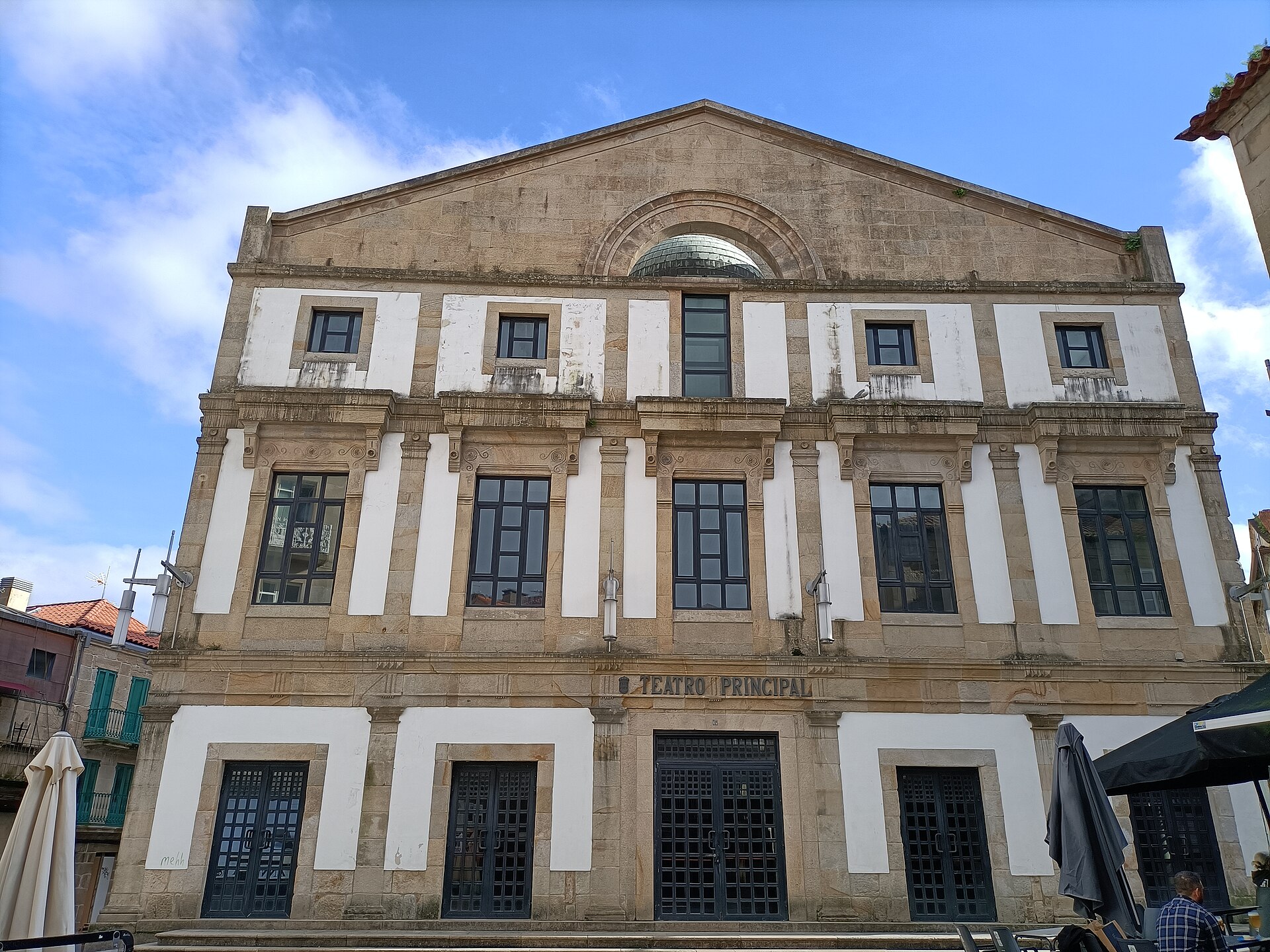
Pontevedra Principal Theatre
Pontevedra Principal Theatre stands in the historic heart of Pontevedra, the capital of the Galician province of the same name in northwestern Spain. Although "Teatro Principal" is a common name for theatres across Spain, this particular building holds a distinctive place in local history — it hosted the city's first-ever film screening and later survived one of the most dramatic destructions of any theatre in the region, a fire that gutted its interior before it rose again in a new form. What stood on this site before the theatre? The plot on which the theatre now stands has a history stretching back further than the building itself. From at least the late 13th century, the site was occupied by the parish church of San Bartolomé el Viejo, which served the local community for centuries before it was demolished in 1842. Decades later, the same plot was chosen as the site of the new theatre. When was the current building constructed? The Principal Theatre's present building dates from 1878. From its opening, it functioned as Pontevedra's main stage and performance hall, quickly becoming a central point of the city's cultural life. It was here, in April 1900, that Pontevedra saw its first-ever cinematographic screening, followed a few months later, in December of that same year, by the city's first public demonstration of a phonograph with a horn speaker. Why did the theatre lose its central role in the 20th century? As dedicated cinemas opened across Pontevedra — Cinema Victoria in 1943, the Malvar cinema in 1948, and Gónviz in 1970 — the Principal Theatre gradually lost its standing as the city's main venue. For a period, it operated as a discount cinema and later as a variety hall. The same building also housed the Liceo Casino, a local social club. What happened to the theatre in 1980? On 14 April 1980, an electrical short circuit in the Liceo Casino's bingo room started a fire that spread through the entire building. The blaze gutted the theatre almost completely, leaving only the main perimeter walls standing. The building then stood unused for years while plans for its reconstruction were drawn up. How was the theatre rebuilt? Architect José Ramón Miyer Caridad won the competition for the reconstruction design in 1985. The rebuilding took over a decade, and the theatre reopened to the public in January 1997. The new design combined decorative touches drawn from 19th-century theatre architecture with a modern, technically updated interior suited to contemporary staging needs. Where exactly is the theatre located? The Principal Theatre sits in Pontevedra's historic old town, in Galicia, in northwestern Spain. Its central location makes it easy to pair a visit with a walk through the rest of the old quarter, including its nearby churches and historic squares. Frequently asked questions When was the Pontevedra Principal Theatre built? The current building dates from 1878, replacing the parish church of San Bartolomé el Viejo, which had stood on the same site until it was demolished in 1842. What was the first cultural event held at the theatre? In April 1900, the theatre hosted Pontevedra's first-ever film screening, followed in December of the same year by the city's first phonograph demonstration. What happened to the theatre in 1980? On 14 April 1980, a fire that started in the bingo room of the Liceo Casino, housed in the same building, destroyed almost the entire interior, leaving only the main walls standing. When was the theatre rebuilt? Architect José Ramón Miyer Caridad won the reconstruction competition in 1985, and the rebuilt theatre reopened in January 1997. Is the Pontevedra Principal Theatre the same as other "Teatro Principal" venues in Spain? No — "Teatro Principal" is a common theatre name used in many Spanish cities. This particular building is located in the centre of Pontevedra, in Galicia.
-
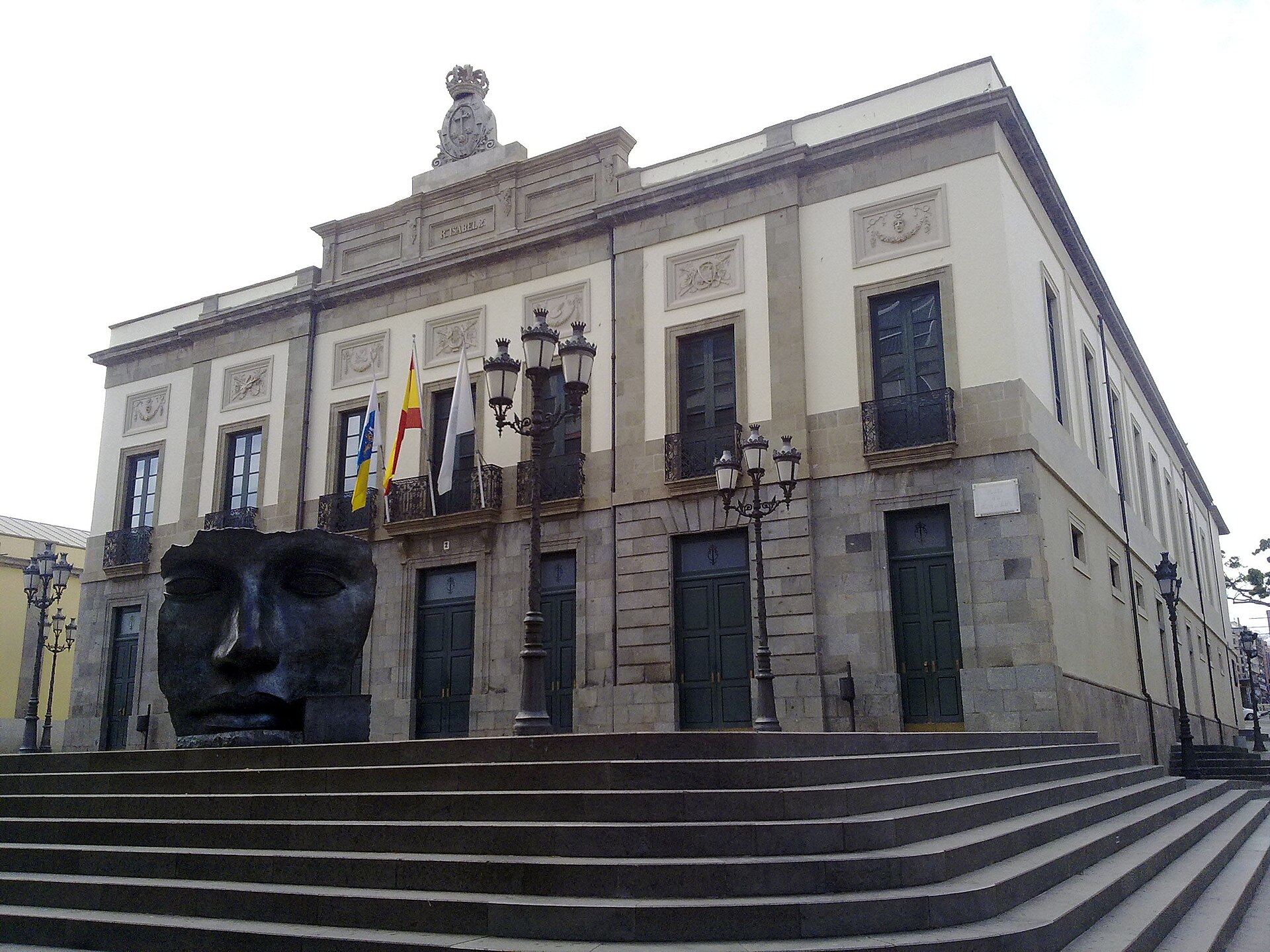
Teatro Guimerá
Teatro Guimerá is the oldest theatre still in operation in the Canary Islands, standing in the heart of Santa Cruz de Tenerife, the island's capital. The building went up in 1849 and formally opened its doors on 25 July 1851. It has remained the city's principal historic stage for drama and music ever since. Where does the theatre's name come from? The venue was originally called Teatro Municipal de Santa Cruz de Tenerife. It was renamed in 1923 in honour of Àngel Guimerà, a poet and playwright born in Santa Cruz de Tenerife who went on to become one of the leading figures of the Catalan literary revival, the Renaixença. Guimerà spent his early childhood on the island before his family moved to the Iberian Peninsula, where his writing career took shape. Who designed the building, and what stood there before? The design came from Manuel de Oraá, who was appointed by royal decree of Queen Isabella II as the Canary Islands' first provincial architect. The theatre rose on the former site of a Dominican convent dedicated to Our Lady of Consolation, torn down after Spain's ecclesiastical disentailment forced the friars to leave the building. What architectural style does it follow? The building follows the romantic-classicist theatre style typical of the 19th century, built on what is known as the Italian model: a horseshoe-shaped auditorium ringed by tiers of boxes, laid out on a rectangular plan across two storeys. The façade is topped with a pediment bearing Queen Isabella II's name and the city's coat of arms, a direct reminder of the era in which the theatre was raised. How has the building changed over time? The interior was modernised in 1911 under architect Antonio Pintor. A far more substantial intervention followed between 1989 and 1991, when architect Carlos Schwartz, commissioned by the Ministry of Public Works together with Santa Cruz city council, added a new rear wing with fourteen dressing rooms spread across two floors, while turning the third floor into a multipurpose hall known as Espacio Guimerá, seating around 80 people. Stage equipment was modernised at the same time. Queen Sofía attended the reopening in person, an occasion still marked today by a bronze plaque in the theatre's lobby. How many people can the auditorium hold? The main hall seats close to a thousand people, making it one of the largest historic stages in the Canary Islands. The smaller Espacio Guimerá hall, by contrast, is used for more intimate events for around eighty guests. Frequently Asked Questions When was Teatro Guimerá built? Construction dates to 1849, with the official opening following on 25 July 1851. Why is it called Guimerá? Since 1923 the name has honoured Àngel Guimerà, a playwright and poet born in Santa Cruz de Tenerife who became a leading figure of 19th-century Catalan literature. Is it really the oldest theatre in the Canary Islands? Yes, it is the oldest theatre in the archipelago that is still in active use. How many seats does it have? The main auditorium holds around a thousand spectators, while the smaller Espacio Guimerá room seats up to 80. Who was the architect? Manuel de Oraá, appointed the Canary Islands' first provincial architect by royal decree of Queen Isabella II.
-
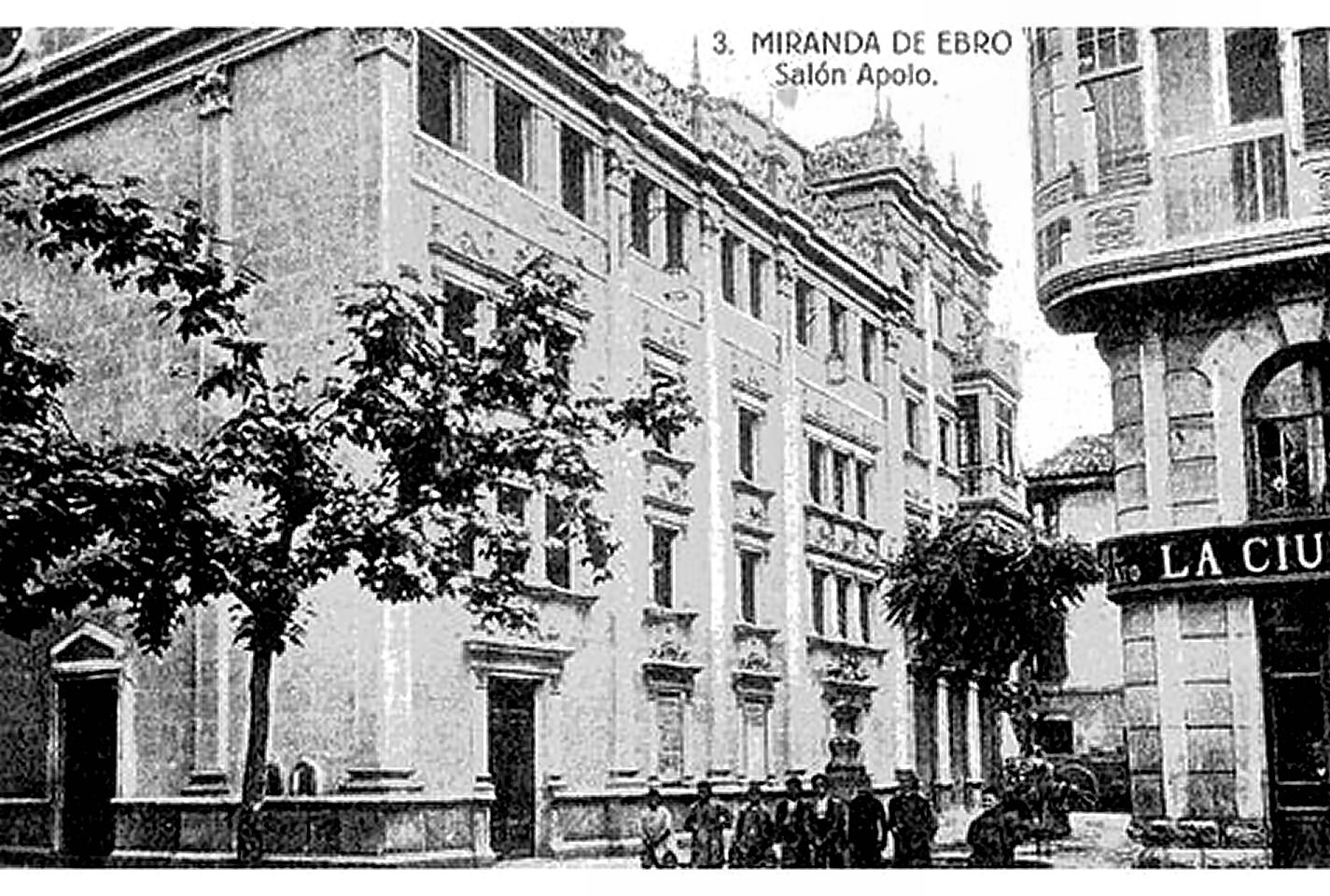
Teatro Apolo
Miranda de Ebro
Teatro Apolo is a historic theatre in the centre of Miranda de Ebro, a town in the province of Burgos, in Spain's Castile and León region. The building sits right next to the Santa María church, in the heart of the old town, and while it now serves as the town's main cultural venue, it actually spent close to a quarter of a century standing empty and falling apart. What stood on this spot before the theatre? The plot where Teatro Apolo now stands was previously home to a small mansion used as a leisure club. That building burned down on 28 December 1919. Rather than rebuild what had been there, the landowner, Dolores Ángel-Zorrilla de Velasco, chose to put up an entirely new building on the site, this time purpose-built for culture and entertainment. Who designed it, and when did it open? The commission went in 1920 to architect Fermín Álamo, who came from the neighbouring region of La Rioja. Work moved quickly enough that the theatre was ready for its grand opening just a year later, on 4 October 1921, with a staging of "El genio alegre" by the Álvarez Quintero brothers, well-known Spanish playwrights of the era. What architectural style does the building follow? Teatro Apolo blends neoclassical and neo-Renaissance elements. Local architecture historians generally rank it as the finest building raised in Miranda de Ebro during the first half of the 20th century, both for its style and for the quality of its construction. Why was the theatre closed for so long? Starting in 1987, the building began to fall into disrepair. For more than two decades it sat unused, gradually deteriorating with no clear purpose. That changed in 2010, when a full-scale restoration project finally got underway. After several years of work, the restored theatre reopened its doors to the public in 2015. What role does the building play today? Beyond its core role as a venue for plays, concerts and other cultural events run by the town, the building also houses the administrative office of Miranda de Ebro's culture and sports department, open to the public from 10:00 to 14:00. Locals sometimes still call it Teatro Salón Apolo, a nod to the name it carried a century ago. What should visitors know before dropping by? Teatro Apolo sits within walking distance of the old town's main landmarks, right beside the Santa María church, so a visit fits naturally into a walk through the historic centre. Its own story - from the 1919 fire, through the 1921 rebuild, to decades of neglect and the 2015 restoration - makes it a worthwhile stop for anyone curious about the fate of small-town Spanish theatres built in the early 20th century. Frequently asked questions Where exactly is Teatro Apolo located? In the historic centre of Miranda de Ebro, in the province of Burgos, right next to the Santa María church. When did the theatre open, and with what production? On 4 October 1921, with a staging of "El genio alegre" by the Álvarez Quintero brothers. Who designed the building? Architect Fermín Álamo, from La Rioja, commissioned by landowner Dolores Ángel-Zorrilla de Velasco. Why was the theatre closed for so many years? It fell into ruin from 1987 onward; a full restoration only began in 2010, and the theatre reopened in 2015. What architectural style does the theatre represent? A mix of neoclassical and neo-Renaissance elements, considered one of the most valuable buildings in Miranda de Ebro from the first half of the 20th century. Does the building serve any purpose beyond staging performances? Yes, it also houses the town's culture and sports administrative office, open from 10:00 to 14:00.
-
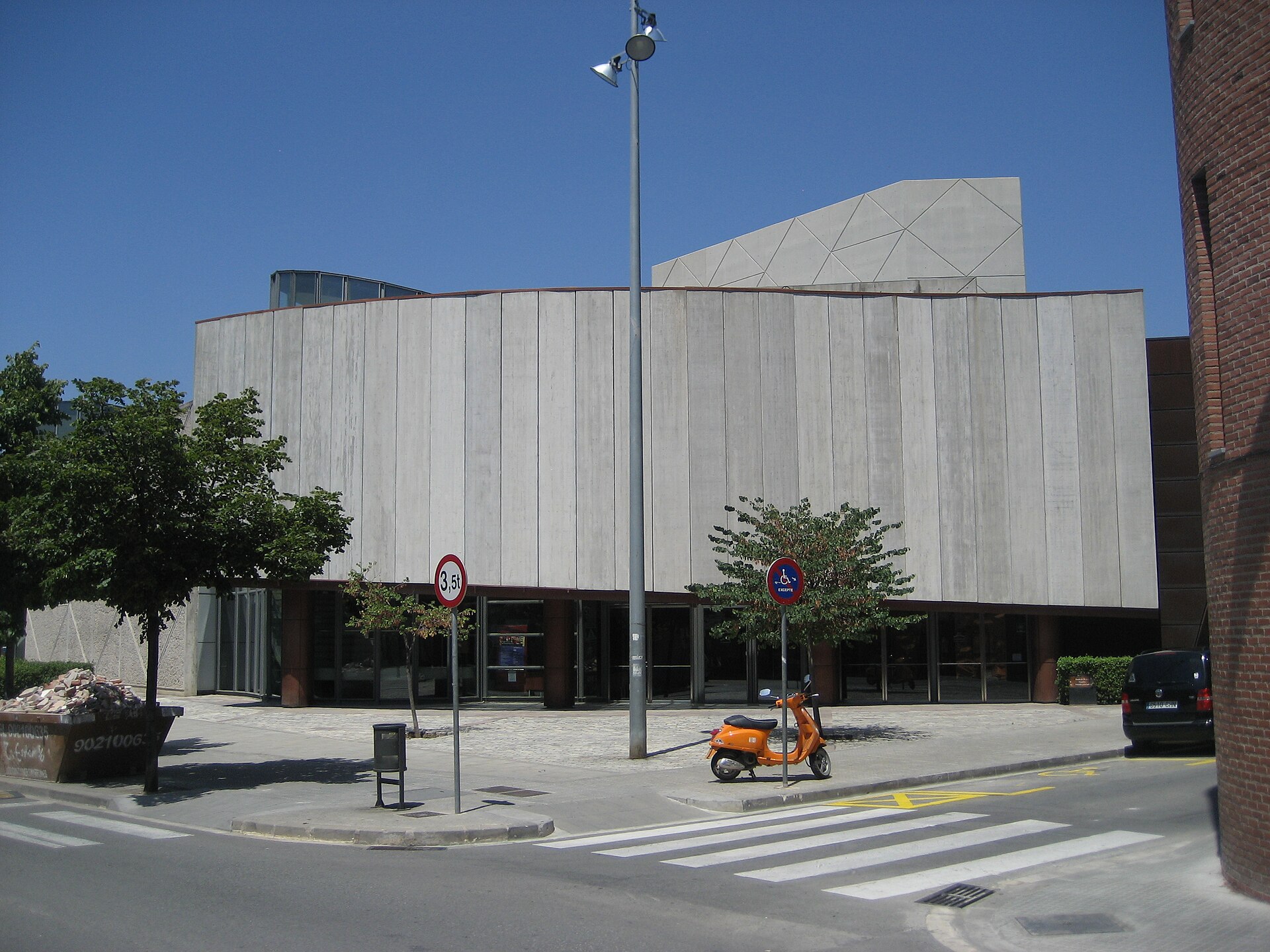
Teatre Auditori de Granollers
Granollers
Teatre Auditori de Granollers is the main theatre and concert venue of Granollers, a town in the Vallès Oriental region of Catalonia, located on Torras i Bages street. The building combines a drama theatre, a concert hall and a community meeting space, hosting a full season of plays, concerts and cultural events every year. How did the theatre come to be built? The plot where the Auditori now stands once served a very different purpose — it was the site of the town's municipal slaughterhouse, which closed down in 1987. The Granollers city council saw an opportunity to turn the freed-up land into a modern cultural facility that would build on the performing arts programming the town already offered. The project was entrusted to local architect Josep Maria Botey. Seventeen years passed between the moment Botey handed over the finished design to the council and the day the building actually opened its doors — a long timeline typical of large, municipally funded cultural projects built in stages. When did the theatre open? The official inauguration took place on 15 February 2002. The first production staged for the public was "Ricardo y Elena" by Carles Santos, a Catalan composer and stage artist known for experimental, music-driven theatrical works. From that opening night onward, the Auditori began regularly hosting drama, concerts and dance performances, quickly establishing itself as one of the recognised performing arts venues both regionally and across Catalonia. What can visitors find inside? The complex is made up of several distinct spaces, each suited to a different scale of event. The Main Hall (Sala Gran) seats up to 700 people and hosts the largest productions — theatre plays, symphonic concerts and opera. Next to it sits the Small Hall (Sala Petita), a more intimate 221-seat space used for smaller-scale drama, independent productions and chamber music. In 2010 a third, multipurpose room was added to the complex, the Sala Oberta, which holds up to 150 people and is used for workshops, rehearsals and smaller events. Who runs the theatre today? The venue is managed by Granollers Escena SL, a public company owned by the town council. This keeps the Auditori firmly rooted as a public institution, with a programme that mixes large touring productions with initiatives supporting local artists and cultural education for Granollers residents. Why combine a visit with a trip to Granollers? Granollers, the capital of the Vallès Oriental region, sits only a short distance from Barcelona, making it an easy day-trip destination that pairs a theatre visit with a walk through the town's historic centre. The Auditori's contemporary, functional architecture stands in deliberate contrast to the older buildings of the old town, giving visitors a clear sense of the town's mix of past and present. Frequently Asked Questions When did Teatre Auditori de Granollers open? The theatre was officially inaugurated on 15 February 2002, opening with a performance of "Ricardo y Elena" by Carles Santos. Who designed the building? The building was designed by architect Josep Maria Botey; seventeen years passed between the completed design and the theatre's opening. How many halls does the complex have, and what is their capacity? There are three halls: the Main Hall with 700 seats, the Small Hall with 221 seats, and the Sala Oberta, added in 2010, with room for 150 people. What stood on the site before the theatre was built? The site previously housed the town's municipal slaughterhouse, which closed in 1987. Who manages the Auditori today? It is run by Granollers Escena SL, a public company owned by the Granollers town council.
Earn badges for the places you visit
Download NextOnTrip, discover new places and check off your trails.