Culture and art in Spain
A guide to 354 Culture and art in Spain — with descriptions, photos and traveler visits from the NextOnTrip community. Locations spread across 167 cities and towns. Most visited by the community: Casa Núñez, Centro de Documentación de las Artes Escénicas de Andalucía, Centre de Documentació i Museu de les Arts Escèniques.
-
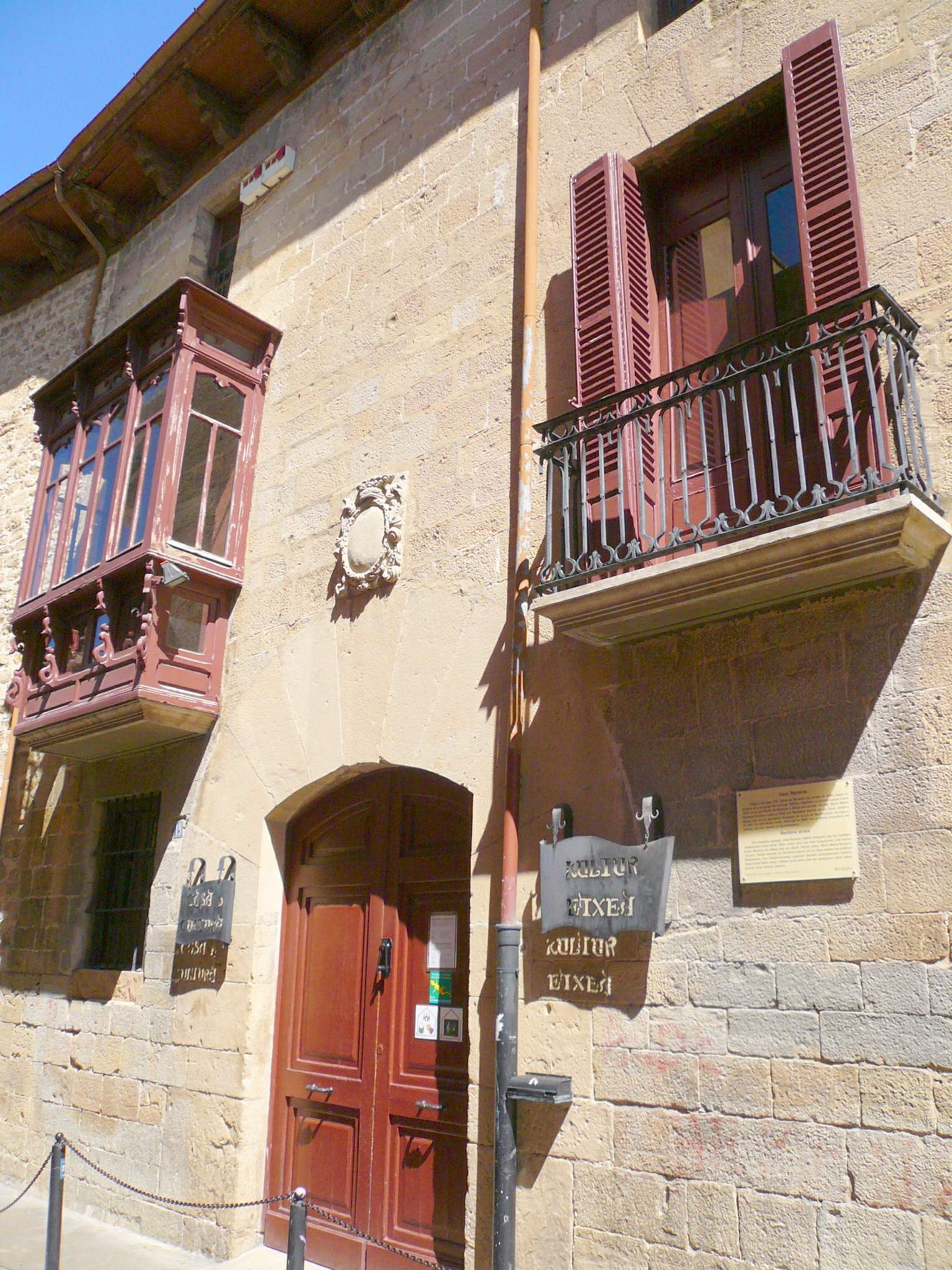
Casa de Cultura de Tafalla
Tafalla
Casa de Cultura de Tafalla is a historic cultural center in the heart of Tafalla, a town in the Navarre region of northern Spain. Built as a solid stone house at Calle de Túbal 19, it has served the town for decades as a hub for community gatherings, learning, and the arts. How did the building become a cultural center? The property passed into municipal hands through a donation by María Jesús Garcés de los Fayos La Rentería, who left it to the town of Tafalla following her death in February 1968. Since then, the building has adapted to the community's changing needs. Over the years it has housed a music school, the town's public library — which operated there until 1999 — and a children's play center that ran until 2005. Today it remains the headquarters for numerous local cultural associations, which carry out their activities in the building's assembly hall. What kind of activities and events happen there? Casa de Cultura de Tafalla continues to function as an active cultural venue. Its assembly hall hosts seasonal cycles of theater, music, and dance performances each spring and autumn, drawing local audiences throughout the year. Every October, the building hosts the International Choral Music Festival, one of the town's notable cultural fixtures. Film screenings take place every Thursday throughout the year except during summer, and the center regularly organizes lectures and talks covering art, history, heritage, and regional ethnography. Is it still the main cultural venue in Tafalla? Not exactly. In 2015, the town inaugurated a new facility, the Centro Cultural Tafalla-Kulturgunea, equipped with a 450-seat auditorium that took over as the primary venue for performing arts programming in Tafalla. Despite this shift, Casa de Cultura de Tafalla has not lost its relevance — it continues to operate as an active cultural center, home to local associations, and host to its own regular schedule of events alongside the newer, larger venue. Where is Casa de Cultura de Tafalla located? The building stands at Calle de Túbal 19, right in the center of Tafalla, making it easy to reach on foot from most parts of town. Visitors planning to attend an event are advised to contact the center directly to confirm the current program, since the schedule shifts seasonally — with particular emphasis on the spring and autumn cycles and the October choral festival. Frequently Asked Questions What is Casa de Cultura de Tafalla? It is a historic building in central Tafalla that functions as a cultural center — a venue for community events, arts programming, and the headquarters of several local cultural associations. What did the building used to be used for? It previously housed a music school, the town's public library (until 1999), and a children's play center (until 2005) before becoming a full-fledged cultural center. What events can visitors see there? Seasonal theater, music, and dance cycles in spring and autumn, the International Choral Music Festival in October, weekly film screenings (except in summer), and lectures on art, history, and regional heritage. Is it still the town's main cultural venue? Since 2015, the main stage role has shifted to the newer Centro Cultural Tafalla-Kulturgunea, which has a 450-seat auditorium, but Casa de Cultura remains an active cultural center and association headquarters in its own right.
-
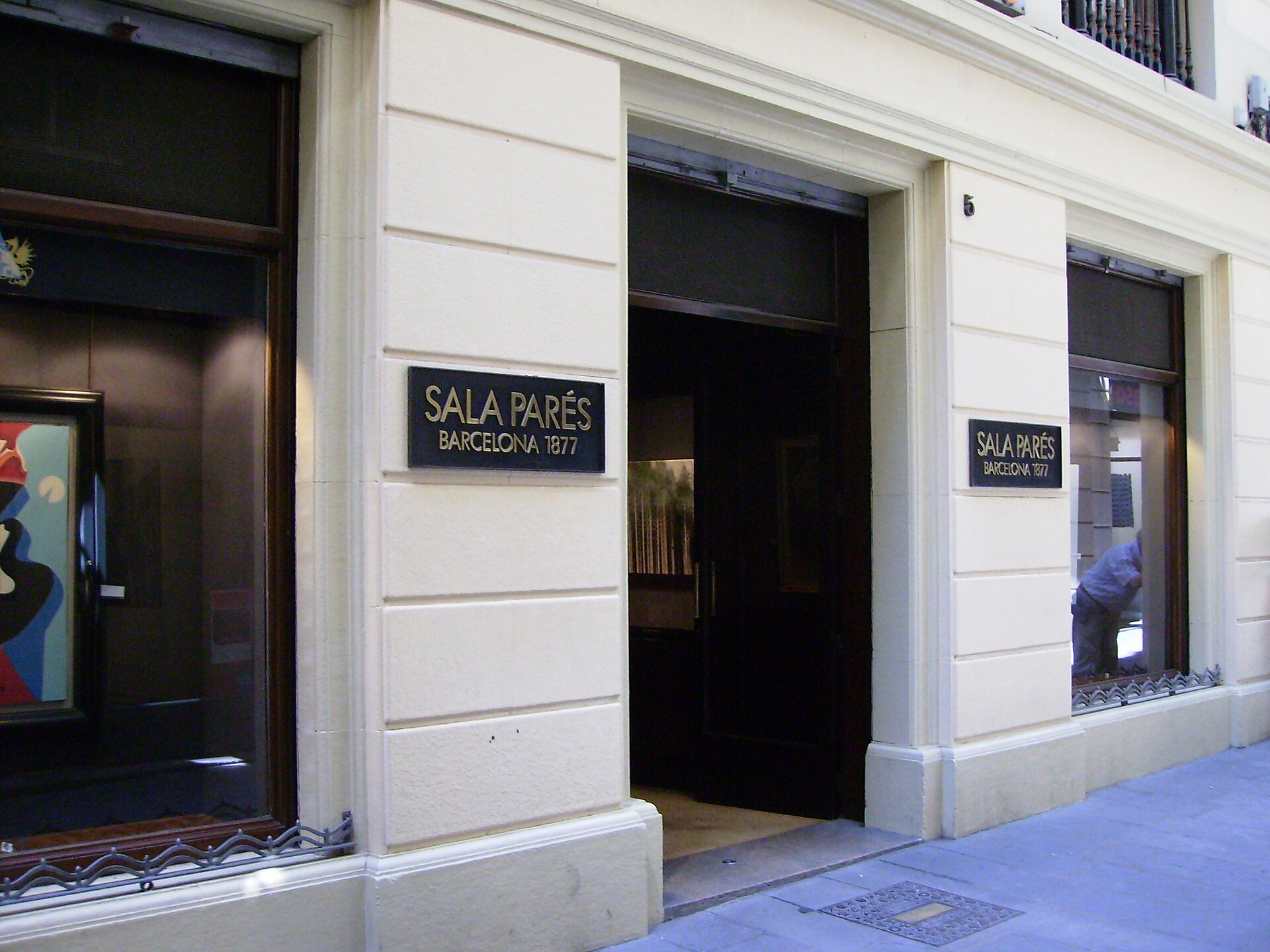
Sala Peres
Barcelona
Sala Parés is the oldest art gallery in Barcelona, and a key stop for anyone interested in the city's cultural history. It began life in 1840 as an art supply store founded by Joan Parés, before formally becoming an art gallery in 1877. It has operated continuously ever since, making it one of the longest-running venues of its kind in Spain. What will you see at Sala Parés? Sala Parés is a working gallery rather than a museum, which means its displays rotate with new exhibitions rather than staying fixed. Visitors can expect to encounter paintings and other visual art in a space that is itself a living piece of Barcelona's art-dealing history. The fact that it has operated without interruption since the 19th century gives a visit a double appeal: it's not only about the art on the walls but also about stepping into a venue that has quietly shaped the city's art scene for well over a century. How do you get to Sala Parés? The gallery sits in central Barcelona, within easy walking distance for anyone exploring the city's historic core. The most convenient way to reach it is by public transport — metro or bus into the city centre, followed by a short walk. For travellers already touring the old town, Sala Parés fits naturally into a walking route alongside other cultural sights in the central districts. When should you visit? Because Sala Parés runs a rotating exhibition programme, it's worth checking its current schedule and opening hours online before you go — what's on display, and when the space is open, can shift depending on the exhibition running at the time. Visiting during regular daytime hours, similar to those of other galleries in the city centre, gives you the best chance of viewing the current show at a relaxed pace. Frequently asked questions Is Sala Parés a museum? No — it's an active art gallery with a rotating exhibition programme, not a fixed museum collection. What's on show changes as new exhibitions open. When was Sala Parés founded? Its history goes back to 1840, when Joan Parés opened an art supply store on the site. It formally became a gallery in 1877. Why does Sala Parés matter to Barcelona? It's the city's oldest art gallery, having operated continuously since the 19th century — a rare, direct link to the long development of Barcelona's art scene. Is there an entrance fee? Access and any fees depend on the specific exhibition running at the time, so it's best to check the gallery's website shortly before your visit.
-
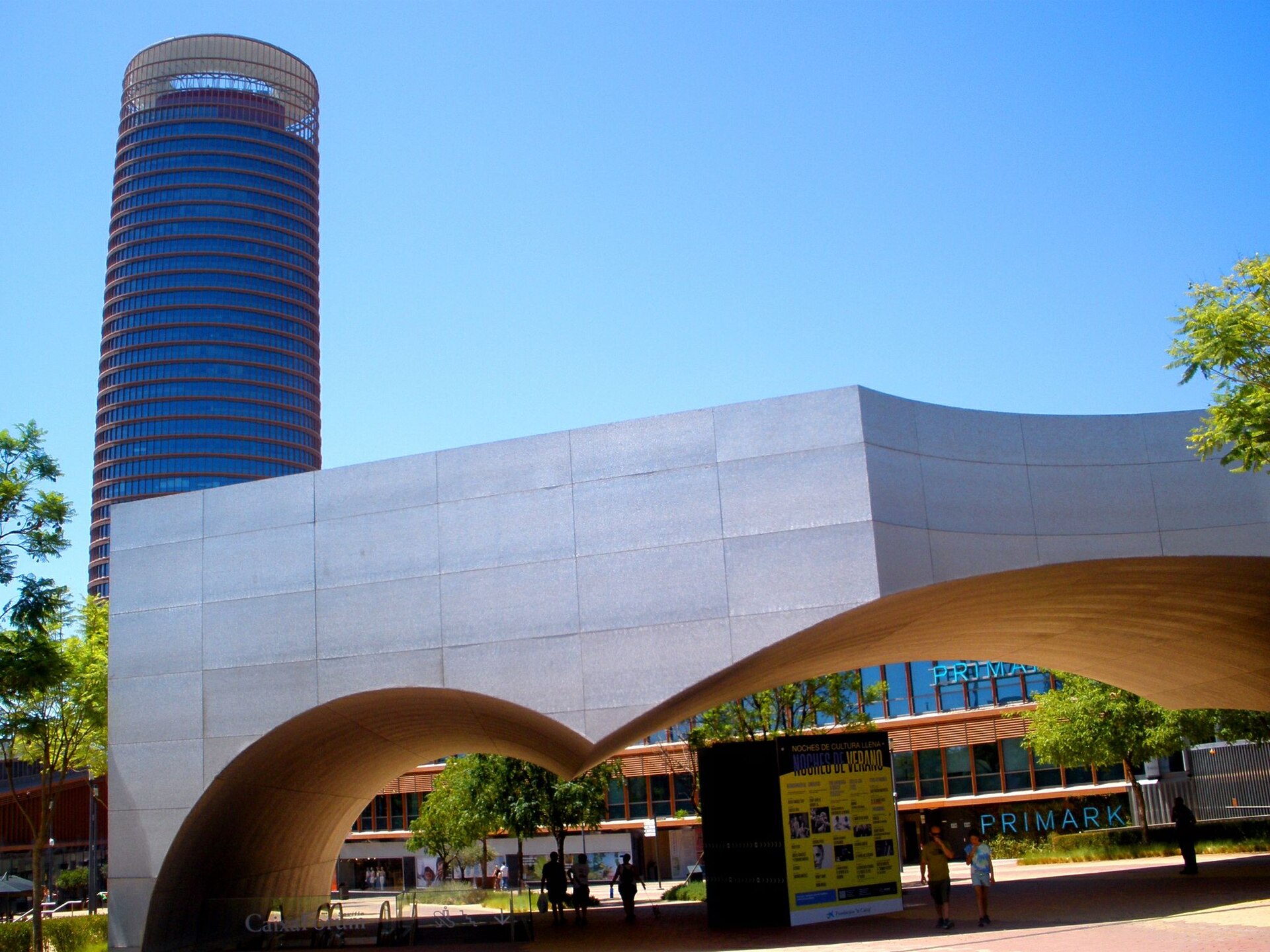
CaixaForum Sevilla
Sewilla
CaixaForum Sevilla is a contemporary cultural centre in Seville and part of the nationwide CaixaForum network run by the "la Caixa" Foundation. It sits in the Puerta Triana area, inside the Torre Sevilla complex, right at the point where the historic city centre, the Isla de la Cartuja and the lively Triana neighbourhood meet. The location is easy to reach on foot from central Seville, making it a natural stop for visitors already exploring the riverside. What is the building like? The space was designed by Seville-born architect Guillermo Vázquez Consuegra, who adapted the lower levels of the Torre Sevilla complex — originally planned as a convention centre — into exhibition and workshop halls. CaixaForum Sevilla opened its doors on 3 March 2017, joining sister venues that were already established in cities such as Barcelona, Madrid, Zaragoza and Palma de Mallorca. What can you see inside? There is no permanent collection here — the programme is built entirely around temporary exhibitions that rotate several times a year, covering contemporary and historical art, science, photography and anthropology. Shows are designed for both adult visitors and families, with the centre regularly running themed guided tours, educational workshops and children's activities tied to whatever exhibition is currently on. Past programming has included a paleontology exhibition featuring original fossils and full-scale replicas of dinosaurs from Patagonia, as well as a show exploring the history of home movies and family memory captured on film. How do you get there? The easiest way is on foot from Seville's historic centre — crossing the bridge into Triana takes roughly 15–20 minutes. The centre is also close to public transport stops serving the Puerta Triana and Isla de la Cartuja area, so it pairs easily with nearby sights such as the Navigation Pavilion or the former Expo '92 grounds. When should you visit? CaixaForum Sevilla is open every day of the year except 25 December and 1 and 6 January. Opening hours are extended during the summer months compared with the rest of the year, giving visitors the flexibility to come either in the morning or later in the evening and avoid the peak heat typical of an Andalusian summer. It's worth checking the current exhibition calendar before your trip, since the programme changes throughout the year and some shows require booking tickets in advance. How much does it cost? Access to the building and some activities is often free, while temporary exhibitions usually carry a modest admission fee. CaixaBank customers and children under 16 frequently get free entry to selected exhibitions, so it's worth checking eligibility when buying tickets. Frequently asked questions Does CaixaForum Sevilla have a permanent exhibition? No — the centre runs entirely on temporary exhibitions that change several times a year, so what you'll see depends on when you visit. How much time should I plan for a visit? A standard visit covering one exhibition and a walk through the building usually takes 1.5–2 hours, longer if you join a workshop or a guided tour. Is it suitable for children? Yes, the centre regularly organises family workshops and activities linked to the current exhibition, and several shows are designed to be interactive and educational. Do I need to book tickets in advance? For popular temporary exhibitions it's recommended to buy tickets online ahead of time, especially on weekends and during the summer holiday season, when capacity can be limited.
-
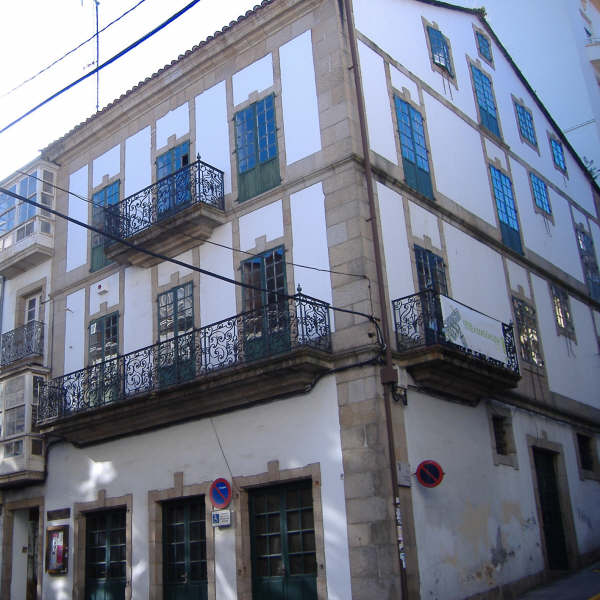
Ateneo Ferrolán
Ferrol
Ateneo Ferrolán is one of the oldest cultural institutions in Ferrol, a naval city in Galicia, housed in a historic building in the Magdalena district. The society was founded in 1879 by a circle of local intellectuals led by Avelino Comerma y Batalla, at a time when Ferrol was flourishing as an industrial and naval hub. For more than a century and a half, the Ateneo has served as a venue for debate, exhibitions and cultural life in Galician language and identity — and its own headquarters is a heritage building worth seeing in its own right. Where is Ateneo Ferrolán located? The building stands on Calle Magdalena, in the heart of the district of the same name — the most representative part of historic Ferrol, laid out during the golden age of the local naval shipyard. The Ateneo occupies two adjoining townhouses, numbers 202 and 204, which were joined into a single complex over the following decades. What does the building look like? The older and architecturally more valuable of the two houses, number 202, was built in 1762 as a residence for naval officers. It follows the classicist style typical of Magdalena's townhouses from that era: rendered masonry walls, granite surrounds on windows, doors, corners and cornices, cantilevered balconies, and a symmetrical main façade. A striking decorative touch comes from the wrought-iron balcony railings in a rococo taste, lending the building a refined, aristocratic air. The property's fate changed after 1887, when its owner, Pedro Carvajal de Castro, died without heirs and the house passed into municipal ownership. For decades afterward, until 1953, it served as a courthouse. Only later did it become the seat of the Ateneo Ferrolano. The building underwent restoration work in 1985 and again in 2012, preserving its historic character while adapting the interior to the needs of a working cultural institution. What can visitors see and do here? The Ateneo Ferrolán runs an active cultural programme — debates, film screenings, concerts and temporary exhibitions held in a dedicated exhibition hall that showcases work by local and regional artists. Much of the activity takes place in Galician, reflecting the association's long-standing role as a guardian of regional identity. The building also houses a library and newspaper archive (hemeroteca) open to visitors and researchers, recognised by Galicia's Council of Culture and Sport as a collection of special regional interest. When is the best time to visit? The ideal time to come is whenever a temporary exhibition or cultural event is running in the hall — it's worth checking the current programme before arriving. The façade and courtyard can be admired year-round, and a walk through the surrounding Magdalena district reveals further examples of Ferrol's historic townhouses. How to get there? Ateneo Ferrolán sits in the city centre, within easy walking distance of other landmarks in the Magdalena district. Local bus routes serve the area, and the building is only a short walk from Ferrol's railway station. Frequently asked questions What is Ateneo Ferrolán? It is a historic cultural society founded in 1879 that promotes Galician culture through debates, exhibitions, concerts and film screenings. Can the building be visited? Yes — the exhibition hall and public events are open to visitors; it's best to check the current schedule beforehand. How old is the building? The older section, number 202, dates back to 1762, when it was built as a residence for naval officers. Is admission free? Access to exhibitions and events depends on the specific programme — some activities are open to the public, while others may require a ticket.
-
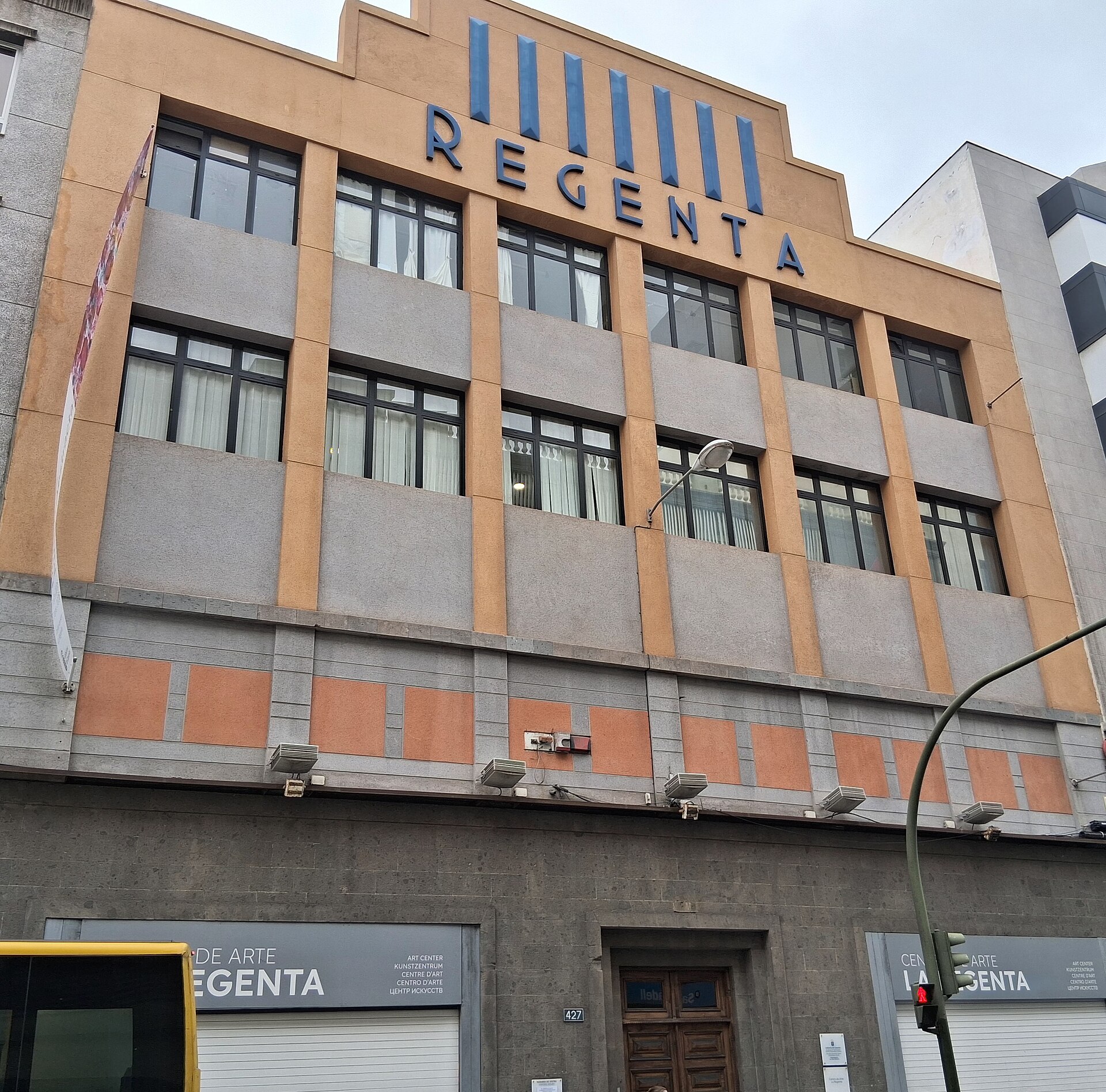
Centro de Arte la Regenta
Las Palmas na wyspie Gran Canaria
Centro de Arte La Regenta is a contemporary art venue in Las Palmas de Gran Canaria, run by the Canary Islands government. It occupies a building on León y Castillo street, in an easy-to-reach part of the city, and has long served as one of the archipelago's main spaces for showing art produced on the islands. What kind of place is this? La Regenta isn't a museum with a fixed permanent collection — it's an exhibition centre, meaning the program changes several times a year, with individual shows typically running anywhere from a few weeks to a few months. The institution focuses on Canarian artists and on placing the islands' art scene within the broader context of Spanish and international art. The centre has already marked a quarter-century of activity, celebrating with an exhibition bringing together more than sixty works previously shown in its rooms, alongside a series of talks with artists, critics and curators discussing La Regenta's role in the recent art history of the Canary Islands. What exhibitions can you expect to see? The programme ranges widely — from retrospectives dedicated to key figures of Canarian post-war modernism, to shows built around artistic collectives, to installations that respond directly to local events. Recent exhibitions have included a show marking the centenary of Manolo Millares, one of Gran Canaria's most important painters, known for textured compositions drawing on Guanche culture. The centre has also hosted a retrospective of ZAJ, the experimental art group founded by Juan Hidalgo, and an installation by Cristina Deniz Sosa built from charred pine trees left over from the 2019 wildfire that burned large areas of Gran Canaria. It's a good illustration of how the centre links art history with current issues on the island. How do you get there? The building sits on León y Castillo, one of the main streets running through Las Palmas, so it's easy to reach by public bus from the city centre — several lines stop nearby. On foot from the historic old town or from Las Canteras beach, the walk typically takes somewhere between ten and twenty-five minutes, depending on your starting point. When is the best time to visit? Entry to exhibitions is usually free, which makes La Regenta an easy addition to a day of sightseeing without needing advance booking. It's still worth checking the current schedule before visiting, since there can be short gaps between one exhibition closing and the next one opening. For art enthusiasts, openings and the accompanying artist talks or panel discussions — a regular part of the centre's educational programme — are often the most rewarding time to go. Frequently asked questions Is Centro de Arte La Regenta a museum with a permanent collection? No — it's a temporary exhibition centre. The programme changes throughout the year, so each visit shows something different. Who runs the centre? It's an institution of the Canary Islands regional government and operates as one of the main public exhibition spaces in Las Palmas de Gran Canaria. Is admission free? Exhibitions are usually free to visit, though it's worth checking current details before your trip, as terms can vary by exhibition. Which artists are typically featured? The programme focuses mainly on artists connected to the Canary Islands, including the legacy of Manolo Millares and the ZAJ group, as well as younger artists responding to local themes such as wildfires and the island's changing landscape.
-

Pueblo Canario
Pueblo Canario is a purpose-built "traditional village" in the heart of Las Palmas de Gran Canaria, where Canarian folk architecture, craft shops and live folklore shows come together inside the leafy Parque Doramas. What exactly is Pueblo Canario Despite its name, Pueblo Canario isn't an old settlement — it's a carefully designed cultural complex built to showcase the character of traditional Canarian architecture without having to travel across the archipelago. The idea came from painter Néstor Martín-Fernández de la Torre, one of the most influential figures in the cultural history of the Canary Islands, who first proposed the project in 1937 as a "living exhibition" of local customs and craftsmanship. His brother, architect Miguel Martín-Fernández de la Torre, turned the concept into reality, designing the buildings in the neo-Canarian style and closely following the forms, materials and proportions of the islands' vernacular architecture. The complex officially opened in 1956 and has remained one of the most distinctive cultural spots in the Gran Canarian capital ever since. Where to find it Pueblo Canario sits inside Parque Doramas, right next to the landmark Hotel Santa Catalina, in central Las Palmas de Gran Canaria. The park itself is named after Doramas, an aboriginal Canarian chieftain and warrior who led local resistance against the Spanish conquest of the island. Its current layout dates back to the 1950s, when the city council commissioned architect Miguel Martín-Fernández de la Torre — again — to redesign the grounds together with landscape architect Nicolau Maria Rubió i Tudurí, who came from Menorca. What there is to see and do At the centre of the complex is a large square lined with workshops and shops selling Canarian handicrafts, from pottery to lacework, making it a good spot to pick up a genuine local souvenir. The same square regularly hosts folklore performances featuring traditional island music and dance — one of the easiest ways to catch a live show of this kind without leaving the city. The site is also home to a bodegón, a local restaurant serving traditional Canarian dishes, and to the Museo Néstor, dedicated to the work of the artist who first dreamed up the village. Who should visit Pueblo Canario works well for travellers who want a taste of Canarian culture without venturing far from central Las Palmas — families, craft lovers, and anyone hoping to catch a folklore show in a relaxed, compact setting. It also makes a natural stop for visitors already exploring Parque Doramas or the area around Hotel Santa Catalina, pairing a stroll through the gardens with a look at local traditions. Frequently asked questions What is Pueblo Canario? It's a complex of buildings built in traditional Canarian architectural style, created to display local customs, crafts and folklore. It isn't a genuine historic village but a cultural project realised between the 1930s and 1950s in Las Palmas de Gran Canaria. Where is Pueblo Canario located? It stands inside Parque Doramas in Las Palmas de Gran Canaria, next to Hotel Santa Catalina — a central, green part of the city that's easy to reach for anyone visiting the Gran Canarian capital. Who built Pueblo Canario? Painter Néstor Martín-Fernández de la Torre conceived the project in 1937, and his brother, architect Miguel Martín-Fernández de la Torre, designed the buildings in neo-Canarian style. The complex opened to the public in 1956. What can visitors buy or see there? The central square is surrounded by shops selling local handicrafts such as pottery and lacework, and it regularly hosts folklore shows with traditional music and dance. The site also houses the Museo Néstor and a bodegón serving Canarian cuisine.
-
Teatro Alcázar
Madrid
Teatro Alcázar stands in Madrid on Calle de Alcalá, one of the Spanish capital's best-known and longest streets. The building was designed by architect Eduardo Sánchez Eznarriaga and opened its doors in 1925. Where is Teatro Alcázar located? The theatre sits on Calle de Alcalá, a major thoroughfare running through central Madrid. Its geographic coordinates (roughly 40.4178° N, 3.6990° W) place it firmly within the historic core of the city, along a street closely tied to commerce, traffic and entertainment venues alike. Is it easy to find as a visitor? Because Calle de Alcalá is one of the main streets travellers use to move between Madrid's central landmarks, the theatre works as a recognisable stop along that route rather than an address hidden away on a side street. Who designed the building? The theatre was designed by architect Eduardo Sánchez Eznarriaga. Its construction in 1925 falls within a period when Madrid was adding several new stages built specifically for musical and revue-style entertainment, reflecting the growing appetite for lighter theatrical genres at the time. How did the theatre open? Teatro Alcázar welcomed its first audience on 27 January 1925. The opening production was the operetta Madame Pompadour. What is an operetta, and why does the choice matter? An operetta is a musical genre blending singing, spoken dialogue and dance, generally lighter in tone than grand opera — a format well suited to the entertainment theatres of the early twentieth century. Choosing Madame Pompadour as the inaugural show signals the kind of repertoire the new venue was built for: musical entertainment aimed at a broad audience rather than heavier dramatic works. Who wrote the opening production? The music for Madame Pompadour came from Leo Fall, a composer well regarded in operetta circles during his career. The fact that his work was the very first staged at Teatro Alcázar ties the venue's history to the tradition of musical theatre from its opening night onward. Frequently asked questions When was Teatro Alcázar built? The theatre was founded in 1925. Who was the architect? The building was designed by Eduardo Sánchez Eznarriaga. Where in Madrid is the theatre located? On Calle de Alcalá, one of the main streets in central Madrid. What was the first show staged there? On 27 January 1925, the operetta Madame Pompadour by Leo Fall opened the theatre — its very first production. Is Teatro Alcázar a musical theatre? Its opening with an operetta points to an original repertoire focused on musical stage productions.
-
Gran Teatre de la Passió
Cervera
Gran Teatre de la Passió is a purpose-built theatre in Cervera, a small town in the Segarra region of Lleida province, in inland Catalonia. It exists for one reason: to host La Passió de Cervera, a centuries-old Passion play that remains one of Spain's most remarkable living theatrical traditions. What is the Gran Teatre de la Passió? It is a large performance hall designed specifically around the staging needs of a religious drama. The building is protected as a local cultural heritage asset, and the play performed inside it has been recognised as a treasure of the intangible cultural heritage of Catalonia and Andorra. How old is the Passió tradition? Written evidence of Passion performances in Cervera goes back to 1477, recorded in the town's account books kept in the Segarra county archive. The same archive holds the original 1534 manuscript of the play, penned by two local priests, Pere Ponç and Baltasar Sança. Over the following centuries the townspeople kept the tradition alive, generation after generation, updating staging and costume while preserving its communal and devotional core. How did the theatre come to be built? For most of its history the play moved between different venues around town. That changed in 1962, when the brotherhood responsible for organising the Passió voted unanimously to build a dedicated theatre. Construction took several years, and the building opened its doors on 12 March 1967, quickly becoming one of the most distinctive performance venues in the region. What makes the building architecturally notable? The theatre covers roughly 4,200 square metres. Its interior is dominated by a semicircular auditorium seating 1,701 people, an unusually large capacity for a town of Cervera's size. The central stage spans 20 metres, and when the side stages are included, the total stage opening reaches 40 metres — reportedly the widest in Spain and the third-widest in Europe. Why does this matter for visitors? Few places in Europe can claim an unbroken, centuries-long tradition of staging a Passion play in a theatre built specifically for that purpose. Visitors interested in religious theatre, local heritage or unusual architecture can tour the building even outside performance season and learn how closely it is tied to community life in Cervera. Frequently asked questions Where is the Gran Teatre de la Passió located? In Cervera, in the Segarra region of Lleida province, in Catalonia, north-eastern Spain. When did the theatre open? On 12 March 1967, following a 1962 decision to build it. How many seats does the auditorium have? The semicircular auditorium seats 1,701 people. What tradition is tied to this venue? La Passió de Cervera, a Passion play documented since 1477 and recognised as a treasure of Catalonia and Andorra's intangible cultural heritage. Is the stage unusual in any way? Yes — counting the central and side stages together, the opening reaches 40 metres, making it the largest stage of its kind in Spain and third-largest in Europe.
-
Teatro Auditorio San Lorenzo de El Escorial
San Lorenzo de El Escorial
Teatro Auditorio San Lorenzo de El Escorial is a contemporary performing-arts venue in the town of San Lorenzo de El Escorial, in the Madrid region, regarded as one of the most technologically advanced cultural buildings in Spain. It should not be confused with the eighteenth-century Real Coliseo Carlos III, a separate baroque theatre located in the same town — the two are entirely different venues from different eras. When was the Teatro Auditorio built? The building was opened by the Spanish Royal Family on 3 July 2006. The inauguration featured a music, opera and dance festival performed by the orchestra and choir of the Maggio Musicale Fiorentino, conducted by Riccardo Muti. Since then, the venue has served as the town's main cultural stage, hosting theatre productions, concerts and dance performances. What does the building look like? The design was created by the architecture studio Picado de Blas. Its façades are clad in granite in beige-yellow and grey tones, chosen to let the structure blend into the surrounding landscape while still offering a clear modern contrast with the nearby historic Monastery of El Escorial. The project received the 2008 Stone Architecture Award in recognition of this approach. The building has ten levels, eight of them underground, since construction required cutting into the rock the site stands on. The whole complex covers more than 25,000 square metres. What facilities does it offer? The venue has a large main hall seating 1,200 people and a smaller chamber hall for 300. Besides the two stages, the building includes rehearsal rooms, spaces for parallel activities such as workshops or exhibitions, outdoor terraces, a restaurant, three cafeterias and two cloakrooms for visitors. This range of facilities allows several cultural events to run at the same time. Why is it worth a visit? Beyond its artistic programme — plays, symphonic concerts, opera and dance — the building itself is an architectural attraction. It is worth noticing how the granite front follows the rocky terrain the theatre is built into, rather than simply sitting on top of it. Frequently asked questions Is the Teatro Auditorio the same as the Real Coliseo Carlos III? No. The Real Coliseo Carlos III is an eighteenth-century baroque theatre in the same town, while the Teatro Auditorio San Lorenzo de El Escorial is a separate, modern building opened in 2006. They are two distinct cultural venues. When did the theatre open? On 3 July 2006, with the Spanish Royal Family in attendance. Who designed the building? The architecture studio Picado de Blas, and the project won the Stone Architecture Award in 2008. How many seats does the main hall have? The large hall seats 1,200 people, and the chamber hall seats 300. What can visitors see at the theatre? The programme includes plays, concerts, opera and dance performances — the venue has regularly hosted cultural productions since its 2006 inauguration.
-
Teatre Principal
Olot
Teatre Principal is Olot's historic municipal theatre, standing on Passeig d'en Blay in the heart of the town. In December 2020 it was declared a National Cultural Heritage asset in the Historic Monument category, an official recognition of its architectural and social value within Catalonia. How far back does the theatre's story go? A public stage on this site, at the old Firal grounds, is recorded as early as 1769, when its takings were meant to help fund the bell tower of the Santa Maria del Tura church. As Olot grew, a bigger building went up between 1842 and 1845 to meet the demand for a proper civic venue. What happened during the Carlist Wars? The theatre's history was far from peaceful. In 1874, during the Third Carlist War, the building was set on fire, an act attributed to troops under Carlist general Savalls. The town council chose to rebuild rather than abandon the site, and construction of a third theatre ran from 1877 to 1887 under architect Martí Sureda i Deulovol. It opened to the public in 1887, though finishing work continued afterward. What does the building look like today? The façade visitors see today took shape at the turn of the 20th century, blending eclectic lines with neoclassical touches: three large arches and pediment-topped openings give it a formal presence on the street. Inside, the horseshoe-shaped auditorium typical of 19th-century theatres survives, along with three tiers of seating, a decorated foyer, and a grand main staircase. Interior decoration work continued into the 1920s. Has the theatre always served the same purpose? Not entirely. In 1962 it was renovated to also work as a cinema, and some of the box seating was removed to fit a larger audience. Further conservation and modernization campaigns followed in the 1980s and 1990s, and a master plan for its long-term protection and use was adopted after 2003. Why is it worth a visit? Teatre Principal is one of the few theatres in the Garrotxa region that has operated continuously since the 19th century, and it still hosts plays, concerts, and cultural events for locals and visitors of all ages. Its 2020 heritage listing, granted alongside the nearby Hospici d'Olot, confirmed its place among the town's most significant architectural landmarks. Frequently asked questions Where exactly is Teatre Principal located in Olot? The building stands at Passeig d'en Blay (also known as Passeig del Firal) number 5, in the town's historic centre. Who designed the current theatre building? The third and current building was designed between 1877 and 1887 by architect Martí Sureda i Deulovol, with the façade refined in the early 1900s. Is the theatre officially protected? Yes. It was declared a National Cultural Heritage asset in the Historic Monument category in December 2020. Is the theatre still in use? Yes, it operates as a public venue with an ongoing programme of theatre, concerts, and cultural events.
-
Auditorio Parque de la Constitución
Marbella
Auditorio Parque de la Constitución is an open-air theatre in Marbella, on Spain's Costa del Sol in the province of Málaga, Andalusia. The stage sits at the heart of the city park of the same name and has served for decades as the venue for Marbella's outdoor summer concerts and shows. Where exactly is the auditorium? The venue stands inside Parque de la Constitución, one of Marbella's best-loved gardens, a short walk from the town centre, at coordinates 36.50822, -4.89133. The park around the stage is planted with cypresses, palm trees, geraniums, bougainvillea and jasmine, so simply walking up to the auditorium already feels like a stroll through a landscaped garden. What is the history behind the park and the stage? Accounts of when the garden itself was first laid out differ — some sources point to the mid-1950s, others to the mid-1980s, with the land originally forming part of a private estate. What is clear is the turning point for its public life: in 1987 the regional government, the Junta de Andalucía, formally handed the park over to the city, opening the way for it to become a public space and, with it, a venue for open-air cultural events. Why is it also called Auditorio José Pernía Calderón? The stage is also known locally as Auditorio José Pernía Calderón, a name that appears alongside the more descriptive "Auditorio Parque de la Constitución" on municipal listings and cultural programmes — both refer to the same open-air venue inside the park. What does the building look like? The auditorium is a circular structure built in a distinctly Andalusian style, marked by horseshoe arches and decorative ceramic tiles along its facade. Rather than a boxy concert hall, it is a stage set directly into the park's greenery, with the audience seated among trees and flowering shrubs rather than concrete walls. What kind of events take place here? The programme leans heavily on open-air summer entertainment: concerts by local bands, tribute shows dedicated to Andalusian rock, tango performances and other live music. Because the venue depends on good weather, activity is concentrated in the warmer months, when evenings in the park make for a relaxed, naturally cool setting for a show. Why is it worth a visit? The combination of greenery, Andalusian architecture and a seasonal cultural calendar makes the Auditorio Parque de la Constitución worth seeking out even beyond a single scheduled event. The park itself ranks among Marbella's most pleasant green spaces, and catching an evening concert surrounded by cypress and jasmine offers a very different experience from a conventional indoor venue. Frequently asked questions Where is the Auditorio Parque de la Constitución located? In Marbella, in the province of Málaga, inside the city park of the same name. Does the auditorium have another name? Yes, it is also known as Auditorio José Pernía Calderón. When did the park become city property? In 1987, when the Junta de Andalucía handed it over to Marbella. What does the auditorium building look like? It is a circular structure in Andalusian style, featuring horseshoe arches and ceramic tiles. What kind of events are held there? Mainly open-air summer concerts, covering pop, rock and tango performances.
-
Centro Cultural de la Villa de Madrid
Madryt
Centro Cultural de la Villa de Madrid — now officially called Teatro Fernán Gómez — is an underground theatre and cultural venue built beneath the Jardines del Descubrimiento gardens on Plaza de Colón, in central Madrid. Where exactly is this theatre? You won't spot a traditional theatre façade here: the auditorium and technical spaces sit entirely underground, beneath the small park next to the Columbus monument and columns on Plaza de Colón. This layout is a direct result of the square's redevelopment in the 1970s. Is it easy to find on the spot? Look for stairways leading down within the gardens on the square itself — from street level, there's little to suggest a full theatre lies beneath your feet. How did this venue come to be? When Madrid's city council decided to remodel Plaza de Colón, architect Manuel Herrero Palacios proposed making use of the space left over underground once the earthworks were finished, and designed a cultural centre inside it. It opened on 15 May 1977, in a ceremony attended by King Juan Carlos I and Queen Sofía, together with then Prime Minister Adolfo Suárez. Why was it renamed Teatro Fernán Gómez? In February 2008, on the initiative of then Madrid mayor Alberto Ruiz-Gallardón, the centre was renamed in honour of Fernando Fernán Gómez, a Spanish actor, director and writer closely tied to the city's stages. Since then, "Centro Cultural de la Villa" survives mainly as the historic name for the same building. What can visitors do here? It remains an active theatre and cultural centre right in the middle of Madrid, close to Paseo de la Castellana and Plaza de Colón — an area many visitors already pass through while exploring the Salamanca district or the city centre. It's worth checking the current programme before a trip, since the underground setting beneath one of Madrid's busiest squares is itself a small architectural curiosity. Worth a visit even without seeing a show? Yes — the square and its gardens are free to walk around at any time, and a stroll past the monument and the park hiding the theatre underneath makes a natural addition to a walk through this part of Madrid. Frequently asked questions Where is Centro Cultural de la Villa de Madrid located? Beneath the Jardines del Descubrimiento gardens on Plaza de Colón in Madrid — the whole building sits underground. When did it open? On 15 May 1977, in a ceremony attended by King Juan Carlos I and Prime Minister Adolfo Suárez. Are Teatro Fernán Gómez and Centro Cultural de la Villa the same place? Yes, they're the same venue. It was renamed in February 2008 to honour actor and director Fernando Fernán Gómez. Who designed the building? Architect Manuel Herrero Palacios, as part of the redevelopment of Plaza de Colón.
-
Edifici del Casino l'Aliança del Poblenou
Barcelona
Edifici del Casino l'Aliança del Poblenou is a Modernist-era building in Barcelona's Poblenou district, still serving as the headquarters of one of the city's oldest cultural and recreational societies. Standing at the heart of the neighbourhood, it continues to host local gatherings, performances and social events almost a century after it was built. Where does the L'Aliança society come from? The L'Aliança society was founded on 19 September 1869 with cultural, recreational and mutual-aid aims for its members. It started out with a distinctly popular character — its first president was a factory worker — but over the following decades its membership shifted toward craftsmen, small property owners and the middle classes of Poblenou, while the group kept a liberal outlook. When was the current building constructed? The building visitors see today is not the society's original home. Work on it began in 1928, the foundation stone was laid in 1931, and construction was not finished until 1944, well into the post-war period. The design came from architect Amadeu Llopart i Vilalta, who also designed the Palace of Metallurgy, Electricity and Motive Power for the 1929 Barcelona International Exposition. The turbulent political decades in between meant the project dragged on far longer than originally planned. What is inside the building? At the centre of the building is an Italian-style theatre hall, with horseshoe-shaped seating and a gallery of boxes wrapped around the stalls. One of its more unusual features is a tilting, raisable parquet floor, which allowed the theatre to be converted quickly into a ballroom for dances. A cork-lined ceiling gave the hall distinctive acoustics, making it suitable for a wide range of uses in the same space — from theatrical performances to concerts and dance nights. What historical events has the building lived through? The society's history has not been a quiet one. During the dictatorship of Primo de Rivera, the society was shut down for several months and its premises closed. Later, during the Spanish Civil War, the building came close to being burned down and was taken over by a local committee for the defence of the Republic. Despite these episodes, the building survived and resumed its original role once the war ended. Why is this building worth noticing in Poblenou? Poblenou is a district where Barcelona's industrial past sits alongside Modernist architecture and a lively contemporary local scene. The Casino l'Aliança is one of the few places in this part of the city where the atmosphere of a 19th-century civic society can still be felt as a living institution rather than a museum piece. With its distinctive facade and theatre interior, the building is worth a moment's attention on a walk through the neighbourhood, even without attending a specific event. Frequently asked questions What is Casino l'Aliança del Poblenou? It is the headquarters of a historic cultural and recreational society founded in 1869, housed in a Modernist-era building in the Poblenou district. Who designed the building? The architect was Amadeu Llopart i Vilalta, who also designed the Palace of Metallurgy for the 1929 Barcelona International Exposition. When was the current building built? Construction began in 1928, the foundation stone was laid in 1931, and the building was completed in 1944. Can visitors see the interior while in Poblenou? The building remains an active society venue, so access to the interior depends on scheduled events — it is worth checking the current programme locally before planning a visit.
-
Sala Beckett
Barcelona
Sala Beckett is one of Barcelona's leading venues dedicated to contemporary playwriting. Located in the Poblenou area at Carrer de Pere IV 228-232, it combines a working theatre, a training centre and a creative laboratory under one roof. Where is Sala Beckett located? The venue sits in Sant Martí, the district built around the former industrial neighbourhood of Poblenou, an area that has steadily turned old factory buildings into galleries, studios and cultural spaces over the past decades. Its address on Pere IV puts it within easy reach of the street art and converted warehouses that define the neighbourhood today. What is the history of the building? Before becoming a theatre, the building belonged to the Pau i Justícia consumer cooperative and functioned as a neighbourhood social club. Local residents held weddings, family celebrations and community gatherings there for years. After a long period standing empty, the space was renovated and repurposed as a hub for theatre creation, keeping a strong link to the everyday life of Poblenou that shaped it originally. What does the theatre focus on? The name honours Samuel Beckett, one of the most influential playwrights of the 20th century, which sets the tone for what happens inside. Sala Beckett operates as the "Obrador Internacional de Dramatúrgia" - an international workshop for playwriting - where new theatrical texts are developed, writing courses are taught, creative residencies take place, and public talks and debates on contemporary theatre are held. Its central mission is to support new playwriting, with particular attention to Catalan-language drama, and to give writers the tools and space to develop their work. Who runs Sala Beckett? The venue is steered by the Fundació Sala Beckett/Obrador Internacional de Dramatúrgia, overseen by a board of trustees made up of twelve playwrights - a structure meant to keep the institution's direction in the hands of theatre practitioners themselves. Sala Beckett holds the status of one of Barcelona City Council's "Fàbriques de Creació" (Creation Factories), a municipal programme backing independent cultural spaces, and also receives support from the Catalan Government's Department of Culture and from INAEM, Spain's national institute for performing arts and music. Who is this place for? Sala Beckett appeals both to audiences looking for ambitious, contemporary theatre and to anyone curious about how new plays get written - the workshops and residencies offer a rare look behind the scenes of playwriting. It also fits naturally into a wider tour of Poblenou's art and culture scene for visitors already exploring the district. Frequently asked questions Is Sala Beckett a commercial theatre? No - it is a cultural institution focused on developing and promoting new playwriting, backed by Barcelona City Council and the Catalan government, rather than a mainstream entertainment venue. Why is it called Sala Beckett? The name references Samuel Beckett, author of plays such as "Waiting for Godot" and one of the defining figures of 20th-century drama. What was in the building before the theatre? The building previously housed the Pau i Justícia consumer cooperative and served as a social club where Poblenou residents held weddings and other community events. Are performances available in English or Spanish? Most productions are staged in Catalan, though the venue also runs international activities - it is worth checking the current programme before visiting, since the schedule changes by season. Is it worth combining a visit with exploring Poblenou? Yes - the district is known for street art, former factories turned into cultural spaces, and cafes, so a visit to the theatre pairs well with a longer walk through the area.
-
Sant Andreu Teatre
Barcelona
Sant Andreu Teatre (SAT!) is a municipal theatre in Barcelona's Sant Andreu district, running since 1990 and combining drama, dance and family-oriented shows. Where is Sant Andreu Teatre located? The venue sits in Sant Andreu, in the north of Barcelona — an area that was an independent town until it was annexed by the city in 1897. Because of this history, the theatre operates well outside Barcelona's tourist core, in a neighbourhood with a strongly local, residential character. Is it worth visiting a theatre outside the city centre? Yes, if you want to see a side of Barcelona beyond Las Ramblas or the Sagrada Família. Sant Andreu has its own identity, and the presence of a stage like SAT! shows that the city's cultural life extends well past its historic core. How did Sant Andreu Teatre come about? The theatre was inaugurated on 25 November 1990. Its first home occupied part of the district's old coach houses (cotxeres), converted into a cultural space of roughly 2,500 square metres. The project was one of several attempts to decentralise Barcelona's theatre scene beyond the city's traditional stages. Did the theatre run continuously from the start? No. The 1990s were turbulent for the institution — SAT! changed management twice and, at one point, lost its status as a public venue. A second stage of activity in the original building began in January 1993, but it lasted only around two and a half years: the theatre closed in autumn 1995, and what was meant to be a temporary closure became permanent. When did the theatre reopen? After years of inactivity, SAT! moved to a neighbouring site within the same district and reopened in September 2003. The new auditorium was built with sightlines and acoustics in mind, and features a single, raked seating area for 383 people. What can visitors see at Sant Andreu Teatre today? Programming follows three main lines: drama, dance, and family productions, including musicals aimed at audiences of all ages. This mix has made SAT! a fixture on Barcelona's neighbourhood cultural map, appealing both to Sant Andreu residents and to visitors looking for something beyond the standard tourist circuit. Who is this stage for? Given its strong offering of family and dance shows, the theatre is a solid option for travellers with children, while still keeping a programme for audiences interested in more classic drama. Frequently asked questions When did Sant Andreu Teatre open? It was inaugurated on 25 November 1990, inside the district's former coach houses. Is it still the same building as at the start? No — after closing in 1995, the theatre moved to a neighbouring site and reopened there in September 2003. How many people can the auditorium seat? The current venue has a single, raked seating area for 383 people. What kind of programme does the theatre offer? It combines drama, dance and family shows, including musicals. In which Barcelona district is the theatre located? In Sant Andreu, in the north of the city, a former independent town annexed by Barcelona in 1897.
-
Sala La Planeta
Girona
Sala La Planeta is an independent theatre in Girona that has been running since 1987 inside a building whose earlier lives — dance hall, espadrille factory, bus garage — leave almost no trace of today's cultural use. Where is the building and why the name? The venue stands at Passeig de Canalejas 3 in Girona, in the Eixample Nord–Devesa area, close to the Devesa park and the historic centre. The name "La Planeta" comes from the building's earlier industrial use and stuck even after its function changed completely. Who designed the building and what was it built for? The building was designed in 1925 by architect Joan Roca i Pinet. It opened as a dance hall attached to the Teatre Albéniz and next to the Cinema Coliseu, meant purely as an entertainment venue, though not yet a theatre in today's sense. How did a dance hall turn into a factory? Only a year after it opened, in 1926, the interior was converted into the Gabaldà i Ferrer espadrille factory at the request of promoter Miquel Ferrer. Shoe production continued there for years, at least until the outbreak of the Spanish Civil War, showing how quickly the building's original purpose gave way to local industrial needs. What happened to the building after that? Once the factory closed, the building was used as a garage and bus station, specifically for the Sarfa company, which ran regional coach services. In the 1970s, owner Damià Ferrer sold the property, opening the door to its next transformation, this time into a cultural venue. When did the building become a theatre? The theatre, named Sala Planeta, opened in 1987 on the initiative of Pere Puig. Since then the space has run continuously as an independent stage for nearly forty years, an unusually long run for a privately managed venue of this size. Who runs the venue and what is its character? The space has been managed since its opening by the Grup Proscenium association, currently directed by Joan Ribas i Feixas. It operates as a private, independent cultural facility, which sets it apart from Girona's municipal theatres and allows for a more experimental programming line. What can visitors see at Sala La Planeta? The programme is varied, covering contemporary theatre, physical theatre, dance and performance art. Within Girona's performing-arts scene, the venue is known for staging less conventional work than the city's larger municipal stages, and its activity is also connected to Girona's Temporada Alta theatre festival. Who is this venue for? Sala La Planeta appeals to visitors interested in experimental theatre and contemporary dance, as well as to anyone curious about a building whose industrial past is hidden behind its current cultural role. It's a solid choice for visitors to Girona looking for an alternative to the city's more classical theatre offering. Frequently asked questions Where is Sala La Planeta located? At Passeig de Canalejas 3 in Girona, in the Eixample Nord–Devesa district, near Devesa park. Since when has the building operated as a theatre? Since 1987, when an independent theatre was opened there on the initiative of Pere Puig. What was the building used for before it became a theatre? Built in 1925 as a dance hall, it became an espadrille factory a year later and was later used as a garage and bus station for the Sarfa company. Who manages Sala La Planeta? The Grup Proscenium association, currently directed by Joan Ribas i Feixas. What kind of shows are staged there? Contemporary theatre, physical theatre, dance and performance pieces, often with an experimental character.
-
Teatro Coliseo Noela
Noia
Teatro Coliseo Noela is a municipal theatre in Noia, Galicia, opened on 24 April 1921. Over the following century the building passed through private ownership, two decades as a cinema and a long closure before reopening as the town's main cultural venue. When was the Coliseo Noela built? The theatre was built on private initiative and opened its doors on 24 April 1921. The inaugural performance was the zarzuela "Cádiz," staged by a local amateur company under the musical direction of pianist Arximiro Cobas. From that evening onward, the building became a regular gathering point for the town's cultural life. Who owned it originally? The theatre initially belonged to three private owners. For decades, up until 1966, it hosted zarzuelas, plays, lectures and concerts, working as Noia's main venue for the performing arts before its role shifted toward a different kind of entertainment. How did the theatre become a cinema? In 1966 the building was leased out and converted for film screenings. It operated as a cinema for twenty years, closing for good in 1986. That two-decade chapter left its mark on the interior, though it never erased the building's original character. What happened after it closed? Once shuttered in 1986, the theatre sat empty while the local council searched for the funding needed to buy and restore it. It was a slow process, requiring both money and a clear decision on how far the restoration should go — whether to preserve the historic look or modernise it. What did the restoration involve? The restoration was led by architect Juan Roade, whose task was to bring the building back into use while keeping its historic identity intact: an Italian-style interior and a modernist facade. After years of work, the theatre — now under municipal ownership — reopened to the public in 1999. What stands out inside the theatre? The interior keeps the layout typical of Italian-style theatres, with seating arranged around a central stage, a design that served venues of this scale across Europe for generations. The facade, by contrast, carries clear modernist features, setting the Coliseo Noela apart from other buildings in central Noia. What happens at the Coliseo Noela today? The theatre now operates as the town's main performance hall, hosting plays, stand-up shows and other artistic events. Together with the nearby Casa da Cultura "Antón Avilés de Taramancos," it forms the core of Noia's cultural life, drawing both local residents and visitors passing through the town. Where exactly is the theatre located? The building stands on Rúa do Curro in Noia, in the province of A Coruña, a short walk from the town's historic centre — close enough to combine a visit with a stroll through the old town and along the waterfront. Is it worth seeing even without a show? The building's own story — from a private stage, through decades as a cinema, to a restored municipal venue — makes it a worthwhile stop for anyone interested in architecture and local cultural history. Its facade and overall character give a sense of what cultural life looked like in a small Galician town in the early twentieth century. Frequently asked questions When did Teatro Coliseo Noela open? It opened on 24 April 1921. Was the building always a theatre? No. It operated as a cinema from 1966 to 1986, then stood closed for over a decade before being restored and reopened in 1999. Who led the theatre's restoration? The restoration was led by architect Juan Roade. Where is Teatro Coliseo Noela located? On Rúa do Curro in Noia, in the province of A Coruña, Galicia. What takes place at the theatre today? Today it hosts plays, monologues and other artistic events, functioning as one of the town's main cultural venues.
-
L'Auditori
Barcelona
L'Auditori is a concert hall in Barcelona, designed by architect Rafael Moneo and opened on 22 March 1999. The building covers 42,000 square metres, making it one of the largest cultural venues built in the Catalan capital in recent decades. Where is L'Auditori located? The building stands near Plaça de les Glòries, an area that has been at the centre of Barcelona's urban renewal since the 1990s. Three of the city's widest and longest avenues converge here, forming a new development hub set apart from the historic old town. The National Theatre of Catalonia sits right next to L'Auditori, turning this corner of Barcelona into a genuine cultural district. Is the National Theatre part of the same complex? No. The concert hall and the National Theatre are two separate buildings, though their proximity means visitors often combine a trip to one with a visit to the other. Who designed the building? Rafael Moneo, an internationally recognised Spanish architect, is behind the design. His plan for L'Auditori had to accommodate a large-scale concert venue — the finished building spans 42,000 square metres — while fitting into the new urban fabric growing up around Plaça de les Glòries. Why does the Glòries location matter? Plaça de les Glòries links three of the city's main traffic arteries and borders areas such as the 22@ technology district and the Fòrum zone, as well as the point where Avinguda Diagonal reaches the sea. By rising here, L'Auditori became part of Barcelona's twenty-first-century face, a deliberate contrast to the older streets closer to the city centre. When did L'Auditori open? The building opened its doors on 22 March 1999. Since then it has served as a concert hall and become a fixture on Barcelona's cultural calendar. What else is worth seeing nearby? A visit to L'Auditori pairs naturally with a stop at the neighbouring National Theatre and a walk around Plaça de les Glòries itself, where the scale of the district's transformation over the past few decades is easy to see. Frequently asked questions How large is L'Auditori? The building covers 42,000 square metres. Who designed L'Auditori? It was designed by architect Rafael Moneo. When did L'Auditori open? It opened on 22 March 1999. Where in Barcelona is L'Auditori? Near Plaça de les Glòries, in one of the city's newer development areas, close to the National Theatre of Catalonia. Is L'Auditori a concert hall? Yes, it functions as a concert hall and is one of the key venues on Barcelona's cultural map.
-
Auditori de Cornellà
Cornellà de Llobregat
Auditori de Cornellà is a modern performance venue in Cornellà de Llobregat, a town just southwest of Barcelona in Catalonia's Baix Llobregat district. Since opening its doors in 1994, it has grown into a main cultural stage for the wider Barcelona metropolitan area, drawing more than 50,000 spectators to over 150 events every year. What can you see at the Auditori de Cornellà? The programme here is broader than a typical concert hall. The main auditorium, with 738 numbered seats, hosts classical and contemporary music concerts, theatre productions, family-friendly shows, magic performances, circus acts, dance and stand-up comedy. The artistic calendar runs across two fixed seasons, spring and autumn, giving visitors a steady, predictable line-up for most of the year. Beyond the arts, the venue regularly hosts corporate conventions, shareholder meetings, political gatherings, product launches, school festivals, and even television and radio recordings, making it one of the busiest multi-purpose halls in the region. How is the venue laid out? Alongside the main hall, the building includes a second space seating up to 372 people, a foyer of more than 250 square metres, and an annexe room of over 150 square metres that can be booked for side events. The 500-person entrance hall comes with a cloakroom and a café, while performers have five fully equipped dressing rooms at their disposal. Every area of the building is wheelchair accessible. Why add Cornellà de Llobregat to your Barcelona itinerary? For travellers based in Barcelona, the Auditori de Cornellà offers a change of pace from the big downtown stages: a smaller, fully professional venue where you can experience Catalan cultural life away from the tourist crowds. Cornellà de Llobregat sits just a few metro stops from central Barcelona, so an evening concert here pairs easily with a day of sightseeing in the capital. Frequently asked questions When did the Auditori de Cornellà open? It opened in 1994 and has served as the town's main cultural venue ever since. How many seats does it have? The main hall seats 738 people, with a secondary space for up to 372. What kind of events are held there? Music concerts, theatre, family shows, dance and circus performances, plus conferences, corporate galas and television recordings. How do you get there from Barcelona? Cornellà de Llobregat is part of the Barcelona metropolitan area and is well connected by metro and suburban train, putting the venue only a short ride from the city centre. Is the venue accessible to visitors with disabilities? Yes, all areas of the Auditori are wheelchair accessible.
-
Roman Theatre of Saguntum
Sagunto
Roman Theatre of Saguntum The Roman Theatre of Saguntum (Teatro Romano de Sagunto) is one of Spain's best-preserved Roman entertainment buildings, set into the hillside directly below Sagunto Castle. Ancient stagecraft and medieval fortification share the same slope here, with the theatre sitting on its own shelf of ground beneath the castle walls. Where exactly is the theatre located? The structure occupies a middle terrace on the hillside: below it lay the ancient town, and above it, on a higher shelf, stood the forum — the civic and administrative heart of Roman Saguntum. This layout wasn't accidental. The theatre formed part of a town plan laid out during the reign of Emperor Augustus, a period when Saguntum grew into a significant administrative and trading centre on Spain's eastern coast. Its coordinates are 39.6768 N, -0.277925 W. When was it built, and how? Construction dates to the middle of the first century AD. The builders made clever use of the natural slope, cutting and raising the seating tiers directly into the hillside rather than erecting a freestanding support structure from scratch. This approach was common for Roman theatres built against a sloped landscape, and it gave the seating both a solid natural foundation and long-term structural stability. What does the theatre consist of? The building splits into two main parts. The first is the cavea, the semicircular seating area, arranged in three concentric tiers that step down toward the performance area. The second is the frons scaenae, the stage building's ornamental front wall, which rises to match the height of the colonnade crowning the top of the seating tiers. The whole plan traces a semicircle, and the theatre could seat around 8,000 spectators — a capacity that puts it on par with theatres built in some of Roman Hispania's larger cities. What legal protection does it have? The Roman Theatre of Saguntum was declared a Bien de Interés Cultural — Spain's national-level heritage designation — in 1896. That makes it one of the earliest such listings in the region, a sign of how quickly its historical value was recognised, well before most comparable Spanish archaeological sites received formal protection. What should visitors know before going? The theatre pairs naturally with a climb up to Sagunto Castle, since both sites sit on the same hill and the walk between them traces the old vertical layout of the town — downhill toward the forum and town centre, uphill toward the fortress. The scale of the seating, still clearly readable in the surviving rows, gives a sense of how important a cultural centre Roman Saguntum must have been to support a venue built for 8,000 people. It's a rewarding stop both for anyone interested in classical antiquity and for visitors who simply want to see how Roman engineers worked with, rather than against, a hillside. Frequently asked questions Where is the Roman Theatre of Saguntum located? At the foot of the hill crowned by Sagunto Castle, on a terrace between the ancient town below and the forum area above. When was the theatre built? In the middle of the first century AD, as part of Saguntum's urban development under Emperor Augustus. How many spectators could the theatre hold? The seating area could accommodate around 8,000 people. What are the main structural parts of the theatre? The semicircular cavea, with three tiers of seating, and the frons scaenae, the stage façade rising to the height of the seating's crowning colonnade. Is the theatre a protected heritage site? Yes — it has held Bien de Interés Cultural status since 1896. Is it worth visiting the theatre together with Sagunto Castle? Yes — both sites sit on the same hillside at adjoining levels, making them a natural single visit.
-
Teatre municipal Cal Bolet
Vilafranca del Penedès
Teatre Municipal Cal Bolet in Vilafranca del Penedès Teatre Municipal Cal Bolet is a historic theatre standing in the heart of Vilafranca del Penedès, the capital of Catalonia's best-known wine region, roughly 50 kilometres southwest of Barcelona. More than a century after it first opened its doors, the building still serves as the town's main stage for drama, music and film. Where exactly is the theatre located? The building sits right in the historic centre of Vilafranca del Penedès, the administrative capital of the Alt Penedès comarca. Its coordinates are approximately 41.3444 N, 1.6998 E. Like much of the old town, it stands within easy reach of the other landmarks that make Vilafranca a popular stop for visitors touring the Penedès wine country. What is the history behind the building? The theatre dates back to 1886, when it was raised through private initiative under the name Teatre Principal. By the early 1900s it had taken on a new identity, Cal Bolet, following the local Catalan custom of naming a venue after the person who ran it — in this case, the family name of the man who had taken over the building. For a period the venue also doubled as a cinema before its theatrical role took over again. The town council of Vilafranca del Penedès purchased the building in 1982, and the curtain rose again on 29 May of that year with a staging of "Terra Baixa," the celebrated drama by Catalan playwright Àngel Guimerà. What does the interior look like, and how many people can it seat? Architecturally, the theatre rises over two levels — a ground floor and an upper storey lined with arches — under a timber roof frame finished with traditional Arabic-style tiles. Inside, the auditorium is arranged across three tiers: the stalls at ground level, an amphitheatre section, and a gallery above. Altogether the hall holds up to 386 spectators, and its layout can be reconfigured for different kinds of events, from theatre productions to concerts and film screenings. What role does Cal Bolet play today? As the municipal theatre of Vilafranca del Penedès, Cal Bolet continues to anchor the town's cultural calendar, hosting regular drama seasons, concerts and events tied to local festivals. The building carries protected status as an asset of local cultural interest, meaning any restoration work must respect its historic fabric — the facade, the arcaded upper floor and the original timber roof structure among them. Is it worth visiting while touring Vilafranca del Penedès? For travellers exploring the Penedès region — a destination built around vineyards and cava production — Cal Bolet offers a change of pace worth building into an itinerary, especially if a performance happens to coincide with the visit. Even without a ticket to a show, the building itself, with its distinctive arcaded facade, is worth a look while wandering the historic centre alongside Vilafranca's other landmarks. Frequently asked questions Where is Teatre Municipal Cal Bolet located? In the historic centre of Vilafranca del Penedès, capital of the Alt Penedès comarca in Catalonia, about 50 km from Barcelona. Where does the name Cal Bolet come from? The theatre opened in 1886 as Teatre Principal and was renamed Cal Bolet in the early 20th century after the family name of its then-owner. How many seats does the theatre have? The auditorium is arranged over three tiers — stalls, amphitheatre and gallery — for a total capacity of up to 386 spectators. When did the town take ownership of the building? Vilafranca del Penedès acquired the theatre in 1982, reopening it on 29 May of that year with a production of "Terra Baixa" by Àngel Guimerà. Is the building legally protected? Yes, Cal Bolet holds protected status as an asset of local cultural interest, safeguarding its historic architecture, including the facade and Arabic-tiled roof.
-
Teatro Principal
Alcoi
Teatro Principal is a historic theatre in the heart of Alcoy, a town in the province of Alicante, and one of the oldest surviving theatre buildings in the Valencian Community. It stands between Calle Santo Tomás and Plaza de Dins, right in the old town, and has been part of Alcoy's cultural life for nearly two centuries. When was Teatro Principal built? The theatre opened in 1838, designed by Juan Carbonell Satorre, Alcoy's municipal architect at the time, who lived from 1774 to 1854. It was built inside the former refectory of the Convent of Sant Agustí, a monastic building that passed into municipal hands after the 19th-century seizure of church property known as the desamortización. That gave Alcoy a dedicated theatre stage well before many neighbouring towns had one. How has the building changed over time? The interior went through its first major overhaul in 1879, carried out by a later municipal architect, Josep Moltó i Valor (1848-1886). From the 1930s onward the venue was gradually converted into a cinema, a common fate for many 19th-century Spanish theatres as film took over. A second thorough renovation followed in 1979. Why was the theatre closed for years? Safety concerns forced Teatro Principal to shut its doors in 2003, after decades of heavy use as both a cinema and a theatre had taken a toll on the structure. The town carried out a full restoration, completed in 2006, restoring the building's original theatrical purpose. Seating capacity dropped in the process, from an original five hundred to two hundred and eighty-five, a trade-off that improved comfort and acoustics at the cost of capacity. Who performed at Teatro Principal after it reopened? Following the 2006 reopening, the theatre hosted a resident company, La Dependent, from 2006 until 2018. The company also curated the programme during that period, which is often regarded as one of the venue's most active chapters in recent history. Is this the same theatre as Teatre Calderón? No. Alcoy has another historic theatre, Teatre Calderón, on Plaza de España, opened later in 1902 and considerably larger, seating 750 people. Teatro Principal is a separate, older building, dating from nearly seventy years earlier, with a smaller scale and a different architectural history. Visitors planning a cultural tour of Alcoy should keep the two venues apart, since their names are easily confused. Frequently Asked Questions Where exactly is Teatro Principal in Alcoy? It sits in the historic centre of Alcoy, between Calle Santo Tomás and Plaza de Dins. When was the theatre built? It opened in 1838, designed by municipal architect Juan Carbonell Satorre. How many seats does it have? Following the 2006 restoration, the theatre seats 285 people, down from an original 500. Why was it closed for several years? Structural safety issues forced its closure in 2003; it reopened in 2006 after a full renovation. Is it the same venue as Teatre Calderón? No. Teatre Calderón is a separate, larger theatre on Plaza de España in Alcoy, opened in 1902.
-
Teatro Vicente Espinel
Ronda
Teatro Vicente Espinel is Ronda's municipal theatre, standing beside the Alameda del Tajo promenade in Málaga province, Andalusia, and named after the Renaissance-era poet Vicente Espinel, who was born in the town. Where is the theatre located? The building sits in a prominent stretch of the Alameda del Tajo, one of the favourite walking areas for both residents and visitors to Ronda. The same plot once held an open-air space used for local festivities, and, according to local tradition, an even earlier makeshift stage - a "corral de comedias" - where a travelling theatre company performed improvised plays. What does the building look like? The theatre has a contemporary design, faced in exposed brick with large glazed windows and an exterior colonnade that gives the entrance the feel of an open portico. Inside, the auditorium seats 520 people, and the stage carries the technical equipment needed for productions with elaborate sets and special effects. When was it built and renovated? The Teatro Vicente Espinel opened in February 1994, a joint project between the Andalusian regional government's culture department and Ronda's town council. In 2011 the building underwent renovation work aimed at fixing humidity and climate-control problems. It remains municipally owned and functions as the town's main performance venue, hosting shows and cultural events throughout the year, including Ronda's carnival celebrations. Who was Vicente Espinel, the theatre's namesake? Vicente Espinel was born in Ronda on 28 December 1550 and died in Madrid on 4 February 1624, becoming one of the notable figures of Spain's Golden Age (Siglo de Oro). In 1570 he travelled to Salamanca to study the liberal arts, supporting himself by teaching singing. As a young man he served as a soldier and took part in several battles before giving up military life. After a turbulent period, he wrote a letter to the Bishop of Málaga, Francisco Pacheco, expressing regret for his earlier conduct, which paved the way for his ordination as a priest in Málaga. Espinel is credited with reshaping the Spanish ten-line verse form, which was named "la espinela" in his honour and is still used in Spanish-language poetry and song today. In music, he is credited with adding a fifth string to the guitar, known as the "mi agudo". His best-known literary work is the picaresque novel "Vida del escudero Marcos de Obregón" (1618), in which he reworked episodes from his own eventful life. Frequently asked questions Can visitors go inside the theatre? The Teatro Vicente Espinel is an active performance venue - the interior is generally accessible when a show, concert, or scheduled event is taking place. How many seats does the auditorium have? The auditorium has a capacity of 520 seats. Why is the theatre named after Vicente Espinel? It honours Ronda's most celebrated native-born poet, creator of the verse form known as "la espinela" and author of the novel "Vida del escudero Marcos de Obregón". What kind of events take place there? Besides theatre productions and concerts, the venue hosts the celebrations linked to Ronda's carnival each year.
-
Teatro Antiguo
Alfara del Patriarca
Teatro Antiguo in Alfara del Patriarca Teatro Antiguo is a historic building standing right in the centre of Alfara del Patriarca, a small town in the l'Horta Nord comarca, in the province of Valencia, just a short distance north of the regional capital. Locals usually call it simply "el teatret" — "the little theatre" — and the building itself carries two chapters of local history: it began life as the town's old casino and today survives as a protected piece of local architectural heritage. Where exactly does Teatro Antiguo stand? The building sits at the corner of Calle Doctor Navarro and Calle Sant Bartomeu, right in the historic core of Alfara del Patriarca. Its coordinates are roughly 39.5447 N, -0.3864 W. The town itself belongs to l'Horta Nord, the belt of fertile, traditionally agricultural land that surrounds Valencia to the north — one of many small municipalities that today function almost as an extension of the larger city while keeping their own distinct, local character. What is the building's history? Before it took on its current name, the building served as the seat of the town's local casino — a social club where residents of Alfara del Patriarca gathered. Over time it became associated with stage performances, which is how it earned the everyday nickname "el teatret," still used by locals. That shift, from casino to stage, is why Teatro Antiguo remains one of the reference points for the town's cultural identity today. What architectural style does it show? The façade and details of the building draw on Gothic architecture, setting it apart from the generally simpler buildings on the surrounding streets. That distinctive look makes Teatro Antiguo easy to spot among the other public buildings in the centre of Alfara del Patriarca. Is the building legally protected? Yes. On 26 September 2002, Teatro Antiguo was officially declared a Bien de Relevancia Local — the Spanish equivalent of a locally significant listed building. That status protects it from demolition or unsympathetic alteration and requires the local council to safeguard its original character. Teatro Antiguo appears on Alfara del Patriarca's list of protected local landmarks alongside other buildings such as the Palacio de la Señoría and the Casa de la Sirena. What should visitors know before dropping by? Teatro Antiguo isn't a heavily promoted tourist attraction with published opening hours — it's first and foremost a local landmark best appreciated from the outside while walking through the town's historic centre. It pairs well with a short side trip from Valencia itself, since Alfara del Patriarca is easy to reach by car or public transport in well under half an hour. Frequently asked questions Where exactly is Teatro Antiguo located? At the corner of Calle Doctor Navarro and Calle Sant Bartomeu, in the historic centre of Alfara del Patriarca, in the l'Horta Nord comarca, province of Valencia. Where does the nickname "el teatret" come from? It's the everyday local name for the building, which originally housed the town's casino before becoming associated with stage performances. Is the building on a heritage list? Yes — since 26 September 2002 it has held Bien de Relevancia Local status. What architectural style does Teatro Antiguo follow? It draws on Gothic architecture, which sets it apart from neighbouring buildings. Are there other notable landmarks in Alfara del Patriarca? Yes — the local list of protected buildings also includes the Palacio de la Señoría and the Casa de la Sirena.
Earn badges for the places you visit
Download NextOnTrip, discover new places and check off your trails.