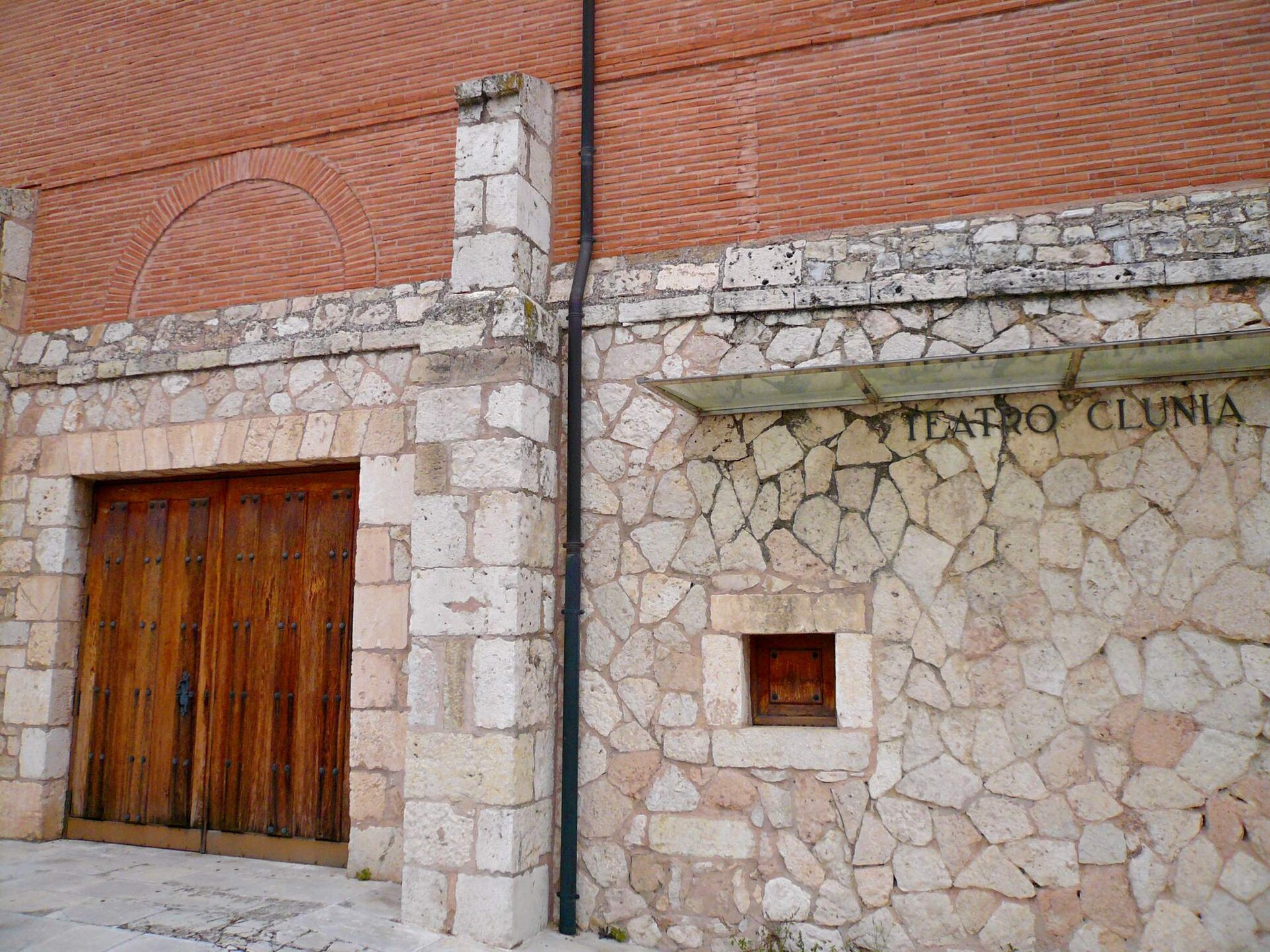
About this place
Teatro Clunia is a theatre and cultural venue housed in a centuries-old building right in the historic centre of Burgos, in northern Spain. Officially known as the Centro Cultural Francisco de Salinas – Teatro Clunia, it combines a working stage with the role of the city's cultural hub.
What is the history behind the building?
The structure dates back to 1514, when it was built as an alhóndiga — a municipal grain exchange and storehouse that regulated the wheat supply for Burgos. Buildings of this kind were essential infrastructure in Spanish towns of the period, and this one served its original purpose for more than three centuries, until 1853.
From prison to playhouse
In the mid-19th century the former grain store was converted into the provincial prison, a role it kept for decades. It wasn't until 1982 that the building underwent a major renovation, led by architect Rafael Fernández Rojas, which gave it its current identity as a theatre and cultural centre.
What happens at Teatro Clunia today?
The auditorium seats 611 people and is used mainly for theatre productions and dance performances. The venue also regularly hosts concerts and film screenings, making it one of the key cultural addresses in Burgos.
Why is it worth a visit?
Beyond its programme, the building is a striking example of adaptive reuse — from grain storage, to incarceration, to the arts. It sits within the compact historic centre, within easy walking distance of the city's main sights. For visitors exploring Burgos, a city best known for its Gothic cathedral, Teatro Clunia offers a glimpse of how the city blends its historical fabric with contemporary cultural life.
Frequently asked questions
Where is Teatro Clunia located? It stands in the historic centre of Burgos, Spain (approximate coordinates 42.3403, -3.7086).
How old is the building? The building dates from 1514, making it over five hundred years old, although its current use as a theatre only began after the 1982 renovation.
What was the building originally used for? It was originally an alhóndiga, a municipal granary regulating the city's grain trade, and later served as the provincial prison from 1853 onward.
How many seats does the theatre have? The auditorium has 611 seats.
What kind of events are held there? Theatre plays, dance performances, concerts and film screenings.
Does the name "Clunia" refer to the Roman city? Yes, it echoes the name of the ancient Roman city of Clunia in the province of Burgos, famous for its own Roman theatre — a separate, much older site from this modern venue in the city centre.
Nearby places

Earn badges for the places you visit
Download NextOnTrip, discover new places and check off your trails.