About this place
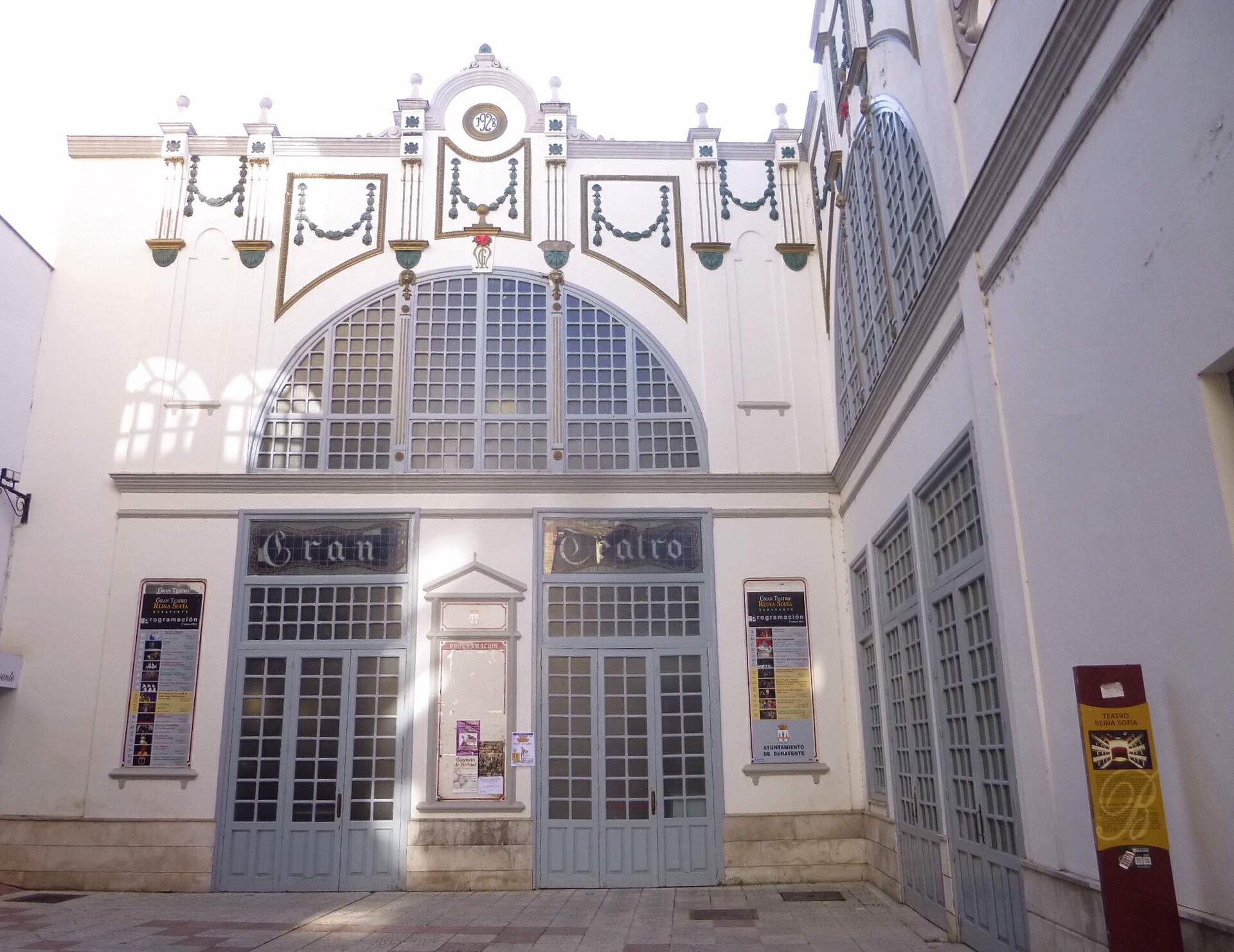
Gran Teatro Reina Sofía is a historic theatre in Benavente, a town in the province of Zamora, in Spain's Castile and León region - a cultural landmark that draws visitors interested in the town's architecture and 20th-century history.
Where did the theatre come from?
The building dates back to 1928, designed by architect Antonio García Sánchez-Blanco and commissioned by local patron Manuel Guerra Hidalgo. It was built to replace an older, Isabelline-style theatre standing nearby, the Teatro del Jardinillo. The new hall rose on the grounds of the former Convent of Santo Domingo, a Dominican monastery that had been disentailed - traces of the convent's decorative work and noble coats of arms are still visible on parts of the structure today.
What happened to it over the following decades?
As cinema grew in popularity through the 20th century, live theatre lost its audience, and performances became occasional rather than regular, largely limited to the September fairs and other town festivities. Without steady use, the building gradually fell into disrepair.
How was it brought back to life?
The turning point came in 1984, when Benavente's town council purchased the building, aiming to save an important piece of the town's architectural heritage. Restoration work began two years later and eventually returned the venue to full theatrical and musical use. The restored auditorium seats 504 people, split between stalls and boxes.
Where does the name "Reina Sofía" come from?
The renovated theatre reopened on 5 April 1991 in a ceremony led by Queen Sofía of Greece, consort of King Juan Carlos I. In her honour, the building was renamed Teatro Reina Sofía, the name it still carries.
What should visitors know before going?
The theatre sits in the centre of Benavente, at coordinates 42.00169, -5.67945. It remains the town's main stage, regularly hosting plays, concerts and other cultural events - worth checking the local events calendar before a visit.
Frequently asked questions
When was the Gran Teatro Reina Sofía built? It was built in 1928, designed by architect Antonio García Sánchez-Blanco.
Why is it called "Reina Sofía"? It was named after Queen Sofía of Greece, who personally reopened the restored building on 5 April 1991.
How many seats does the theatre have? The auditorium holds 504 seats, combining stalls-level armchairs and boxes.
What stood on this site before the theatre? The theatre was built on the grounds of the former, disentailed Convent of Santo Domingo, a Dominican monastery whose decorative traces and coats of arms partly survive.
Was the building always used as a theatre? No - through much of the 20th century, as cinema rose in popularity, the theatre saw only occasional use and fell into disrepair, until the town council bought and restored it starting in 1984.
Earn badges for the places you visit
Download NextOnTrip, discover new places and check off your trails.