About this place
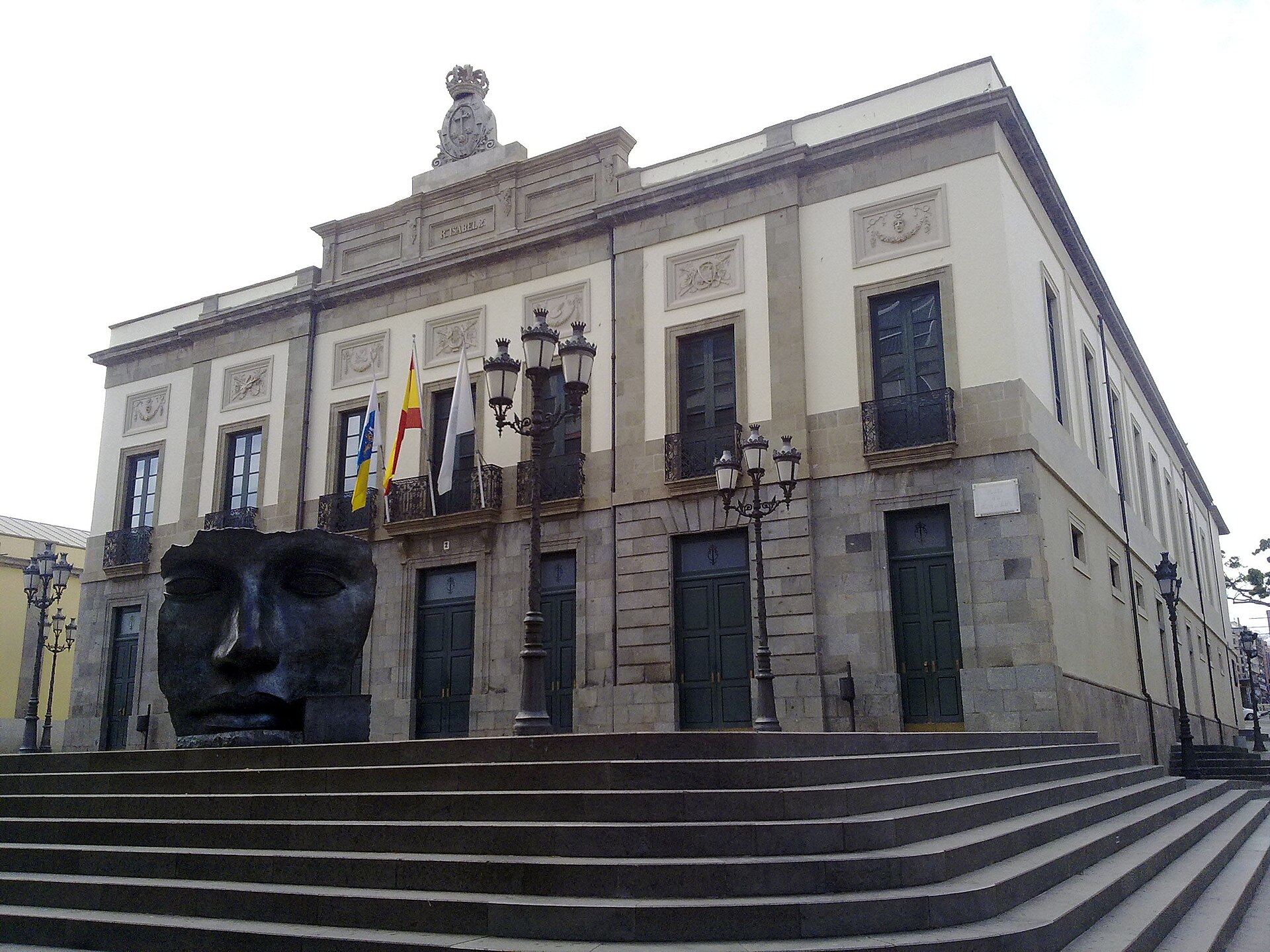
Teatro Guimerá is the oldest theatre still in operation in the Canary Islands, standing in the heart of Santa Cruz de Tenerife, the island's capital. The building went up in 1849 and formally opened its doors on 25 July 1851. It has remained the city's principal historic stage for drama and music ever since.
Where does the theatre's name come from?
The venue was originally called Teatro Municipal de Santa Cruz de Tenerife. It was renamed in 1923 in honour of Àngel Guimerà, a poet and playwright born in Santa Cruz de Tenerife who went on to become one of the leading figures of the Catalan literary revival, the Renaixença. Guimerà spent his early childhood on the island before his family moved to the Iberian Peninsula, where his writing career took shape.
Who designed the building, and what stood there before?
The design came from Manuel de Oraá, who was appointed by royal decree of Queen Isabella II as the Canary Islands' first provincial architect. The theatre rose on the former site of a Dominican convent dedicated to Our Lady of Consolation, torn down after Spain's ecclesiastical disentailment forced the friars to leave the building.
What architectural style does it follow?
The building follows the romantic-classicist theatre style typical of the 19th century, built on what is known as the Italian model: a horseshoe-shaped auditorium ringed by tiers of boxes, laid out on a rectangular plan across two storeys. The façade is topped with a pediment bearing Queen Isabella II's name and the city's coat of arms, a direct reminder of the era in which the theatre was raised.
How has the building changed over time?
The interior was modernised in 1911 under architect Antonio Pintor. A far more substantial intervention followed between 1989 and 1991, when architect Carlos Schwartz, commissioned by the Ministry of Public Works together with Santa Cruz city council, added a new rear wing with fourteen dressing rooms spread across two floors, while turning the third floor into a multipurpose hall known as Espacio Guimerá, seating around 80 people. Stage equipment was modernised at the same time. Queen Sofía attended the reopening in person, an occasion still marked today by a bronze plaque in the theatre's lobby.
How many people can the auditorium hold?
The main hall seats close to a thousand people, making it one of the largest historic stages in the Canary Islands. The smaller Espacio Guimerá hall, by contrast, is used for more intimate events for around eighty guests.
Frequently Asked Questions
When was Teatro Guimerá built? Construction dates to 1849, with the official opening following on 25 July 1851.
Why is it called Guimerá? Since 1923 the name has honoured Àngel Guimerà, a playwright and poet born in Santa Cruz de Tenerife who became a leading figure of 19th-century Catalan literature.
Is it really the oldest theatre in the Canary Islands? Yes, it is the oldest theatre in the archipelago that is still in active use.
How many seats does it have? The main auditorium holds around a thousand spectators, while the smaller Espacio Guimerá room seats up to 80.
Who was the architect? Manuel de Oraá, appointed the Canary Islands' first provincial architect by royal decree of Queen Isabella II.
Nearby places

Earn badges for the places you visit
Download NextOnTrip, discover new places and check off your trails.