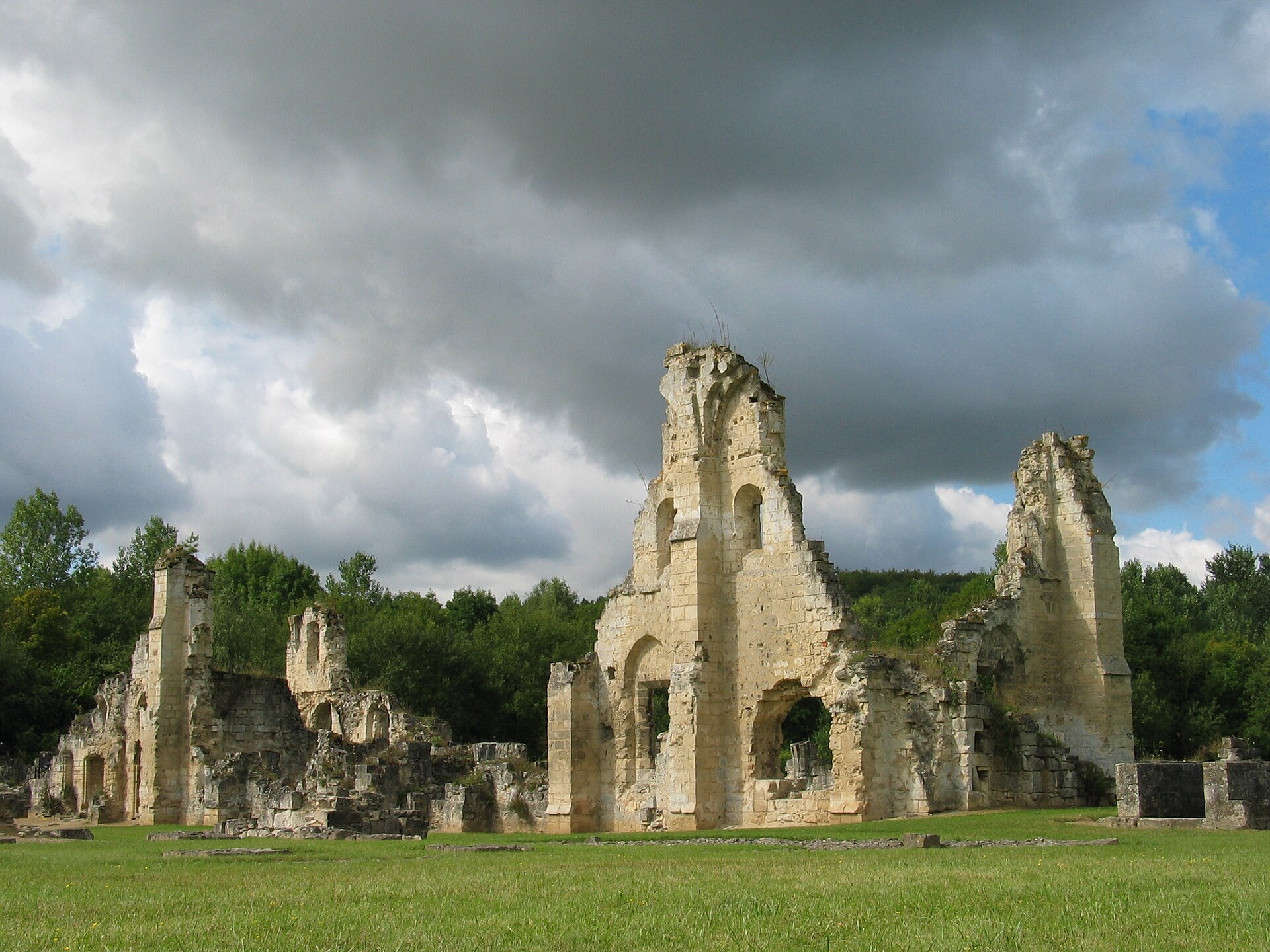
About this place
Vauclair Abbey is the ruin of a Cistercian monastery set in the Ailette valley, at the foot of the northern slope of the Chemin des Dames, in the commune of Bouconville-Vauclair in the Aisne department. The site carries more than eight centuries of monastic history alongside one of the harshest episodes of the First World War, and today it stands as one of the key stops along the Chemin des Dames memorial route.
Who founded the abbey, and when?
The monastery was established in 1134 at the initiative of Bernard of Clairvaux, at the request of Barthélemy de Jur, bishop of Laon. Vauclair belonged to the Cistercian order and for centuries operated as a self-sufficient religious community, building up land and influence across the Laonnois region. Its wealth came to light unexpectedly during archaeological digs in the 1960s, when excavators uncovered a hoard of nearly 4,200 silver coins from the 16th and 17th centuries, wrapped in cloth bags.
What happened to the abbey during the First World War?
During the fighting over the Chemin des Dames in 1917, part of the Nivelle Offensive, German forces occupied the area around the abbey and used nearby quarries and underground galleries as shelters and artillery positions. This drew heavy French bombardment onto the monastic buildings, reducing the abbey to near-total ruin. The spring 1917 battles along the Chemin des Dames caused more than 180,000 casualties and triggered mutinies within the French army — Vauclair became one of the enduring symbols of that disaster.
What do the ruins look like today?
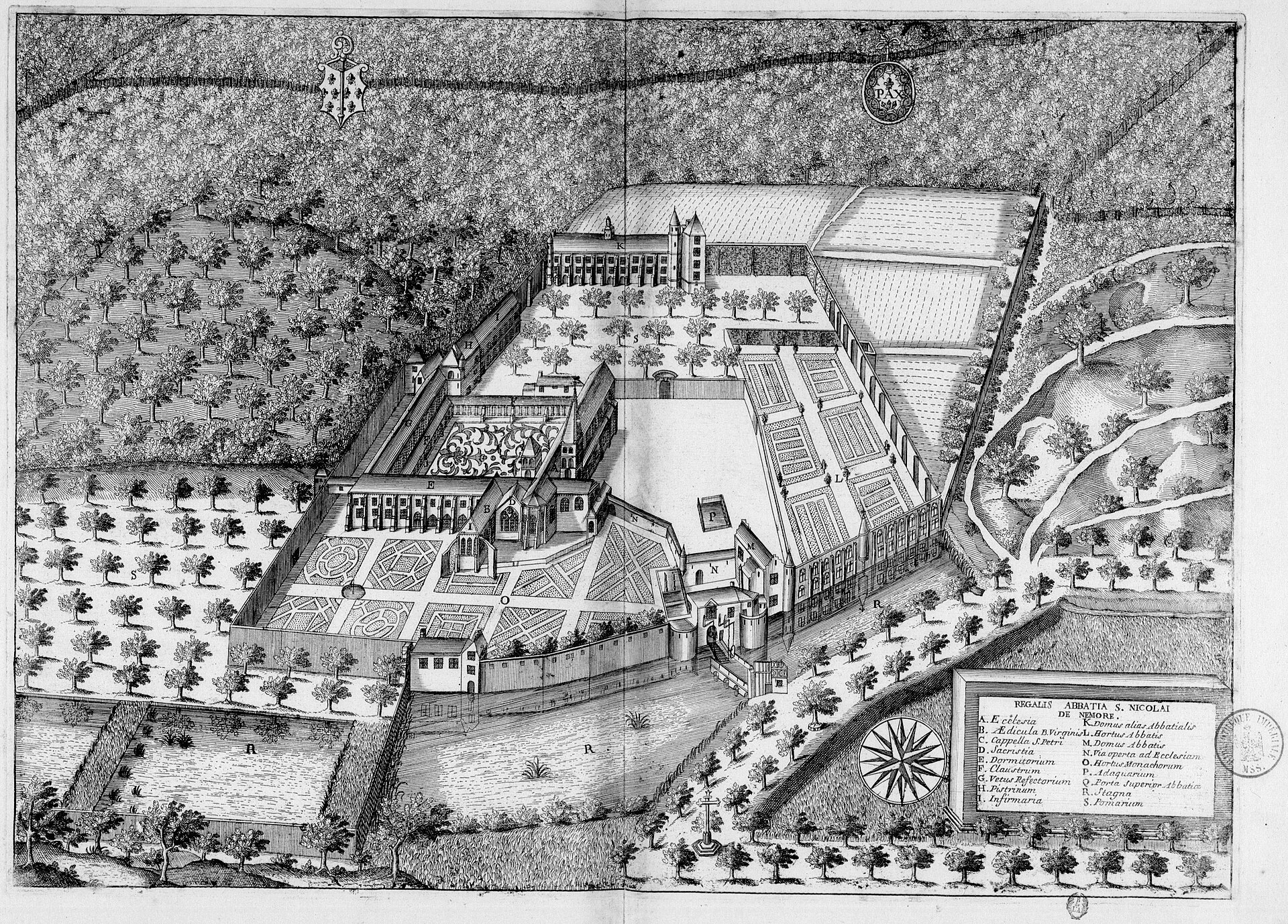
The surviving remains — sections of wall, the outline of the abbey church and former outbuildings — have been listed as a historic monument since 9 January 1970, which guarantees them official protection and conservation oversight. Archaeological work led from 1966 by Belgian Jesuit Father René Courtois uncovered a large part of the foundations and helped clarify the original layout of the monastery.
Is there a garden on site?
Yes, and it is one of the main reasons to visit beyond the historical interest. Father Courtois, working with herbalists Odette and Fabienne Ballot from Laon, created a medicinal plant garden that opened in 1976. It holds more than 400 plant species arranged in a distinctive checkerboard pattern of beds, modeled on medieval monastic gardens. In 1990 a heritage orchard was added, planted with old varieties of pear and apple trees typical of northern France.
How do you get there, and what does it cost?
The easiest way to reach the abbey is by car — there is a parking area right next to the ruins. Entry to the site is free, making it an easily accessible stop while touring the Chemin des Dames and the other WWI memorial sites in the area.
Frequently asked questions
When was Vauclair Abbey founded? In 1134, at the initiative of Bernard of Clairvaux and at the request of the bishop of Laon.
Why is the abbey in ruins? It was almost completely destroyed in 1917 during the fighting over the Chemin des Dames, when German artillery positions nearby drew intense French bombardment onto the buildings.
What can visitors see besides the ruins? A medicinal plant garden with more than 400 species, laid out in a pattern inspired by medieval monastic gardens, along with an orchard of old fruit-tree varieties.
Is there an entrance fee? No, entry to the abbey grounds is free, and parking is available next to the ruins.
Where exactly is the abbey located? In the commune of Bouconville-Vauclair, in the Aisne department, at the foot of the northern slope of the Chemin des Dames, about fifteen kilometers south of Laon.
Nearby places

Earn badges for the places you visit
Download NextOnTrip, discover new places and check off your trails.