About this place
Commanderie du Mont-de-Soissons is a former Templar commandery in the hamlet of Mont-de-Soissons, part of the commune of Serches in the Aisne department, roughly fifteen kilometres southeast of Soissons. The surviving cluster of buildings ranks among the more completely documented Templar estates in northern France, and its medieval layout is still legible on the ground today.
Where is the commandery and what remains of it?
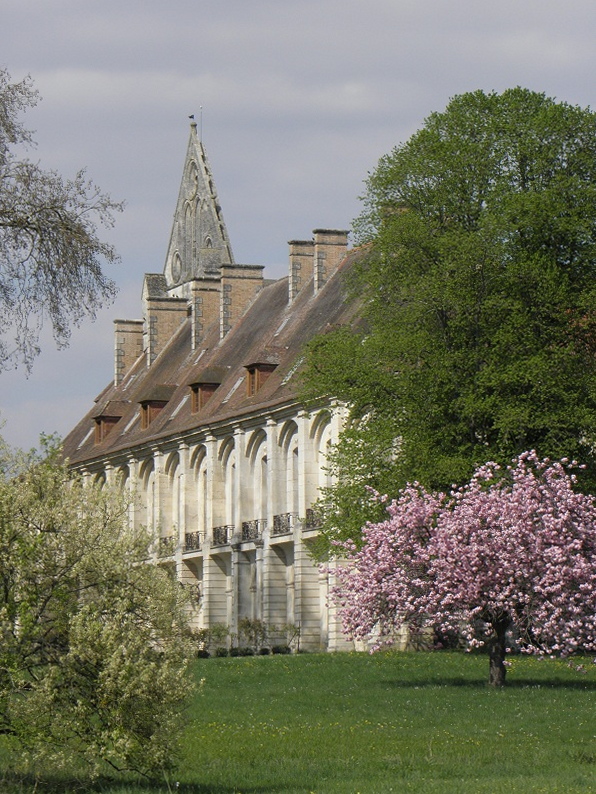
The site sits in open farmland typical of the Aisne countryside. The buildings are arranged around a large quadrangle that includes a main dwelling house, a chapel, a dovecote, and a set of barns. Most of what survives was built across the 12th and 13th centuries, giving Mont-de-Soissons an unusually coherent architectural ensemble for a rural commandery of this age.
How did the commandery come into being?
Its origins go back to the earliest years of the Templar order in France. As early as 1133, Josselin de Vierzy, bishop of Soissons, handed over the minor tithes from his farm at Serches to the Templars in return for an annual payment of twelve deniers, making it one of the earliest recorded grants to the order in this part of France.
How did the estate grow over time?
Further donations followed quickly. In 1157, Eudes, lord of Saint-Médard, gave the Templars his house together with its surrounding land. The next year, in 1158, Robert, count of Braine, and his wife Agnès transferred all of their holdings at Vauberlin to the order. During the 13th century, the lords of Faverolles added further gifts of their own. Over time the commandery's possessions also came to include a house in Soissons, smaller holdings at Acy, Ambrief, Rosières and Mont-Hussart, and a mill at Villeblain, within the parish of Chacrise.
What happened to the commandery after the Templars were suppressed?
Following the trial and suppression of the Templar order in the early 14th century, the Mont-de-Soissons estate passed, as did most former Templar property in France, to the Knights Hospitaller. Toward the end of the 15th century, the Hospitallers merged their commandery of Maupas with Mont-de-Soissons, which then became the seat of a newly formed bailiwick.
Is the site a protected historic monument?
The surviving 13th-century buildings — the chapel, the main house and the barn — were listed as a historic monument in France by decree on 3 June 1927. That protection covers both the structures themselves and their original spatial arrangement around the quadrangle.
Frequently asked questions
Who founded the Mont-de-Soissons commandery? It grew out of donations made to the Templar order, the earliest recorded one dating to 1133 and coming from Josselin de Vierzy, bishop of Soissons.
Which buildings have survived? A main house, a chapel, a dovecote and farm outbuildings arranged in a quadrangle, most of them dating from the 12th and 13th centuries.
Did the site always belong to the Templars? No. After the Templar order was suppressed, the property passed to the Knights Hospitaller, who made Mont-de-Soissons the seat of a bailiwick after merging it with the commandery of Maupas at the end of the 15th century.
Is the commandery a listed monument? Yes, the chapel, main house and barn were registered as a historic monument in France in 1927.
Where exactly is the commandery located? In the commune of Serches, in the Aisne department in the Hauts-de-France region, at the hamlet named Mont-de-Soissons.
Nearby places

Earn badges for the places you visit
Download NextOnTrip, discover new places and check off your trails.