About this place
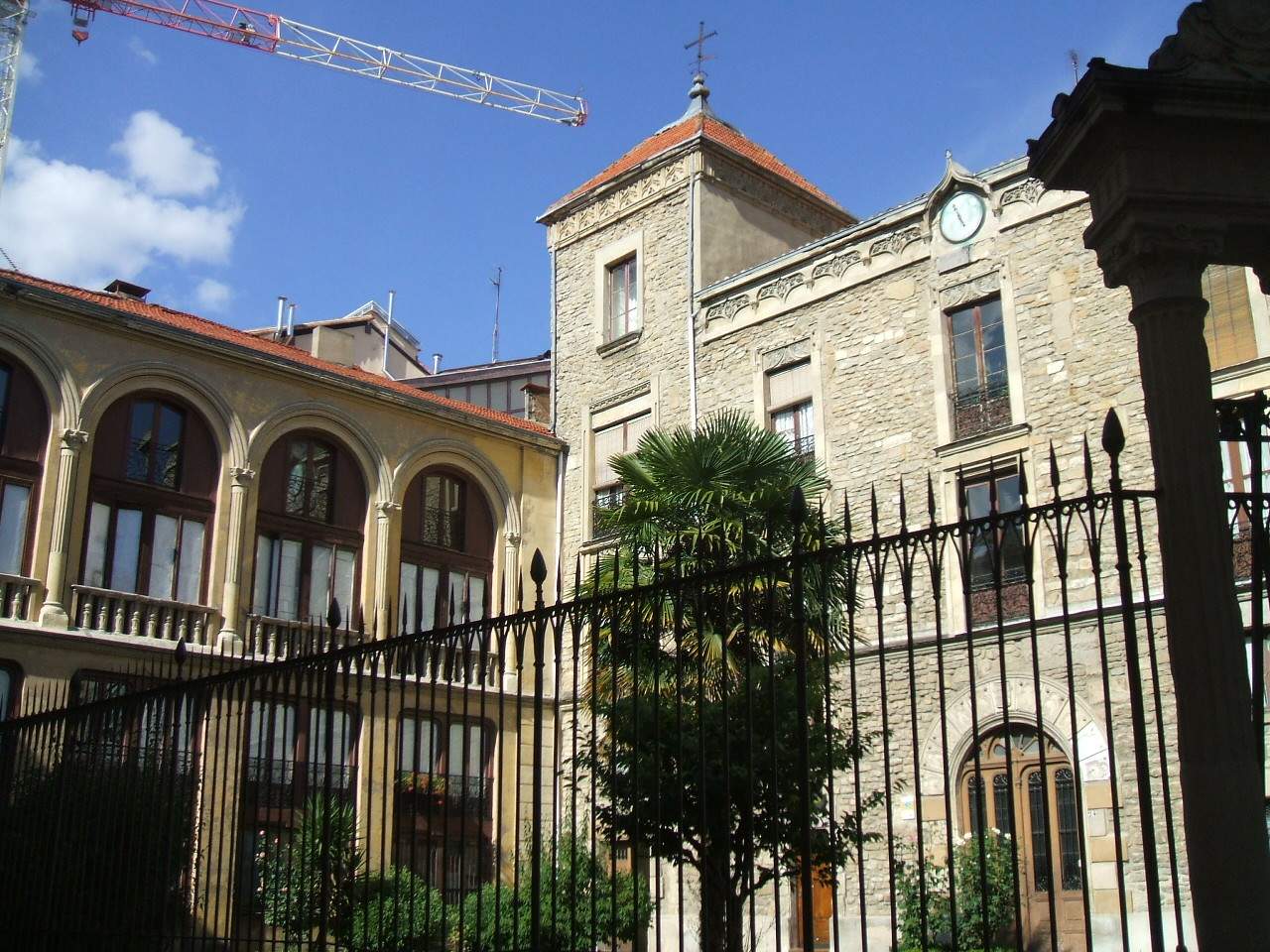
Palacio de los Álava Esquivel stands at the heart of the old town of Vitoria-Gasteiz, wedged between Calle Herrería and Calle Zapatería, and ranks among the grandest noble residences of the Basque capital of Álava.
How did the palace come to be built?
Construction began in 1488, commissioned by Pedro Martínez de Álava and his wife María Díez de Esquível, whose surnames the building still carries. Their son, Diego de Álava y Esquível, finished the work in 1535, giving the residence its Renaissance form. A major refurbishment followed in 1865, adding the Neo-Gothic touches still visible on the facades today.
What should visitors look out for?
The palace presents two distinct facades onto two different streets of the old quarter - an older one facing Zapatería, and a later one facing Herrería - a split that traces the building's staged growth across the centuries. Facing the inner garden, slung between the two flanking towers, hangs a striking timepiece known as the "Reloj de la Batalla," the Battle Clock. Family tradition holds that Ignacio María de Álava y Sáenz de Navarrete, a Lieutenant General of the Spanish Navy from the Álava line, brought it home as a prize seized from an English ship at the Battle of Trafalgar in 1805. A plaque on the building, however, is dated 25 June 1782, which suggests the clock may in fact have been captured during an earlier engagement, possibly the Great Siege of Gibraltar.
What is the palace's place in Spanish history?
The residence has hosted crowned heads and military commanders over the centuries - King Francis I of France is said to have slept here. Its most consequential link to history, though, runs through the Napoleonic Wars: General Miguel Ricardo de Álava, a member of the family that owned the palace, fought alongside the Duke of Wellington at the Battle of Vitoria in 1813, the clash that drove French forces out of the Iberian Peninsula and hastened Napoleon's downfall.
Who owns the palace today?
The building's story took an unusual turn in the 20th century - its current owner is the city council of Tangier, Morocco. Vitoria-Gasteiz's own municipal authorities have repeatedly asked their Moroccan counterparts to carry out restoration work to keep the historic structure from deteriorating further.
How to get there and when to visit?
The palace sits right in the middle of Vitoria-Gasteiz's old town, surrounded by other Renaissance-era noble houses, and forms one stop on the city's self-guided route past seven historic palaces. The easiest way to reach it is on foot, walking along Herrería and Zapatería, two of the oldest medieval streets in the city centre. Since the building remains institutionally owned and is not open as a museum, a visit here means admiring both facades from the street - daytime is best, when natural light picks out the stonework detail and the battle clock most clearly.
Frequently asked questions
Can you go inside the Palacio de los Álava Esquivel? No. The building is not run as a museum and belongs to the city council of Tangier, so visits are limited to viewing both facades from the street.
Why does the palace have two facades? It was built in stages between the 15th and 19th centuries, and each street it faces - Zapatería and Herrería - shows a facade from a different construction period.
What is the "Reloj de la Batalla"? It's the clock hanging between the two towers on the garden side, said by family tradition to have been captured from an English ship, though the date on its plaque leaves the exact battle in question.
What is the palace's connection to the Battle of Vitoria? General Miguel Ricardo de Álava, related to the family that owned the palace, fought alongside the Duke of Wellington in the decisive 1813 battle against Napoleon's forces.
Nearby places

Earn badges for the places you visit
Download NextOnTrip, discover new places and check off your trails.