About this place
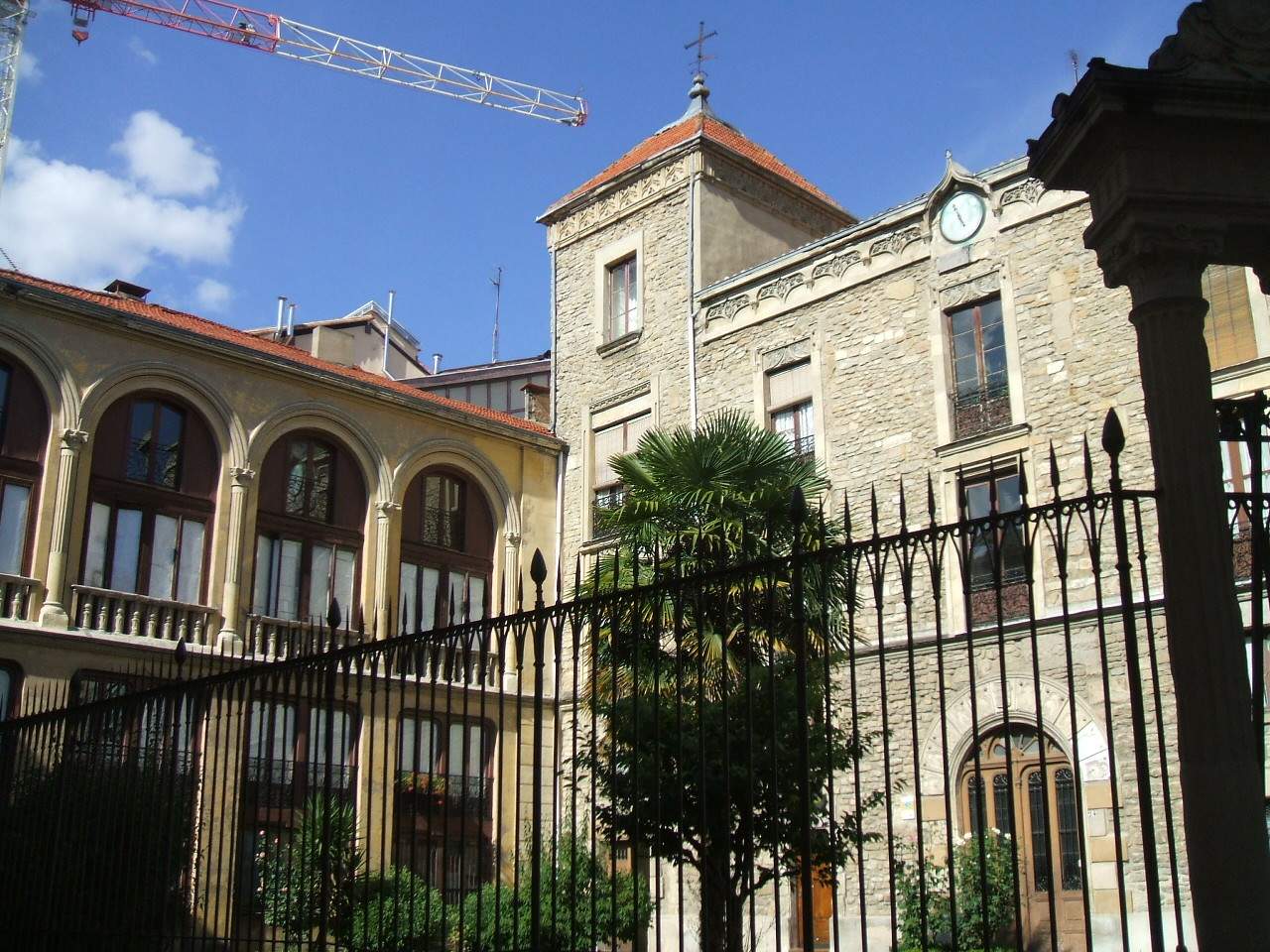
Etxanobe etxea is a historic townhouse in Vitoria-Gasteiz, standing at the corner of Callejón de la Sociedad Vascongada and Calle Santa María, right in the heart of Casco Histórico – the old town of the Basque capital. It doesn't sit on the region's headline sightseeing routes, but it's a worthwhile stop for anyone curious how a 19th-century bourgeois building in Álava has been repurposed again and again over more than a century.
Where does the name come from, and whose house was it?
The building went up in 1886. Its first owner was the engineer Manuel Echanove y Goñi – the source of the "Etxanobe" name (the Basque-inflected form of his surname). The townhouse stayed in private hands for nearly a hundred years, until the Vitoria-Gasteiz city council bought it in 1979 and converted it into a public building.
How has the building's role changed over time?
Since the council took it over, Etxanobe etxea has served several administrative and educational functions in turn. In 1985 it opened as the seat of the University School of Social Work, later hosting the City Design Center and various municipal departments. Since September 2019, the palace has been home to Sorginenea – Casa de las Mujeres (the Women's House), an institution dedicated to strengthening feminism and gender equality in the region. It's this most recent role that keeps the building socially and culturally active today, rather than leaving it as a purely historical shell.
What's worth noticing inside and out?
From the outside, Etxanobe etxea looks like a typical 19th-century bourgeois townhouse – a solid, compact volume characteristic of Casco Histórico's dense stone streetscape. In 2017 the building underwent renovation work costing nearly 180,000 euros, which included installing a lift connecting all floors and modernizing the bathrooms. The result is a building adapted to contemporary use while keeping its historic façade intact.
How do you get to Etxanobe etxea?
The building sits within Casco Histórico, the oldest and most walkable part of Vitoria-Gasteiz. The easiest way to reach it is on foot from the central Plaza de la Virgen Blanca or the Santa María Cathedral – both are just a few minutes away through the old town's narrow streets. It's a typical location for the city's downtown landmarks: no public transport needed, surrounded by other townhouses and palaces from the same era.
When's the best time to visit?
Etxanobe etxea currently functions as an active social institution, so it's best to plan a visit around the working hours of the organizations based there, i.e. on weekdays. The surrounding Casco Histórico itself looks best in the morning or late afternoon, when the stone façades catch soft light and the streets are quieter than at midday.
Frequently asked questions
Can you visit Etxanobe etxea as a heritage site? The building now functions as a public institution (Sorginenea – Casa de las Mujeres), not a museum with regular tours, but its façade and setting within Casco Histórico can be viewed from the outside at any time.
Where does the building's name come from? From its first owner, engineer Manuel Echanove y Goñi, who built the townhouse in 1886.
What is Sorginenea, the organization based there today? It's the Casa de las Mujeres (Women's House), an institution operating since 2019 that supports feminist initiatives and women's empowerment processes in Vitoria-Gasteiz.
Are there other landmarks nearby worth seeing? Yes – the building sits in Casco Histórico, just a few minutes' walk from Santa María Cathedral and Plaza de la Virgen Blanca, the main points of the city's historic center.
Nearby places

Earn badges for the places you visit
Download NextOnTrip, discover new places and check off your trails.