About this place
Vitoria-Gasteiz Town Hall faces Plaza de España in the heart of the Basque Country's capital, in the province of Álava — a city recognised as European Green Capital in 2012.
What does the building look like and where did it come from?
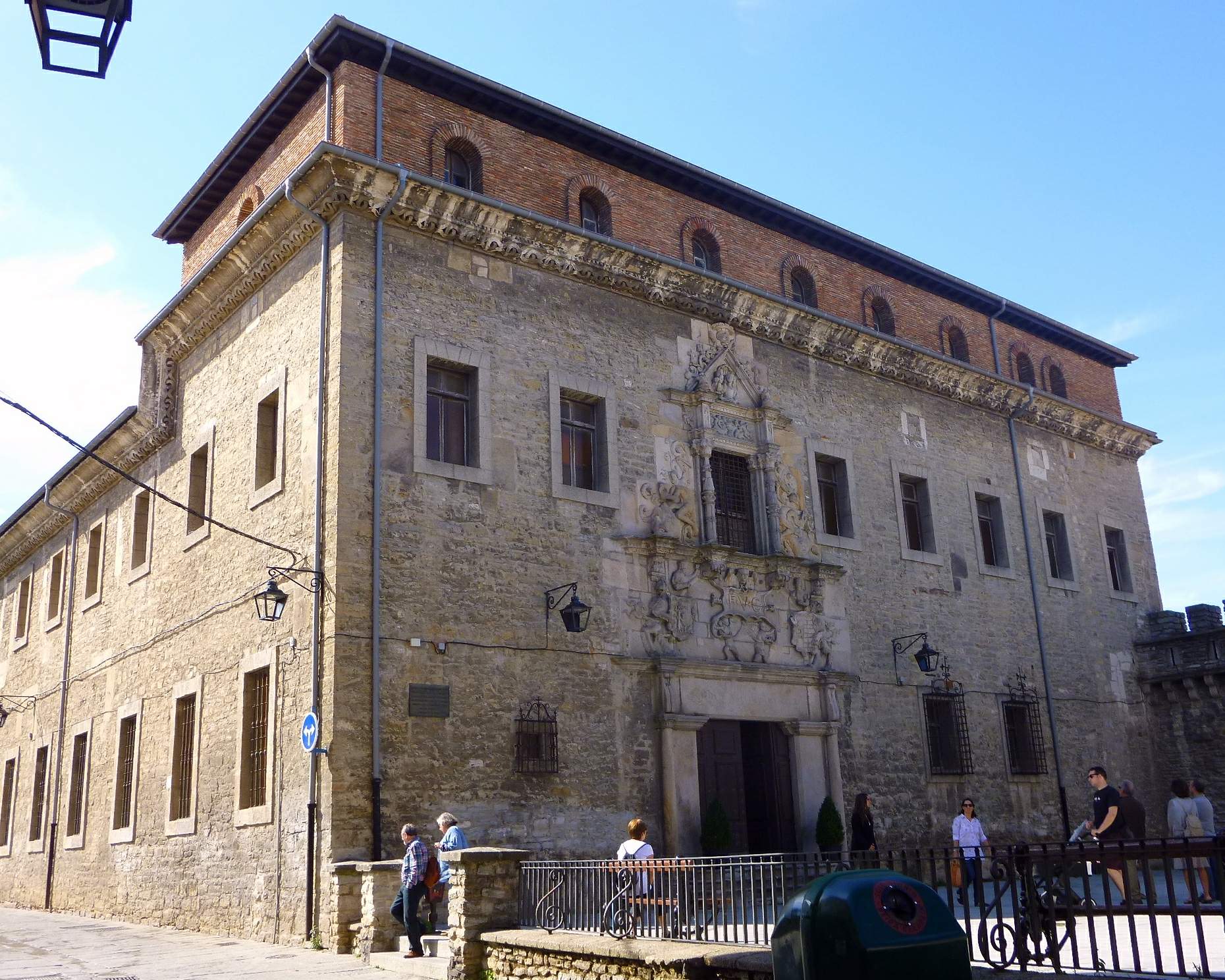
The current town hall dates back to 1731 and was designed by architect Justo Antonio de Olaguibel, the figure behind the 18th-century classical remodelling of the city. The façade follows a strict Neoclassical layout, with an arcaded portico running along the ground floor that opens directly onto the square, giving passers-by shelter from rain and shade in summer. The building underwent a major restoration in 1982, which brought the structure back to its original appearance while adapting it for continued use as the seat of the local government.
Where exactly is it, and what surrounds it?
The town hall closes off one side of Plaza de España, also known locally as Plaza Nueva, a rectangular square lined with arcades that ranks among the most recognisable spots in the old town. From here it's an easy walk to Santa María Cathedral, which sits at the centre of the medieval quarter, laid out in a distinctive almond shape of concentric streets. Because of that proximity, most visitors treat the square in front of the town hall as a natural starting point for exploring the historic centre.
Can visitors go inside?
Since the building still functions as the seat of the city council, access is generally limited to the exterior — walking the square and passing under the arcades is enough to take in the Neoclassical proportions of the façade. On certain occasions, such as open days or municipal events, parts of the interior are opened to the public, so it's worth checking the local schedule ahead of a visit if that's of interest.
Why is Plaza de España worth a stop?
The square in front of the town hall functions as a social hub for the city: cafés line the arcades, and local markets and cultural events regularly take place right there. For anyone touring Vitoria-Gasteiz, it makes a convenient base for continuing into the Casco Viejo, the old town's tangle of narrow streets, stone façades and bars serving the region's pintxos.
Frequently Asked Questions
Can you go inside Vitoria-Gasteiz Town Hall? The building is an active seat of local government, so visits are usually limited to viewing the façade and arcades from the outside; interior access sometimes opens up during public events.
Who designed the town hall? It was designed by architect Justo Antonio de Olaguibel, known for his role in the 18th-century Neoclassical remodelling of Vitoria-Gasteiz.
When was the current building built? The town hall was constructed in 1731 and underwent a thorough restoration in 1982.
What else is worth seeing nearby? Santa María Cathedral and the streets of the Casco Viejo, the historic centre known for its almond-shaped layout, are both within easy walking distance.
Nearby places

Earn badges for the places you visit
Download NextOnTrip, discover new places and check off your trails.