Museums in Portugal
A guide to 175 Museums in Portugal — with descriptions, photos and traveler visits from the NextOnTrip community. Locations spread across 88 cities and towns. Most visited by the community: Casa-Museu Frederico de Freitas, Quinta das Cruzes Museum, Aljezur Táctil Museu Municipal.
-
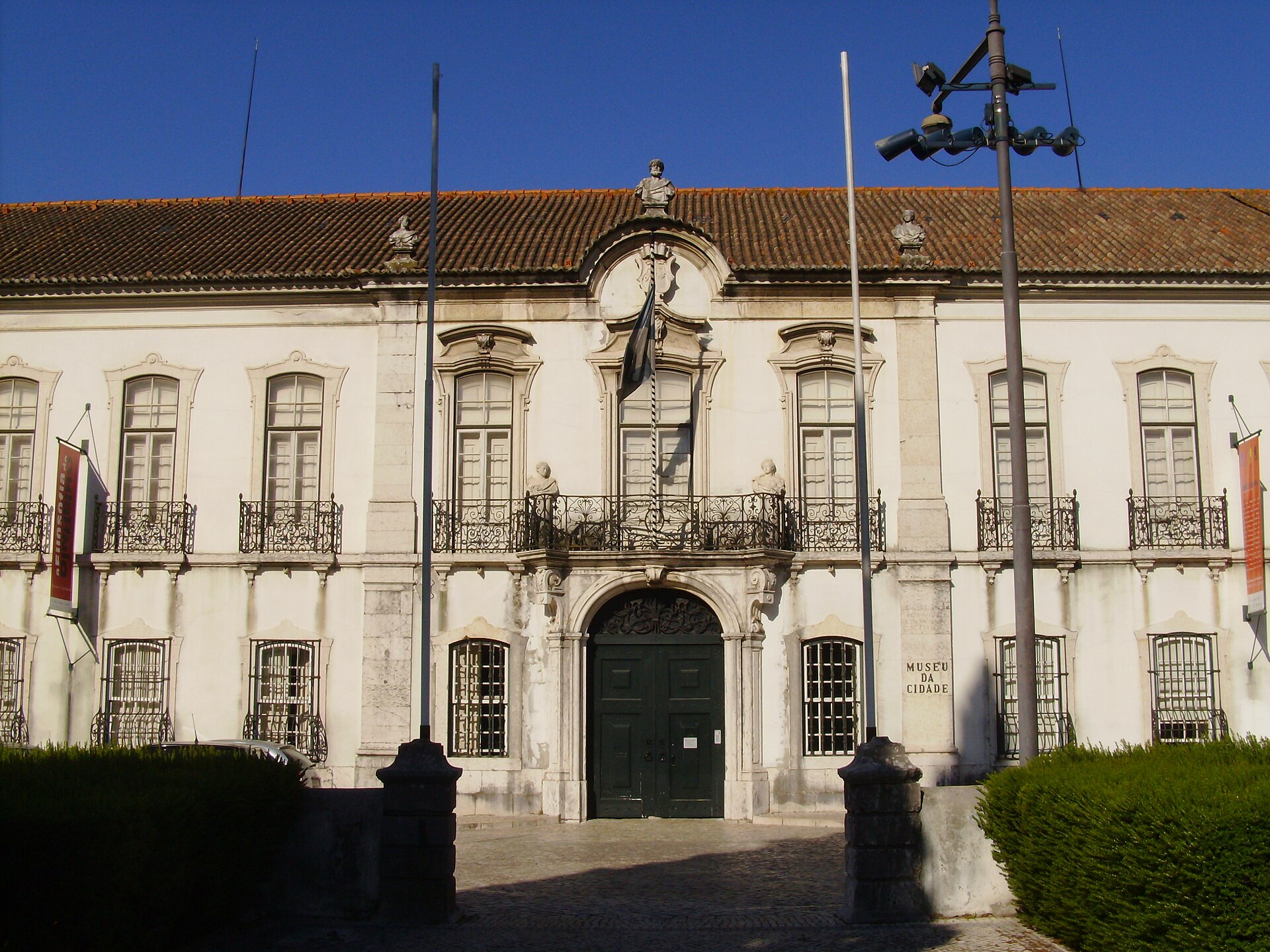
Museu de Lisboa
Museu de Lisboa – the museum of Lisbon's history Museu de Lisboa (the Museum of Lisbon) is a network of museums devoted to the history of Portugal's capital, from prehistoric times to the present day. It is not a single building but several sites across the city. The best known is Palácio Pimenta in the Campo Grande district, but the network also includes venues on Praça do Comércio in the Baixa and the Casa dos Bicos in Alfama. What is the Museu de Lisboa? Wikidata describes it as the museum of the City of Lisbon. Its purpose is to tell how the capital developed: from the earliest settlements, through the Roman and Moorish city, to a modern metropolis. Spreading the story over several locations gives each chapter a fitting home. Where is the main site? Palácio Pimenta stands on Campo Grande, north of central Lisbon, at roughly 38.758° N, 9.157° W. Access is from Campo Grande, near Rua Cipriano Dourado. OpenStreetMap lists opening hours as "24/7", which most likely refers to the grounds rather than the galleries. Check the official website for gallery hours before you go. History of the palace Palácio Pimenta is a former summer residence built in the first half of the 18th century. It takes its name from one of its successive owners, Manuel Joaquim Pimenta. Lisbon City Council acquired the building in 1962. The City Museum (Museu da Cidade), housed since 1942 in the Palácio da Mitra, was moved here, and the new museum opened its doors in 1979. What to see in the collection The collection includes paintings, ceramics, engravings, maps, azulejo tiles and archaeological finds. Together they show the urban, social, economic and symbolic development of Lisbon. The permanent exhibition runs chronologically: it begins with prehistoric Lisbon, then moves through the Roman and Moorish city, medieval Lisbon, the city of the 16th century and the Age of Discovery, and on to the wealthy 18th-century city destroyed by the Great Earthquake of 1755. Sculpture, painting and a model of 18th-century Lisbon show what the city looked like before the disaster. Who is it for? The museum suits anyone who wants to understand where today's Lisbon comes from. It works well as an introduction to the city, because it sorts the eras into order and helps you recognise traces of history on the streets afterwards. The model of pre-earthquake Lisbon is a useful reference for anyone wondering how much of the old city survived. Frequently asked questions Is the Museu de Lisboa a single building? No. It is a network of museums at different places in Lisbon, including Palácio Pimenta, a venue on Praça do Comércio and the Casa dos Bicos. Where is Palácio Pimenta? On Campo Grande, near Rua Cipriano Dourado. What period does the collection cover? From prehistory up to the 20th century, while the network as a whole covers the city from its earliest times to the present. When did the museum open in the palace? In 1979, after the city bought the building in 1962. Which exhibits stand out? The model of 18th-century Lisbon before the 1755 earthquake, azulejo tiles, maps, engravings and archaeological finds.
-
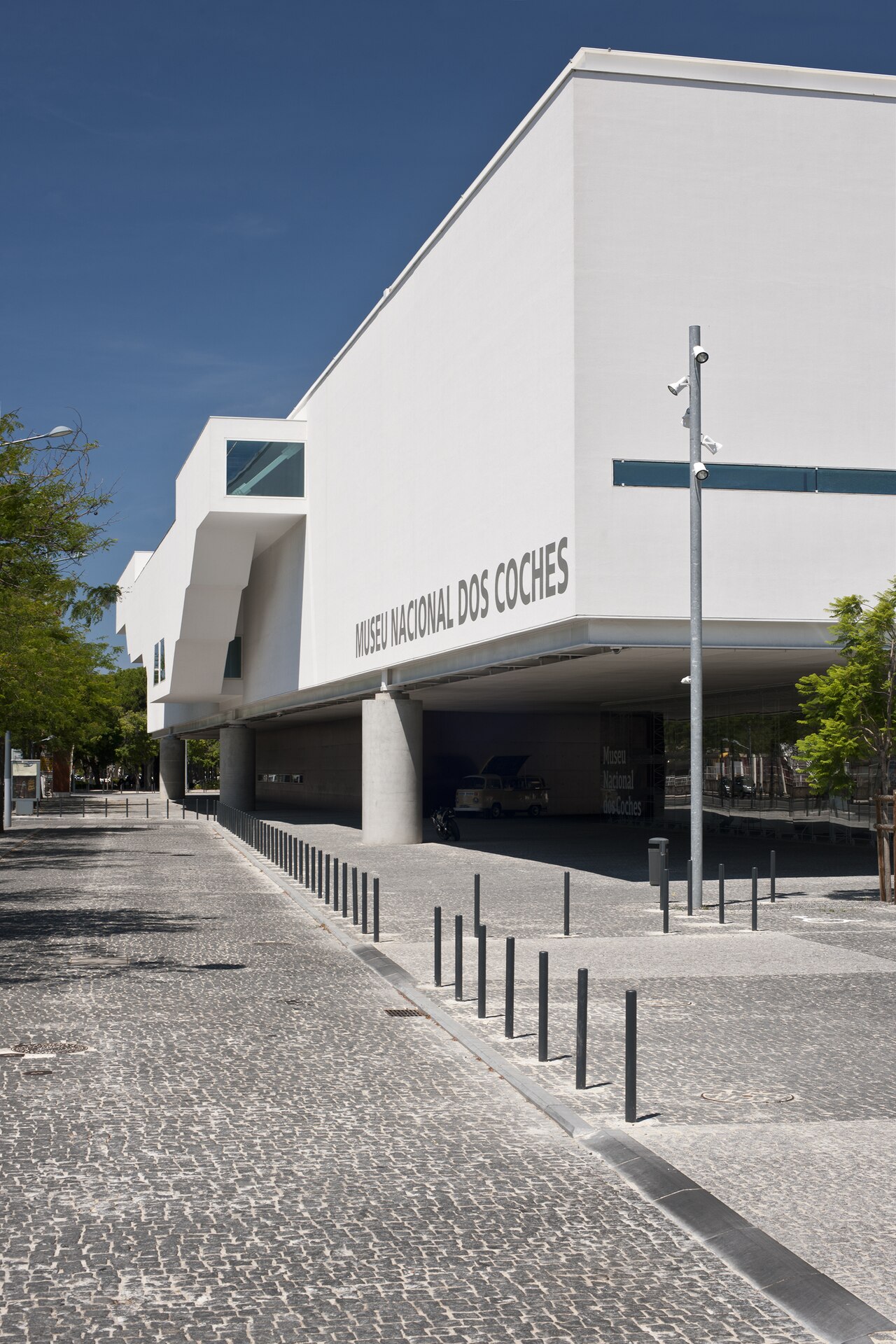
National Coach Museum
Lisboa
The National Coach Museum (Museu Nacional dos Coches) is a museum in Lisbon's Belém district that holds one of the finest collections of historic carriages in the world. It ranks among the most visited museums in the Portuguese capital and pairs naturally with a day exploring the rest of Belém. What can you see at the National Coach Museum? The collection consists of coaches and carriages that belonged to the royal houses of Portugal, dating from the 16th to the 19th century. Highlights include a 17th-century coach associated with King Philip II and the vehicles connected with the embassy that King João V sent to Pope Clement XI. The latter group shows how baroque courts used splendour as a diplomatic tool. Coaches were more than transport. They served in ceremonies, formal entries, diplomatic missions and public displays of power. So beyond the vehicles themselves, look at the carved and gilded decoration and at how coach design changed across three centuries. Where does the collection come from? Queen Amélie founded the collection in 1905. The coaches were first placed in the former royal riding arena, an extension of Belém Palace. The hall measured about 50 metres by 17 metres and had been used for training horses, riding displays and games. For many years the museum was housed there. The new building from 2015 In May 2015 a new museum building opened to hold the most representative part of the collection. It stands in Belém on a site once occupied by a military workshop. It was designed by the Pritzker Prize-winning Brazilian architect Paulo Mendes da Rocha. The building has a bold, austere form and is conceived as open to its surroundings, with no conventional doors and entry possible from many sides. The historic riding arena remains part of the story of the place. Planning your visit The museum sits in Belém, close to other well-known sights, so it fits easily into a walking day. Allow roughly one to two hours, depending on your interest in history and decorative arts. Check opening hours and ticket prices on the official website before you go, as they can change. Frequently asked questions Where is the National Coach Museum? In the Belém district of Lisbon, Portugal, near coordinates 38.6967 N, 9.1982 W. Who founded the collection? Queen Amélie, in 1905. Which period do the coaches come from? Mostly the 16th to 19th century, from Portugal's royal houses. Who designed the new building? Paulo Mendes da Rocha, a Pritzker Prize laureate. It opened in May 2015. Is it worth visiting if I am not into carriages? Yes. The collection reveals court ritual, craftsmanship and the politics of display in old Portugal, and the architecture is an attraction in itself.
-
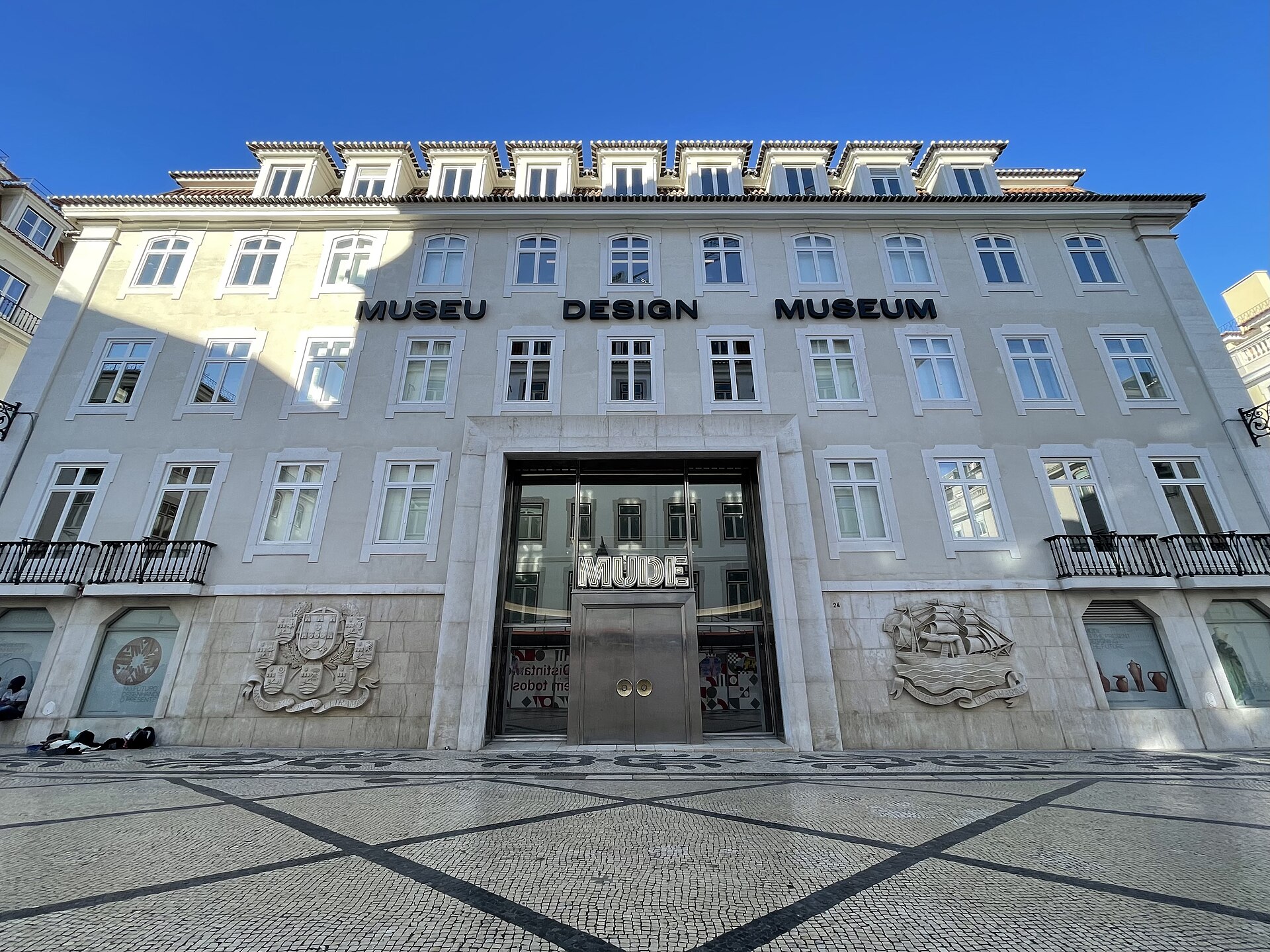
Design Museum
Lisboa
MUDE, the Design Museum in Lisbon (Museu do Design), stands at Rua Augusta 24 in the heart of the Baixa district. It is a museum of design and fashion housed in the former headquarters of the Banco Nacional Ultramarino, the bank that financed Portugal's colonial empire. What kind of museum is it? MUDE treats design broadly: furniture and everyday objects, graphics and publications, contemporary jewellery and clothing. Its core is the collection of Francisco Capelo, a Portuguese collector who began assembling it in the 1990s. The objects date from 1937 to the end of the 20th century. In 1999 his design holdings were shown at the Centro Cultural de Belém as a Design Museum. In 2002 the City of Lisbon took over part of the collection, and by 2006 both the design and fashion holdings were in public ownership. What is the story of the building? The building was constructed as a bank and became its headquarters in the 1920s. It was extended later: Luís Cristino da Silva led the second intervention, and António Garcia and Daciano da Costa the third. The grand banking-era interiors are part of the appeal today. When did it open, and what changed? The museum opened in 2009 as a temporary venue and ran that way until 2016, when major works began. The building reopened to the public on 25 July 2024. After the renovation it gained a rooftop restaurant and an auditorium. Whose work is on display? The collection includes work by around 230 designers. Design is represented by Charles and Ray Eames, Le Corbusier, Tom Dixon and Philippe Starck. Fashion names include Yves Saint Laurent, Jean-Paul Gaultier, Christian Dior, Chanel, Vivienne Westwood and Versace. The holdings are organised into six typological groups: scene, editorial, graphic, fashion, contemporary jewellery, and product together with interiors. In total they span 23 collections. Frequently asked questions Where is MUDE? At Rua Augusta 24 in central Lisbon's Baixa, close to the main walking routes through the old town. Is it the same as the Design Museum in London? No. It is a separate institution, built around Francisco Capelo's collection and Portuguese design context. Is it worth visiting if I am not into design? Yes. The former bank building and the views from the new rooftop are reasons enough, and the well-known names in the collection make the subject easy to enter. When should I go? Check opening hours and ticket prices on the official site, mude.pt, before your visit.
-
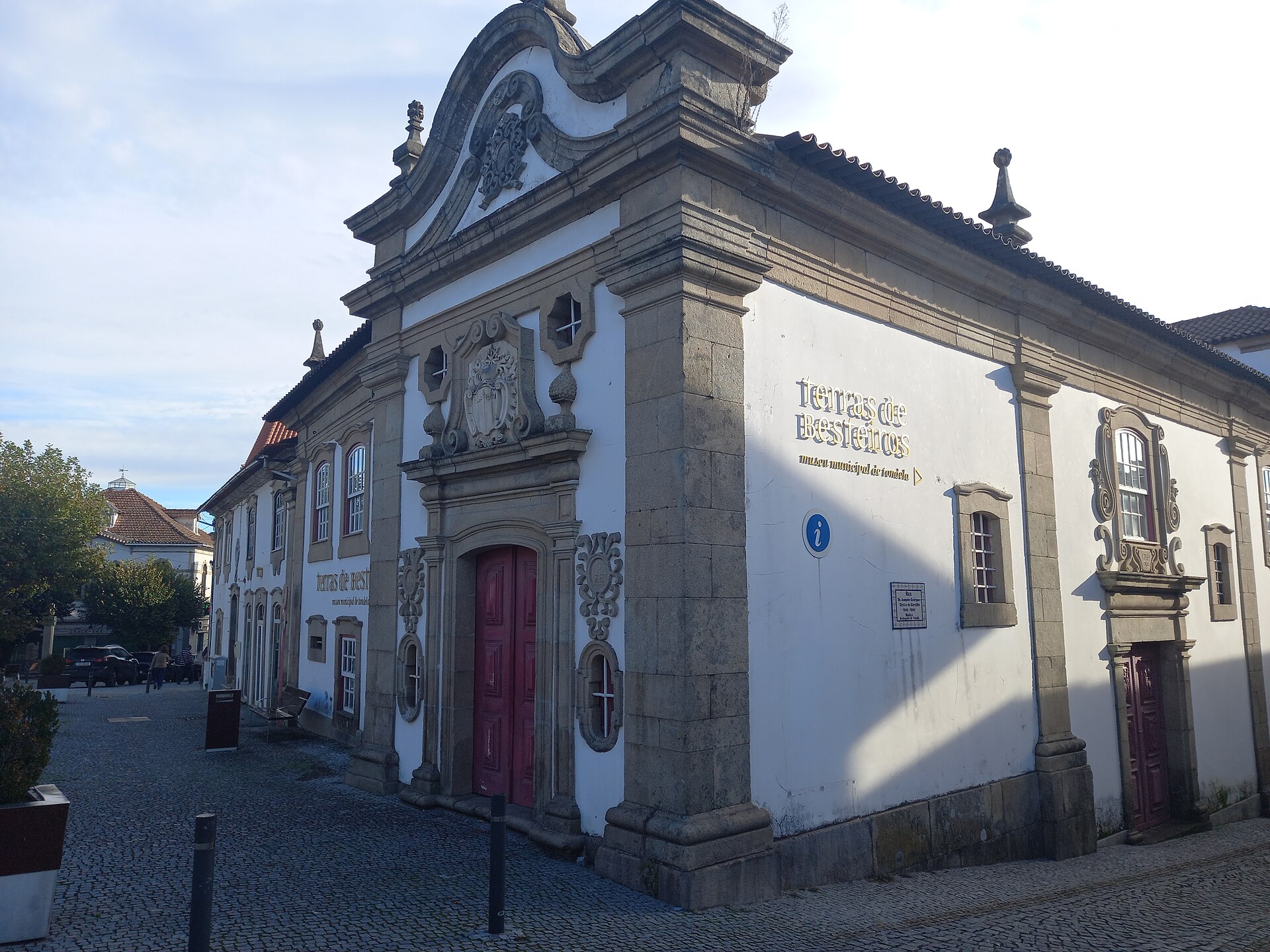
Museu Terra de Besteiros
Tondela
Museu Terras de Besteiros is the municipal museum of Tondela in central Portugal, housed in the historic manor house Solar de Santa Ana in the old town. It tells the story of the Besteiros territory from the first traces of human settlement to the present day. The museum opened in 2010 and is run by the Tondela municipality. What can I see inside? The permanent exhibition spreads over nineteen rooms. The collection is large and varied, covering archaeology, history, ethnography and sacred art. The visit is easy to follow because themes are split across two floors. The ground floor is devoted to archaeology, with an emphasis on prehistory and rock art. Upstairs you will find the ethnographic section, showing the everyday life and objects of the people who lived in the region. The museum describes itself as a "territory museum". That means it is not limited to a single building. The collection in Solar de Santa Ana is complemented by museum sites preserved in situ, in the places where heritage was created or discovered. A visit in town can therefore become the starting point for a trip through the surrounding parishes. Which museum sites lie outside the main building? These can be visited by appointment: Anta da Arquinha da Moura in Lajeosa do Dão, a megalithic burial monument, Estela menir de Caparrosa in the united parishes of Caparrosa and Silvares, Estação de Arte Rupestre de Molelinhos in Molelos parish, a rock art site, Ambientes do Ar in Caparrosa and Silvares, Edifício das Reservas at Solar dos Almiros, where the museum's reserve collections are kept. These visits are guided, so contact the museum before you travel. What else does the museum offer? Besides the permanent exhibition there are guided tours, temporary exhibitions and educational workshops. The building also has an auditorium, a documentation centre and a shop. It suits families with school-age children and anyone who wants to understand local history before exploring the wider Dão region. How do I get there, and when is it open? The museum is at Rua Dr. Simões de Carvalho, 3460-588 Tondela. Phone: +351 232 811 125. According to tourism sources it is open Tuesday to Sunday, 10:00-12:30 and 14:00-18:00. It is closed on Mondays, on 1 January, 1 May, Easter Sunday and 25 December. Check current hours before you go, as they may change. Is it popular? In 2025 the museum recorded 9,205 visitors, 1,867 more than the year before. The numbers are modest but growing, which suggests the local institution is drawing steadily more interest. Frequently asked questions Do I need to book? Not for the main exhibition, but visits to the museum sites in the field are arranged by appointment. How many rooms are there? Nineteen. What topics does the exhibition cover? Archaeology, history, ethnography and sacred art. Can I visit on Monday? No, the museum is closed on Mondays. Where is it? In central Tondela, inside Solar de Santa Ana.
-
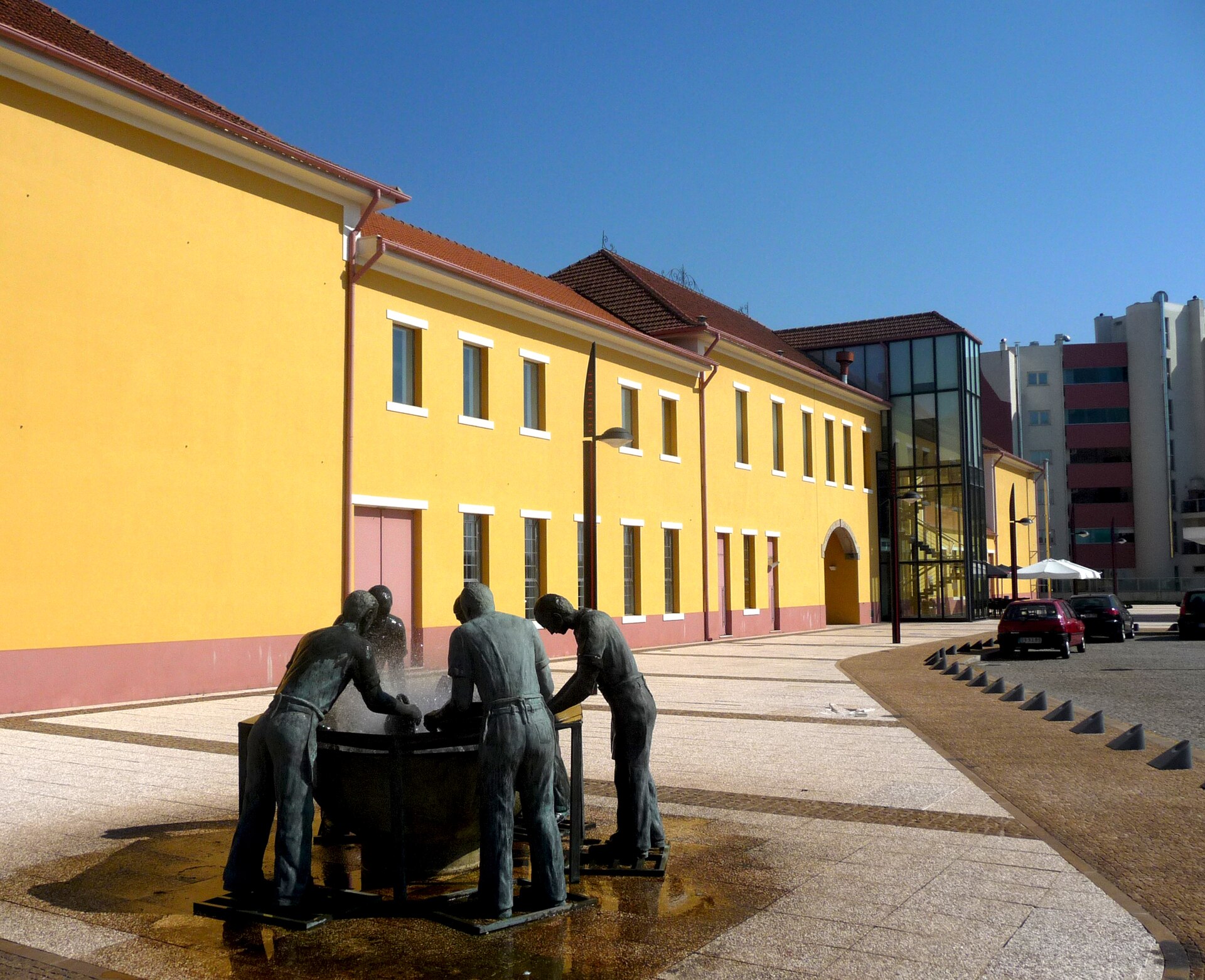
Museu da Chapelaria
São João da Madeira
Museu da Chapelaria in São João da Madeira is the only museum on the Iberian Peninsula devoted to hat making. It sits inside a former factory on Rua Oliveira Júnior in northern Portugal, not far from Porto. What is the Museu da Chapelaria? The museum opened on 22 June 2005, inaugurated by the then Portuguese president Jorge Sampaio. It occupies what remains of the Empresa Industrial de Chapelaria Lda., a company that was once the largest hat factory on the whole Iberian Peninsula. It is one of the main stops on the city's industrial tourism route. What is the history of the factory? The company was founded in 1914 by António José de Oliveira Júnior. Its story follows the whole twentieth century of Portuguese hat making: mechanisation in the early 1900s, a peak in the 1940s, and a gradual decline from the 1950s onward. The factory finally closed in 1995. Today its halls tell the story of the work, the machines and the people who shaped daily life in São João da Madeira for decades. What will you see inside? The permanent exhibition follows the stages of making a hat and shows historic machinery and objects from the trade. In early 2025, around the museum's twentieth anniversary, it closed for roughly six months of renovation. It reopened with a reworked permanent exhibition, better accessibility for visitors with reduced mobility, and two temporary exhibitions linked to the fashion house Dior. The site also includes: an official museum shop, a 105-seat auditorium, a documentation and research centre, a recreation room, a restaurant. Are guided tours available? Yes. From Tuesday to Saturday, guided visits are offered to groups of more than five people. They are led by trained guides, including former workers from the hat industry who speak from first-hand experience. That makes the visit more than a walk past display cases. How do you plan a visit? The museum is at Rua Oliveira Júnior 501, 3700-204 São João da Madeira. Group visits are booked through the Turismo Industrial office on 256 200 204. Since the renovation, it is worth checking opening hours on the museum's official website before you travel. Allow roughly one and a half to two hours. Frequently asked questions Is it really the only museum of its kind in the region? Yes, it is the only museum on the Iberian Peninsula dedicated to hat manufacturing. When was the factory founded? In 1914, and it closed in 1995. Can you eat on site? Yes, there is a restaurant within the museum. Is there a shop? Yes, the official museum shop sells hat-related souvenirs. Is it accessible for visitors with reduced mobility? After the 2025 renovation the building is more accessible than before. The museum pairs well with other industrial tourism sites in São João da Madeira, a town known for its hat and footwear traditions. It is a rewarding stop for anyone curious about how Portuguese industrialisation looked from the inside, and it works as a short day trip from Porto.
-
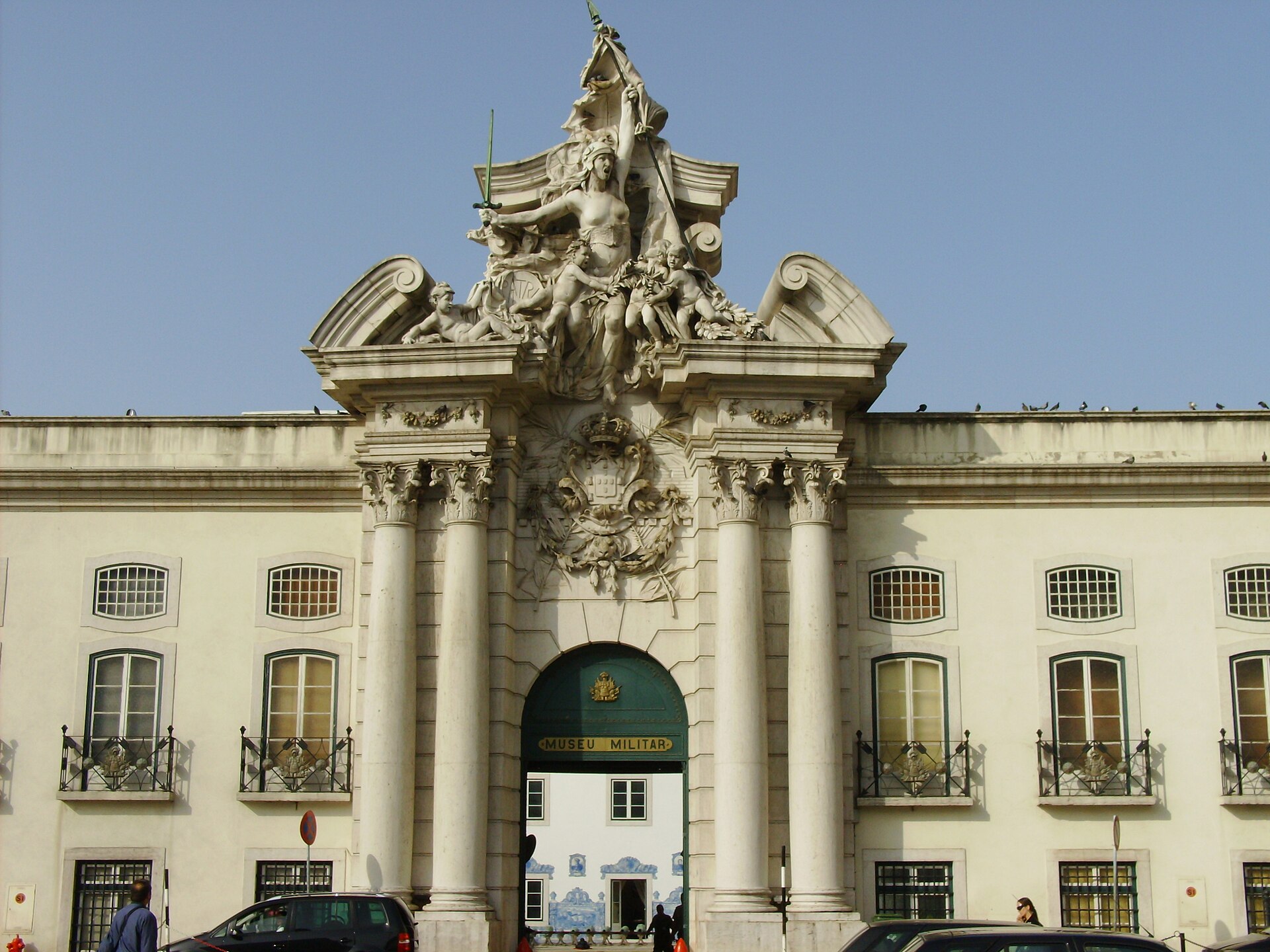
Museu Militar de Lisboa
Lisboa
Museu Militar de Lisboa (Lisbon Military Museum) is described as the oldest museum in the city. It stands right across from Santa Apolónia station, not far from Terreiro do Paço and São Jorge Castle. Its rooms are rich in gilded carved woodwork, azulejo tiles and painting, and its holdings include one of the most complete artillery collections in the world. How did the museum come about? The site was once a shipyard from the reign of Manuel I (1495–1521). Under João III a cannon foundry was built here, also used to make gunpowder and to store arms for the Portuguese fleet. A fire damaged the buildings in 1726, and the 1755 earthquake destroyed them completely. The complex was rebuilt on the orders of José I as the Royal Army Arsenal. The institution, first called the Artillery Museum, was founded in 1851. What can you see inside? The core of the collection is bronze cannon from many periods. One standout is a piece from Diu, weighing around 20 tons and bearing Arabic inscriptions. The museum is not only about weapons: you will also find paintings, sculpture, tiles and architectural elements. A highlight is a set of 26 azulejo panels depicting major events in Portuguese history from 1139 to 1918. The exhibits fill 34 baroque rooms, many named after national heroes such as Vasco da Gama and Prince Henry the Navigator. The decoration, with its elaborate carving and tilework, is as interesting as the objects on display. Who is it for? It suits anyone interested in military history, artillery or decorative arts. Because it sits by Santa Apolónia station, it fits easily into a walk through the eastern side of Alfama and the Tagus waterfront. Practical information Location: by Santa Apolónia station, Lisbon (coordinates 38.7132, −9.1242). Opening hours: Tuesday to Sunday, 10:00–17:00. Closed: Mondays, Easter, 1 January, 1 May and 25 December. Frequently asked questions Is it really the oldest museum in Lisbon? The place data describes it as the oldest museum in the city, with origins in 1851. How much time should I plan? With 34 rooms, allow at least an hour or two, especially if you enjoy artillery and azulejos. Can I combine it with other sights? Yes, Terreiro do Paço and São Jorge Castle are nearby. When is it closed? On Mondays, and on Easter, 1 January, 1 May and 25 December. Check current hours before you go.
-
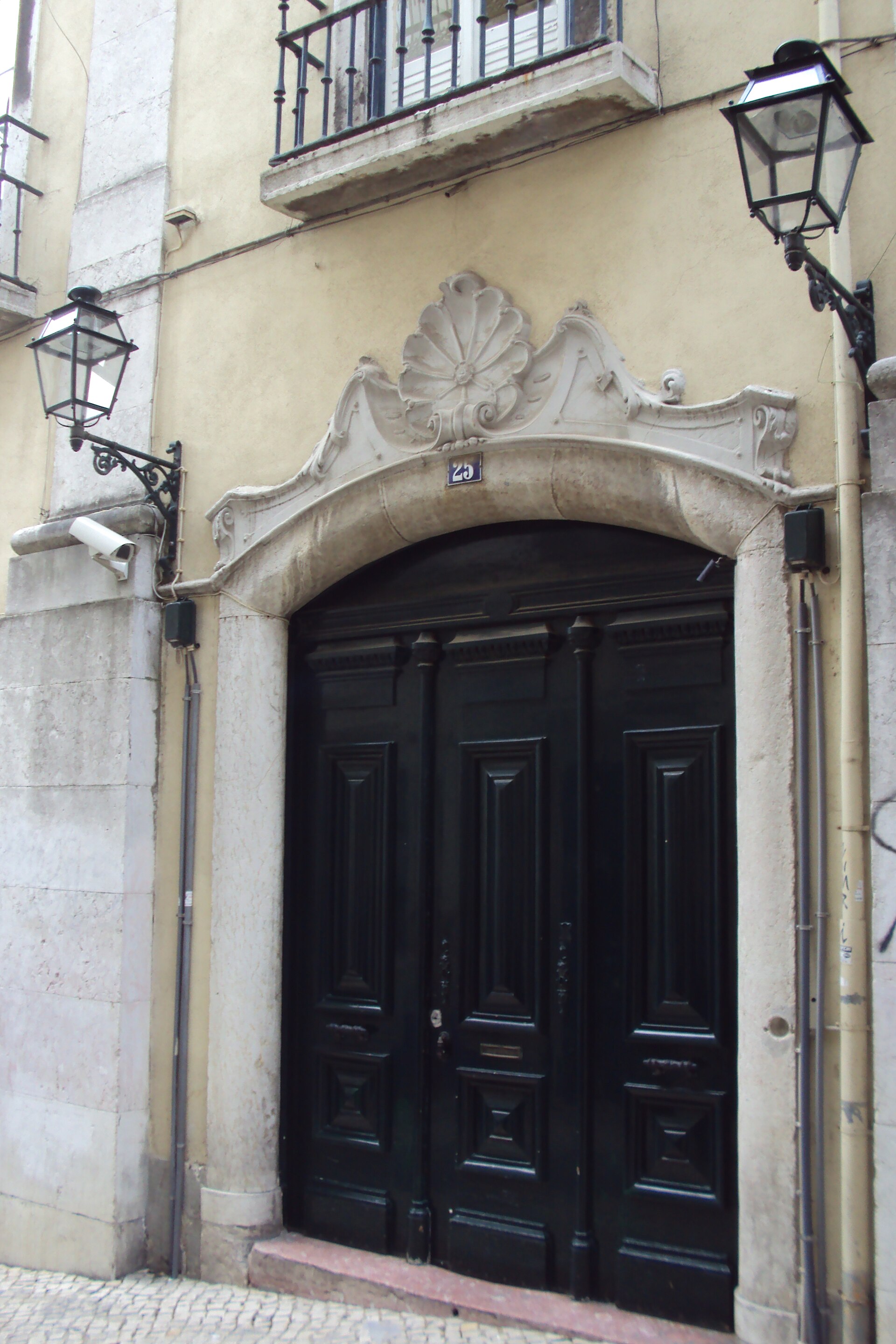
Museu Maçónico Português
Lisboa
Museu Maçónico Português (the Portuguese Masonic Museum) is a museum about the history and symbolism of Freemasonry in Portugal, located in Lisbon's Bairro Alto district. It sits inside the headquarters of the Grande Oriente Lusitano, a Masonic body founded in 1802, and is one of the more unusual stops in the capital for anyone who enjoys history, symbols and offbeat collections. What is the Masonic Museum in Lisbon? It is a thematic museum run by the Masonic organisation itself. It explains what Freemasonry was and is in Portugal, which symbols were used in rituals, and how the movement's fate became entangled with twentieth-century Portuguese history. The museum is an institutional member of ICOM, the International Council of Museums. What is the museum's history? The Grande Oriente Lusitano saw the need for a museum as early as the beginning of the twentieth century, and the museographic project began to take shape around 1918. It was cut short in May 1935, when the dictatorship outlawed Freemasonry in Portugal and dissolved its assets. After the revolution of 25 April 1974 the idea was revived. The core of the collection came from goods the state returned to the Grande Oriente Lusitano, items seized during the dictatorship. Donations from many Portuguese Freemasons later enlarged it. Sources give different opening dates: some speak of a founding in 1984, others of a formal inauguration on 21 February 1986. What can you see? Visitors see objects tied to Masonic symbolism and ritual: aprons, swords, pillars, mosaics, gloves, set squares, compasses and plumb lines. For outsiders it is a chance to see how the tools of craftsmen became a language of symbols. The museum reopened on 16 September 2023 after renovation and a redesign of its displays. The new permanent exhibition has three parts: Symbolic, on the meaning of signs and rituals, Daily Life and History, placing Freemasonry in the context of Portuguese history, High Degrees, on the higher degrees of initiation. Who is it for? It suits lovers of Portuguese history, symbolism and twentieth-century politics, and anyone looking for something beyond Lisbon's standard trail. Bairro Alto is a good base for combining the visit with a stroll through the neighbourhood, its cafes and viewpoints. Frequently asked questions Where is the Museu Maçónico Português? In Lisbon's Bairro Alto district, in the building that houses the Grande Oriente Lusitano. When did the museum reopen after renovation? On 16 September 2023, with a new permanent exhibition in three parts. Does it show genuine ritual objects? Yes. The collection includes aprons, swords, pillars, gloves and symbolic tools, among them items returned by the state after 1974 and gifts from Freemasons. Why does the collection have such a turbulent past? Because Freemasonry was outlawed in 1935 and its assets dissolved. The collection could only be rebuilt after the political change of 1974. Before you go, check current opening hours and visiting rules on the official Grande Oriente Lusitano website.
-
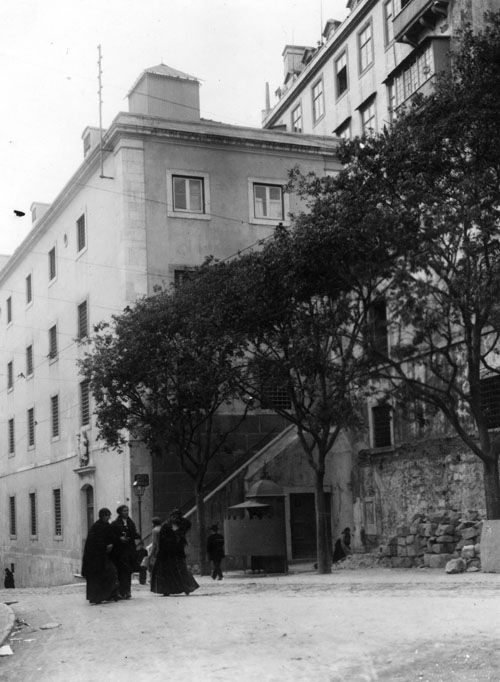
Cadeia do Aljube
Lisboa
Cadeia do Aljube is a former prison in Lisbon that now serves as a museum. It stands in the Santa Maria Maior district, in the Alfama area, right next to Lisbon Cathedral. Since 2015 the building has housed the Museu do Aljube – Resistência e Liberdade, the Museum of Resistance and Freedom. What was the Aljube prison? Between 1928 and 1965, Aljube served as a political prison of the Estado Novo regime. Opponents of the dictatorship that ruled Portugal from 1926 to 1974 were held here. Well-known inmates included Francisco Miguel Duarte, Telo Mascarenhas and Mário Soares. The building is therefore one of the city's most significant places of memory for twentieth-century political repression. What can you see in the museum? The museum is openly committed to its cause: it aims to remember and document the struggle against the dictatorship and to honour those who resisted. It gives special attention to the people killed under the military dictatorship and the Estado Novo between 1926 and 1974. The permanent exhibition runs across several floors: Level -1 – archaeological finds, Ground floor (0) – a memorial to political prisoners and the history of the building, Floor 1 – the character of the Portuguese dictatorial regime and its means of repression, Floor 2 – the resistance of the opposition, imprisonment, torture and isolation cells, Floor 3 – the anti-colonial struggle, independence movements, the fall of the dictatorship and the revolution of 25 April 1974. Who is it for? It is a strong stop for anyone interested in modern Portuguese history, human rights, and how a country looks back on a period of authoritarian rule. It combines easily with a walk through Alfama and a visit to the nearby cathedral. Allow generous time, because the exhibition is extensive and leads from the oldest layers of the site to the day of the revolution. Frequently asked questions Is Cadeia do Aljube still a prison? No. It is a former prison, and a museum has operated there since 2015. Where is it? In Lisbon's Santa Maria Maior district, in the Alfama area near the cathedral, at roughly 38.710 N, 9.133 W. Who was imprisoned here? The political prison operated from 1928 to 1965. Inmates included Francisco Miguel Duarte, Telo Mascarenhas and Mário Soares. What period does the exhibition cover? The military dictatorship and the Estado Novo (1926–1974), the resistance to them, the anti-colonial struggle and the overthrow of the regime on 25 April 1974. Is the museum only about the prison? No. Besides the building's history, it presents the wider picture of the regime, its repression and popular resistance, plus archaeological finds on the lowest level.
-
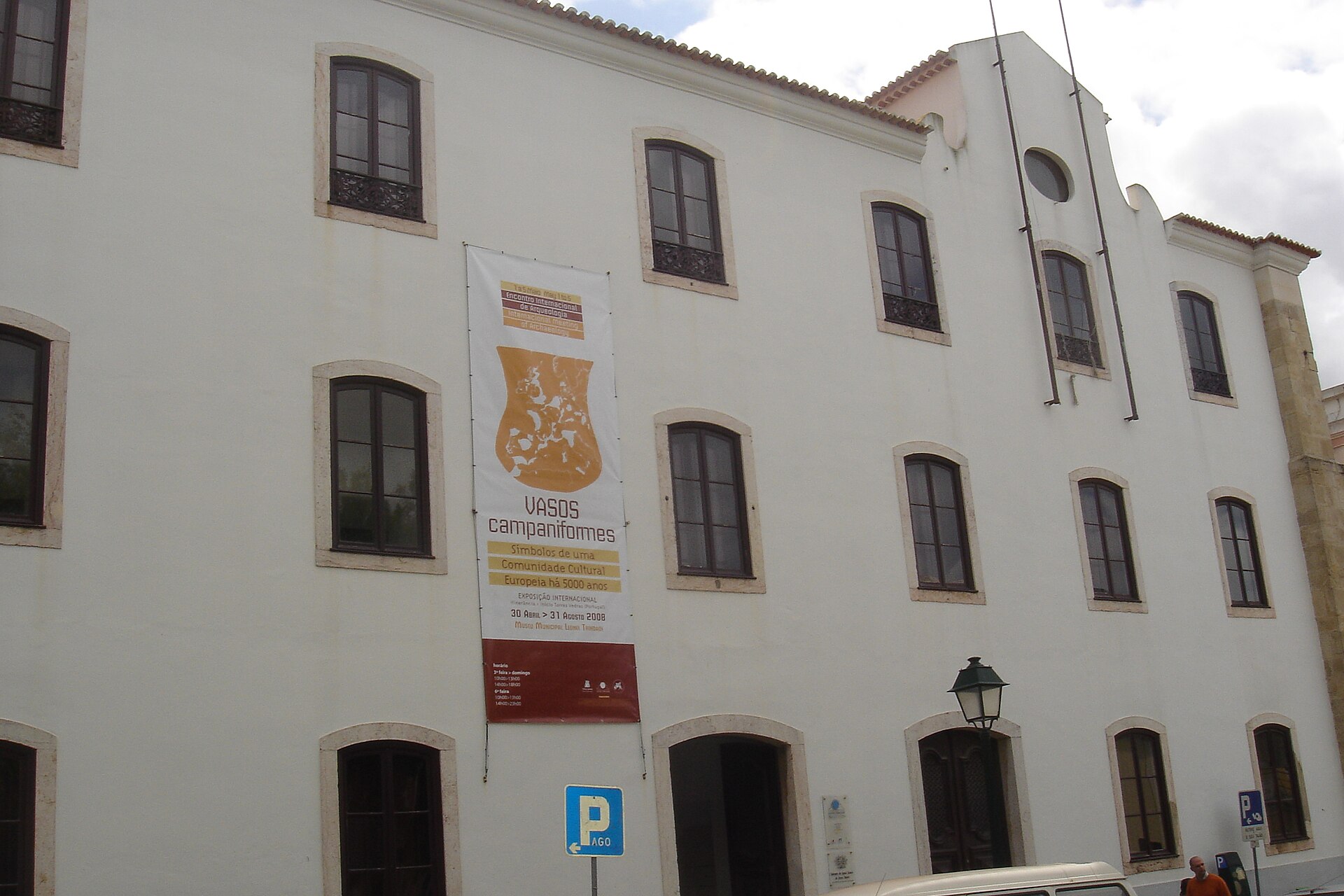
Museu Municipal Leonel Trindade de Torres Vedras
Torres Vedras
Museu Municipal Leonel Trindade is an archaeology and history museum in Torres Vedras, housed in the former Convento de Nossa Senhora da Graça on Praça 25 de Abril, right in the town centre. Where does the museum's name come from? The institution is older than its current monastery setting might suggest. The town's first municipal museum opened on 28 July 1929, in a hall belonging to the Irmandade dos Clérigos Pobres (Brotherhood of the Poor Clergy), next to the Church of São Pedro in the centre of Torres Vedras. It wasn't until 2007 that the municipal council decided to rename the institution after Leonel Trindade, and it has carried his name ever since. The museum has occupied its present home, the former Convento de Nossa Senhora da Graça, since 1992. What can visitors expect to see? For a museum of regional scope, the holdings are remarkably varied. They include archaeological collections documenting the earliest traces of human presence in the Torres Vedras municipality, alongside a sacred art section, paleontological specimens, and a collection of contemporary painting. A dedicated section covers the history of the municipality itself and the famed defensive system known as the Torres Lines (Linhas de Torres) — the fortifications built around the town during the Napoleonic Wars. This combination lets a single visit span the region's prehistory, its early modern military history, and its local artistic tradition. Why does the convent building suit this role? The Convento de Nossa Senhora da Graça, the museum's home since 1992, is itself part of Torres Vedras's heritage. Its former monastic rooms provide space well suited both to archaeological displays and to the sacred art on show, which fits naturally with the building's original character. The central location on Praça 25 de Abril also makes it easy to combine a museum visit with a walk through the town's historic centre. How much time should visitors set aside, and when should they go? The museum is open to the public from Tuesday to Sunday, from 10:00 AM to 6:00 PM. Given the breadth of the collection — from archaeology to contemporary painting — allowing at least an hour is worthwhile, and visitors particularly interested in military history and the Torres Lines may want to spend longer studying the material on the fortifications. Frequently asked questions Has the museum always had this name? No. Until 2007 it operated as the Torres Vedras Municipal Museum; it was only then renamed after Leonel Trindade. Where exactly is the museum located? On Praça 25 de Abril, inside the former Convento de Nossa Senhora da Graça, in the centre of Torres Vedras. What kinds of collections does it hold? Archaeology, sacred art, paleontology, contemporary painting, and local history, including the Torres Lines. Since when has the museum been in its current building? Since 1992 — before that, from 1929, it was housed elsewhere in town. What are the opening hours? Tuesday to Sunday, 10:00 AM to 6:00 PM.
-
Museu do Ouro
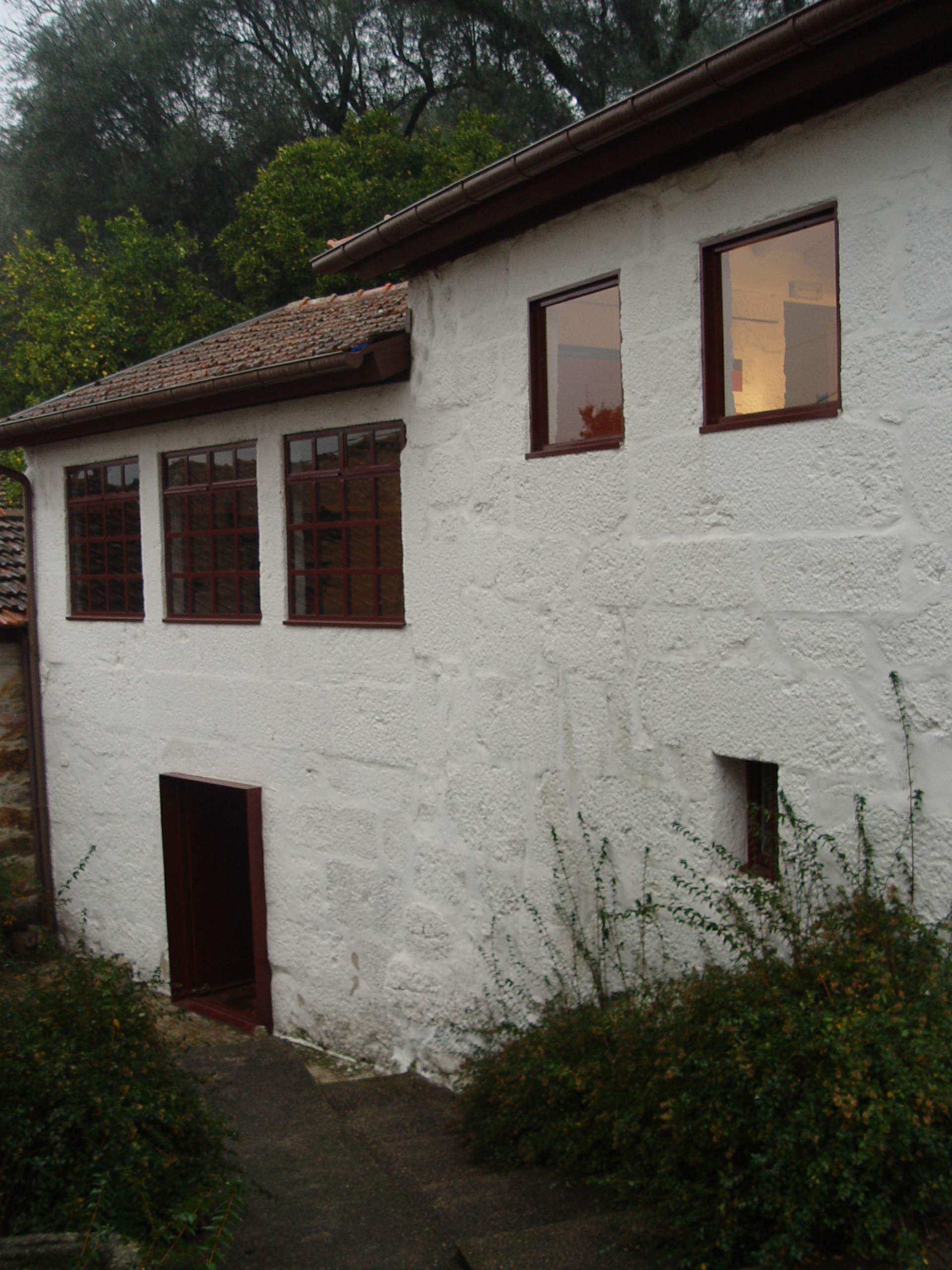
Museu do Ouro (Gold Museum) is dedicated to traditional goldsmithing and stands in the village of Travassos, in the municipality of Póvoa de Lanhoso in northern Portugal. It was created to document and showcase the craft of local goldsmiths, whose work has made this area one of the historic centers of Portuguese filigree. How did the idea for the museum come about? The idea of opening a jewelry museum in Travassos dates back to the 1980s. It was brought to life by Francisco de Carvalho e Sousa, a goldsmith with fifty years of experience in the trade, who spent decades gathering objects and documentation tied to the local craft. His private collection became the founding core of the museum's holdings. Museu do Ouro officially opened its doors on March 3, 2001. What is filigree, and why is Travassos linked to it? Filigree is a goldsmithing technique in which delicate, finely intertwined threads of gold or silver are shaped into ornamental forms. In the Póvoa de Lanhoso region, particularly in the parishes of Travassos and Sobradelo da Goma, filigree production has been documented since at least the 19th century, with evidence of goldsmiths active in the municipality reaching back to the 18th century. This multigenerational tradition is why Travassos is often referred to as the capital of Portuguese filigree. The craft has been inscribed in Portugal's National Inventory of Intangible Cultural Heritage. What does the museum building look like, and what can visitors see inside? The museum occupies two decommissioned goldsmithing workshops from different periods, both part of a complex known as Casa da Alfena. Inside, four exhibition spaces have been set up: a reconstruction of a 1950s workshop, a room dedicated to gold, a temporary exhibitions room, and a recreated traditional Portuguese gold shop. The displays include tools and equipment from old workshops, silver objects, and a wide variety of gold pieces — bead necklaces, reliquaries, rings, Maltese crosses, spindle heads, pectorals, and crucifixes. The collection also holds archaeological finds, including a Copper Age diadem and a Roman earring. Who can visit, and when is the museum open? Museu do Ouro is closed from Monday to Friday and welcomes visitors on Saturdays and Sundays from 2:30 pm to 5:30 pm. School groups and other organized visits can be scheduled at additional times by prior booking. Frequently asked questions Where exactly is the museum located? In the village of Travassos, in the municipality of Póvoa de Lanhoso, Braga district, northern Portugal. When was the museum founded? It opened on March 3, 2001, although the idea for it originated in the 1980s. Whose collection forms the basis of the museum's holdings? The collection of Francisco de Carvalho e Sousa, a goldsmith with fifty years of professional experience. What is filigree? A goldsmithing technique that creates ornamental forms from thin, intertwined threads of gold or silver, with a long tradition in the Travassos area. What are the visiting hours? Saturdays and Sundays from 2:30 pm to 5:30 pm; organized groups can arrange other times.
-

Leonel Trindade Municipal Museum
Torres Vedras
The Leonel Trindade Municipal Museum (Museu Municipal Leonel Trindade) is an archaeological and historical museum in Torres Vedras, in the Lisbon region of Portugal. It occupies a former convent on the southern edge of the town centre, so it fits easily into a walk through the old town. What is this place? The museum was founded in 1929 and is dedicated to studying the origins and historical development of human presence in the Torres Vedras municipality. Since 1992 it has been housed in the former convent of Nossa Senhora da Graça on Praça 25 de Abril. The historic walls add atmosphere to the visit, since the displays sit in a building shaped by monastic life. What can you see? The core of the collection is an extensive archaeological section reaching back to the late Palaeolithic. Highlights include Copper Age objects from the sites of Castro de Zambujal and Tholos de Paimogo. The museum also holds proto-historic goldsmith work and Latin inscriptions. Beyond archaeology, you will find works of art from local churches. A separate section covers the Lines of Torres Vedras, the defensive system built on the orders of Britain's Duke of Wellington to hold off a French invasion during the Peninsular War. It is a useful starting point for understanding why this area matters in military history. The museum also stages temporary exhibitions alongside other cultural activities. One of them explored the Augustinian order's presence in Portugal and was held inside the former convent itself. Who is it for? Visitors interested in Portuguese archaeology and prehistory. Military history fans who want context for the Lines of Torres Vedras. Travellers from Lisbon looking for a calm cultural stop in a smaller town. Frequently asked questions Where is the museum? In Torres Vedras, inside the former Nossa Senhora da Graça convent on Praça 25 de Abril, at the southern edge of the centre. When was it established? It was founded in 1929 and has been in its current home since 1992. What is in the collection? Archaeological finds from the late Palaeolithic onward, Copper Age objects, goldsmith work, Latin inscriptions, art from local churches and an exhibition on the Lines of Torres Vedras. Should I check opening hours before going? Yes. Hours and temporary exhibitions can change, so check the Torres Vedras municipality website before you set out. How long should I allow? About an hour is usually enough, though archaeology and military history enthusiasts may want longer.
-
Carlos Machado Museum
Carlos Machado Museum (Museu Carlos Machado) is the oldest museum in the Azores, set in Ponta Delgada on São Miguel island. It occupies a former convent, Santo André, and brings together the natural world of the archipelago, sacred art, ethnography and decorative crafts. It is a good first stop for anyone who wants to understand the islands before heading out to explore them. Who was Carlos Machado, and how did the museum begin? Carlos Maria Gomes Machado was a lyceum rector and professor of natural history. In 1876 he began collecting specimens to use in his teaching. The collection grew quickly, and in 1880 the Azorean Museum officially opened. Its founding reflects the nineteenth-century enthusiasm for science and island ecosystems, fuelled by the debate around Darwin's theory of evolution. Today the institution carries its founder's name. Where is the museum? The museum stands in the centre of Ponta Delgada, the capital of São Miguel, inside the former Santo André convent. The collections moved into this imposing building in 1930. Historic architecture paired with modern displays means the setting is part of the attraction. Ponta Delgada is the usual starting point for exploring the island, so the museum fits easily into a stroll through town. What is in the collections? At first the collection covered Azorean natural history: zoology, botany, geology and mineralogy. Over time it expanded into other fields: natural history – fish, crustaceans, birds, mammals, molluscs, insects, arachnids, reptiles, plants, plus geological specimens and minerals, sacred art and sculpture, painting and azulejo tile art, gold and silverwork, ethnography and archaeology – household items, tools, old toys and finds that help tell the story of how São Miguel was settled. The museum also stages temporary exhibitions, where classical heritage sits alongside contemporary photography and art projects. Who will enjoy a visit? Nature lovers can see how rich the fauna and flora of these volcanic islands in the middle of the Atlantic are. Those interested in history will learn how Azoreans lived and what their everyday objects looked like. It is also a solid plan for days when the weather is not right for hiking around craters and coastline, as the Azores are known for changeable conditions. Frequently asked questions Where is the Carlos Machado Museum? In Ponta Delgada on São Miguel island, in the Azores archipelago (Portugal). When was it founded? Collecting began in 1876, and the museum officially opened in 1880. Which building houses it? The former Santo André convent, where the collections were relocated in 1930. Is it only a natural history museum? No. Alongside natural history you will find sacred art, painting, azulejos, gold and silverwork, ethnography and archaeology. How long should I allow? One to two hours is usually enough, depending on your interests and the current exhibitions. Check opening hours and ticket prices on the official website before you go. Tips for visitors Visit early in your stay so the landscapes you see later, from crater lakes to the coast, make more sense. The museum is within walking distance of other sights in central Ponta Delgada, so it combines easily with the rest of the town. If you care about one part of the collection, such as nature or sacred art, focus on it and leave time for the temporary exhibition.
-
Museu de Arte Popular
Museu de Arte Popular is a former folk art museum in Lisbon's Belém district, housed in a building left over from the 1940 Portuguese World Exhibition. It is listed as a cultural heritage monument and stands at 38.6937 N, 9.2084 W, close to the Tagus waterfront. What is the Museu de Arte Popular? The museum was founded in 1948 to preserve and promote Portuguese folk art. Its building is one of the few structures that survived the Portuguese World Exhibition, held in Lisbon in 1940 to mark eight centuries since the country's founding and three since it regained independence from Spain. Today the building stands as a record of the architecture and ambitions of that era. What did the collection include? The displays presented folk culture from across the country: costumes, work tools, agricultural implements, musical instruments, carts, furniture and textiles. Regional examples included ceramics from Minho, baskets from Trás-os-Montes, pottery from Alentejo and fishing gear from the Algarve. The five permanent rooms were devoted to Douro and Minho, Trás-os-Montes, the Algarve, the Beiras, and Estremadura and Alentejo. What can you see today? The building stood closed for years and was threatened with demolition before reopening after renovation in 2010. The exhibition rooms are no longer open to visitors, and the collection has been transferred to the Museu Nacional de Etnologia. Inside, you can still view the original murals in the reception area, browse the shop selling ceramics, woodwork, cork objects, textiles and books, and stop at the reasonably priced café. Opening hours According to OpenStreetMap, the site is open Wednesday to Friday from 10:00 to 18:00, and on Saturdays and Sundays from 10:00 to 13:00 and 14:00 to 18:00. It is closed on 1 January, 1 May, 13 June, 25 December and at Easter. Check official channels for current information before you go. Frequently asked questions Where is the Museu de Arte Popular? In Lisbon's Belém district, in a building from the 1940 Portuguese World Exhibition. When was the museum founded? In 1948, as an institution devoted to Portuguese folk art. Can I still see the old collection? It has been moved to the Museu Nacional de Etnologia, so that is where the objects are now. What is there to see in the building? The original murals in the reception, a craft shop and a café. Is the building a heritage monument? Yes, Wikidata classifies it as a cultural heritage monument in Lisbon. Who is it for? The site suits anyone interested in 1940s architecture, Portuguese history and traditional crafts. It pairs well with a walk around Belém, where many other monuments and museums are nearby, and with a souvenir stop at the museum shop.
-
Calouste Gulbenkian Museum
Lizbona
The Calouste Gulbenkian Museum in Lisbon is one of Portugal's most important art museums. It houses the private collection of Armenian oil magnate Calouste Gulbenkian, spanning roughly five thousand years of art, from ancient Egypt to the early twentieth century. How did the museum come about? Gulbenkian died in 1955 and left instructions in his will that his collection be opened to the public. The newly created Gulbenkian Foundation became the owner of the works, and the museum opened in 1969. The modernist building, designed by Portuguese architects, sits in a park of about 7.5 hectares on Avenida de Berna, near Praça de Espanha and a short ride from the city centre. What can you see? The collection holds more than six thousand objects, yet the visit stays easy to follow because the galleries are organised roughly by period and region. Ancient art: Egyptian statuettes and other objects from the Old Kingdom to the Roman era, plus Greek and Roman pieces. Islamic and Eastern art: carpets, ceramics, textiles and manuscripts from the Middle East and the Far East. European art: paintings by Rembrandt, Monet, Renoir, Degas and Turner, along with furniture, tapestries, ivories and glass. René Lalique jewellery: a large group of Art Nouveau jewels and glass, often named among the collection's finest treasures. The park and modern art Greenery surrounds the museum, offering a calm place to rest after the galleries. The foundation grounds also include the Modern Art Centre (CAM), which shows contemporary work, so one trip can pair the old masters with newer movements. How much time to allow Plan 2.5 to 3 hours for the founder's collection, 60 to 90 minutes more for CAM, and about an hour for the gardens. A full afternoon therefore runs four to five hours. Frequently asked questions Where is the museum? In Lisbon, in a park on Avenida de Berna, close to Praça de Espanha. When did it open? In 1969, following the will of Calouste Gulbenkian. When is it open? Reported hours are Wednesday to Monday, usually 10:00 to 18:00, with closures on Tuesdays and major holidays. Hours can change, so check the museum's website before you go. Is there anything for Impressionism fans? Yes, the collection includes works by Monet, Renoir and Degas. Is it suitable for children? The park is a good place for a break, and the Egyptian objects and jewellery can appeal to younger visitors too. It works well as a rainy-day plan in Lisbon, and in good weather it combines art with an easy walk through a green park.
-
Museum of the Presidency of the Republic
Lisboa
Museu da Presidência da República (Museum of the Presidency of the Republic) is a museum in Lisbon's Belém district devoted to the history of Portugal's head of state and of the republic itself. It stands within the Palácio Nacional de Belém, the official residence of the President of Portugal, and opened on 5 October 2004. Why was it opened on 5 October? The date is deliberate. Portugal proclaimed the republic on 5 October 1910, and the anniversary is a symbolic day for the country. Opening the museum on that date tied it to the republican idea and to the history of the presidential office from the start. Where is the museum? It is in Belém, in western Lisbon near the Tagus, at roughly 38.697 N, 9.201 W. The museum occupies the palace's former coach house, a building originally linked to the storage of carriages and vehicles. The Palácio Nacional de Belém itself has more than 500 years of history and has served as the residence of the country's presidents since the republic was established. A visit therefore also means learning about a place where the highest office of state still operates today. What is in the collection? The museum holds thousands of pieces. They include personal belongings of presidents, oil portraits, gifts received during state visits, and decorations. An archive of thousands of documents complements them, illustrating both the public and the family lives of most of Portugal's presidents. The display presents the heads of state who shaped the country's twentieth century. How is the exhibition organised? The collection is divided into eight thematic areas: national symbols, the Portuguese Republic, the presidents of Portugal, the activities of the President of the Republic, a gallery of official portraits, state visits, honorary orders, the Palácio de Belém. This layout lets you follow the story in several ways: through state symbolism, through the individual presidents, and through the daily work and diplomacy of the office. Who is it for? The museum suits visitors interested in modern Portuguese history, politics and state symbolism. It pairs well with a day in Belém, where several sights sit within a short walk. If you enjoy portraits, diplomatic gifts and mementos of notable figures, there is plenty to see. For anyone wanting to understand how Portugal became a republic and how the presidency works, it offers an accessible introduction. Frequently asked questions When did the museum open? On 5 October 2004, the anniversary of the republic's proclamation in 1910. Where exactly is it? Within the Palácio Nacional de Belém in Lisbon, in the palace's former coach house. What does the collection contain? Personal objects, portraits, state gifts, decorations and archival documents related to Portugal's presidents. How many thematic sections are there? Eight, ranging from national symbols to the history of the Belém palace itself. Is it worth combining with other Belém sights? Yes. The district is rich in landmarks, so a full day of sightseeing is easy to plan. Check the museum's official website for current opening hours and ticket prices before you go. In short The Museu da Presidência da República is a focused, thematic museum that tells the story of the Portuguese republic, its symbols and the people who have led the state. Opened in 2004 in the palace's former coach house in Belém, it combines political history with a collection of portraits, gifts and documents. It is a sensible stop on a Lisbon itinerary for anyone interested in twentieth-century history and state institutions.
-
Casa de Miguel Torga
Sabrosa
Casa de Miguel Torga is the family home of one of Portugal's most important twentieth-century writers, turned into a memorial museum in São Martinho de Anta, in the municipality of Sabrosa in northern Portugal. It opened on 17 January 2022, marking 27 years since the author's death. Who was Miguel Torga? Miguel Torga was the pen name of Adolfo Correia da Rocha, a physician, poet, novelist and playwright. He was born on 12 August 1907 in São Martinho de Anta and died on 17 January 1995 in Coimbra. He combined medical practice with writing for most of his life, and his native village in the north of the country returns again and again in his stories and diary entries. For many Portuguese readers he is the voice of that rugged, mountainous region and its people. What is there to see? The building dates from 1950. It is a small single-storey house with a hall, kitchen and bathroom, a living room and three bedrooms, surrounded by a garden and orchard. Torga and his family spent Christmas, Easter and summer holidays here, and it is where he wrote many of his poems, short stories and diary pages. The visit is not about a monumental exhibition. It is about meeting the writer's everyday surroundings: a modest interior where the memory of his life in his home region has been preserved. How did the house become a museum? The property was donated by the writer's daughter, Clara Crabbé Rocha, to the Regional Directorate of Culture of the North (DRCN). It was restored and adapted as a museum space, and it is managed by Sabrosa Town Council, complementing the neighbouring Espaço Torga. Espaço Torga next door Nearby stands Espaço Torga, a contemporary cultural facility designed by Eduardo Souto de Moura. The two sites work well together: the house shows the intimate, family side of the writer's life, while the modern architecture of Espaço Torga frames his work and legacy. The contrast between a modest village house and a contemporary building is part of the appeal. Frequently asked questions Where is Casa de Miguel Torga? In São Martinho de Anta, municipality of Sabrosa, in the Trás-os-Montes and Alto Douro region of northern Portugal. When did the museum open? On 17 January 2022, the anniversary of the writer's death. Is it really the writer's home? Yes. It is the 1950 family house where Torga spent holidays and wrote part of his work. Who runs it? Sabrosa Town Council, together with the neighbouring Espaço Torga. Is it worth visiting without Portuguese? Yes, if you are interested in literature, regional history or architecture. The atmosphere of the house and its garden speak even without reading the original texts. Check opening hours on the Sabrosa council website before you go. Who is it for? Literature lovers, visitors exploring the Douro valley, and travellers looking for quiet, less touristy places. The visit is short, so it fits easily into a longer route around Sabrosa. It is a good stop for anyone who wants to learn about the man behind one of Portugal's best-known literary pen names, and to see the village that shaped his imagination and that he returned to throughout his life.
-
Biscainhos Museum
Biscainhos Museum (Museu dos Biscainhos) is a former noble residence in Braga, northern Portugal, now serving as the city's municipal museum. The building is an example of civil Baroque architecture and keeps much of its original layout, offering a look at how the aristocracy lived in the 17th and 18th centuries. What is the Biscainhos Museum? The palace, also known as the Residence of Biscainhos, lies in the municipality and district of Braga. It houses the municipal museum, with Roman relics alongside everyday objects from the 17th to 19th centuries, including pottery and furnishings. A visit works as a lesson in regional history and a glimpse into a former elite household. What can you see inside? The collection covers 17th- and 18th-century art and craft: Baroque furniture, ceramics, Chinese porcelain, European glassware, silverware, textiles and paintings. Visitors walk through decorated rooms with polychrome chestnut-panelled ceilings and 18th-century azulejos showing hunting scenes. Stone paving hints at the house's former working use. The Baroque garden The palace is complemented by a garden regarded as one of the most significant examples of Baroque garden design in Portugal, covering roughly one hectare. Its formal layout suits a quiet stroll after the interiors. Setting and atmosphere The residence was built outside the city's medieval walls, which gives it a calmer, more secluded feel than the historic core. It still sits in central Braga, so it pairs easily with other sights in town. Coordinates are about 41.5512 N, 8.4297 W. Frequently asked questions Where is the Biscainhos Museum? In central Braga, northern Portugal. What architectural style is it? Civil Baroque, with much of the original layout preserved. What is in the collection? Furniture, ceramics, Chinese porcelain, glass, silver, textiles and paintings from the 17th and 18th centuries, plus Roman relics. Is there a garden? Yes, a Baroque garden of about one hectare, among the most significant in Portugal. Who is it for? Anyone who enjoys history, period interiors, azulejos and quiet gardens.
-
Museum of Mechanical Music
Pinhal Novo
Museu da Música Mecânica (Museum of Mechanical Music) is a private museum in Pinhal Novo, in the Arraiados area of Portugal. It is dedicated to the study, preservation and display of mechanical musical instruments. It opened in October 2016 and holds more than 600 pieces. What can you see at the Museu da Música Mecânica? The collection includes automata, phonographs and gramophones. The items date from the late 18th century to the middle of the 20th century, so the museum shows how the way people listened to music changed over more than a century and a half, before electronic devices became common. A visit is more than looking at display cases. The museum invites guests on a journey through time: you can see the instruments and hear their original sounds, even though they are over a hundred years old. For many visitors this is the main draw, since the sound of these old mechanisms is hard to capture in a photo or a description. Where did the collection come from? The collection belongs to Luís Cangueiro. He bought the first piece in 1986, prompted by the memory of a music box that stood in his childhood home. That personal beginning grew into a collection of hundreds of objects, now shown in a building designed for the purpose. What does the building look like? The architect Miguel Marcelino designed it. The structure resembles a giant music box. The main facade has a concave curve that echoes the horns of early phonographs, so even from the outside you can tell what the place is about. Are there events at the museum? Besides the permanent display, the museum hosts cultural and educational events, workshops and temporary exhibitions. That makes it interesting not only for fans of technology history, but also for families and anyone curious about musical heritage. How do you find the museum? Address: Rua dos Alegrias, Quinta do Rei, Arraiados, 1955-281 Pinhal Novo. Pinhal Novo is in Setúbal District, south of Lisbon, so the museum fits easily into a day trip from the capital area. The coordinates are roughly 38.6216 N, 8.8612 W. Contact: phone +351 960 080 044, email [email protected]. Opening hours can be limited; sources have listed afternoon visits on weekends and holidays with a guided musical tour. Check the official website or call before you go. Frequently asked questions When did the museum open? In October 2016. How many pieces are in the collection? More than 600, including automata, phonographs and gramophones. What period do the instruments come from? From the late 18th century to the mid-20th century. Who designed the building? The architect Miguel Marcelino. It resembles a giant music box. Who built the collection? Luís Cangueiro, who bought his first piece in 1986. Can you hear the instruments? Yes, the museum lets visitors hear the original sound of instruments more than a century old. Is it a good place for families? Yes. The sound and mechanics appeal to children and adults, and the museum also runs workshops and educational activities. Where can I check opening hours? At museudamusicamecanica.com or by phone, as hours may change.
-
Lamego City Museum
Lamego
Lamego City Museum (Museu de Lamego) is one of the most rewarding museums in northern Portugal, set in the former episcopal palace in the historic centre of Lamego, in the Douro region. Its collection spans the 1st to the 20th century, and several pieces are classified as national treasures. What is the Lamego City Museum? The museum was founded in 1917. Its creation followed the Law of Separation of the State from the Churches (1911), passed after the Portuguese Republic was established. Church holdings and former episcopal property moved into public hands, and the 18th-century palace of the bishops of Lamego became the museum's home. Part of the collection was built up over centuries by the bishops themselves, with further additions since. What is the building like? The palace has kept its grand character, with an inner courtyard and a ceremonial staircase. The rooms hint at the life of the former bishops' residence, so the architecture is as much a part of the visit as the exhibits. What should you look for? Paintings by Vasco Fernandes (Grão Vasco), one of Portugal's most celebrated Renaissance painters. They come from a monumental altarpiece commissioned by Bishop D. João Madureira for the cathedral chancel. Twenty panels were made, five survive, and those are shown here. Flemish and Brussels tapestries from the early 16th century. 17th-century glazed tile panels (azulejos). A medieval tomb chest. Richly gilded 17th-century chapels rescued from the Convento das Chagas. Who is it for? Anyone interested in sacred art, Renaissance painting or Portuguese azulejos. It pairs well with a walk through Lamego, including the cathedral and other landmarks of the old town, which sit close together. Frequently asked questions Where is the museum? In the historic centre of Lamego, in the Viseu district of northern Portugal, inside the former episcopal palace. When was it founded? In 1917. What are the main highlights? The five surviving Grão Vasco panels, the 16th-century tapestries, 17th-century azulejos and the medieval tomb chest. How long should I allow? Roughly one to two hours covers the main rooms at a relaxed pace. Check opening hours and ticket prices before you go. Is the building itself worth seeing? Yes. The 18th-century palace architecture, courtyard and staircase stand out, and the gilded chapels from the Convento das Chagas add real splendour to the interiors. The museum is a natural complement to any visit to Lamego. It shows how art and church life in the region developed over the centuries, and it offers a window onto the changes that followed the fall of the monarchy in Portugal.
-
Museum of Art, Architecture and Technology
Lisboa
MAAT – Museum of Art, Architecture and Technology is a museum of art, architecture and technology in Lisbon's Belém district, right on the bank of the Tagus. It opened to the public on 5 October 2016, and the short name MAAT quickly became one of the best-known labels on the city's cultural map. What is this place? MAAT is made up of two buildings standing side by side, and they could hardly look more different. The first is the former Tejo Power Station, now called MAAT Central. It was built between the 1910s and the 1940s and supplied electricity to the wider Lisbon region, running continuously from 1909 to 1954. The second is a modern structure known as MAAT Gallery, designed by the London studio AL_A, which Amanda Levete and colleagues founded in 2009. What does the building look like? The new part of the museum stands out for its curving, flowing shape. The facade is covered in white tiles that catch the light and change the building's look through the day. It contrasts sharply with the industrial character of the old power station next door. Seeing those two worlds together is one of the main reasons to come, even if exhibitions are not your priority. What can you see inside? MAAT Central hosts the permanent exhibition "The Electricity Factory", which tells the story of the building's earlier life, along with the EDP Foundation's energy heritage collection. The museum also stages temporary exhibitions by contemporary artists, architects and thinkers from Portugal and abroad. Programmes change over time, so check the official website for what is on before you go. Planning your visit According to OpenStreetMap, opening hours are Monday to Friday 10:30–19:00, and weekends and public holidays 9:30–19:00. Hours can change, so confirm them before travelling. The phone number listed is +351 963 780 233. The coordinates are roughly 38.6959 N, 9.1935 W. The riverside setting makes it easy to combine the visit with a walk. You can stroll slowly along the Tagus, looking out over the water, with the 25 de Abril Bridge on the horizon. Belém is one of the most visited parts of Lisbon, so MAAT fits naturally into a day of sightseeing in the area. Frequently asked questions Where is MAAT? In Lisbon's Belém district, on the Tagus riverfront. When did it open? To the press on 2 October 2016 and to the public on 5 October 2016. Who designed the new building? The London studio AL_A, founded by Amanda Levete and colleagues. What was the Tejo Power Station? A power plant that supplied electricity to the Lisbon region and ran continuously from 1909 to 1954. Is it only about art? No. Alongside contemporary art and architecture, you can learn about the history of energy and electricity inside the old power station. Is it worth visiting without going inside? Yes. The building's shape, the white tiled facade and the riverside promenade are attractions in their own right, and the view of the river and the bridge completes the walk.
-
Museu João Soares
Leiria
Museu João Soares in Leiria, officially the Casa-Museu Centro Cultural João Soares, is a house-museum devoted to contemporary Portuguese history, set in Cortes, in the municipality of Leiria. It is run by the Fundação Mário Soares e Maria Barroso and has operated since 1996 in a building donated by the Soares family. What is the Casa-Museu João Soares? It combines a museum, a cultural centre and an educational space. The foundation describes it as a place for learning history and for dialogue about citizenship. After the family handed over the building, the foundation restored and adapted it, so alongside the galleries you will find facilities for working with school groups and researchers. What can you see in the exhibitions? The core is the permanent exhibition "Twentieth-Century Portugal: The Paths of Democracy – João Soares / Mário Soares". It focuses on the country's modern history, including the road to democracy after the revolution of 25 April 1974. The museum also stages temporary exhibitions, so the programme changes through the year. The collection includes museum objects, especially gifts Mário Soares received during his public life. It also holds artworks, honorary decorations and the academic robes of Mário Soares and Maria Barroso. What are the facilities and the garden like? The building has several exhibition areas, a library, an auditorium, technical storage, work spaces and apartments. The João Lopes Soares Library keeps a catalogue of more than 25,000 titles. A separate highlight is the garden designed by Gonçalo Ribeiro Telles, one of Portugal's most respected landscape architects. It contains an open-air amphitheatre and the car Mário Soares used during election campaigns after 25 April 1974. Who is it for? The educational programme is aimed mainly at schools and families. It includes guided visits, educational workshops, book and reading promotion, leisure activities and performances. For adult visitors it is a good way to understand post-revolution Portugal through the story of one of its key political families. Frequently asked questions Where is the museum? In Cortes, in the municipality of Leiria, in central Portugal. Since when has it operated? Since 1996, in a building donated by the Soares family and restored by the foundation. Who manages it? The Fundação Mário Soares e Maria Barroso. Is there anything for children? Yes. The educational offer targets schools and families, with workshops, reading activities and performances. Is the garden worth a look? Yes. It was designed by Gonçalo Ribeiro Telles and holds an amphitheatre and Mário Soares's historic campaign car. How much time should I plan? About two hours covers the permanent exhibition, temporary shows and a stroll in the garden. Check current opening hours on the foundation's website before visiting.
-
Casa de Camilo Castelo Branco
São Miguel de Seide
Casa de Camilo Castelo Branco is a house museum in São Miguel de Seide, in the municipality of Vila Nova de Famalicão in northern Portugal. It was the home of writer Camilo Castelo Branco, one of the leading figures of Portuguese Romanticism. The building is a protected cultural heritage monument and a natural stop for literature lovers. Whose house was it? The house was built around 1830 by Pinheiro Alves, the first husband of Ana Plácido, after he returned from Brazil with a considerable fortune. Over time it became the setting for the life of Camilo and his long-term partner. The writer lived here from 1863 to 1890. Why does it matter for literature? Camilo wrote a large part of his output in Seide: novels, short stories and journalism, and his name belongs to the Portuguese literary canon. The house is also where he died. On 1 June 1890 the writer, widowed and left blind, took his own life. That history gives the rooms a serious, reflective atmosphere. Fire and reconstruction A fire destroyed the original building in 1915. The house was rebuilt and opened to visitors in 1922 as the Museu Camiliano. A later inauguration in 1958, led by Marcelo Caetano, established its role as the Casa-Museu de Camilo. Keep in mind that today you see a reconstructed residence, not the house as it stood before the fire. What will you see inside? The exhibition includes the writer's furniture and personal belongings, which help you picture his daily life. There is also a valuable library collection, including books written in this very house. The site works as a study centre for Camilo's work too, so it attracts researchers as well as tourists. Planning your visit The house stands in the village of São Miguel de Seide, a few kilometres from the centre of Vila Nova de Famalicão. Driving is the easiest way to get there. A visit usually takes about an hour, longer if you read the displays and care about the author's biography. Check opening hours and ticket prices with the municipality or a tourist office before you go, as they can change. Frequently asked questions Is the house original? The original building burned down in 1915. The present house is a reconstruction, open to the public since 1922. Who was Camilo Castelo Branco? A 19th-century Portuguese writer of novels and short stories, regarded as one of the main authors of Romanticism in Portugal. Do I need to speak Portuguese? Not to enjoy the atmosphere, but the museum texts are mostly in Portuguese. A translation app on your phone helps. Where is it? In northern Portugal, in the Minho region, in the municipality of Vila Nova de Famalicão, between Braga and Porto. Is it worth the trip? Yes, if you are interested in literature, 19th-century Portuguese history, or want to see where one of the country's greatest writers lived and died. It is a quiet stop away from the usual tourist routes. The house also makes a good base for exploring the area: Vila Nova de Famalicão, nearby Braga and Guimarães, where sightseeing combines easily with local Minho cuisine.
-
Museu do Sabugal
Sabugal e Aldeia de Santo António
Museu do Sabugal is the municipal museum of Sabugal in central Portugal, located on Largo de São Tiago. It is dedicated to studying and sharing the history, culture and heritage of the whole Sabugal municipality. For travellers crossing this border region, it is a good place to understand who lived here, and how, from prehistory onward. What can you see at Museu do Sabugal? The core is a permanent exhibition on archaeology. It presents objects found within the municipality that tell the story of centuries of human presence in Riba Côa, the lands along the Côa river. The display therefore explains local history through finds rather than offering a general survey of Portuguese history. The museum's emblem is one of its own pieces: a decorated ceramic fragment dated to the Iron Age II. The motif appears in its logo and reflects the museum's focus on the material traces of early communities. History of the museum and its building The museum was officially created on 24 September 1986. It moved into its current building on 26 July 2003, and the permanent exhibition opened on 23 June 2006. The building dates from 1883, and its façade has been preserved. It shares the premises with an auditorium, so the site can also host cultural events alongside regular visits. Who is it for? people interested in archaeology and the early history of the Iberian Peninsula, travellers exploring the towns of the Beiras and the Spanish border area, families looking for a quiet, compact exhibition that can be seen in a short time. Frequently asked questions Where is the museum? On Largo de São Tiago in Sabugal, in the parish of Sabugal e Aldeia de Santo António. What is the permanent exhibition about? The archaeology of the Sabugal municipality and the settlement history of the Riba Côa region. When was the museum founded? Officially in 1986; the permanent exhibition has been open since 2006. Is the building historic? It dates from 1883, and its façade has been preserved. How long does a visit take? It is a small local museum, so a short visit is usually enough. Check opening hours and ticket prices before you travel, as they may change.
-
Museu Monográfico de Conimbriga
Museu Monográfico de Conimbriga is a national archaeological museum in Condeixa-a-Nova, central Portugal, standing right beside one of the best-preserved Roman cities on the Iberian Peninsula. It opened in 1962 under its first director, João Manuel Bairrão Oleiro. Museum and excavation site work as a single experience, and the displays come almost entirely from digs carried out on the spot. Where is the museum and how do you get there? The museum is in Condeixa-a-Nova, in the Coimbra district, a short drive southwest of the city of Coimbra, at roughly 40.098 N, 8.490 W. It adjoins the Conímbriga ruins, so there is no separate trip to make. A car is the easiest option, though public transport from Coimbra is available in season. What is inside? The collection is organised into 31 thematic groups. Expect sculpture, architectural decoration fragments, funerary monuments and everyday objects such as pottery, tools, and household and farming utensils. A separate section holds Roman and Visigothic coins. The permanent display includes about 1,500 items and shows how townspeople lived from Roman times onward. Among the best-known pieces is a colossal head of Emperor Augustus that once belonged to the temple in the city's Augustan forum. Mosaics are another highlight, including one showing the head of the Minotaur at the centre of a labyrinth. Why combine the museum with the ruins? The museum supplies context; the ruins supply scale. The visitable area covers around 3 hectares, and many mosaics remain exactly where Roman craftsmen laid them. The most striking building is the Casa dos Repuxos, the House of the Fountains, with a mosaic floor of about 569 m², traces of wall painting and a peristyle garden where water once jetted from many outlets. Seeing the finds first makes it easier to read the rooms. Conímbriga has been a National Monument since 1910 and is regarded as the largest excavated Roman site in Portugal. How much time should you plan? The museum alone takes about an hour, but with the ruins allow two to three hours. Wear comfortable shoes, since paths are uneven and partly exposed to the sun. In summer, aim for the morning. Frequently asked questions Are the museum and ruins the same place? They are neighbours and are normally visited together. When was the museum founded? In 1962. What is the standout exhibit? Visitors often single out the head of Augustus and the Minotaur mosaic. Is it a good day trip from Coimbra? Yes, it is one of the most rewarding excursions nearby, especially for anyone who enjoys ancient history. Is it suitable for children? Generally yes. Mosaics, fountains and easily imagined Roman houses tend to hold younger visitors' interest. Practical tips Check current opening hours and ticket prices on the official museum website before you go, as they can vary by season. Bring water and a hat, and if you like photography, mosaics often look best in morning light. Afterwards, consider a stop in Coimbra, known for its medieval university, to add another chapter of Portuguese history to the day.
Earn badges for the places you visit
Download NextOnTrip, discover new places and check off your trails.