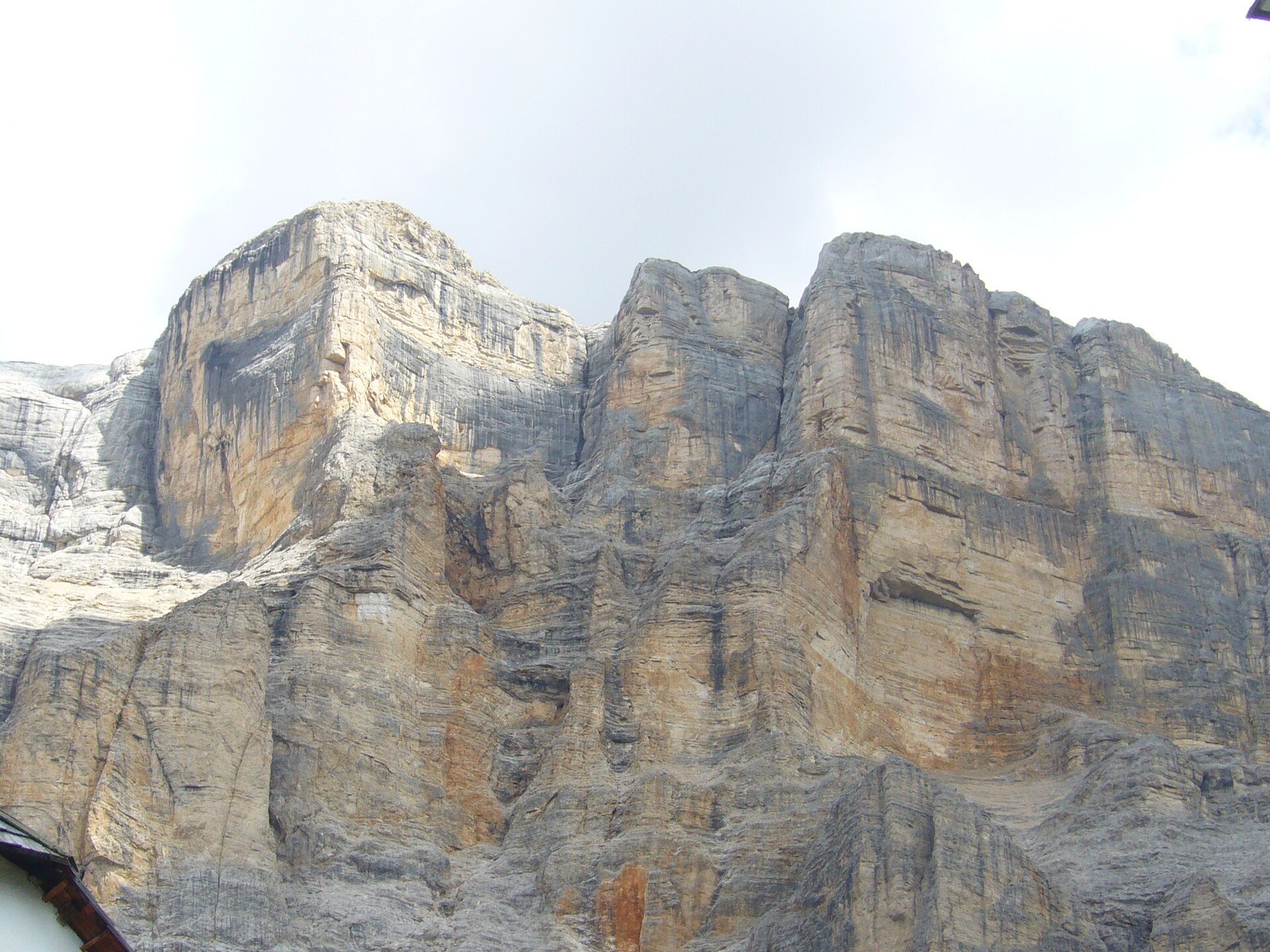
About this place
Sas dla Crusc — known in German as Heiligkreuzkofel and in Italian as Sasso della Croce — rises to 2,907 metres in the Alta Badia area of South Tyrol, Italy. The massif stands out as one of the most recognisable rock formations in the central Dolomites, visible from a wide arc of surrounding trails and valleys.
How do you get there?
The village of Badia in the Val Badia valley is the natural starting point. A chairlift called Santa Croce runs from Badia up to the La Crusc platform, cutting the initial ascent to a few minutes. Walking the same distance takes about an hour. By car, Bolzano is roughly 1.5 hours away; Cortina d'Ampezzo is a similar distance from the opposite direction. SAD regional buses serve the valley throughout the year, with more frequent schedules in summer.
What will you find at the summit?
The top opens onto a sweeping panorama of the central Dolomites, including the Fanes-Sennes massif, the Puez-Odle group, and — on clear days — the distant spires of Tre Cime di Lavaredo. The summit plateau also holds the remains of an old sanctuary, which gave the mountain its Ladin name: sas dla crusc means "rock of the cross." On clear autumn days the northern horizon reveals the Austrian Alps.
How do you climb it?
The standard route follows a via ferrata up the western face. The first iron fixtures appear about 40 minutes above La Crusc, followed by roughly 1.5 hours of protected climbing on exposed rock. The angle eases as you gain the high plateau, and a short walk leads to the true summit. Total time from Badia is around 3 hours. The route is graded suitable for beginners, though it demands a good level of fitness and proper gear: harness, via ferrata set, helmet, and mountain boots are all required.
An alternative approach traverses through Rifugio Fanes (Fanes Hut), connecting Sas dla Crusc with the wider Fanes-Sennes-Braies Nature Park and allowing a longer multi-day circuit.
When is the best time to visit?
The climbing season runs from June to September. July and August see the best-prepared trails and the most activity on the mountain. September is quieter, with stable weather and early autumn colour on the slopes below the rock band. Outside these months, snow lingers on the eastern faces and the via ferrata becomes a serious winter undertaking requiring crampons and ice tools.
Frequently asked questions
Is Sas dla Crusc suitable for families with young children? The via ferrata section is not appropriate for small children. Families who want the views without technical climbing can stop at the La Crusc chairlift station — the outlook across the Alta Badia valley and onto the rock face is already impressive from there.
What equipment do I need? A via ferrata harness with lanyards, a helmet, and sturdy mountain boots are the minimum. Equipment can be hired at outdoor sports shops in Badia and San Cassiano.
How long does the full outing take? A loop from Badia — ascending via the via ferrata and descending on a separate trail — takes 5–6 hours. Using the chairlift in one direction cuts roughly an hour off that.
Is there a mountain hut near the summit? There is no hut on the summit itself. Rifugio Fanes lies a few kilometres away and can be reached via the Fanes-Sennes-Braies Nature Park. Staying overnight there makes it easy to combine the Sas dla Crusc climb with a longer trek through the Ladin Dolomites.
Nearby places

Earn badges for the places you visit
Download NextOnTrip, discover new places and check off your trails.