About this place
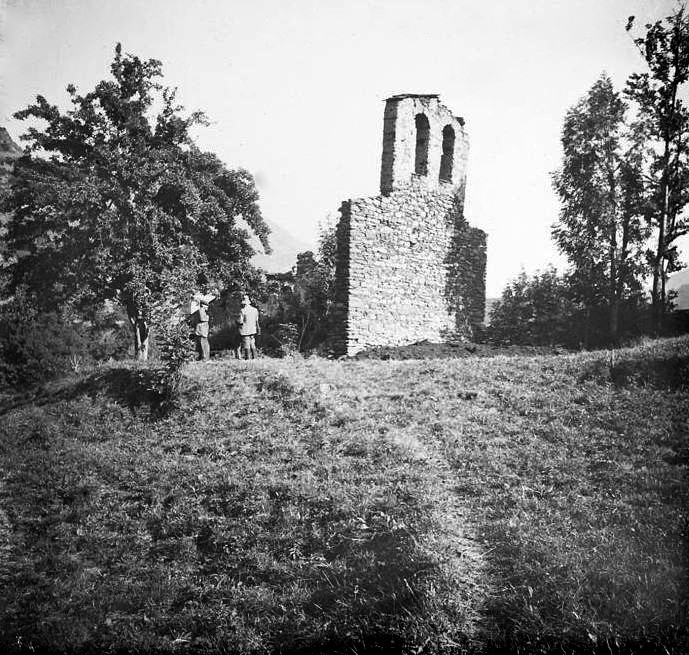
Santa Eulàlia d'Alós Sobirà is the ruined Romanesque church of a vanished medieval village in the municipality of Alt Àneu, in the Pallars Sobirà region of Catalonia. The site sits above the present-day village of Alós d'Isil, within what was once the term of Isil, marking the exact spot where a settlement stood until the 14th century.
What is the history behind this place?
Santa Eulàlia served as the parish church of Alós Sobirà, the upper of the two medieval nuclei that made up Alós — the other being Alós Jussà, lower down the valley. Written records mention the church from 1090 onward, but the trail goes cold in 1338, when its name disappears from documents. That date lines up with the resettlement of the entire community — 68 households at the time — down to Alós Jussà, today's village of Alós d'Isil. Once the move was complete, the upper settlement was abandoned and eventually erased from the map as an inhabited place.
What is left to see?
Don't expect a restored monument. What remains are wall fragments substantial enough to trace the outline of the original floor plan, but nothing more — no roof, no standing nave, no interpretive signage. It's a quiet archaeological trace of a community that stopped existing almost seven centuries ago, set in the landscape typical of Alt Àneu and the Noguera Pallaresa valley: meadows, forest, and steep rocky slopes characteristic of this stretch of the Catalan Pyrenees.
How do you get there?
The starting point is Alós d'Isil, a village within the Alt Àneu municipality, in the Isil valley in the northern part of Pallars Sobirà. The ruins lie above the current village, on the site of the old upper settlement, reached on local mountain paths rather than a signposted route. This is a destination for travelers interested in the region's medieval history and Pyrenean settlement patterns, not for those after a polished, infrastructure-heavy attraction.
When is the best time to visit?
Late spring through early autumn (May to October) is the most reliable window, when mountain trails are clear of snow and accessible on foot. In winter, the Alt Àneu area can be cut off by snowfall, and reaching the ruins may be difficult or impossible. It's worth combining the visit with a stop in Alós d'Isil itself and the other villages of the Àneu valley, well known for their Romanesque religious architecture.
Frequently asked questions
Is there anything left to see at Santa Eulàlia? Yes, but not much — surviving wall fragments let you make out the church's original floor plan. It's a ruin, not a functioning building.
Where exactly was the village of Alós Sobirà located? Above today's village of Alós d'Isil, in the Alt Àneu municipality, Pallars Sobirà. The ruins sit at roughly 42.7031, 1.09411.
Why did Alós Sobirà disappear? Historical sources indicate that around 1338 the entire community, then numbering 68 households, moved down to the lower settlement of Alós Jussà, today's Alós d'Isil. The upper village was abandoned from that point on.
Is it worth combining this with other sights in the area? Yes — the Àneu valley and the neighboring villages of the Alt Àneu municipality are rich in Romanesque architecture and serve as a gateway to hiking routes in the Catalan Pyrenees.
Nearby places

Earn badges for the places you visit
Download NextOnTrip, discover new places and check off your trails.