About this place
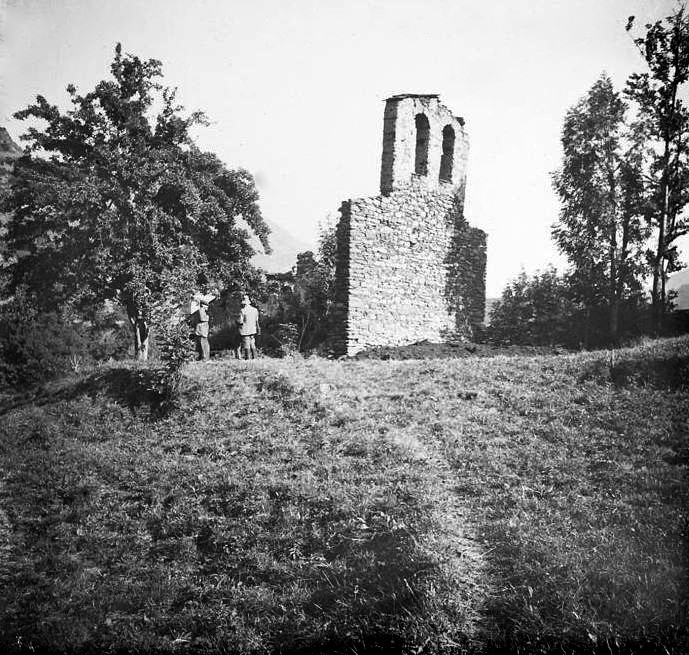
Sant Beado is a small Romanesque hermitage church in the municipality of la Guingueta d'Àneu, in the Pallars Sobirà region of the Catalan Pyrenees. Perched above 1,670 metres on the southern ridge of the Serra Mitjana — the line that separates the Riu d'Unarre valley from the Torrent de Sant Beado stream — it is the kind of stop that rewards travelers looking for a genuine piece of medieval mountain history rather than a roadside monument.
How do you get there?
The chapel sits about 1.5 km north-northeast of Cerbi, one of the villages within the municipality of la Guingueta d'Àneu. There is no road access: the final stretch of the route starts at Bordes d'Aurós, a cluster of traditional mountain shepherd huts, and continues on foot up the slope to the isolated building. Because of the altitude and terrain, summer and early autumn are the best windows to visit, when the path is fully passable and weather in this part of the Pyrenees tends to be at its most stable.
What will you see on site?
Sant Beado is a modest single-nave building, raised in Romanesque style during the first half of the 11th century — the same period that produced most of the rural and monastic churches scattered across the Àneu valleys. Its plain stone construction and remote setting have preserved the austere, hermit-like character the building has carried since the Middle Ages. Administratively, the church falls under the Diocese of Urgell and the Pallars Sobirà archpresbytery, and it is formally linked to the parish of Sant Serni de Cerbi in the neighboring village.
What is the story behind it?
The name Sant Beado comes from a local legend about "Beat de Cerbi," a French pilgrim said to have been caught in a violent snowstorm near Cerbi. According to the story, he performed several miracles there, and the local devotion that followed eventually led to the construction of the chapel on the spot. The saint's feast day is celebrated on February 15, and the building still serves as a focus of local folk devotion, though its isolation means it rarely hosts regular services.
Who is this place for?
Sant Beado is a textbook example of the mountain hermitages scattered through the Àneu valleys, an area known for its dense network of Romanesque churches woven into the Pallars Sobirà landscape. The visit suits travelers who enjoy pairing sightseeing with walking: reaching the trailhead at Bordes d'Aurós already requires a car or a long approach on foot, and from there only a mountain path leads onward. The payoff is silence, a valley panorama, and a building that has changed remarkably little in a thousand years.
Frequently Asked Questions
Can you drive to Sant Beado? No. The final section, from Bordes d'Aurós to the chapel, is accessible only by a mountain footpath.
Which village is the best starting point? Cerbi, a village within the municipality of la Guingueta d'Àneu, sits about 1.5 km from Sant Beado and serves as the usual reference point.
Where does the church's name come from? From the legendary pilgrim "Beat de Cerbi," who according to local tradition survived a snowstorm here and performed miracles.
When is the best time to visit? Summer and early autumn, when the mountain path is easiest to access and Pyrenean weather is at its most stable.
Nearby places

Earn badges for the places you visit
Download NextOnTrip, discover new places and check off your trails.