About this place
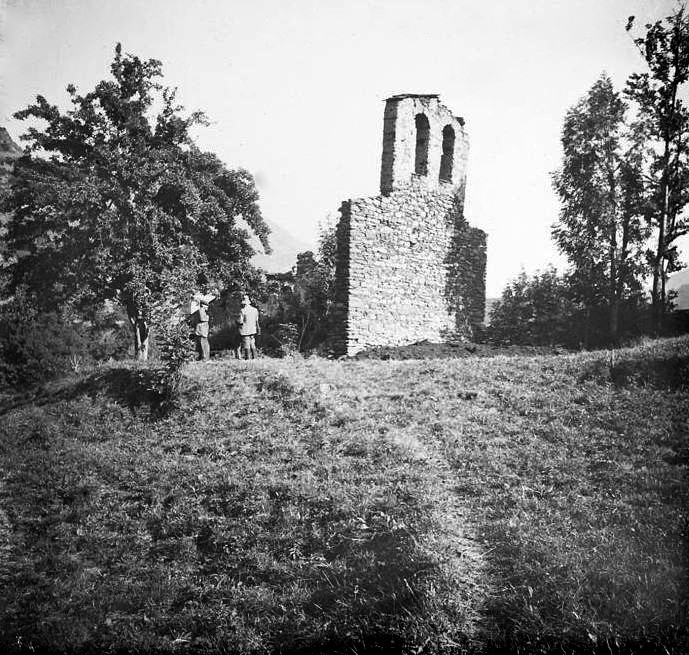
Sant Lliser d'Alós d'Isil is a small parish church in the hamlet of Alós, part of the municipality of Alt Àneu in the Pallars Sobirà region, deep in the Catalan Pyrenees. It sits close enough to other landmarks of the Vall d'Àneu — including the well-known church of Sant Joan d'Isil — that visitors often combine the two on a single day trip through the valley.
How do you get there?
Alós lies in the upper stretch of the Àneu valley, right next to Isil, the last sizeable village before the mountain passes leading toward the French border. From Esterri d'Àneu, the main town of the municipality, it's a short drive of around fifteen minutes along the local road that follows the Noguera Pallaresa river. The setting is typical of high-mountain villages in Pallars Sobirà: stone houses, narrow lanes, and a church that acts as the natural landmark at the centre of the settlement.
What will you see?
The building's current appearance is largely the result of a Baroque remodelling, yet Sant Lliser has retained significant traces of its original Romanesque fabric. The most valuable surviving element is the portal on the south façade, richly decorated and dated to the late 12th century. Its form is closely comparable to the portal of the nearby church of Sant Joan d'Isil, suggesting the two were carved by stonemasons working in the same valley workshop.
The portal is made up of three archivolts resting on plain columns, framed by a drip moulding typical of Pyrenean Romanesque architecture. The central archivolt stands out for its decoration of rosettes enclosed in circles alternating with cylindrical elements, a motif associated with the local stone-carving tradition active around the turn of the 12th and 13th centuries.
The church's history is documented as far back as 1090, making it one of the earlier recorded religious buildings in this part of Pallars Sobirà. During restoration work carried out in 1989, two sculpted stone blocks were found embedded in the walls of the bell tower, likely reused fragments of earlier architectural decoration. Archaeological surveys conducted around the same time uncovered twenty-one tombs dating from the 11th to the 18th century, evidence that a burial ground surrounded the church and remained in use for several hundred years.
When should you visit?
Given its location high in the Àneu valley, the best window for a visit runs from June to September, when mountain roads and passes are fully open and the weather in the Pyrenees is at its most stable. Outside the summer months the area can be affected by snow, which makes reaching smaller villages like Alós more difficult. As with many rural churches in the region, Sant Lliser is not permanently open to visitors — it's worth checking local information or contacting the Alt Àneu municipal office before planning a stop.
Frequently asked questions
Is Sant Lliser d'Alós d'Isil entirely Romanesque? No. Its present form is mostly the result of a later Baroque rebuild, but it preserves important Romanesque elements, above all the richly carved south portal from the late 12th century.
What is the church's most notable architectural feature? The south portal — three archivolts on plain columns under a drip moulding, with the central archivolt decorated with rosettes and cylindrical elements, closely related to the portal at Sant Joan d'Isil.
Has any archaeological work been carried out at the site? Yes. In 1989, restoration work uncovered two sculpted stone blocks inside the bell tower walls, and surveys around the church revealed twenty-one tombs dating from the 11th to the 18th century.
How far back does the church's documented history go? The earliest documentation of Sant Lliser dates to 1090, confirming its early medieval, Romanesque origins.
Nearby places

Earn badges for the places you visit
Download NextOnTrip, discover new places and check off your trails.