About this place
Plaça de la Quartera is a small, intimate square in the Gerreria quarter, right in the heart of Palma's old town on Mallorca.
Where does the square's name come from?
The name is no accident. A "quartera" was a historic unit for measuring grain, and in the 15th century a building stood here that served as the city's public grain store. Wheat was kept here to safeguard Palma's residents against drought and poor harvests — the kind of emergencies that could threaten an entire city's food supply.
Who worked in the old grain store?
Running a municipal granary took an entire team of specialists. Stewards known as mayordomos oversaw operations, purgadores cleaned and sorted the incoming grain, medidores measured the quantities stored, and millers handled the grinding. This division of labor shows just how seriously the city took food security in past centuries.
The storehouse itself no longer stands — the city council had it torn down in 1875. Even so, the square kept its historic name, a lasting reminder of what once stood here.
What can you see there today?
One of the square's most distinctive features is its arcaded galleries, still intact on three sides — only one side has lost its original portico. This layout gives the square the intimate, sheltered feel typical of old Mediterranean market squares, where trade and daily life once unfolded under the shade of the colonnades.
It's also worth stepping onto the neighboring Carrer de la Corderia, home until recently to Ca la Seu, a rope and cordage shop founded in 1510 and considered one of Europe's oldest continuously run businesses. Around 2010 it was converted into a bar, but its centuries-long history still fascinates anyone curious about Palma's traditional crafts.
Today, Plaça de la Quartera is a lively gathering spot — locals and visitors alike linger in the shade of the arcades, drawn by the small cafés and boutique shops that give the square its relaxed, Mediterranean character, away from the busier main streets of the old town.
How do you get to Plaça de la Quartera?
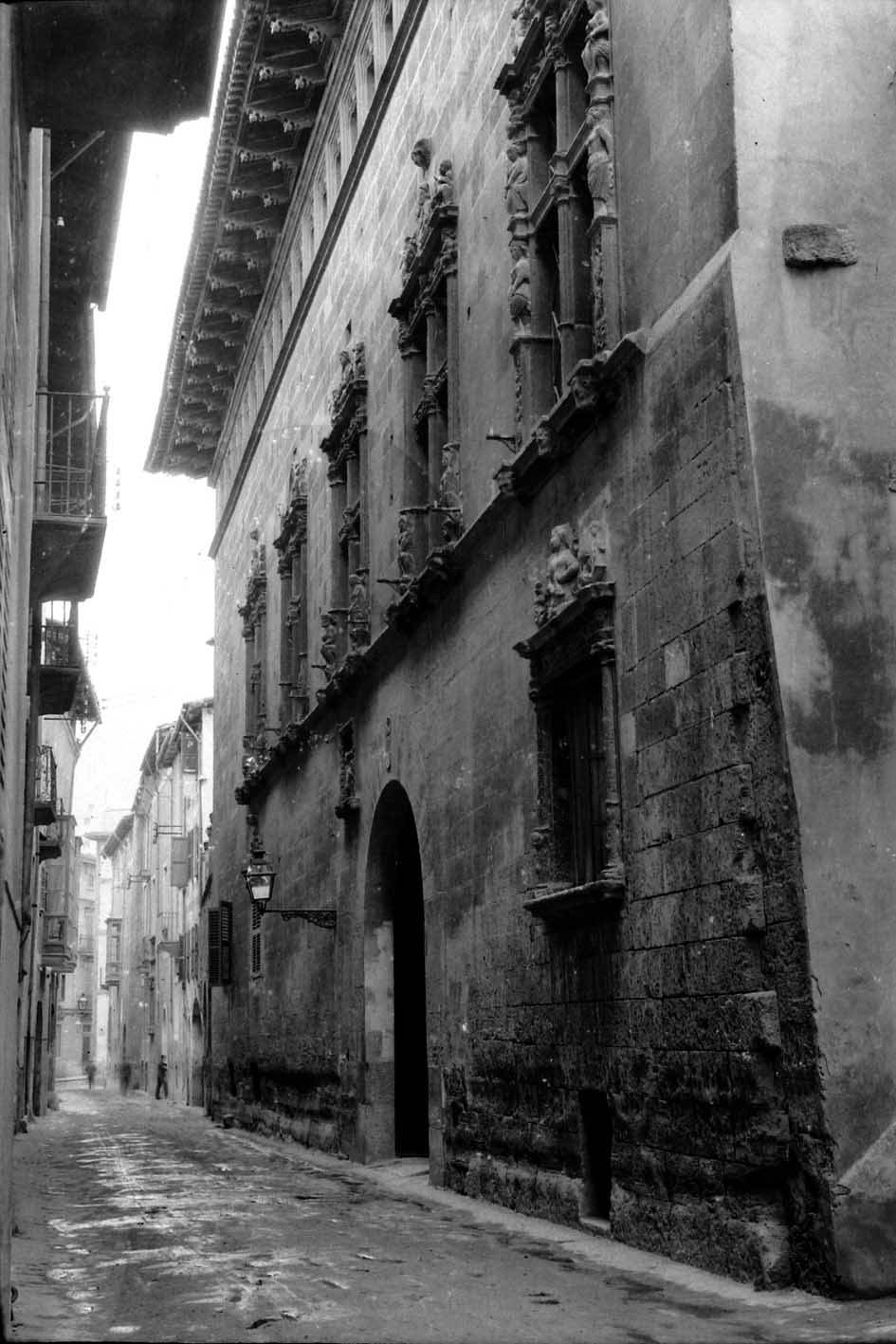
The square sits within Palma's historic old town, in the Gerreria quarter — one of the city's traditional artisan districts. The best way to reach it is on foot, wandering through the old town's narrow streets; it's a natural stop along a walking route that connects to the surrounding squares and alleyways of the neighborhood.
When is the best time to visit?
The square is most enjoyable during the quieter hours of the day — morning or late afternoon, when the arcades offer welcome shade and the café tables aren't yet crowded. Outside peak tourist season (autumn, winter, early spring), the plaza keeps a more authentic, local feel.
Frequently asked questions
What does "Quartera" mean? It refers to a historic unit for measuring grain — for centuries, this site held the city's public granary, where wheat was stored and measured.
Does the original granary building still stand? No, it was demolished in 1875 by order of the city council. What remains is the square's name and the arcaded galleries on three of its sides.
What's worth seeing nearby? The adjoining Carrer de la Corderia, once home to the historic rope shop Ca la Seu, founded in 1510.
Is it a popular spot with tourists? Yes, though it retains a low-key character — it's a favorite rest stop for anyone exploring the old town, thanks to its nearby cafés and small local shops.
Nearby places

Earn badges for the places you visit
Download NextOnTrip, discover new places and check off your trails.