About this place
Can Fàbregues is a historic townhouse in the old center of Palma de Mallorca, on Carrer de Sant Francesc, with a turbulent past stretching back to the Middle Ages and an equally dramatic 21st-century rescue story.
What is this place?
In the 15th century the building was known as the Llonjeta of inquisitor Pere Gual. Between 1488 and 1535 it served as the seat of the Inquisition on Mallorca, with proceedings there focused mainly on the forced conversion of the island's Jewish-descended population (the chuetas). It's one of the few surviving buildings on the island tied directly to this dark chapter of local history.
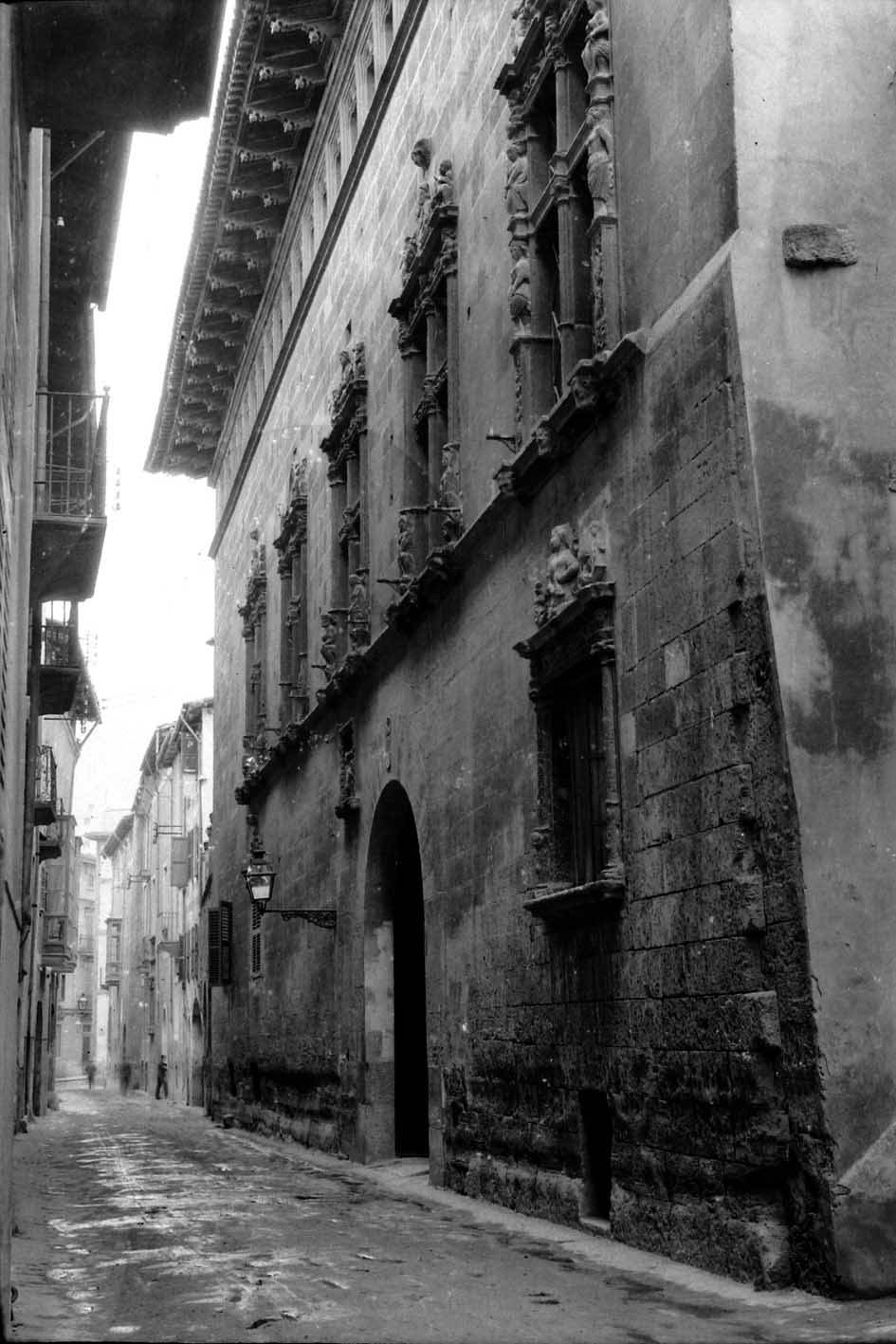
The structure has three floors, with walls built using rammed earth (tapial) reinforced with lime — a technique typical of old Palma townhouses. The architecture layers several eras: Gothic elements alongside later neoclassical additions, evidence of repeated remodeling over the centuries. The plot covers roughly 1,332 square meters.
Why does its history matter?
The story of Can Fàbregues is really one of near-loss and recovery. Palma's city council bought the building in 1985, but did little to preserve it over the following decades. Ceilings caved in, beams rotted, and rubble piled up inside — by 2012, the heritage watchdog Hispania Nostra had added Can Fàbregues to its Red List of endangered buildings, warning that demolition (with only the façade preserved) was a real possibility.
The turning point came in 2013, when the building — by then sold into private hands — was acquired at auction for €1,101,000 by a luxury-hotel entrepreneur experienced in restoring historic Palma townhouses (notably Can Cera, on the same street). The plan was to convert it into a small luxury hotel. Restoration took over a decade: only in December 2025 did Hispania Nostra formally remove Can Fàbregues from its Red List, confirming the building had been successfully rehabilitated.
How do you get there?
Can Fàbregues sits in the heart of Palma's old town, on Carrer de Sant Francesc, a few minutes' walk from La Seu cathedral and the Basilica of Sant Francesc. The surrounding streets are classic old-town Palma — narrow lanes, stone façades, and neighboring restored townhouses (casals) such as the aforementioned Can Cera. The easiest approach is on foot from the old quarter, or by local bus to stops near Plaça de Cort.
What will you see?
From the outside, the building shows its distinctive three-story massing and a façade blending Gothic elements with later neoclassical touches — a visible record of centuries of alteration. Because it underwent a full rehabilitation after years of structural collapse and neglect, it's worth viewing not just as another old façade but as a case study in successfully rescuing endangered heritage in Palma. For anyone interested in the city's history, it's also a tangible reminder of one of the darkest chapters in the relationship between the Inquisition and the local community.
When should you visit?
Since Can Fàbregues is a restored private building (now adapted for hotel use), the surrounding old town is best explored during daylight hours, when the façade details are easiest to appreciate and walking the narrow streets is most pleasant. Spring and early autumn are the most comfortable seasons for exploring central Palma on foot, avoiding summer heat and crowds.
Frequently Asked Questions
Can you visit the inside of Can Fàbregues? After its rehabilitation, completed in 2025, the building serves a private purpose (intended as a hotel), so interior access depends on its current use — worth checking locally or with tourist information before visiting.
Why was the building on the Red List of endangered heritage? Decades of neglect, from the city's purchase in 1985 until its sale in 2013, left the structure badly deteriorated, with collapsed ceilings and severely damaged beams.
What is Can Fàbregues' connection to the Inquisition? Between 1488 and 1535, the building housed the seat of the Inquisition on Mallorca, which conducted proceedings mainly targeting forced conversions among the island's Jewish-descended population.
Where exactly is the building located? On Carrer de Sant Francesc in the historic center of Palma de Mallorca, near other restored townhouses in the same neighborhood.
Nearby places

Earn badges for the places you visit
Download NextOnTrip, discover new places and check off your trails.