About this place
Can Vivot is one of the grandest noble townhouses in Palma's old quarter on Mallorca — a private residence that has stayed in the same family for centuries and hides one of the best-preserved baroque interiors on the island.
What is Can Vivot?
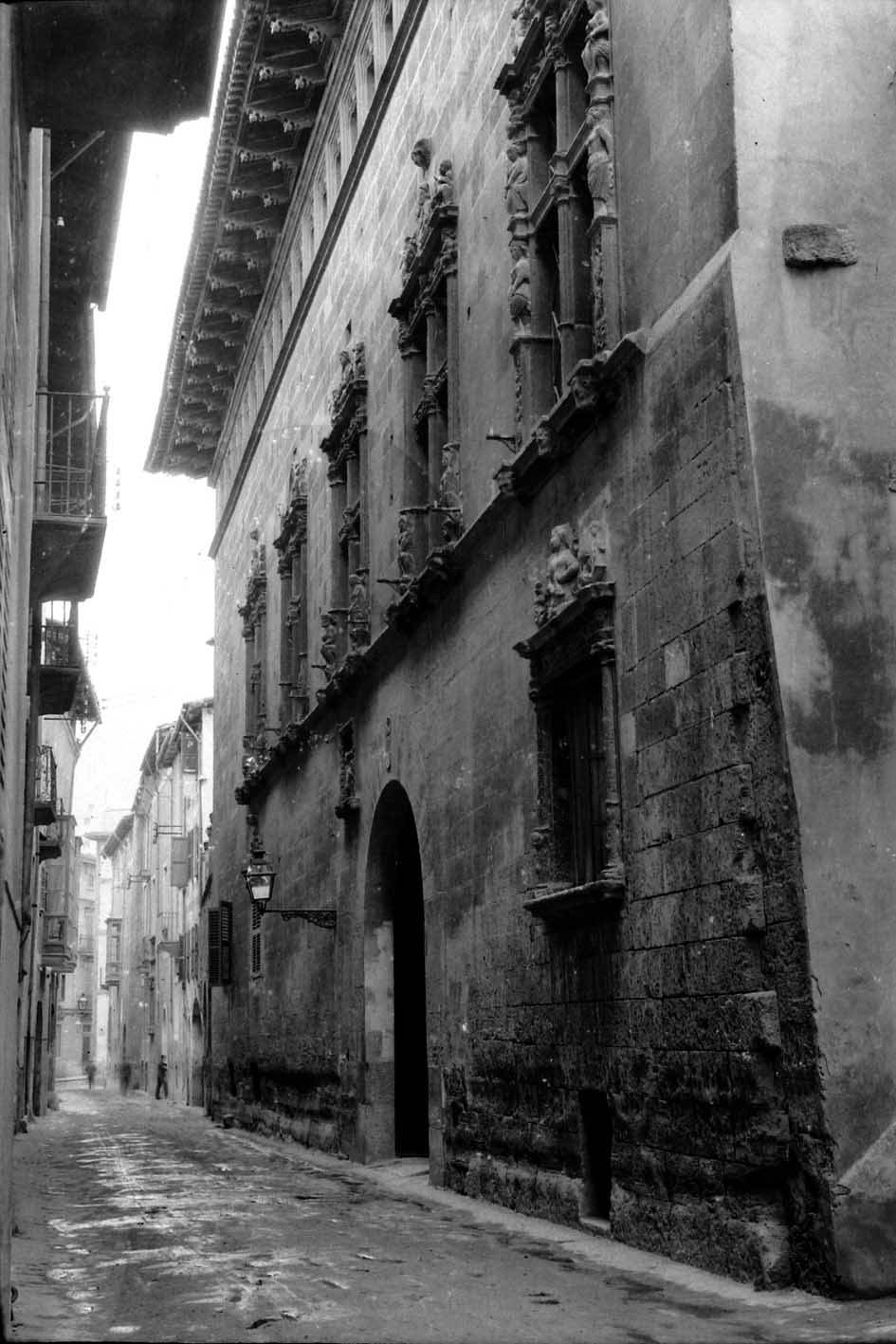
Can Vivot is a stately urban palace whose foundations go back to the 14th century — traces of the original medieval structure are still visible in the lower sections of the facade and walls. The building took shape when two adjoining properties on the same plot were merged into a single residence following the Revolt of the Brotherhoods (Revolta de les Germanies) of 1521–1523. From the early 16th century the house belonged to the Villalonga family, and it was Joan Sureda i Villalonga who commissioned the extensive renovation, carried out between the late 17th and early 18th century, that gave the palace its present form. In 1717, following years of political upheaval tied to the War of the Spanish Succession, King Philip V granted him the title of Marquis de Vivot — the source of the palace's name today.
What will you see inside?
The heart of Can Vivot is its monumental baroque courtyard, built in the early 18th century and regarded as one of the finest on the island. The rectangular patio is framed by red marble columns topped with Corinthian-style capitals supporting lowered arches, and its floor keeps its original baroque paving. An imperial staircase rises from the courtyard in two symmetrical flights that meet on a shared upper landing — a striking architectural flourish rarely matched by other Palma palaces on this scale. Back in the 19th century, Archduke Ludwig Salvator of Austria, a keen chronicler of the Balearics, singled this patio out as among the most beautiful in the city. Can Vivot is also unusual for having kept its original 17th- and 18th-century interiors essentially intact: furniture, decoration and fittings still stand where they were placed centuries ago, turning the palace into a rare, living record of Mallorcan aristocratic life.
The Vivot family story
The palace has remained in family hands for generations, first under the Villalonga name and then the Vivots — a continuity almost unheard of among the city's grand houses. In 1711, during the War of the Spanish Succession, a pro-Bourbon conspiracy was uncovered inside the house, and Joan Sureda was arrested. He avoided serious punishment and returned to Mallorca with the Bourbon expedition, earning royal favor that led, a few years later, to his marquisate.
How do you get to Can Vivot?
The palace sits right in the heart of Palma's old town, tucked among the narrow lanes just a short walk from La Seu cathedral and Plaça de Cort. Walking is by far the easiest way in — this is exactly the kind of neighborhood best explored slowly, moving from one hidden courtyard to the next. Several city bus stops serve the surrounding streets, and the nearest underground car parks are only a few minutes away on foot.
When should you visit?
Can Vivot remains a private residence, so access to the interior and courtyard is typically limited to specific opening days or organized visits — it's worth checking the current schedule before you go. The courtyard is also included on some of Palma's self-guided "patio routes," a popular way for visitors to explore the old town's hidden architecture. Weekday mornings outside the peak summer season tend to be the quietest time to wander this part of the city, with soft light that shows the courtyard at its best.
Frequently Asked Questions
Can visitors enter Can Vivot? Yes, though as a private residence it opens its courtyard and interiors only at set times or through organized visits, so it's best to plan ahead and check current access before arriving.
Why is the Can Vivot courtyard so special? It's one of the largest and best-preserved baroque courtyards in Palma, distinguished by its red marble columns and the twin-flight imperial staircase that meets on a single upper landing.
How old is the building? Its oldest structural elements date to the 14th century, but the palace owes its current appearance to a major renovation carried out at the turn of the 17th and 18th centuries.
Where does the name Can Vivot come from? It comes from the title Marquis de Vivot, granted in 1717 to Joan Sureda i Villalonga by King Philip V.
Nearby places

Earn badges for the places you visit
Download NextOnTrip, discover new places and check off your trails.