About this place
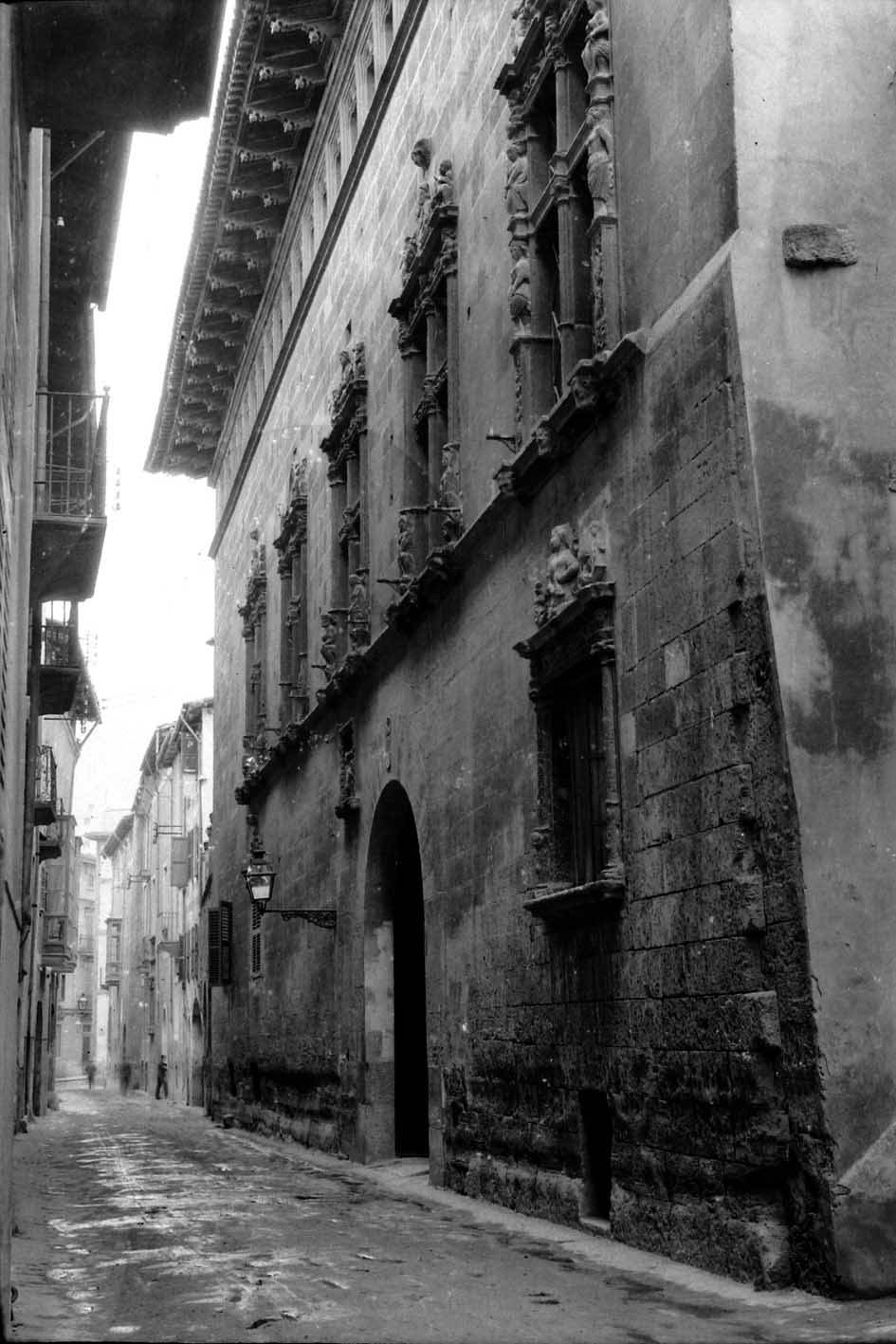
Can Catlar (also known as Can Catlar del Llorer or Cal Marquès del Palmer) is a historic townhouse in Palma de Mallorca's old town, listed as a Spanish cultural asset (Bien de Interés Cultural) since 1973.
What is Can Catlar?
It's a patrician house with a layered history stretching back to the Middle Ages, with some researchers pointing to even earlier, Muslim-era roots on the site. The building as it stands today combines elements from several periods: Gothic arches and courtyard fragments show 14th-century craftsmanship, while the main structure was reshaped repeatedly, notably in the 16th and 17th centuries. It's a classic example of a Palma noble residence, where successive generations of owners adapted the interiors to their needs while leaving the oldest, most valuable features untouched.
The building's name traces back to the Descatlar (Dezcatlar) family, and the site once played an economic role too — from 1442 it housed the Seca, the mint that struck Majorcan currency, established under a grant from King Alfonso V to Pere Abrí-Descatlar y de Santacoloma. In the 18th century, the estate's owner, Pedro Dezcallar y Net, was granted the title of Baron of Pinopar by Archduke Charles of Austria. By the mid-19th century the property passed to the Llorac family, which explains the "del Llorer" variant of the name still used today.
What will you see inside?
The heart of Can Catlar is its courtyard — one of the oldest and most valuable patios in Palma's entire old town. This is where the building's Gothic origins are most visible: stone arches, proportions typical of medieval Majorcan residential and defensive architecture, and a layout that has survived every later renovation. The building currently houses Palma's Municipal Archive (Arxiu Municipal), which occasionally hosts temporary exhibitions open to visitors — it's worth checking the current schedule before you go, since access to the interior tends to be limited to the archive's opening hours or the run of a specific exhibition.
How do you get there?
Can Catlar sits right in the heart of Palma's old town, within the dense grid of narrow streets best explored on foot. The easiest route is a short walk from La Seu Cathedral or Plaça de Cort — just a few minutes through the shaded old-town lanes. Since the area is largely pedestrianised, driving there doesn't make sense; leave the car in a car park on the edge of the historic centre and continue on foot.
When should you visit?
The best time to explore Palma's old town, including the Can Catlar area, is spring (April–June) or early autumn (September–October), when temperatures are milder than in July and August and the streets are less crowded with tourists. If you specifically want to step inside during an archive exhibition, plan your visit for a weekday morning, when Palma's cultural institutions are typically open.
Frequently asked questions
Is Can Catlar open to visitors? The building now houses Palma's Municipal Archive, so access to the interior depends on the archive's opening hours and any temporary exhibitions — it isn't a standard tourist attraction with fixed visiting hours.
Where does the name Can Catlar come from? The name refers to the Descatlar (Dezcatlar) family historically tied to the site, while the "del Llorer" variant refers to the Llorac family, who took over the estate in the 19th century.
What's the building's most valuable feature? Architecture historians most often point to the courtyard with its Gothic arches as the oldest and best-preserved part of the structure.
Are there similar landmarks nearby? Yes — Palma's old town is known for many similar courtyards and patrician townhouses, which together form a natural walking route through the oldest part of the city.
Nearby places

Earn badges for the places you visit
Download NextOnTrip, discover new places and check off your trails.