About this place
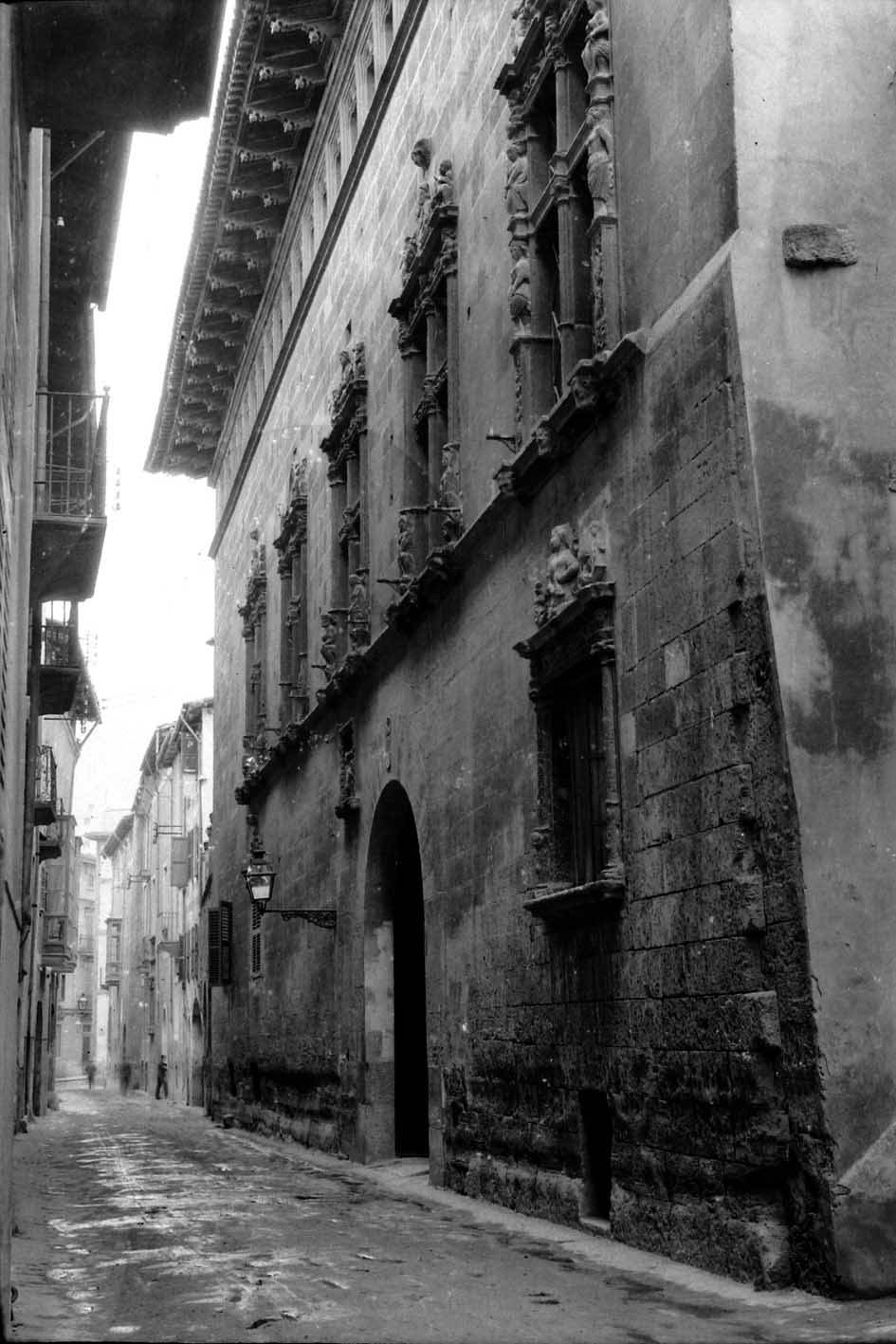
Can Dusai is a 16th-century patrician townhouse in the old quarter of Palma de Mallorca, standing at Calle de Can Dusai 3, inside what used to be the city's Jewish district.
Where does the name Can Dusai come from?
The house takes its name from Meir Dusai, a wealthy Jewish merchant who lived on the site from around the year 1300 before later relocating to Egypt. Even after his move, the property stayed in the hands of his descendants until the early 17th century. The street itself, Carrer de Can Dusai, was laid out in the second half of the 14th century and linked several key points of Palma's medieval judería.
What does the building look like architecturally?
Can Dusai is a good example of a Palma "casal" — a townhouse built around an interior patio, a typical residence for the island's landed families. The courtyard is marked by a lowered arch resting on pilasters, a form associated with early 17th-century patio design, set above an uneven stone floor laid with Binissalem limestone. A semicircular, medieval-style arch has also survived, exposing the earliest construction phase behind the later additions. The main entrance itself opens through a more recent segmental arch, so the façade reads as several overlapping building campaigns rather than a single moment in time.
Who owned Can Dusai over the centuries?
From the 17th century onward, the house belonged to the Duzay family, who had come to Mallorca from Sardinia. Their coat of arms is still carved into the patio arches today, a rare piece of surviving heraldry on a private building right in the heart of Palma's old town.
Can visitors go inside Can Dusai?
The building is currently in private use, housing an architecture firm — a common fate for Palma's historic casals, since ongoing private use is often what keeps these houses maintained without turning them into full-scale tourist sites. As a result, the interior is not generally open to the public, and in practice a visit means viewing the façade, and occasionally a glimpse of the patio, from the street.
Why is Can Dusai worth seeing when exploring Palma?
The house sits along the walking routes through Palma's former Jewish quarter, among the narrow lanes of the old town. It's a spot where Roman, Arab, Christian and Jewish layers of the city's history sit stacked within a single small footprint. For anyone interested in Mallorcan townhouse architecture, Can Dusai is a valuable case study of a casal that has avoided commercial conversion and kept its original courtyard layout intact.
Frequently Asked Questions
Where does the name Can Dusai come from? From Meir Dusai, a Jewish merchant who lived there from around 1300; the name stuck even after the family later left for Egypt.
How old is the building? Its current form dates to the 16th century, with the patio elements added in the early 17th century.
Can visitors enter Can Dusai? No — it's a private building used as an architecture office, so visits are limited to the façade and street-level views.
What are the main things to notice on-site? The lowered arch on pilasters in the patio, the surviving medieval-style arch, and the Duzay family coat of arms carved into the courtyard arches.
Nearby places

Earn badges for the places you visit
Download NextOnTrip, discover new places and check off your trails.