About this place
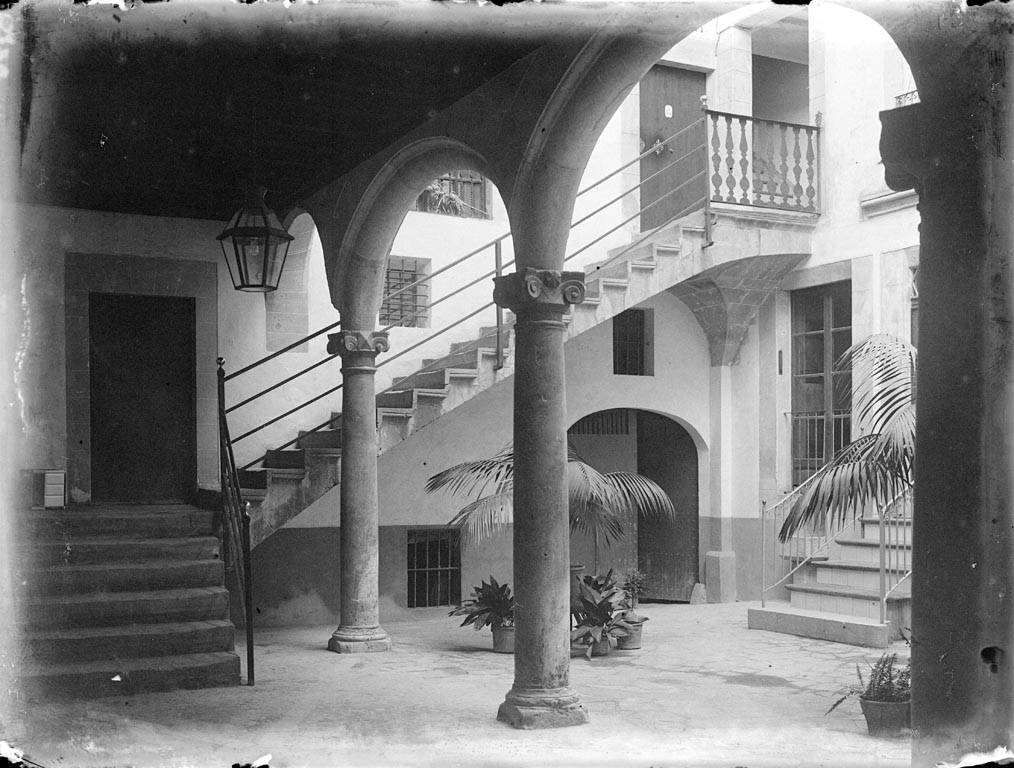
Can Ordines d'Almadrà is a historic townhouse in the old quarter of Palma de Mallorca, counted among the notable casals featured on the city's patio-visiting routes. The building keeps a Gothic entrance portal and a family history reaching back to the early 1500s, making it a worthwhile stop for anyone exploring Palma's historic centre beyond the usual landmarks.
When was Can Ordines d'Almadrà built?
Construction began in the early 16th century at the initiative of Berenguer Vivot, who was married to Joana de Santjoan, lady of the knighthood of Ariany. That marriage is directly tied to the building's best-known architectural detail: the inscription above the entrance.
What is worth seeing inside?
The entrance vestibule is framed by a Gothic portal carrying a Latin inscription. Translated, it urges quiet and discretion, on the grounds that silence brings its own rewards — a message linked to the union of knight Vivot and Joana de Santjoan. The same vestibule holds two further portals leading to rooms that originally served as private studies, a feature common in the homes of Palma's noble and merchant families of the period.
How did ownership of the house change?
The name the building carries today comes from a later owning family. The property passed to the Ordines d'Almadrà line through the marriage of Àngela Prohens to Joan Ordines d'Almadrà. The Ordines d'Almadrà surname itself has peasant roots, tracing back to landholders from Alaró, a town in Mallorca's interior. This trajectory — a knightly foundation, followed by a marriage that brought in a family of rural origin — is a fairly common pattern among Palma's old townhouses, where ownership and family names shifted across generations through marriage alliances.
Where is the building and how can visitors see it?
Can Ordines d'Almadrà stands in Palma's historic centre, within the dense network of narrow streets of the old town, close to other heritage casals. The building is included in the Patios de Palma routes, a set of initiatives that open up the interior courtyards of private and public residences normally closed to passers-by. Because access to the courtyard and interior is usually limited to specific open days, it is worth checking the city's event calendar before planning a visit.
Why add it to a Palma itinerary?
For anyone interested in the domestic architecture of Palma's old nobility and merchant class, Can Ordines d'Almadrà offers a compact but legible example of the layers found across the city's casals: a knightly founding, a Gothic architectural detail, and a later change of family name. It works well as an alternative to the largest, more crowded palaces in the city, showing similar architectural solutions in a quieter setting.
Frequently Asked Questions
Who built Can Ordines d'Almadrà? Berenguer Vivot commissioned the building in the early 16th century; he was married to Joana de Santjoan, lady of the knighthood of Ariany.
What does the inscription on the entrance portal mean? The Latin text in the vestibule calls for discretion and silence, tying the virtue to the marriage of the building's founders, Vivot and Santjoan.
Where does the name Ordines d'Almadrà come from? The property passed to this family through the marriage of Àngela Prohens to Joan Ordines d'Almadrà; the surname has peasant roots linked to Alaró.
Can the interior of the building be visited? Access to the courtyard and interior rooms is generally offered as part of Palma's patio-visiting routes and open days — checking the current schedule before a visit is recommended.
Nearby places

Earn badges for the places you visit
Download NextOnTrip, discover new places and check off your trails.