About this place
Can Oleo is a Gothic stone mansion in the old town of Palma de Mallorca, standing at Carrer de l'Almudaina 4, just steps from the cathedral and the Almudaina royal palace. Since 1975 it has held the status of Bien de Interés Cultural (BIC), Spain's legal designation for protected heritage sites, and its story stretches back to the 1400s.
Where does the name Can Oleo come from?
The house originally belonged to the Tomàs family, who were involved in outfitting privateering vessels — a common trade in a Mediterranean port like Palma at the time. In 1443 the property passed to Pere Vivot i Pacs. The name we know today came later, once the mansion entered the Oleo family through marriage — it's this surname that stuck and gave the building its current identity.
One family member in particular left his mark on local history: Francesc Oleo, a physician credited with introducing Jenner's smallpox vaccine to the island. He also played an active role during the 1820 plague outbreak in Artà, taking part in efforts to contain the epidemic.
What will you see at Can Oleo?
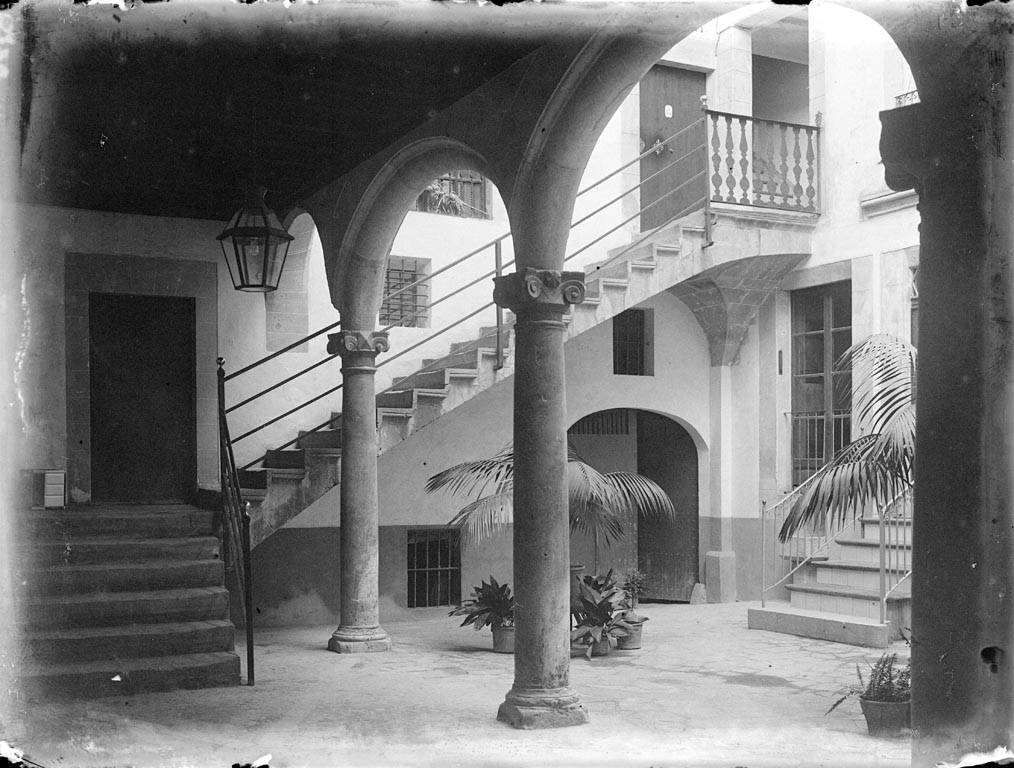
The building's architectural highlight is its Gothic staircase, which by the late 19th century was already drawing the attention of travelers and scholars visiting Palma. It became something of a benchmark for the city's Gothic civil architecture, and it remains the feature most worth seeing today. The stone façade and interior layout reflect the typical pattern of a patrician townhouse in old Palma, where wealthy families combined residence with public display of status.
The building now belongs to the Universitat de les Illes Balears, which has leased it to the regional government for 20 years. Can Oleo currently houses the Centre d'estudis de l'evolució de la Ciutat de Palma, a research center dedicated to studying the city's urban history, linked to the Palma XXI initiative.
How do you get to Can Oleo?
The mansion sits inside Palma's historic core, an easy walk from Palma Cathedral (La Seu) and the Almudaina royal palace. This is pedestrian territory — the narrow streets of the old town aren't built for driving — so the simplest approach is on foot from the cathedral square or from Passeig des Born. Several EMT city bus stops serving central Palma are within a short walk.
When should you visit?
Since Can Oleo mainly functions as a research institution rather than a standard tourist site with fixed opening hours, it's worth checking for scheduled events or open days organized by the center before planning a visit. The surrounding old town is best explored in the morning, before the streets fill up, or in the late afternoon, when the stone façades pick up a warm glow from the low sun.
Frequently Asked Questions
Can you visit the inside of Can Oleo? The building operates as a research center, so access to the interior depends on the institution's current activities — it's best to check locally or look for updated information before your visit.
Why does Can Oleo matter to Palma? It's one of the few well-preserved examples of Gothic civil architecture in the city, and its staircase is regarded as a reference point in the history of local architecture.
Who manages the building today? It's owned by the Universitat de les Illes Balears and used by a research center focused on the urban history of Palma.
Is Can Oleo close to other landmarks? Yes — it sits right in the heart of the old town, next to Palma Cathedral and the Almudaina palace, making it easy to combine with other sights in that part of the city.
Nearby places

Earn badges for the places you visit
Download NextOnTrip, discover new places and check off your trails.