About this place
Can Crespí, also referred to as Can Ribera, is an 18th-century stone mansion standing at Carrer de Sant Roc 1, right in the heart of Palma de Mallorca's old town. The house belonged to the Crespí family, who originally came from nearby Santa Maria del Camí, and it stands today as one of the many casals — the merchant and noble town houses that still give Palma's historic center its stone-labyrinth character.
What can you see there?
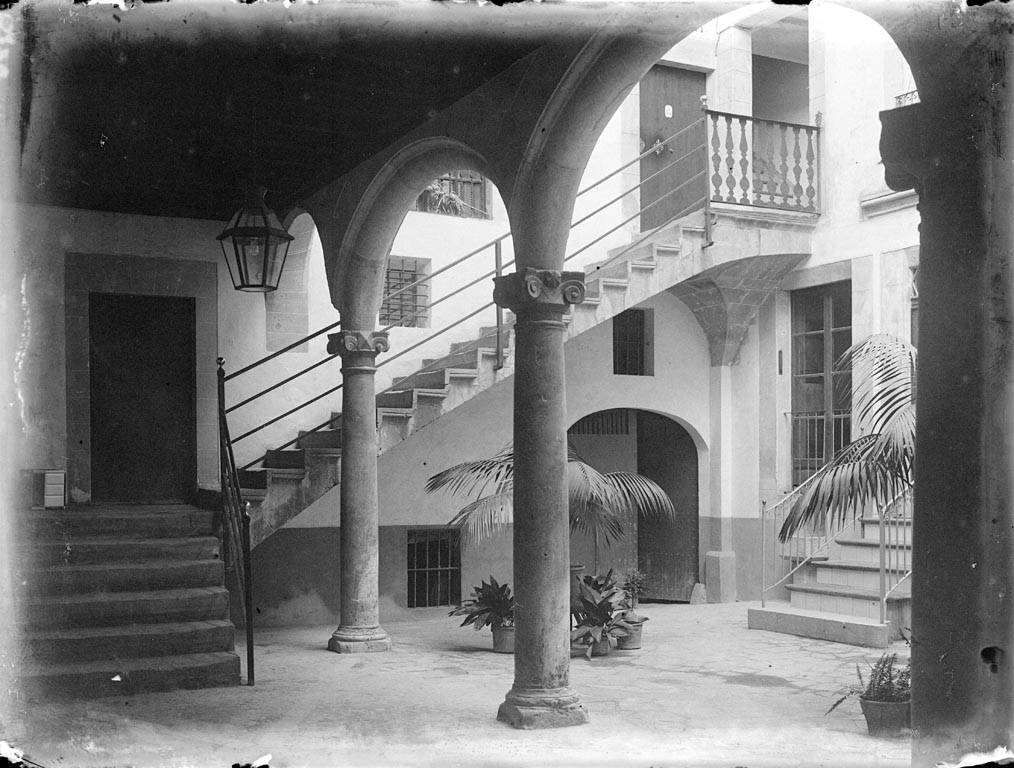
The plain street facade gives little away: a semicircular arched doorway leads through a small vestibule into the inner courtyard that forms the heart of any Palma casal. The covered section of the patio rests on three arches carried by red marble columns topped with Ionic-style capitals — a detail that instantly signals the wealth of the family who once lived here. In the open-air part of the courtyard stands an octagonal well fitted with decorative wrought-iron work, a typical feature of Mallorcan patios from this era.
Can Crespí is sometimes described as a "casal with literary resonances" and appears in studies dedicated to Palma's historic courtyards, including the book "Patis de Palma" (Ajuntament de Palma, 2002) and earlier research by Murray-Pascual from 1999. It's this combination of architecture and family history that makes the building a reference point for anyone interested in the old town's built heritage.
How do you get there?
Can Crespí sits within the Casc Antic, Palma's historic quarter, just a few minutes' walk from La Seu cathedral and Plaça de Cort. Walking is by far the easiest way in — the old town's narrow streets aren't built for cars, and most of the district's landmarks are best explored on foot anyway. The nearest bus stops are along Avinguda de Jaume III and around Plaça d'Espanya, both a short walk from Carrer de Sant Roc through the tangle of old streets.
When is the best time to visit?
Palma's old town, Can Crespí included, is at its best in spring and early autumn, when temperatures are milder than midsummer and the streets carry fewer crowds. The stone facades and shaded courtyards look particularly striking in the late-afternoon light, when the sun angles low into the inner patios of the historic houses. Visiting this stretch of the city works well as part of a longer walk taking in the other casals and courtyards of the old town, which together paint a fuller picture of Palma's 17th- and 18th-century town-house architecture.
Frequently Asked Questions
Can you visit the inside of Can Crespí? The building remains privately owned, so access to the interior and courtyard may be limited. The facade and overall layout, however, can be appreciated from Carrer de Sant Roc itself.
Why is the building also called Can Ribera? The name Can Ribera appears alongside Can Crespí in some sources, which is common for Palma's old casals — over the centuries these houses changed hands and picked up alternate names tied to the families associated with them.
What's the most notable architectural feature? The inner courtyard, with its three arches on red marble columns and Ionic capitals, along with the octagonal well and its wrought-iron grille in the uncovered part of the patio.
How does Can Crespí fit into Palma's history? It represents a typical 18th-century merchant-noble residence, linked to the Crespí family from Santa Maria del Camí, and forms part of the broader heritage of old-town courtyards documented in studies on Palma's architecture.
Nearby places

Earn badges for the places you visit
Download NextOnTrip, discover new places and check off your trails.