About this place
Can Llorenç Villalonga is a historic townhouse in the old quarter of Palma, Mallorca, just a short walk from La Seu cathedral. The building takes its name from the writer Llorenç Villalonga (1897–1980), one of the most important Majorcan novelists of the 20th century, who lived here with his wife from 1942 until his death. This is a literary landmark rather than a museum stop — a place worth knowing about while wandering the old town, though not a site with a ticketed exhibition.
Who was Llorenç Villalonga, and why does this house matter?
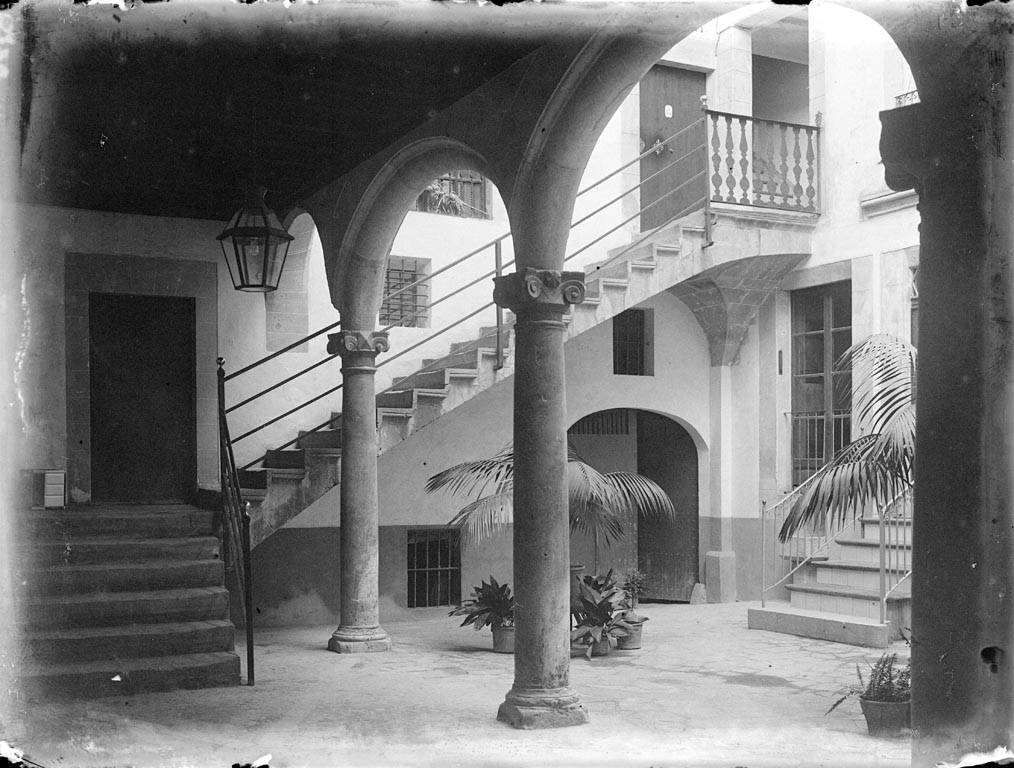
Llorenç Villalonga i Pons was born in Palma in 1897 and died there in 1980. His novels are considered classics of Catalan-language literature written in Mallorca, portraying the declining world of the local aristocracy and the tension between tradition and modernity on the island. The house on the former Estudi General Lul·lià street was his residence for nearly four decades; he lived here with his wife, who survived him by six years. The building is a typical old-Palma "casal" — a stone-built townhouse with an interior courtyard, characteristic of this part of the city.
How do you get to Can Llorenç Villalonga?
The building sits in the heart of the Casc Antic, a district best explored on foot. From La Seu cathedral it is only a few minutes' walk through the old town's narrow streets. Visitors coming from other parts of the city can take an EMT city bus to stops near Plaça de Cort or Plaça Santa Eulàlia and continue on foot from there — driving is impractical here due to narrow lanes and restricted-traffic zones. The location also works well combined with other old-town sights, since it sits within a few hundred metres of the historic centre's main landmarks.
What will you actually see there?
The interior is not open to visitors — it remains a building of a private character rather than a museum. The tourist value lies mainly in the façade itself and its setting: the dense, stone-built streetscape of old Palma, narrow alleys, interior courtyards glimpsed through neighbouring doorways, and the general atmosphere of the district that inspired the writer. It's also worth knowing that a square in central Palma bears Villalonga's name, commemorating him in the city's public space. Visitors wanting to go deeper into the author's life and work can pair a visit with the Casa-Museu Llorenç Villalonga in Binissalem, the writer's hometown, which houses a museum dedicated to his biography and writing — a separate site, located some kilometres outside Palma.
When is the best time to visit?
The Casc Antic is pleasant to explore year-round, but conditions are best in spring (April–June) and early autumn (September–October), when temperatures are milder than in high summer and the old-town streets are less crowded than at the peak of the season. Morning visits help you avoid both the heat and the largest tour groups, and the light on old Palma's stone façades tends to be better for photography earlier in the day.
Frequently Asked Questions
Can you go inside Can Llorenç Villalonga? No, the building is not open to the public — it is viewed from the outside as part of old Palma's streetscape.
Who was Llorenç Villalonga? A Majorcan writer (1897–1980) known for novels about the decline of the local aristocracy, regarded as one of the key figures of 20th-century Catalan-language literature in Mallorca.
Is this the same as the museum in Binissalem? No. Can Llorenç Villalonga in Palma was the writer's former residence, while the Casa-Museu Llorenç Villalonga in Binissalem is a separate museum dedicated to his life, located in a different town.
How much time should you set aside? Viewing the building itself takes only a few minutes, but combined with a walk through the Casc Antic and the nearby cathedral, it's worth allowing one to two hours.
Nearby places

Earn badges for the places you visit
Download NextOnTrip, discover new places and check off your trails.