About this place
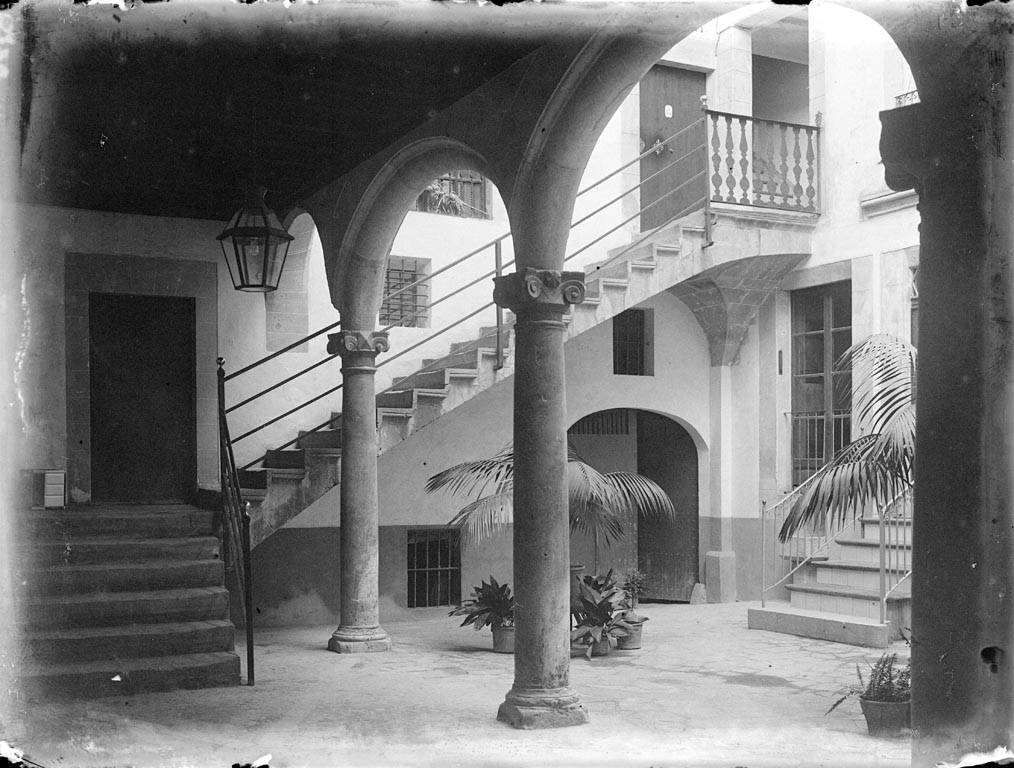
Can Bordils is one of the oldest manor houses in Palma de Mallorca, tucked into the narrow streets of the Balearic capital's old town. Its core stands on foundations dating back to the Muslim era, and one of its walls is actually a surviving stretch of the old Roman city wall — a rare case where several layers of the city's past sit stacked in a single structure. Today the building houses Palma's Municipal Archive and is open to visitors as an exhibition space.
When was Can Bordils built?
The main body of the house dates to the 13th century, though the site itself was already occupied during the earlier Muslim period. From the 15th century onward the building passed through a succession of prominent families who used it as a private residence. It first belonged to the Sureda-Zanglada family, then, between the 17th and 19th centuries, to the Bordils family — the name that stuck. Between the 19th and 20th centuries ownership passed to the Villalonga-Escalada family.
Who shaped its current look?
The first major renovation took place in the 16th century, carried out by the Sureda family. That work gave the building much of its present character, and the family's coats of arms are still visible today carved into the windows of the studies and into one of the interior arches.
How did the building end up with the city council?
In 1936 Can Bordils was acquired by the Unzué family. Since 1982 it has belonged to Palma's town council (Ajuntament de Palma), which carried out an extensive restoration to adapt the building for its current role as home to the Municipal Archive. Before that move, the archive's collections had been kept on the third floor of the current town hall building, until 1988.
What is on display inside?
Restoration work, led by architect Miquel Vicens, recovered the building's original appearance. Can Bordils now hosts a permanent exhibition covering both the history of the building itself and the history of the archive it houses — an institution holding municipal records dating from 1206 to the present day. Visitors can see a representative selection of the collection, ranging from medieval parchments to more recent documents.
Recent restoration work in the building's courtyard also brought a discovery: a medieval doorway that had been hidden for centuries under later layers of masonry came to light during the project, a reminder that Can Bordils still has parts of its history left to uncover.
Where is Can Bordils located?
The building sits right in the heart of Palma's historic quarter, within easy walking distance of the cathedral and the other landmarks of the old town, making it a simple addition to any walk through the city centre.
Frequently asked questions
What is Can Bordils? It is a historic townhouse in the centre of Palma, now serving as the seat of Palma's Municipal Archive, with an exhibition space open to the public.
How old is the building? Its core dates from the 13th century and rests on foundations from the Muslim period, and one of its walls is a remaining section of the old Roman wall.
Can visitors go inside? Yes, the building holds a permanent exhibition dedicated to the history of Can Bordils itself and to the collections of the Municipal Archive.
Why is it called Can Bordils? The name comes from the Bordils family, who owned the house between the 17th and 19th centuries — it had earlier belonged to the Sureda-Zanglada family and later passed to the Villalonga-Escalada family.
What was found during the latest renovation? Works in the courtyard uncovered a previously hidden medieval doorway, confirming how many historical layers this building still holds.
Nearby places

Earn badges for the places you visit
Download NextOnTrip, discover new places and check off your trails.