About this place
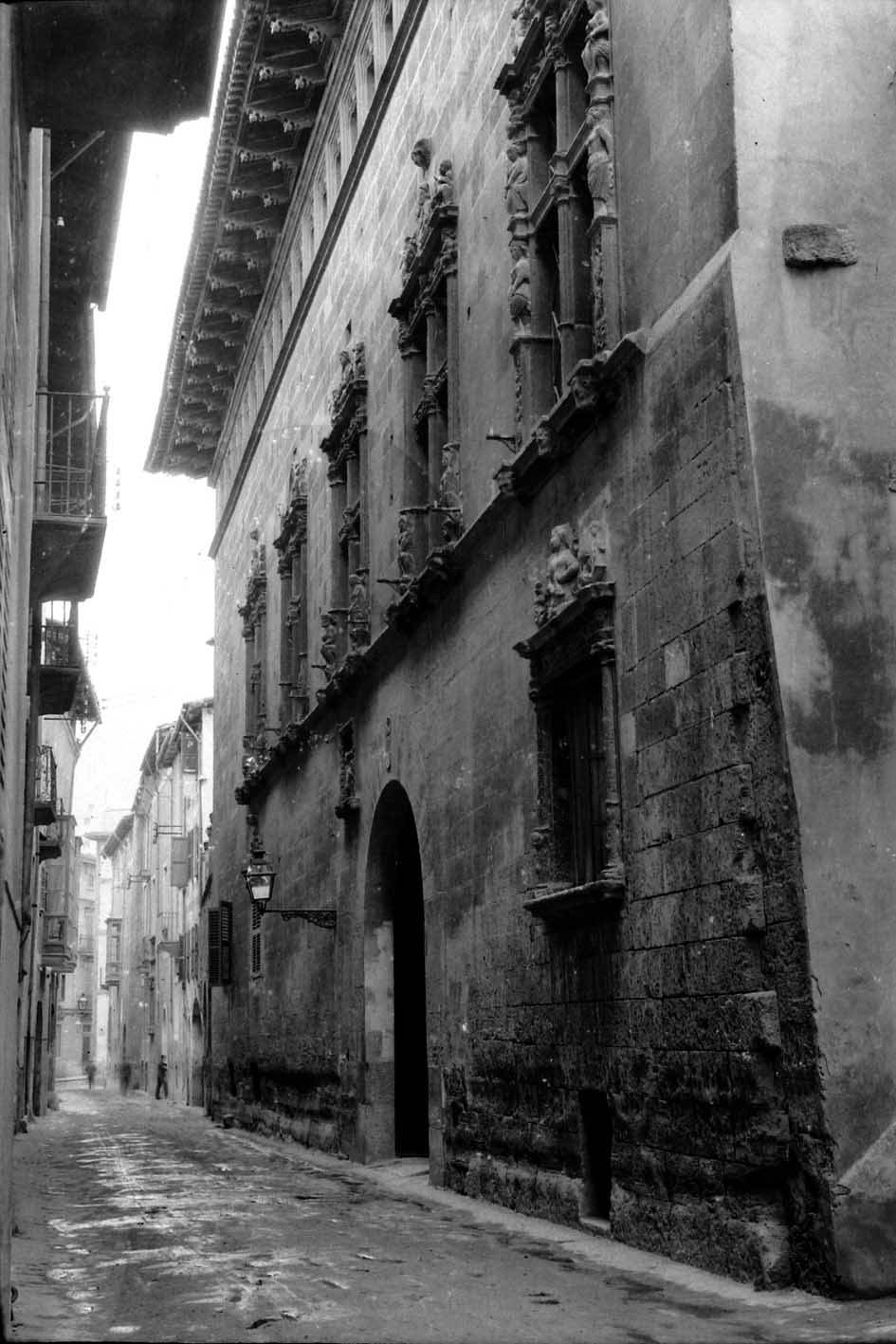
Can Dameto de la Quartera is a historic townhouse in the old center of Palma, one of the many noble mansions that still give Palma's historic quarter the atmosphere of the former capital of the Kingdom of Mallorca.
What will you see?
The building dates back to the 16th-17th century and follows the classic pattern of a Palma noble house: a plain, austere stone facade that gives no hint of the far more elaborate space hidden behind it. At the heart of such houses lies the interior patio — an open courtyard lined with stone arches and a staircase leading to the upper floors, once the hub of daily life for the family and household staff. Walking past the entrance gate, it is worth glancing inside, since in many Mallorcan palaces of this kind the courtyard is visible from the street even without going in. That contrast between a modest street front and a richly worked courtyard is exactly what tends to surprise visitors exploring Palma's old town.
The history behind the house
The house originally belonged to the Vallespir family, who came from Inca. In the 18th century the property passed to the Dameto family, and from then on it became known as Can Dameto. The Dametos were one of the old noble houses of the Kingdom of Mallorca, tracing their origins to Florence; family members served as knights, officials and military officers, and from the 17th century the family was linked to the title of Marquis of Bellpuig. It's worth noting that Can Dameto de la Quartera housed a minor, less prominent branch of the family — the main line resided in a separate, grander palace known as Cal Marquès de Bellpuig. Over time the house's name was extended with "de la Quartera," taken from the square next to it.
How to get there?
The palace sits within the dense street grid of Palma's old town, close to Plaça Sa Quartera, the historic site of the city's former grain market and for centuries one of its commercial hubs. The easiest way to reach this part of the old quarter is on foot, walking from La Seu cathedral or the Church of Santa Eulàlia toward the north-eastern edge of the historic center. The narrow, winding lanes typical of Palma's medieval street layout are best explored slowly, pausing along the way at the many other mansions and townhouses that line them.
When to visit?
Palma's old town is pleasant to explore year-round, but spring and autumn offer the best conditions, with mild temperatures and noticeably fewer visitors than in peak summer. Morning hours are the best time for a walk through the narrow streets around Can Dameto de la Quartera, when the light nicely brings out the detail of the stone facades and the surrounding squares are still relatively quiet.
Frequently Asked Questions
Can visitors go inside the building? Can Dameto de la Quartera is a privately owned historic townhouse, so visits are generally limited to admiring the facade and, in some cases, glimpsing the courtyard from the entrance gate.
Where does the building's name come from? The name combines the surname of the Dameto family, who took over the house in the 18th century, with the name of the adjoining Quartera square, once the city's grain market.
Is it worth combining with other old-town sights? Yes — the building stands close to other historic townhouses and squares in Palma's old quarter, making it easy to fold into a longer walk through the historic center.
Was this the only Dameto family palace in Palma? No — the main line of the family owned a separate, grander residence known as Cal Marquès de Bellpuig, while Can Dameto de la Quartera belonged to a minor branch of the family.
Nearby places

Earn badges for the places you visit
Download NextOnTrip, discover new places and check off your trails.