- Mines
Mergelgroeve van Kanne
About this place
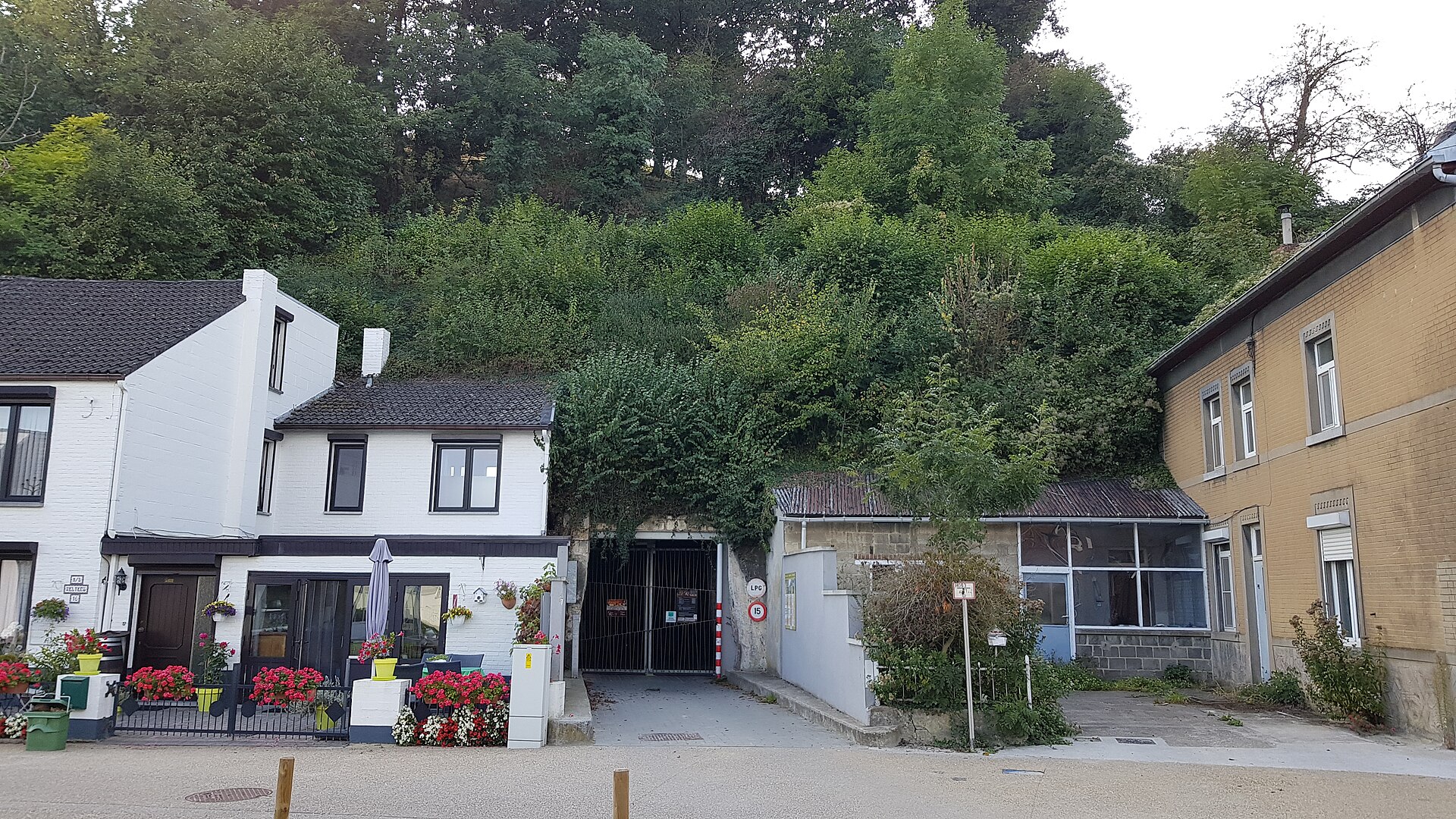
Mergelgroeve van Kanne is an underground limestone (marl) quarry in the village of Kanne, part of the municipality of Riemst in the Belgian province of Limburg. Locally it is also known as Grotten van Kanne or Groeve Avergat, and it belongs to the wider network of Limburg marl quarries, a system of extensive tunnels running beneath the hills of this border region near the Netherlands.
How far back does quarrying at Kanne go?
Marl extraction in this area predates even the Roman period, when the soft stone was already being dug up to fertilize farmland nearby. Underground quarrying for building stone, however, only began around the 14th century. Local stonecutters known as blokbrekers were already cutting limestone blocks in Kanne before the 15th century, and the oldest surviving inscriptions carved into the tunnel walls date back to the 17th century. The limestone extracted here has long served as a construction material for surrounding towns and villages, prized because it is soft and easy to cut when freshly quarried, then hardens after exposure to air.
What do the tunnels beneath Kanne look like today?
Centuries of extraction left behind a dense network of underground passages and chambers stretching deep beneath the hills that surround the village. This sprawling underground labyrinth, typical of the Limburg marl quarries, gradually became more than just a former workplace for stonecutters — over time it took on new economic and social roles that shaped the site's later history.
How did the use of the quarry change during the 20th century?
From the early 20th century onward, the stable temperature and humidity inside the tunnels turned out to be ideal conditions for growing mushrooms. Mushroom cultivation inside the gangenstelsel, the underground tunnel system, expanded over the following decades, and from the 1960s much of that production gradually shifted above ground to more modern surface facilities. Despite this shift, mushroom growing never disappeared entirely from inside the quarry and still forms part of its ongoing economic story.
Can visitors tour Mergelgroeve van Kanne?
Yes. The underground quarry is open to visitors, with guided tours, rondleidingen, offered daily on weekends during the summer months of July and August. The route leads through part of the historic tunnel system, giving visitors a look at traces of past quarrying work, including the 17th-century inscriptions left behind by the original stonecutters.
Can you actually get married inside the quarry?
Since June 2012, yes — the municipality of Riemst officially designated the underground quarry as one of its recognized wedding locations. This unusual combination of a rugged, industrial past with a role as a backdrop for civil ceremonies makes Mergelgroeve van Kanne a distinctive stop among the region's attractions.
Frequently asked questions
Where exactly is Mergelgroeve van Kanne located? In the village of Kanne, part of the municipality of Riemst in the Belgian province of Limburg, close to the border with the Netherlands.
What other names is this quarry known by? Locally it is also called Grotten van Kanne and Groeve Avergat.
Since when has quarrying taken place here? Underground extraction of building stone began around the 14th century, though marl was already being dug up nearby for agricultural use as far back as Roman times.
When can you join a guided tour of the tunnels? Guided tours run daily on weekends throughout July and August, covering part of the underground passage system.
Is mushroom farming still part of the site's story? Mushroom cultivation, which began here in the early 20th century, partly moved to surface facilities from the 1960s onward, but has never completely disappeared from inside the quarry.
Nearby places

Earn badges for the places you visit
Download NextOnTrip, discover new places and check off your trails.