About this place
The memorial to homosexuals persecuted under the Francoist regime stands in Durango, a town in the Basque Country's Bizkaia province, right next to the Landako multi-purpose pavilion. It is one of the few monuments in Spain dedicated explicitly to the victims of persecution based on sexual orientation during General Franco's dictatorship.
What does the monument look like?
The memorial takes the form of a monolith carved from dark grey marble streaked with white veins. Its base is rectangular, while the top has been shaped irregularly, so that one side of the block rises into the outline of a large, inverted letter "G". The piece was created by Basque artist Koldobika Jáuregui, known for combining raw, minimalist forms with strong symbolic content.
A commemorative plaque is set into the monolith. Its inscription honors the people who, under Francoism, were persecuted and repressed because of their sexual and affective orientation, and who nonetheless fought for the right to live in freedom despite a repressive legal system and a climate of fear. It is a compact but powerful tribute to a chapter of history that stayed largely unspoken for decades.
When was it unveiled?
The monument was inaugurated on Saturday, 16 May 2009, at the exact spot where it still stands today. The location is far from random: standing beside the Landako pavilion, home each year to the region's largest Basque culture fair (the Durangoko Azoka book and record fair), means the memorial is seen by thousands of visitors annually.
How do you get there?
Durango sits in Bizkaia province, at the heart of the Basque Country, and is well connected to Bilbao and other towns in the region. The monolith stands in an easily accessible spot next to the Landako pavilion, close to the town center, making it simple to combine a visit with a walk through Durango's old quarter, known for its historic architecture and atmospheric streets.
What else is worth seeing nearby?
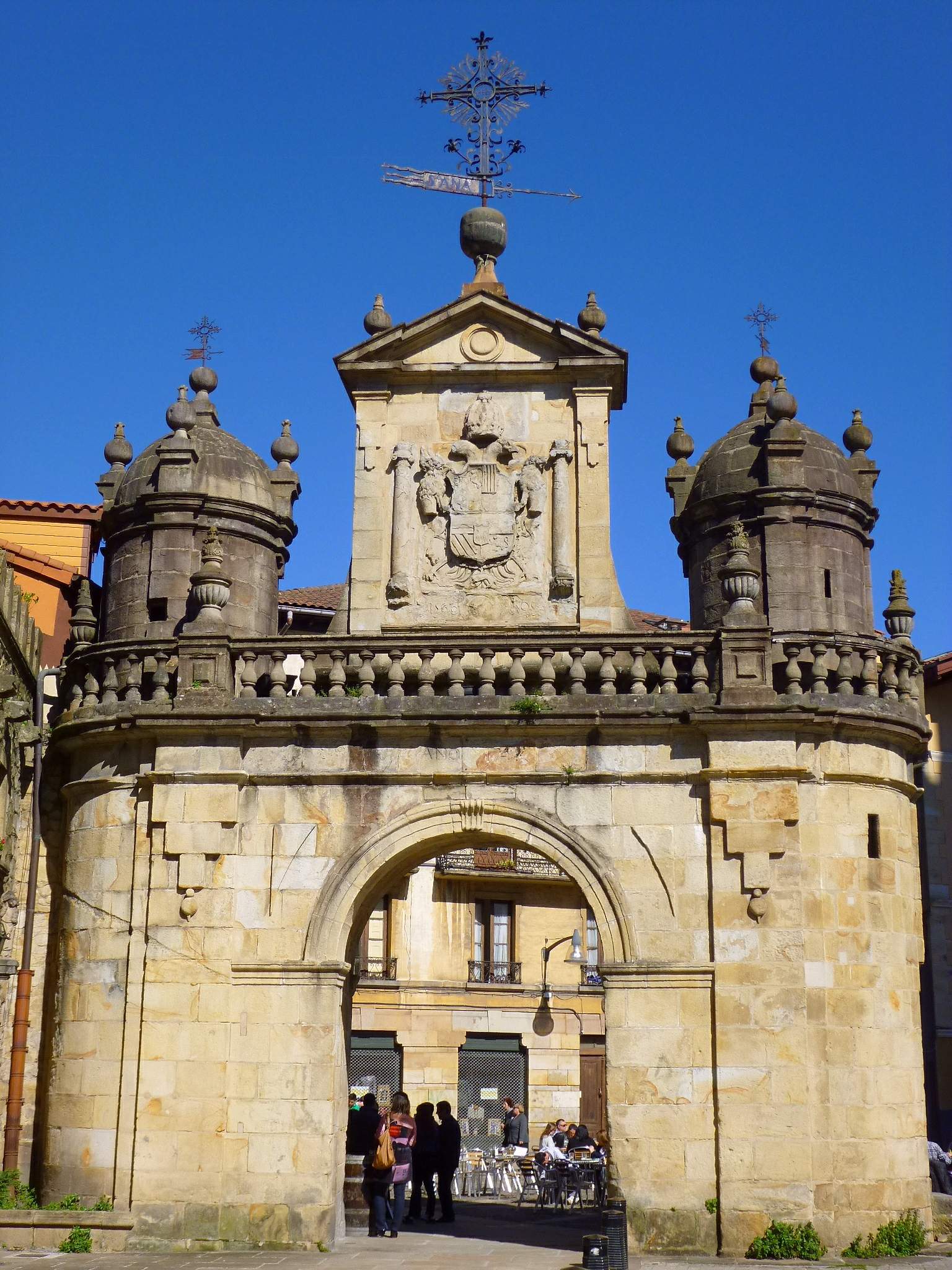
The monument itself takes only a few minutes to view, but it works well as a starting point for a stroll through Durango — a town with a rich history, a well-preserved old town, and notable examples of both religious and civic Basque architecture. The Landako pavilion beside it is a functional exhibition space that comes alive especially during the annual Basque book and music fair.
Why is it worth visiting?
The Durango monolith belongs to a small group of Spanish memorial sites that directly address the repression of LGBT+ people under Francoism — a period when the law treated homosexuality as a "social danger" until the late 1970s. For travelers interested in Spain's recent history and the memory of the dictatorship's victims, it is a meaningful stop that rarely makes it into standard guidebooks.
Frequently asked questions
Who designed the monument in Durango? The monolith was created by Basque sculptor Koldobika Jáuregui.
When was the monument unveiled? It was inaugurated on 16 May 2009.
What material is the monument made of? Dark grey marble with white veins, topped with a distinctive, irregularly carved shape resembling an inverted letter "G".
Where exactly does the monument stand? Next to the Landako multi-purpose pavilion in Durango, in Bizkaia province, Basque Country, Spain.
Nearby places

Earn badges for the places you visit
Download NextOnTrip, discover new places and check off your trails.