About this place
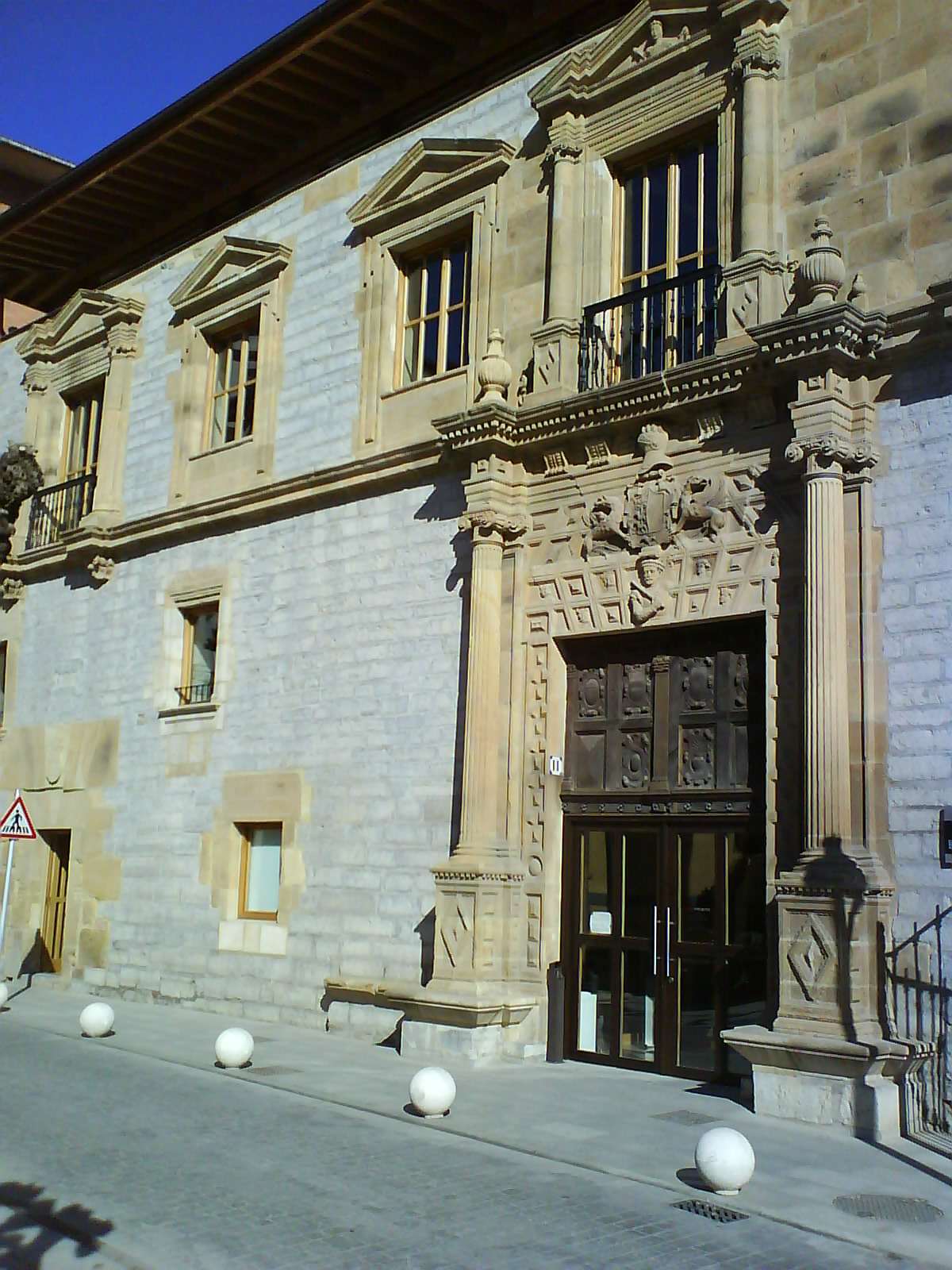
Lobiano Jauregia (Lobiano Palace) is a Renaissance mansion standing in the center of Ermua, a small town in the Basque Country's Bizkaia province. Regarded as one of the region's finest Renaissance buildings, it now serves as the town's cultural center.
How do you get there?
Ermua sits on the Euskotren commuter line connecting Bilbao with Donostia-San Sebastián, so a regional train or bus is the easiest way in — the palace stands right in the town center, an easy walk from the station. Drivers benefit from the town's direct link to the motorway running between Bilbao and the French border.
What's the story behind the building?
The palace was raised around 1550 at the initiative of Rodrigo de Lobiano, a wealthy merchant, and his wife María de Aguirre, who came from neighboring Álava. The couple built an imposing, monumental residence meant to pass on as an inheritance to their four children while announcing the family's rank among the region's richest merchant houses.
Its history afterward was far from quiet. Once the direct line of heirs faded, the building spent a period housing a community of nuns, who lived there until they secured their own convent in 1594. The property then reverted to the Lobiano family. Late in the 18th century, in 1794, the palace suffered fire damage tied to the War of the Convention, one of the conflicts that reached Basque territory at the time. Over the following centuries it underwent further alterations, as one would expect of a centuries-old residence that repeatedly changed hands and purpose.
What can you see inside today?
Toward the end of the 20th century, the building passed into the hands of the Ermua town council, which carried out a thorough restoration and converted it into a Casa de Cultura — locally known as Lobiano Kultur Gunea. Inside today you'll find an exhibition hall, an auditorium, a painting room, a theatre hall, and a dance hall. It functions as the town's cultural meeting point, hosting temporary exhibitions, performances, art classes, and municipal events throughout the year.
The building's Renaissance facade composition alone is worth the stop, even without a specific event on the calendar — it's a rare surviving example of bourgeois Renaissance architecture in this part of Bizkaia.
When's the best time to visit?
Since the palace operates as a working cultural venue, it's worth checking Ermua's local events calendar before heading over — exhibitions and performances run cyclically throughout the year, with a fuller program typically in autumn and winter, when cultural life moves indoors. A visit pairs easily with exploring central Ermua and the hiking trails in the surrounding Bizkaia hills.
Frequently asked questions
What is Lobiano Jauregia used for today? It's a former 16th-century noble palace now converted into the town's cultural center, with an exhibition hall, auditorium, and art workshops.
Who built the palace? It was built around 1550 by the merchant Rodrigo de Lobiano and his wife María de Aguirre as a family residence and inheritance for their children.
Is the building still the original 16th-century structure? The overall Renaissance character survives, but the palace was altered repeatedly over the centuries, including repairs after an 1794 fire linked to the War of the Convention.
Can you visit without attending a cultural event? Yes, the building operates as a public cultural center, though it's best to check opening hours and the current program with Ermua's town council beforehand.
Nearby places

Earn badges for the places you visit
Download NextOnTrip, discover new places and check off your trails.