About this place
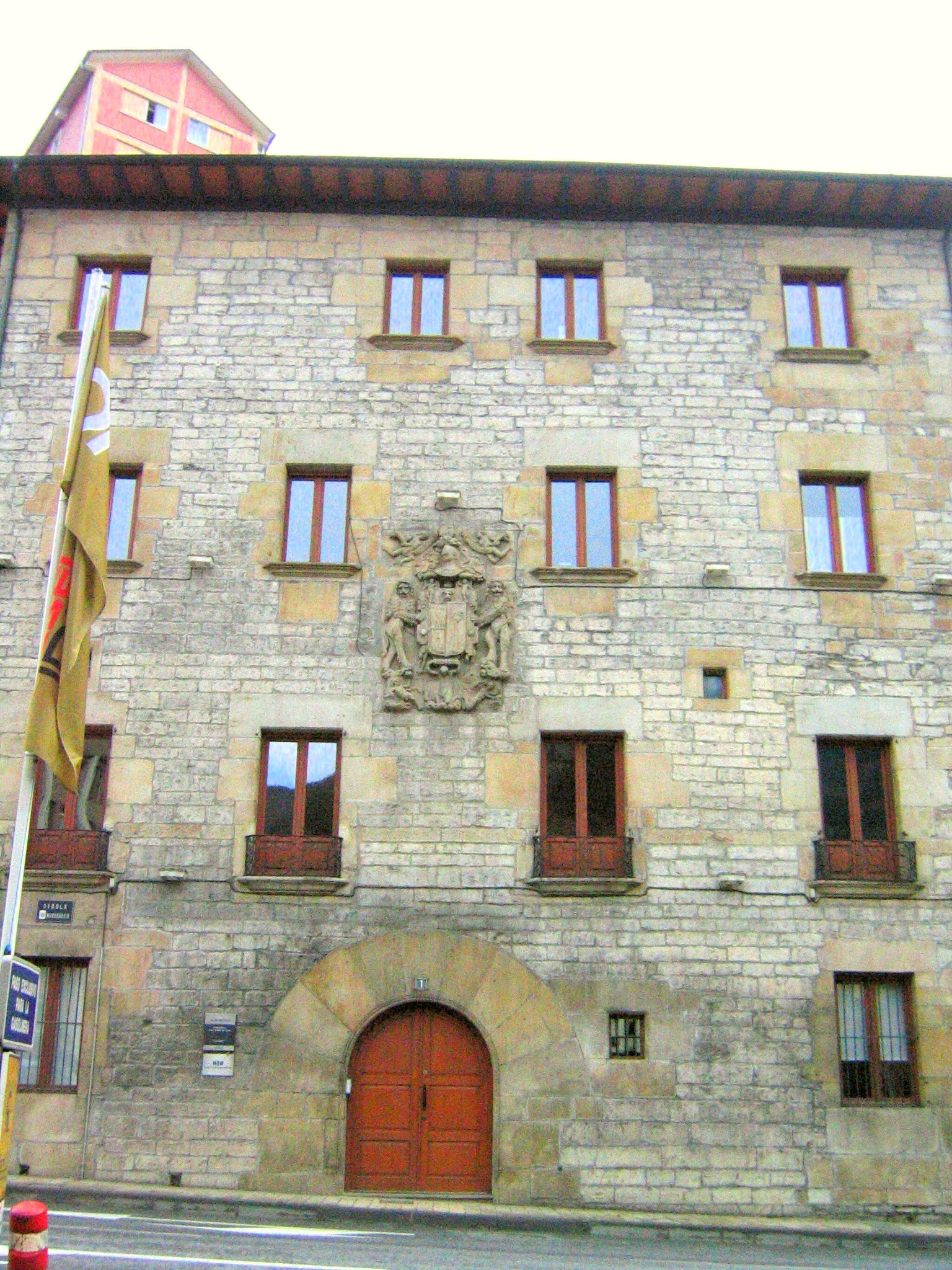
Isasi Jauregia (Markeskua) is a Renaissance-era noble house in Eibar, in Spain's Basque Country, and one of the most significant pieces of civil architecture still standing in the town.
What is this building?
Also known as the Tower of Isasi or the Palace of the Marquis of Isasi, Markeskua was built in the 16th century at the order of Martín López de Isasi and Domenja Orbea. Like many other noble houses of that period, it was raised outside the boundaries of the medieval village, close to the road leading toward Ermua. The choice of site was deliberate: the Isasi family was a powerful lineage whose members held significant posts at court, and a residence visible from the main route through town was a clear statement of status.
What will you see there?
The building itself is restrained rather than showy — a rectangular floor plan, sober decoration, and a hipped roof. That combination of solidity and understatement is characteristic of Basque noble houses of the era: little ornamentation, but confident, well-proportioned architecture that was built to last.
The entrance is the focal point: a semi-circular arch framed by carefully cut voussoirs leads into the interior. Above it, set centrally on the façade, is a stone coat of arms belonging to the Isasi family. In the 16th century, a coat of arms like this was the building's main form of communication — it told passersby exactly whose house this was and what social standing the family held.
Look closely at the façade and you can trace how Basque palace architecture evolved during the Renaissance: the thick walls and careful stonework still echo the defensive medieval tower houses that came before, even as the overall form shifts toward a more representative, less fortress-like residence.
How is the palace used today?
Following a thorough restoration, Markeskua now serves as the headquarters of the Udako Euskal Unibertsitatea (UEU), the Basque Summer University. What was once a private noble residence has become an active cultural hub, hosting academic courses, meetings, and events centered on Basque language and culture. It's a good example of historic architecture being adapted for contemporary educational use without losing its original character.
How do you get there?
The palace stands in Eibar, a town in the Gipuzkoa province of the Basque Country, well connected by rail and regional roads to both San Sebastián and Bilbao. It sits close to the town centre, near the old route to Ermua, so the easiest way to reach it is on foot from downtown Eibar or by local bus.
When should you visit?
Since Markeskua functions as the seat of a summer university, it's worth checking the local academic calendar before visiting — some interior spaces may only be accessible during specific courses or events. The façade and overall structure, however, can be admired from the outside year-round, and quieter months outside the academic season make for a more relaxed visit to the surrounding area.
Frequently Asked Questions
What does the name "Markeskua" mean? It refers to the title of marquis — a member of the Isasi family held that title, which is why the building is also known as the Palace of the Marquis of Isasi.
When was the palace built? It dates to the 16th century, built during the Renaissance at the order of Martín López de Isasi and Domenja Orbea.
Can you visit the interior? The building now houses the Basque Summer University (UEU), so interior access depends on the university's schedule of courses and events.
What is the most distinctive architectural feature? The semi-circular entrance arch framed by stone voussoirs, and the Isasi family coat of arms set centrally on the façade.
Nearby places

Earn badges for the places you visit
Download NextOnTrip, discover new places and check off your trails.