About this place
Aldatze Jauregia in Eibar
Aldatze Jauregia (Aldatze Palace) is a historic residence in Eibar, a town in the Gipuzkoa province of the Basque Country, also known as the Iñarra Palace or Elexalde.
Where is the palace located?
The building stands at the upper end of Aldatze street, in the neighborhood that shares its name. It's one of several old noble residences scattered across Eibar — a town best known for its centuries-long tradition of gun- and bicycle-making, though it also hides pockets of pre-industrial architecture. Aldatze occupies a quiet, elevated part of town, away from the industrial core, which helps explain why the building has survived in such good condition.
What's the history behind it?
The exact construction date is unknown, but the palace already existed before the 17th century. That's when its owner at the time, Juan López de Iñarra, rebuilt and substantially enlarged it, giving the residence the form still recognizable today. The original structure is said to have resembled another Eibar palace, Markeskua, before diverging through its own later modifications.
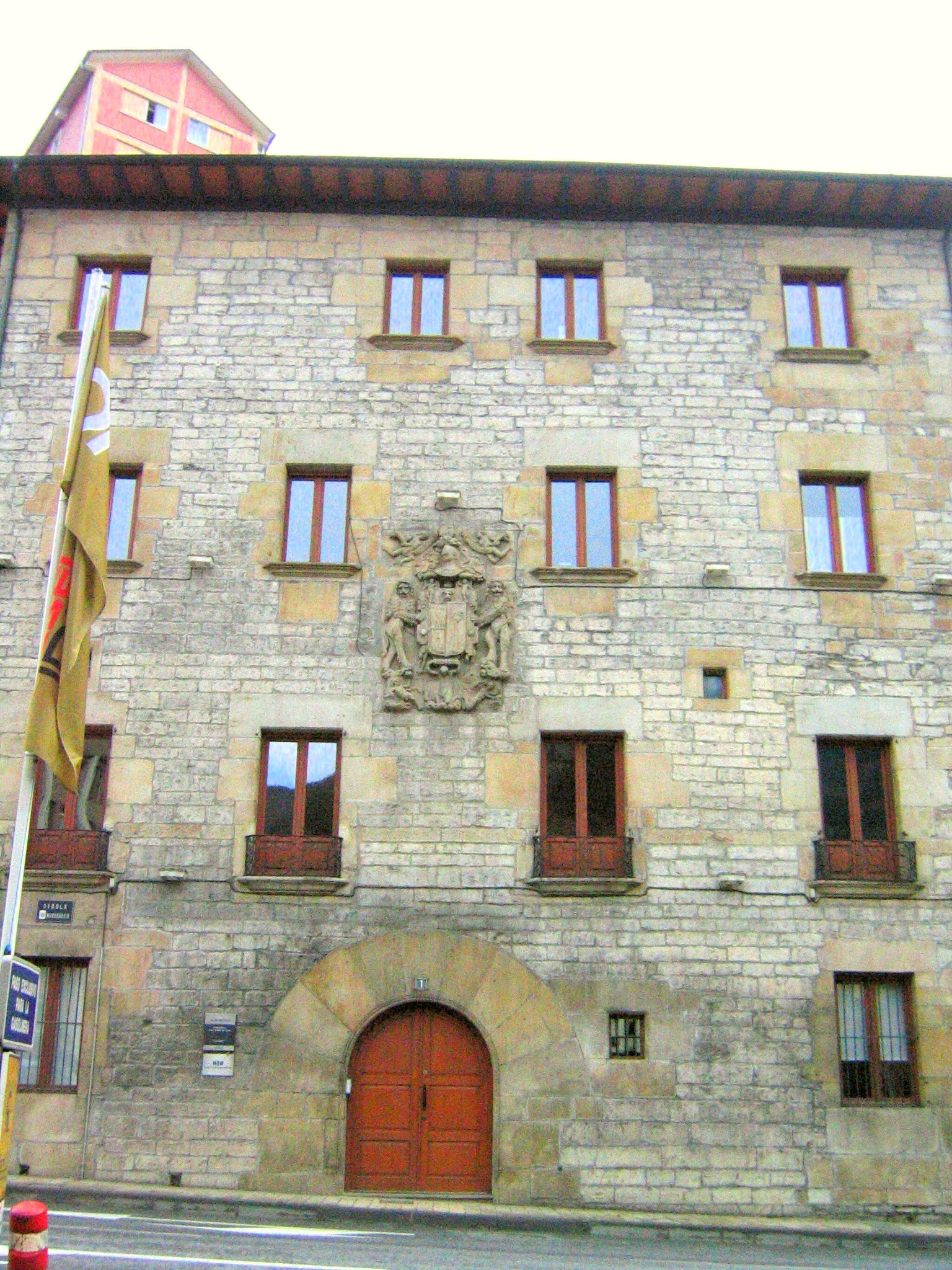
What emerged was a Baroque building: sturdy and sober, with little ornamentation, built on a roughly square plan under a four-sided sloped roof. The façade carries a prominent Iñarra family coat of arms — for centuries the residence's clearest marker of status and the family's standing in local affairs.
What is the palace used for today?
The building's fortunes changed at the start of the 20th century. Around 1914, nuns from the Sisters of Our Lady of Providence moved in and opened a girls' school there, the Colegio Santa María de la Providencia. Locals still refer to the sisters as "the nuns of Aldatze." The school has operated continuously ever since and today is co-educational.
This isn't an isolated case: only two other former noble residences in Eibar have followed a similar path — the buildings now housing La Salle school and Euskal Unibertsitatea. All three tell the same story — places once tied to power and weapons eventually given over to education and culture.
What will you actually see there?
Visiting Aldatze Jauregia mostly means walking around the building and taking in its architecture from the outside: a solid Baroque structure with its characteristic four-sided roof and the Iñarra coat of arms on the façade. Since the building is a working school, the interior isn't open to visitors, but the façade and the surrounding Aldatze neighborhood give a good sense of Eibar's older, aristocratic side — a contrast to the industrial character of the rest of the town.
When should you visit?
The palace can be viewed year-round, ideally as part of a longer walk through historic Eibar that takes in other period buildings alongside Aldatze. Aim for a time of day with good light — afternoon works well for photographing the façade and coat of arms.
Frequently Asked Questions
Can you go inside the palace? Not as part of regular sightseeing — the building is an active school, so the interior is used by students and staff. Visitors view it from the outside.
Who was Juan López de Iñarra? He was the 17th-century owner who rebuilt and enlarged the existing residence, giving it its current Baroque form and adding the Iñarra family coat of arms to the façade.
Where does the name Aldatze come from? It comes from the street and neighborhood where the palace stands. Over the years the building has also been known as Elexalde and Iñarra, depending on the period and its owners.
What other historic buildings are worth seeing in Eibar? The buildings now home to La Salle school and Euskal Unibertsitatea share a similar history of shifting from noble residence to educational institution — together with Aldatze Jauregia, they're the three surviving examples of this pattern in the town.
Nearby places

Earn badges for the places you visit
Download NextOnTrip, discover new places and check off your trails.