About this place
Olaso bridge crosses the Deba river in Elgoibar, a town in the Gipuzkoa province of the Basque Country, Spain. It sits at the edge of the old Olaso district, next to the industrial estate of the same name, and today serves as the gateway to a riverside path for walkers and cyclists running along the right bank of the Deba.
Where exactly is the bridge located?
Olaso bridge stands on the northern edge of Elgoibar, at the point where the town meets the Deba valley heading toward Maltzaga and, further on, Eibar. Right by the Olaso industrial estate, this is where the bidegorri begins — a shared cycling and walking path that follows the river for around 2.4 kilometres to Maltzaga before linking up with the next stretch that continues to Eibar. The full route between the two towns adds up to roughly 4.5 kilometres and forms part of a wider network of paths connecting the towns of the lower Deba valley.
What is the riverside route like?
The path starting at the bridge climbs gently, with a couple of short steeper sections, but overall it is an easy, family-friendly route. It follows the right bank of the Deba, offering views over the river and the green valley around it, making it a pleasant alternative to walking through the town's historic centre.
Why is it called Olaso, and what lies behind the name?
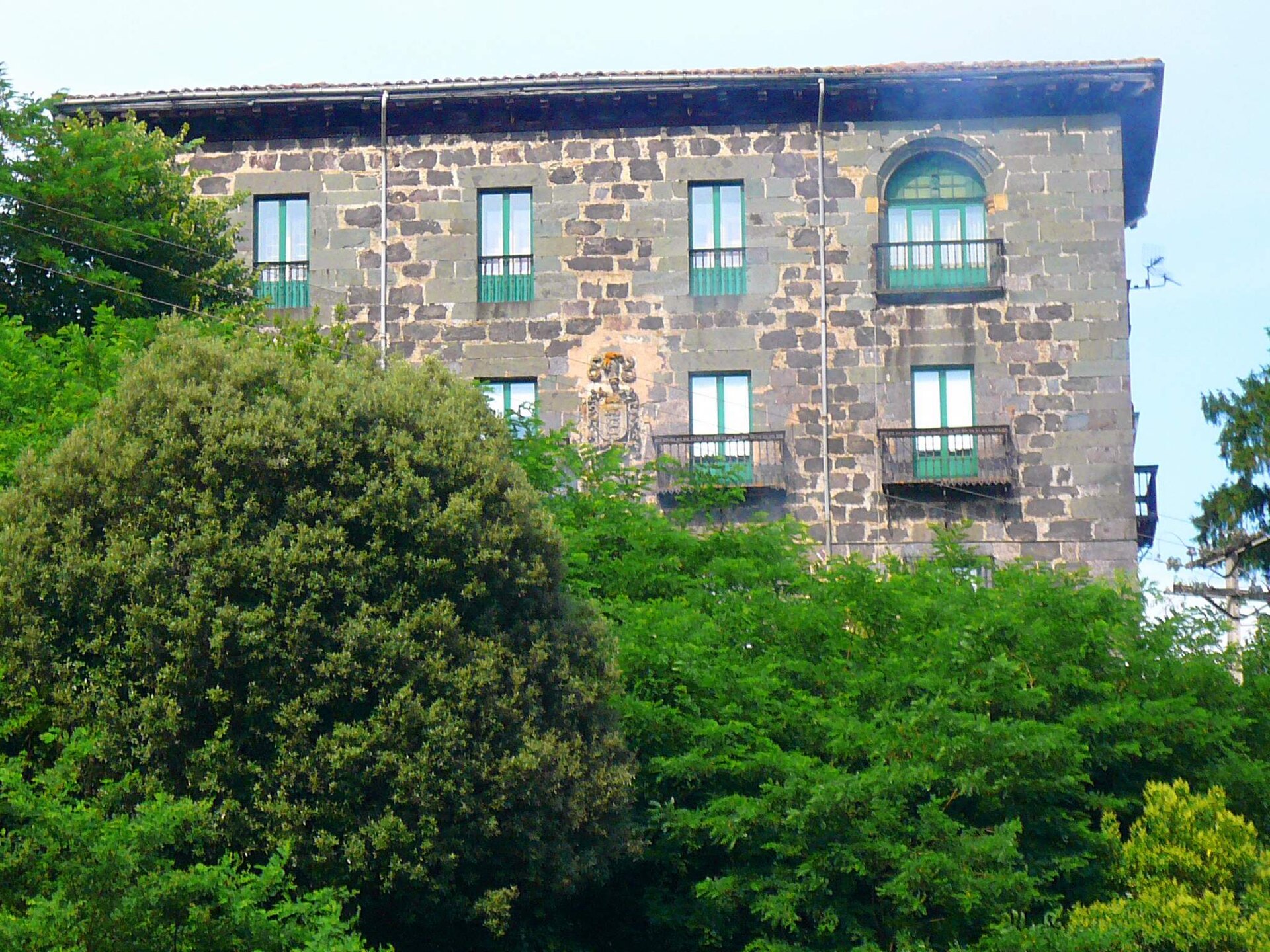
The bridge takes its name from one of the oldest and most significant parts of Elgoibar — the former estate of the Olaso family, a powerful noble lineage that built a fortified tower house here in the Middle Ages. It was on land belonging to the Olaso monastery that King Alfonso XI granted the founding charter in 1346, giving rise to a walled town first known as Villamayor de Marquina — today's Elgoibar. The only part of the old monastic complex to survive is a Gothic portico dated to 1459, attributed to Martín Sancho, which now serves as the entrance to the town's cemetery and is protected as a historic-artistic monument. The Olaso name lives on today in the surrounding street, the industrial estate, and the bridge itself.
What else is worth seeing in Elgoibar?
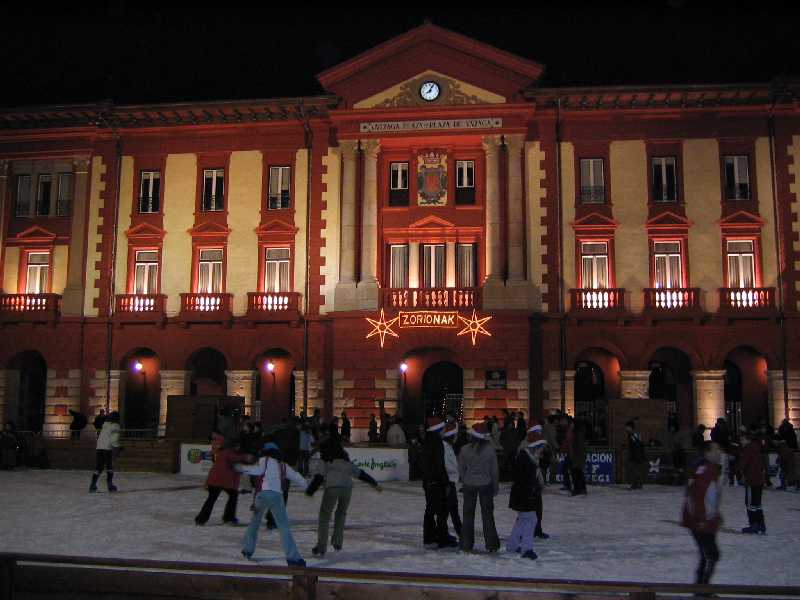
Elgoibar today is above all an industrial town, known for its long tradition of machine-tool manufacturing, a heritage reflected in the local museum dedicated to the sector. The historic centre gathers around the baroque town hall and the church of San Bartolomé, forming the kind of compact layout typical of Basque towns in the Deba valley. Walking from Olaso bridge toward the centre, or in the opposite direction along the river, is a good way to experience both sides of the town — its industrial present and its historic core.
Frequently Asked Questions
Can you cycle across Olaso bridge? Yes, the bridge marks the start of the bidegorri path running along the Deba toward Maltzaga and Eibar, open to both pedestrians and cyclists.
How far is it from the bridge to Eibar? The full route connecting Elgoibar with Eibar covers about 4.5 kilometres, with the first stretch to Maltzaga measuring roughly 2.4 kilometres.
Where does the bridge's name come from? It refers to the historic Olaso district and family, whose tower house and monastery stood at the origins of Elgoibar itself, founded in 1346.
Is the riverside route suitable for families with children? Yes, the section starting at the bridge is gently graded with only minor climbs, and it is considered a family-friendly route for both walking and cycling.
Nearby places

Earn badges for the places you visit
Download NextOnTrip, discover new places and check off your trails.