About this place
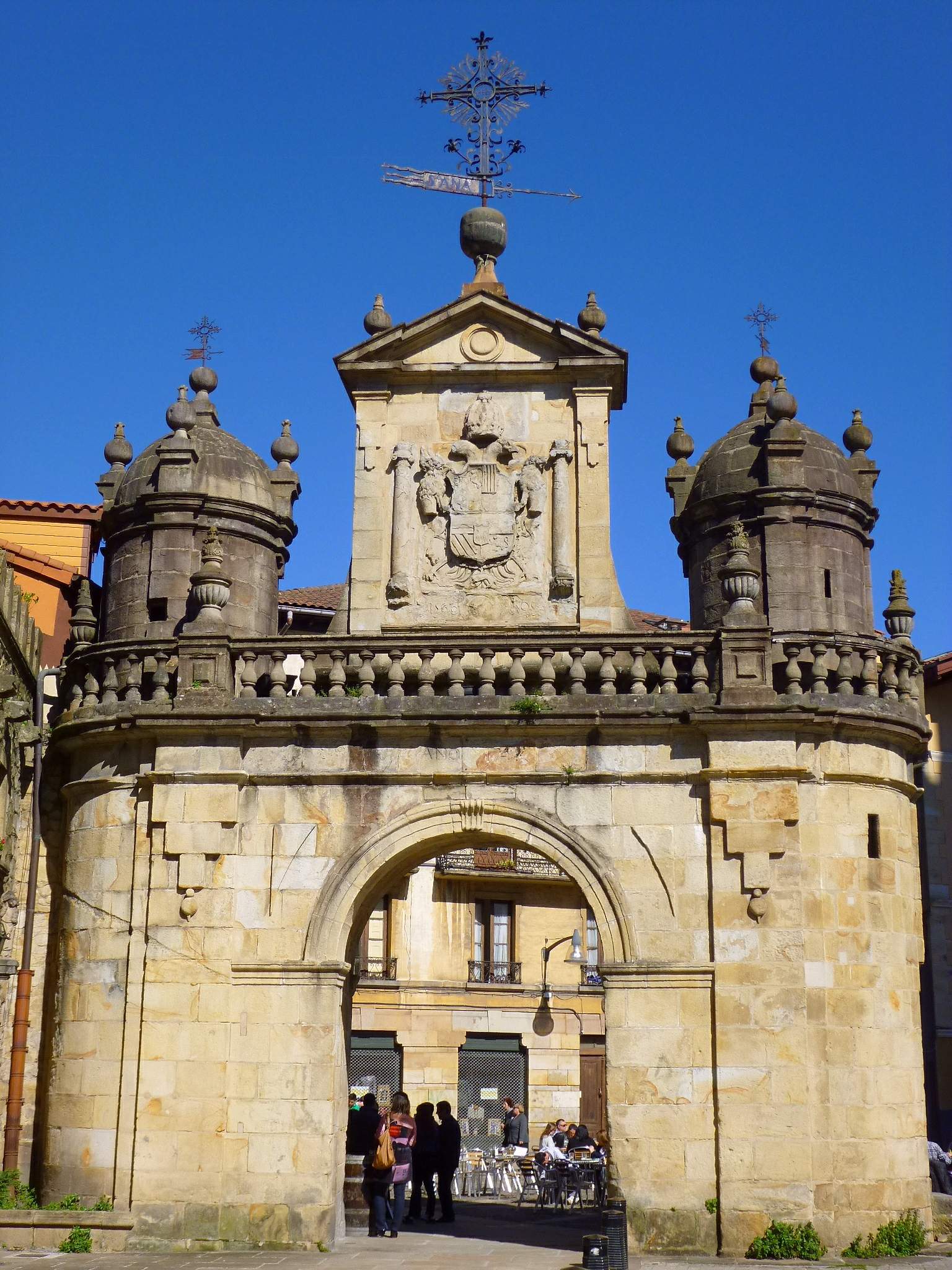
Puerta de Santa Ana in Durango is the sole survivor of the six gates that once pierced the medieval town walls of this Basque town in the Duranguesado area of Bizkaia. It stands on Plaza de Santa Ana, marking the symbolic entrance to the old quarter, today protected as a Conjunto Monumental (listed historic ensemble).
What does the gate look like today?
The structure you see now is not the original one. The first gate went up in 1566 in Renaissance style, but by the 1740s (1743-1744) the town council decided it no longer matched the times and replaced it with a new Baroque construction — the version still standing on the square today.
The gate takes the form of a grand, two-storey triumphal arch, its passage closed by a semicircular arch. The facade carries an imperial-style coat of arms, and a niche above the passage holds a statue of a female saint. The scale and ornamentation were meant to signal the town's status and prosperity, not just serve a defensive purpose.
What role did it play historically?
Despite the name evoking Saint Anne's patronage, the gate's real importance was economic. It was formerly known as the Puerta del Mercado — the Market Gate — because goods supplying the town's residents passed through it on their way in. For centuries it served as the main checkpoint for trade and foot traffic entering the walled centre.
Of the original ring of six town gates, the rest disappeared over time as Durango grew and the walls lost their defensive purpose. Puerta de Santa Ana is the only one that has survived intact, making it today the most recognisable remnant of the town's medieval fortification system.
Where is it and what else is nearby?
The gate stands at the heart of the old town, on the square that bears its name, surrounded by stone buildings typical of Basque townscapes. It's a natural starting point for exploring Durango's historic centre — from here, narrow streets lead on to other landmarks of the old quarter, including nearby churches and 17th-century town houses. Durango's old town, with its medieval street layout, is itself the main reason visitors linger here rather than passing straight through.
When is the best time to visit?
Since it's an outdoor urban landmark open at all hours and free to visit, the gate can be seen any time of year or day. Early morning and late afternoon light tends to work best for photos, catching the coat of arms and the niche statue at a flattering angle. It's also worth timing a visit around market days or local festivals, when the square in front of the gate comes alive and its original role as a trading entrance feels easier to picture.
Frequently asked questions
Is Puerta de Santa Ana the original medieval gate? Not entirely. The first gate was built in 1566, but the Baroque structure standing today dates from 1743-1744, when it replaced the older Renaissance-style version.
How many of Durango's town gates still exist? Just one. Of the six historic entrances through the town walls, Puerta de Santa Ana is the only one that has survived to the present day.
Why was it once called the Market Gate? Because goods supplying the town passed through it — it functioned as the main commercial entry point into Durango.
Is there an entrance fee? No, it's a public urban landmark, freely accessible at any time with no admission charge.
Nearby places

Earn badges for the places you visit
Download NextOnTrip, discover new places and check off your trails.