About this place
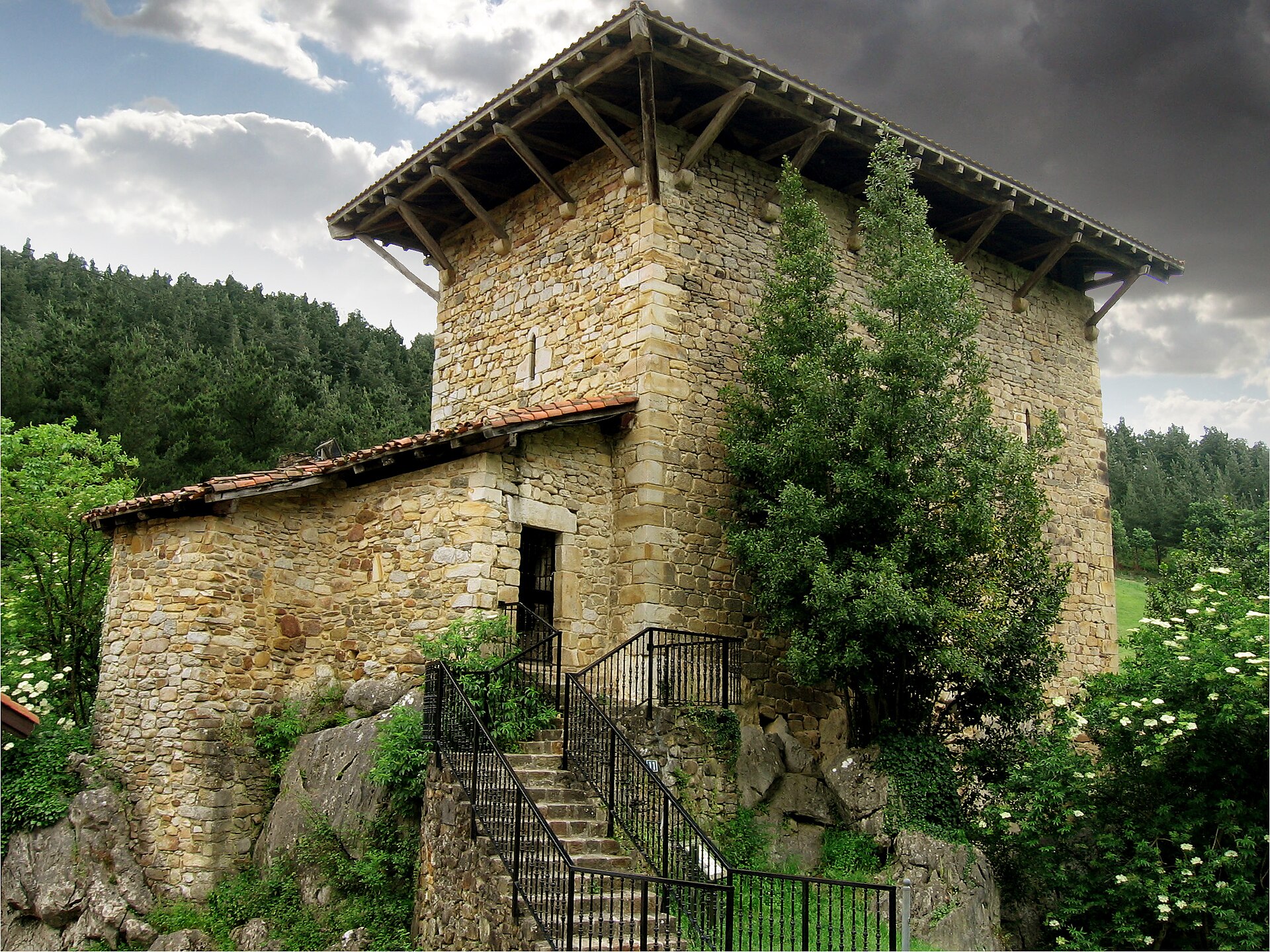
Etxaburu Tower in Izurtza is one of Biscay's best-known Basque tower houses, perched at the foot of Mugarra peak in the Durangaldea region.
The building rises directly from a rocky outcrop riddled with natural caves and fissures, a setting that has fed local legend for centuries. The earliest reliable records of the tower date to the 15th century, though the structure standing today is the result of a 16th-century rebuild. Local tradition holds that an earlier version of the tower was torn down on the orders of Henry IV of Castile, and later rebuilt by Sancho López de Ibargüen. Fantastical tales about its origins — some tracing it back to Roman times — still circulate around the site, and together with its dramatic rock-top position they explain why the tower has long drawn visitors to this corner of Biscay.
How do you get to Etxaburu Tower?
The tower sits roughly a kilometre off the road linking Durango with the Urkiola pass, on the left side of the route running from Mañaria to Izurtza. Driving is the most practical option — it's a short trip from Durango toward Urkiola — but the final stretch has to be covered on foot, along a local track leading up to the base of the rock the tower stands on. Izurtza itself is a small municipality (anteiglesia) in the Basque Country, well connected within Durangaldea, and the tower is often included as a stop on tours through the wider area.
What will you see there?
Etxaburu has a rectangular floor plan and thick masonry walls, more than a metre wide at the base. The building has two main levels — a lower floor that served as a basement and an upper floor used as living quarters — topped by an additional attic space. What sets it apart is the way it grows out of a hollowed rock cut through with caverns, making it one of the more striking Basque dorretxeak (tower houses) still standing. The building was restored in the 1980s and converted into a youth hostel, a change that helped keep it in good condition to this day. From the slopes of Mugarra around the tower, views open out over the valleys of Durangaldea, and the spot doubles as a starting point for walkers heading up Mugarra or on toward the nearby Urkiola sanctuary.
When is the best time to visit?
Spring and autumn are the most comfortable seasons, when the mountain paths around Mugarra are easy to walk and temperatures suit a longer excursion. Summer brings more hikers heading toward Urkiola, while winter conditions can make the approach track to the tower harder going. Whatever the season, it's worth setting aside time not just for the building itself but for a short walk around the rock it sits on, since the setting is a large part of the appeal.
Frequently asked questions
Can you go inside Etxaburu Tower? Since its 1980s restoration the building has operated as a youth hostel, so access to the interior depends on its current use and any booking arrangements — worth checking ahead if seeing the inside is the goal.
How far is the tower from the centre of Izurtza? It stands some distance from the village itself, about a kilometre from the main Mañaria–Izurtza road, on the slopes of Mugarra.
Is it worth combining the visit with a hike? Yes — the tower lies close to the paths leading up Mugarra and on toward the Urkiola sanctuary, a common extension for visitors who enjoy walking.
Where do the tower's name and legends come from? Etxaburu is the name of the local dorretxea, and the stories about its Roman origins and its destruction under Henry IV of Castile belong to the oral tradition of the Durangaldea region — though the confirmed historical record only goes back to the 15th century.
Nearby places

Earn badges for the places you visit
Download NextOnTrip, discover new places and check off your trails.