About this place
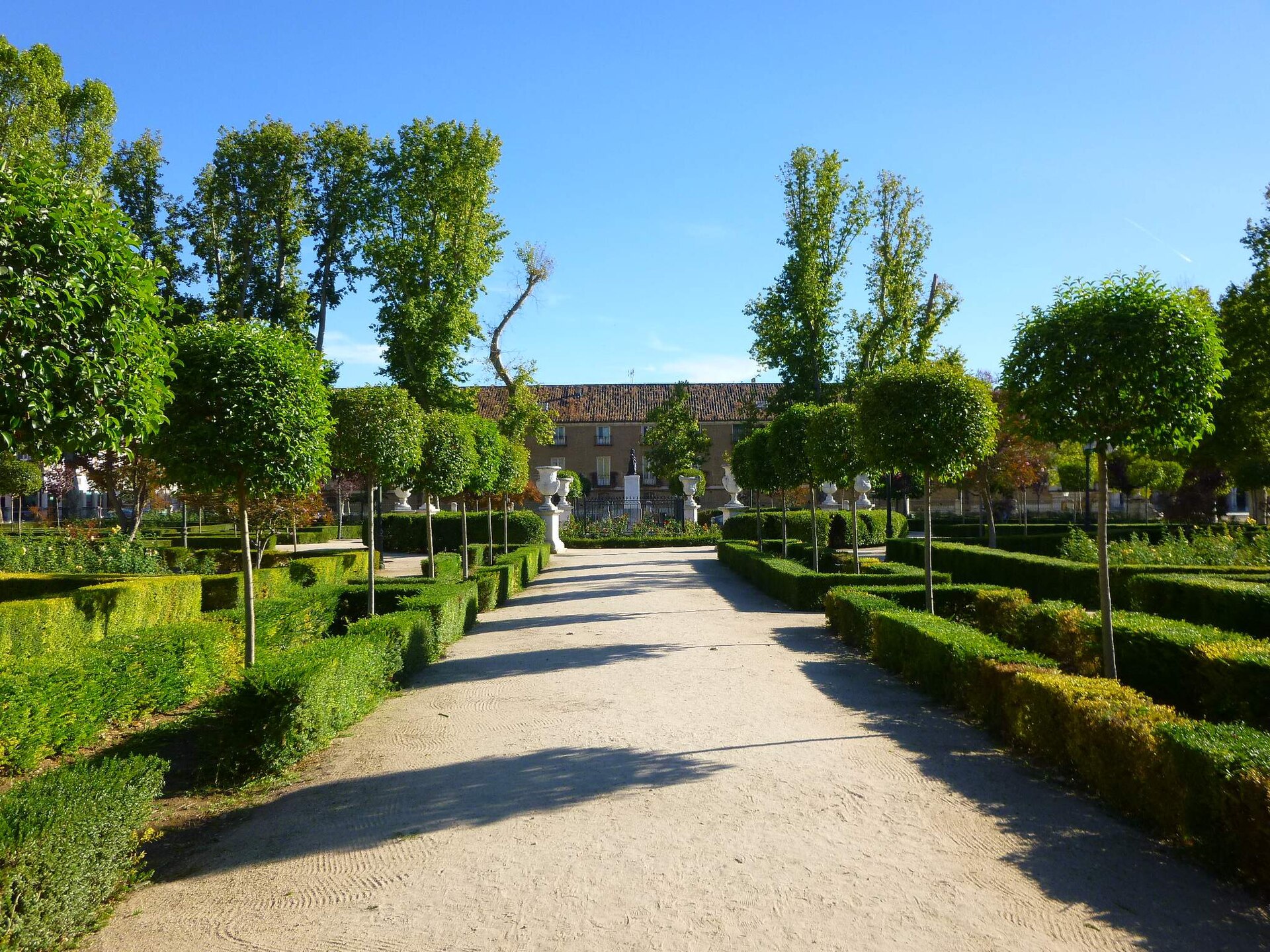
Jardín de la Isla is a Renaissance royal garden in Aranjuez, laid out on an artificial island of roughly 25 hectares, encircled by the waters of the Tagus River and a channel dug alongside it. It sits directly at the northern edge of the Royal Palace and ranks among the oldest parts of the whole complex that once served as the summer residence of the Spanish Habsburgs and Bourbons.
How did the island itself come to exist?
The site's story predates the garden's golden age by centuries. Between 1387 and 1409, masters of the Order of Santiago, which then administered the Aranjuez estate, made use of a natural bend in the Tagus and cut a channel that separated a stretch of land from the riverbank. That is how the island was formed — though at the time it was purely an engineering intervention in the river's course, not yet a designed landscape.
Who designed the garden as it exists today?
Serious work on the garden began under Philip II. The design was entrusted to Juan Bautista de Toledo, an architect also known for his work on El Escorial, with construction carried out between 1561 and 1564. After Toledo's death, Juan de Herrera took over the project, and in 1582 he arranged the fountains — still one of the garden's most recognizable features. The composition follows a single main axis running along the island's longest line, around which rectangular beds were laid out in a symmetrical, orthogonal pattern typical of the Renaissance garden tradition imported into Spain from Italy.
What was the garden used for in the 17th century?
Under Philip III and Philip IV, the Jardín de la Isla stopped being only a place for strolling and quiet contemplation. Court spectacles, theatrical performances and even bullfights were staged there, showing how multifunctional the grounds around the palace became during the Baroque era. The garden was therefore not merely a decorative backdrop for the residence but also a stage for the social life of the Spanish court.
What protected status does the garden hold today?
The historical and artistic importance of the Jardín de la Isla was formally recognized as early as 1931, when it was granted Bien de Interés Cultural status — the highest category of heritage protection in Spain. Later, in 2001, the garden was included within the area inscribed on the UNESCO World Heritage List as part of the "Aranjuez Cultural Landscape," a listing that covers the entire historic residential complex together with its surrounding gardens and agricultural landscape.
Frequently asked questions
Is the Jardín de la Isla the same as the famous Jardín del Príncipe in Aranjuez? No — they are two separate gardens within the royal estate. The Jardín de la Isla is older and sits directly beside the palace, while the Jardín del Príncipe is a much larger complex from the late 18th century, located further along the river.
Why is the garden called "de la Isla"? The name refers literally to the island (Spanish: isla) on which it was laid out — an artificial strip of land cut off by a channel from the main course of the Tagus back in the medieval period.
Who was the main author of the garden's design? The work was initiated by Juan Bautista de Toledo under commission from Philip II, and after his death it was continued by Juan de Herrera, who was responsible among other things for the layout of the fountains.
Can the garden be visited today? Yes, the Jardín de la Isla is open to the public and forms part of the tourist route through Aranjuez, alongside the Royal Palace and the estate's other gardens.
Nearby places

Earn badges for the places you visit
Download NextOnTrip, discover new places and check off your trails.