About this place
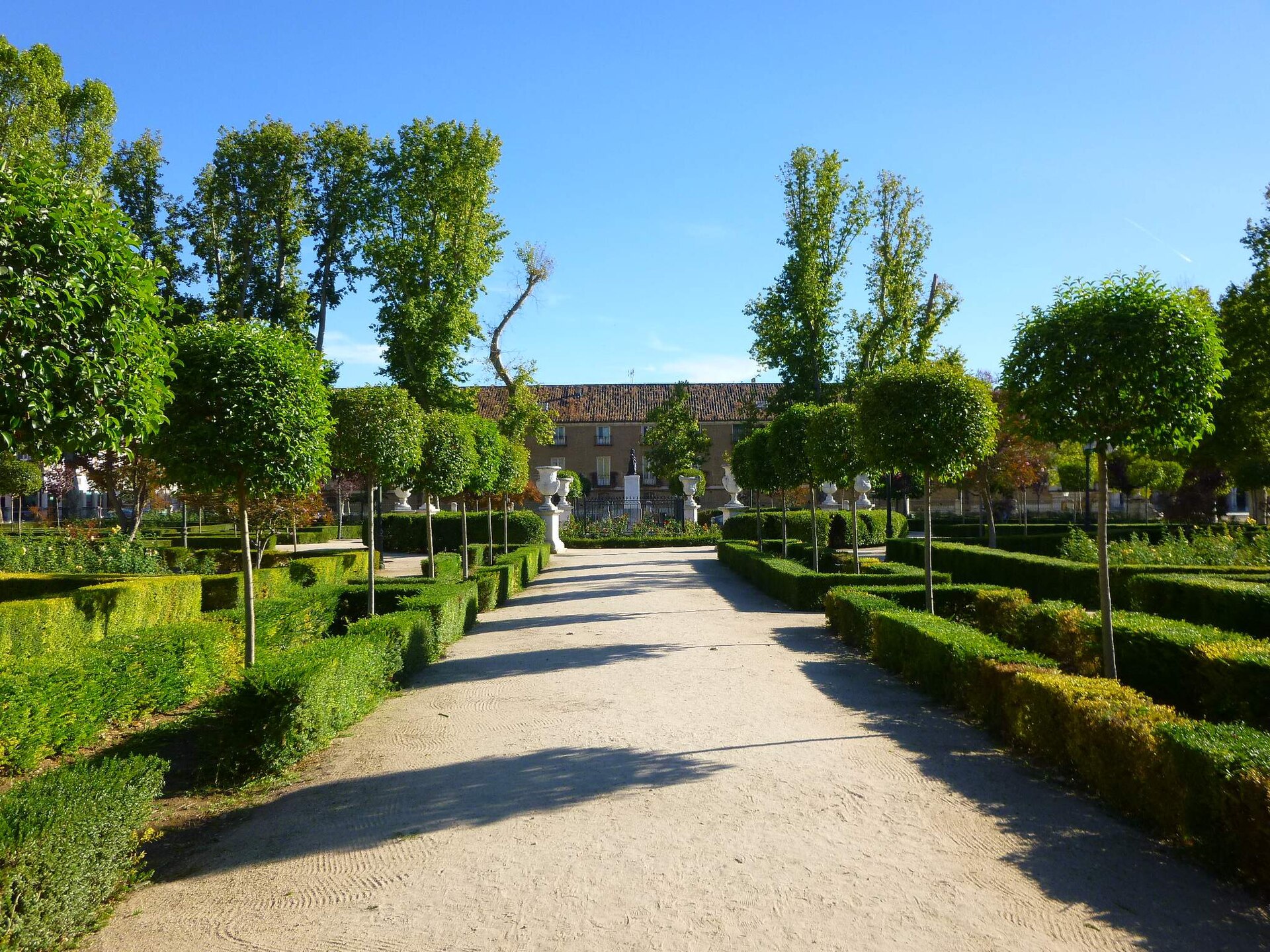
Jardín del Parterre is a historic garden adjoining the Royal Palace of Aranjuez, and one of the few examples in Spain of classical French-style garden design. Its geometric layout, symmetrical pathways, and clipped hedges have set it apart from the more informal gardens nearby for almost three centuries, making it one of Aranjuez's most distinctive landscaped spaces.
When was the garden created?
The Jardín del Parterre was designed and laid out during the reign of Philip V, between 1728 and 1735. The project was entrusted to Esteban Marchand, who introduced the French garden model to Aranjuez — based on regularity, axial symmetry, and clearly defined geometric composition. At the same time, the design retains traces of the earlier Mannerist idea of an enclosed garden, walled off and separated from the open landscape beyond.
What can visitors see in the garden?
The centerpiece of the Jardín del Parterre is the Fuente de Hércules (Fountain of Hercules), considered the garden's most notable fountain. Its sculptures were created by Juan Adán, commissioned by Ferdinand VII in 1827. The garden also holds four of the twenty-eight so-called Thierry vases, brought to Aranjuez in 1804 from the gardens of the Royal Palace of La Granja de San Ildefonso. Precisely arranged flower beds, trimmed rows of trees, and geometric walkways produce the sense of order and symmetry typical of French-style gardens, best appreciated from elevated vantage points or from the palace windows overlooking the grounds.
What protected status does the garden hold?
The Jardín del Parterre has been listed as a Bien de Interés Cultural (Spain's designation for assets of special cultural significance) since 1931. Since 2001 it has also formed part of a UNESCO World Heritage area, included in the "Paisaje cultural de Aranjuez" (Cultural Landscape of Aranjuez) declaration, which covers the palace, the town, and its surrounding gardens.
Has the garden been restored recently?
Yes. The garden underwent a thorough restoration costing around 4.5 million euros, which recovered its original layout and added more than a hundred new trees (126 in total). The work aimed to bring back the Baroque character of a design nearly three centuries old, while applying contemporary standards for maintaining the greenery.
Frequently asked questions
Is there an entrance fee for the garden? Like most of the royal gardens in Aranjuez, the Jardín del Parterre can be visited free of charge, separately from any ticket required to enter the palace itself.
How long does it take to walk through the garden? Given its comparatively modest size next to other Aranjuez gardens, such as the Jardín del Príncipe, a relaxed walk taking in the fountain and sculptures typically takes 20 to 30 minutes.
How does it differ from the neighboring Aranjuez gardens? Unlike the more naturalistic, English-inspired gardens found elsewhere in Aranjuez, the Jardín del Parterre follows the formal French style, with symmetrical flower beds, geometrically trimmed vegetation, and an axial composition centered on its fountain.
Is the garden located within the UNESCO-listed area? Yes, it forms part of the site inscribed on the UNESCO World Heritage List since 2001 as "Paisaje cultural de Aranjuez," which includes the palace and the town's historic gardens.
Nearby places

Earn badges for the places you visit
Download NextOnTrip, discover new places and check off your trails.