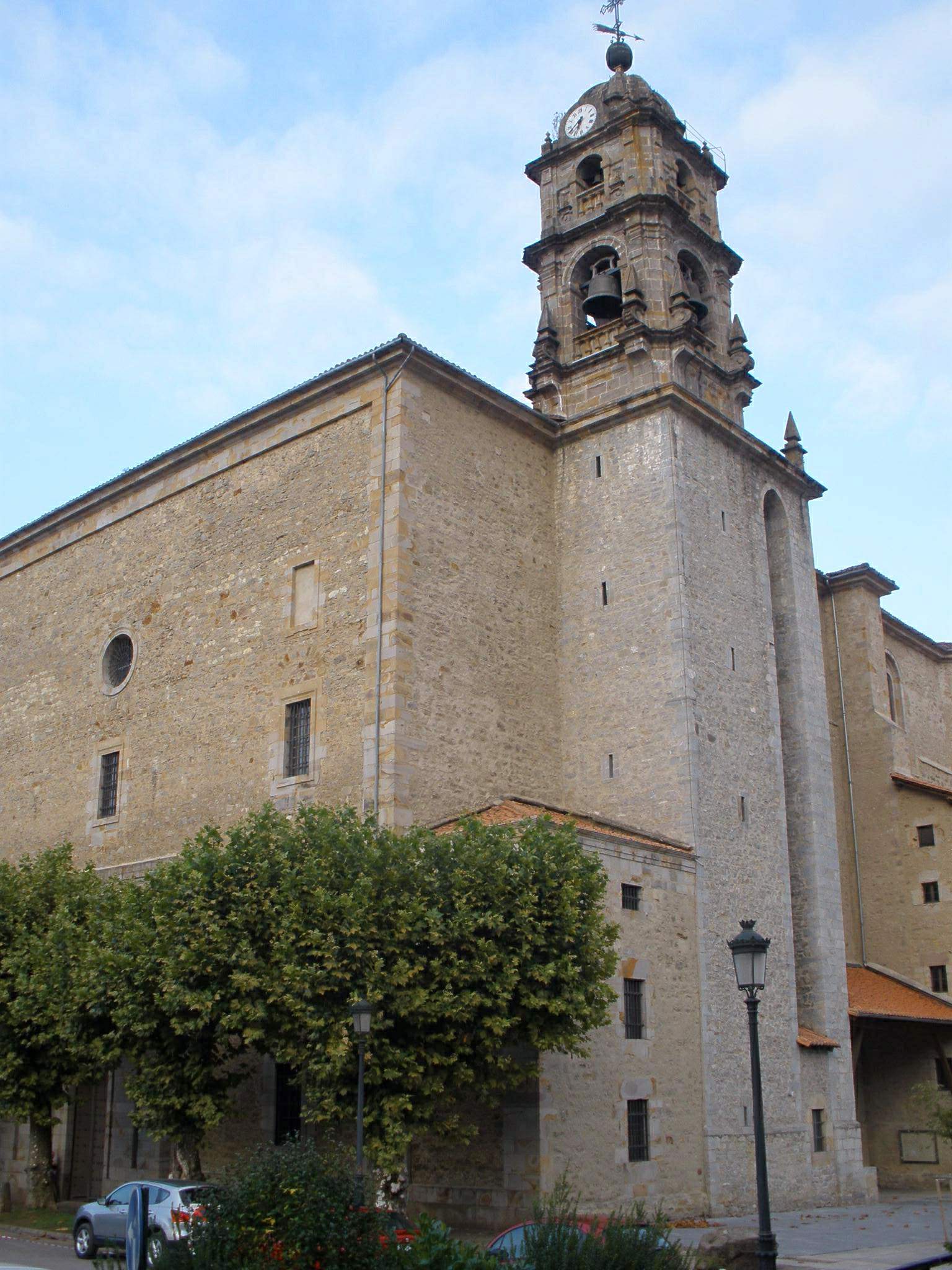
About this place
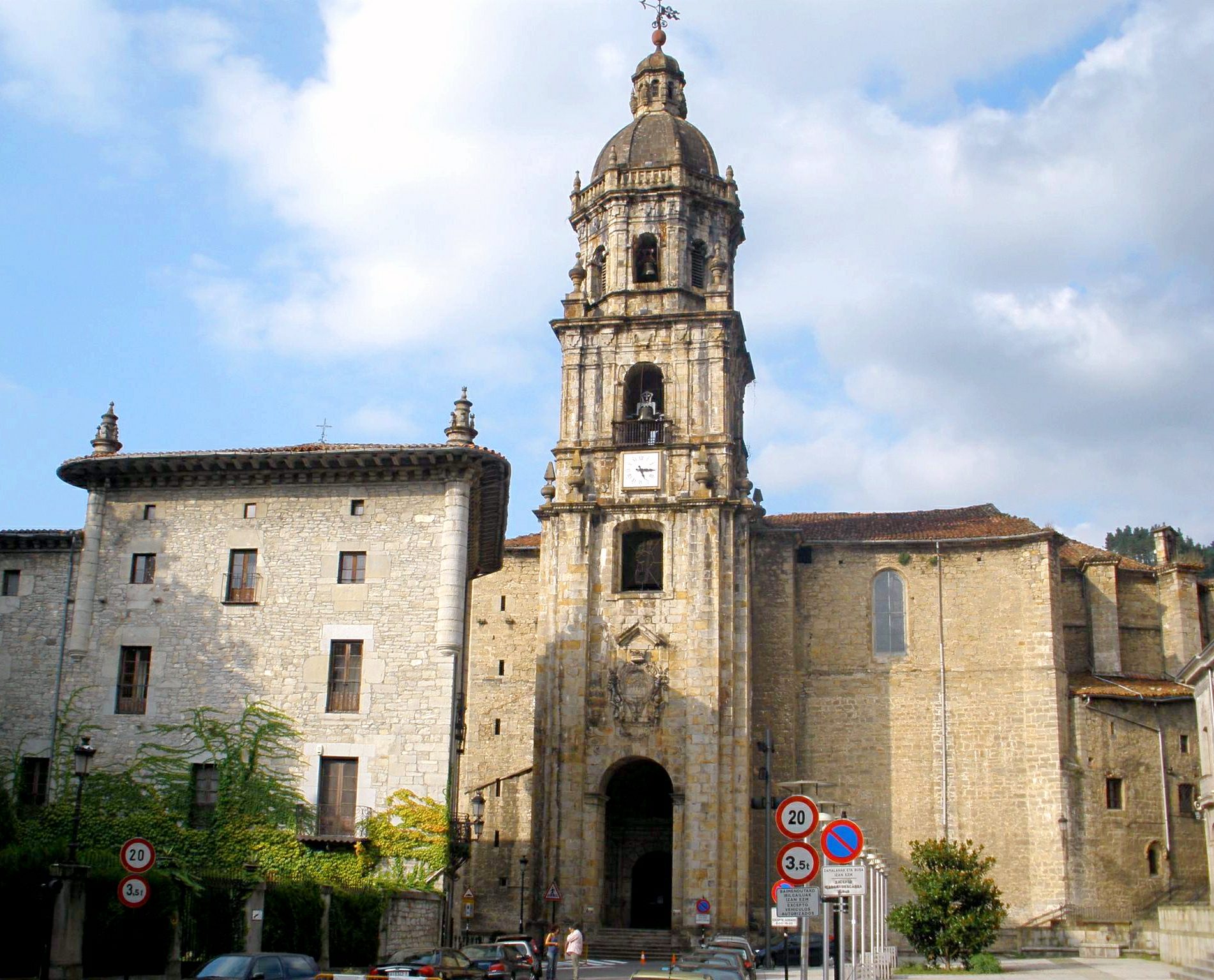
Church of Santa Marina de Oxirondo is the main parish church of Bergara, a town in the Basque Country, and one of the region of Gipuzkoa's most notable examples of Basque Gothic architecture. Standing at the heart of the town's historic quarter, it has anchored local religious life for centuries.
How to get there?
Bergara sits inland in Gipuzkoa, in the valley of the Deba river, within a short drive of San Sebastián. The church stands right in the middle of the old town, so anyone wandering through Bergara's historic streets will come across it almost by default. The area is fully walkable, with parking and public transport stops just a few minutes away on foot.
Where does the name Oxirondo come from?
The church's name comes from the former Oxirondo monastery, first documented in 1305, when King Ferdinand IV of Castile granted it to the Lord of Oñate. The parish of Santa Marina de Oxirondo itself was incorporated into the town of Bergara in 1348 — meaning the religious history of the site predates the current building by centuries. An earlier, medieval church eventually gave way to the much larger structure visitors see today.
How was the present-day church built?
Construction of today's building was a long, interrupted process. Work took place in two clearly separate phases — from 1542 to 1607 and from 1648 to 1672 — with a gap of several decades caused by financial and technical difficulties. Despite this extended timeline, the finished church shows a remarkably consistent architectural style, something unusual for a project stretched over so long.
The church was built as a hall church (Hallenkirche), meaning its three naves rise to the same height rather than featuring a taller central nave flanked by lower side aisles, as in classic Gothic design. The naves rest on large, monolithic pillars with Tuscan bases and capitals, and the whole structure is covered by an intricate ribbed vault typical of sixteenth-century building techniques. The result is an interior that reads as wide and unified, without one dominant central axis pulling the eye forward.
The bell tower came later than the main body of the church — its Baroque design was presented in 1701 by Martín Esteban de Abaria, and the finished tower gave the building the tall, distinctive silhouette still visible from many points around town.
What is worth seeing inside?
The standout feature of the interior is the main altarpiece, commissioned in 1736. The finished retable, carried out between 1739 and 1742, is the work of Miguel de Irazusta, while the figures decorating it were carved by Luis Salvador Carmona, one of the most highly regarded Spanish Baroque sculptors of his time. This combination of architectural altarpiece and figurative sculpture makes the main altar one of the most valuable elements of the church's decoration.
A further phase of work came at the end of the eighteenth century: starting in 1787, under the direction of architect Alejo de Miranda, the choir, the portico, and the side façade were added. These later additions round out the building's architectural story, blending the original Gothic structure with subsequent Baroque and Neoclassical elements.
The Church of Santa Marina de Oxirondo forms part of the protected historic ensemble of Bergara's old town and remains an active parish church where regular services are held.
Frequently Asked Questions
What does the name Oxirondo mean? It refers to the former Oxirondo monastery, first documented in 1305, from which the parish that was incorporated into Bergara in 1348 takes its name — the name survived even after the church itself was rebuilt.
How long did it take to build the church? Construction took place in two phases, from 1542 to 1607 and from 1648 to 1672, with a gap of several decades in between — spreading the total build over more than a century.
What architectural style does the church represent? It is an example of Basque Gothic built as a hall church, with three naves of equal height resting on monolithic pillars and covered by a ribbed vault.
What is inside the main altar? The main altarpiece was carried out between 1739 and 1742 by Miguel de Irazusta, with figures sculpted by Luis Salvador Carmona — one of the church's most important decorative features.
Nearby places

Earn badges for the places you visit
Download NextOnTrip, discover new places and check off your trails.