About this place
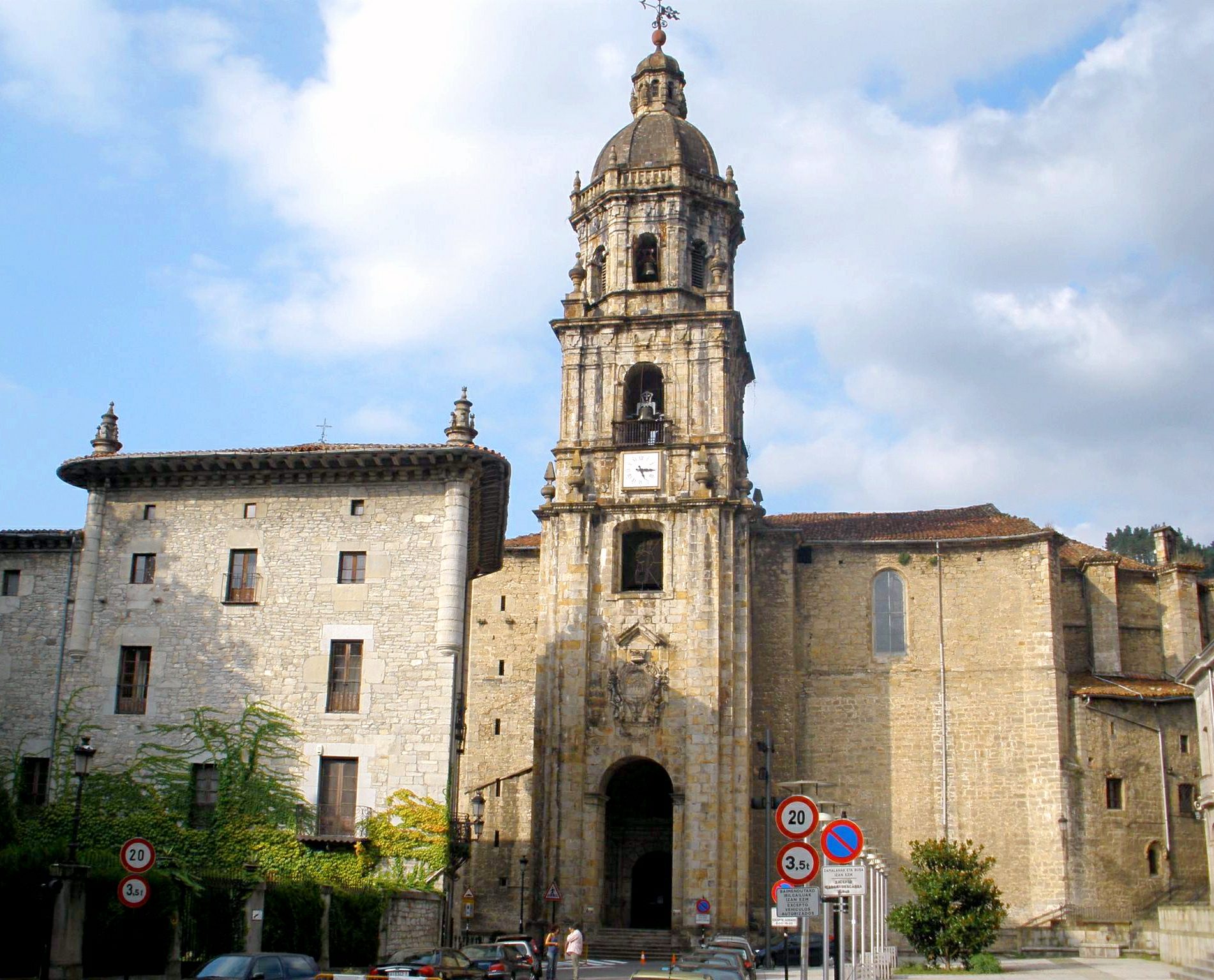
Church of San Pedro de Ariznoa is the parish church at the heart of Bergara, a town in Gipuzkoa, in Spain's Basque Country. It was around this church that King Alfonso X of Castile founded Bergara in 1268, making the building the historical nucleus of the entire town.
How did the church come about, and how is it linked to Bergara's founding?
Bergara was founded in 1268 by Alfonso X the Wise, who organized the new settlement around the existing parish of San Pedro de Ariznoa. The building seen today is not that original church, though: it was raised on the foundations of an earlier structure across four separate building campaigns, carried out from the late 15th century until around 1620. The result is a so-called Basque Gothic hall church: a rectangular plan with three naves of equal height, the central one wider than the two side aisles. Also dating from the 16th-century building phase is the modest but carefully executed plateresque decoration on the lower part of the façade — fine rosettes and a medallion, or tondo, carved with a cherub.
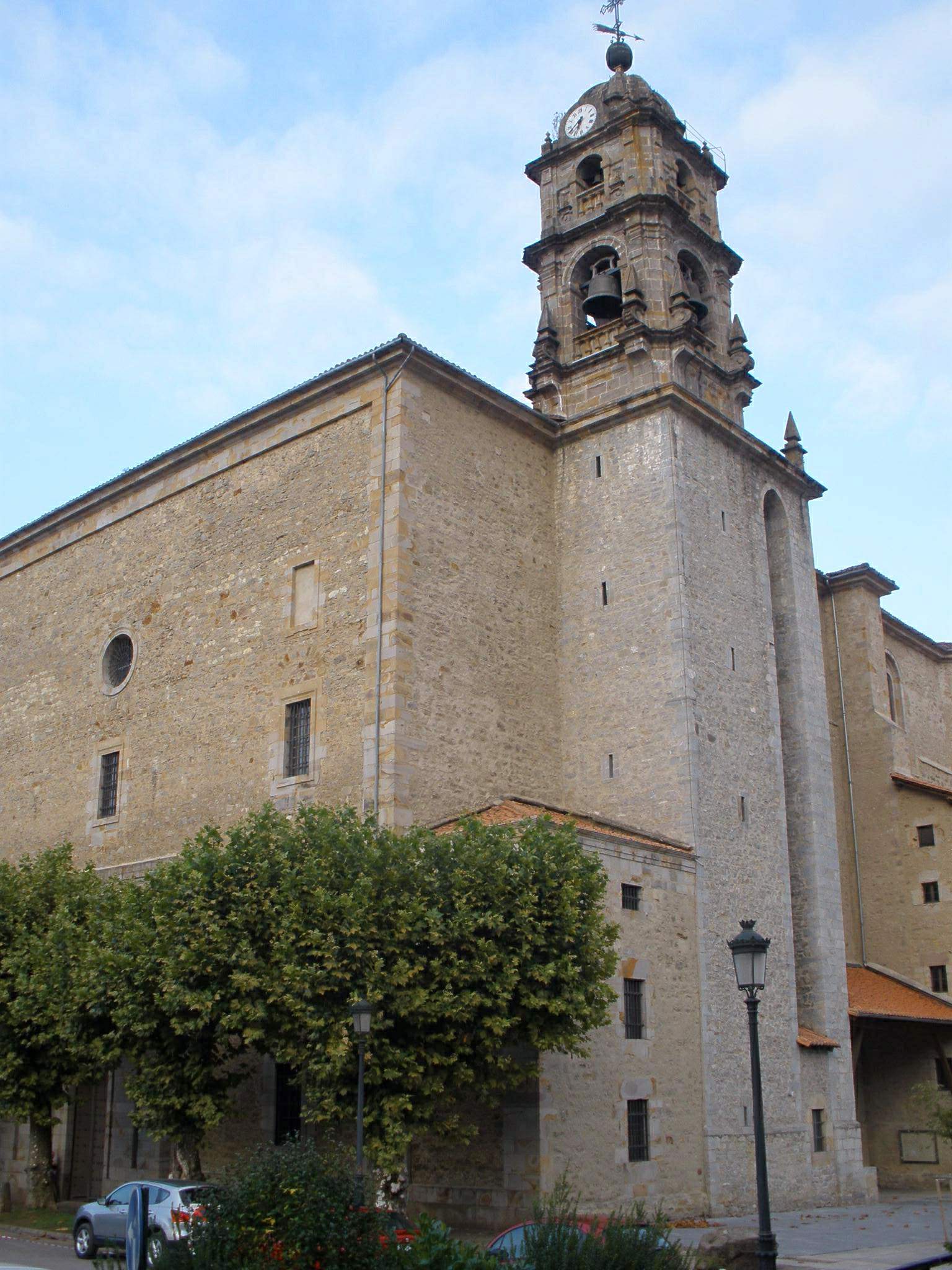
The church's most recognizable exterior feature, though, is its baroque tower, added in 1742 to a design by the architect José de Lizardi. It is considered one of his finest works and still gives the building its distinctive silhouette today.
What can visitors see inside?
The interior holds several artworks of real significance for Basque and Spanish art history. The main altarpiece, in plateresque style, was built between 1535 and 1540 and is regarded as one of the earliest Renaissance altarpieces raised anywhere in the Basque Country. Its upper section depicts a Calvary scene; the three central sections show episodes from the Passion of Christ along with saints and apostles; and the predella at the base depicts the four Evangelists.
Beneath the choir stands the Cristo de la Agonía (Christ of the Agony), a sculpture carved in 1626 by the Seville sculptor Juan de Mesa. Many scholars of Spanish Baroque art rank it among the most important works of the period, which makes it worth pausing over longer than the rest of the church's furnishings.
The church also houses a historic romantic organ, built in 1889 by the French organ-building firm Stoltz-Frères, valued by organ music enthusiasts for its rich, period-typical sound. A painting of the Adoration of the Shepherds arrived at the parish in 1658; numerous art historians attribute it to the Spanish painter Jusepe de Ribera.
Why is the church called San Pedro de Ariznoa?
The name Ariznoa refers to the original site of the parish, the point around which the whole town of Bergara later grew, as mentioned above. Its dedication to Saint Peter marks it out as the town's first and principal parish, distinct from Bergara's other churches, such as the nearby Santa Marina de Oxirondo.
Frequently Asked Questions
When was the Church of San Pedro de Ariznoa built? The current building went up across four construction campaigns between the late 15th century and around 1620, on the foundations of an earlier parish church. Its baroque tower was added later, in 1742.
What is the most important artwork inside the church? The most highly regarded pieces are the Cristo de la Agonía, carved by Juan de Mesa in 1626, and the plateresque main altarpiece from 1535–1540, one of the earliest Renaissance altarpieces built in the Basque Country.
Where is the church located? The church stands in the historic center of Bergara, in the province of Gipuzkoa, in Spain's Basque Country, and was the point around which the entire town took shape after its founding in 1268.
Is there anything of interest for music lovers? Yes — the church houses a romantic organ built in 1889 by the French firm Stoltz-Frères, a valued instrument at the regional level.
Nearby places

Earn badges for the places you visit
Download NextOnTrip, discover new places and check off your trails.