About this place
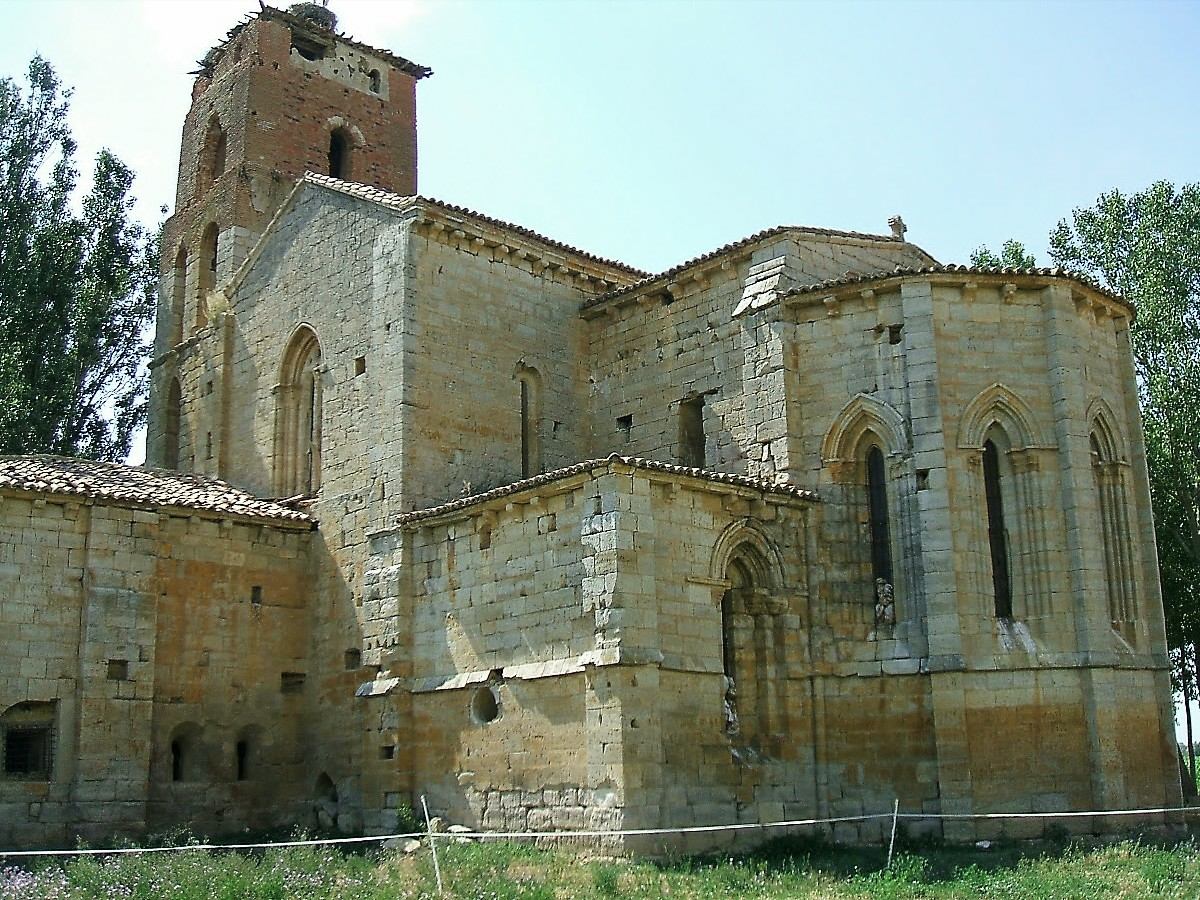
The Church of Saint Peter in Frómista is a Gothic church belonging to the Diocese of Palencia, standing in a small town in Castile and León that lies directly on the French Way of the Camino de Santiago. It should not be confused with the town's world-famous Romanesque Church of San Martín — the two buildings represent entirely different periods of the town's architectural history.
What can you see inside?
The interior is laid out in three naves and five bays, giving the church a spacious, austere feel typical of late Castilian Gothic. The main altarpiece, a Baroque retable, was designed in 1636 by Francisco Trejo and stands in visual contrast to the older Gothic shell of the building. Among the sculptural highlights is a "Descent from the Cross" group attributed to the Castilian school of Valmaseda, along with two carved figures of Saint Peter and Saint Paul, the church's patrons.
The building now doubles as a museum space, housing the Frómista Museum. Its collection includes a set of 29 Hispano-Flemish painted panels from the 15th century depicting scenes from the life, Passion, and death of Christ, together with pieces of historical goldwork connected to the town's local tradition known as the Miracle of Frómista.
What is the history behind the church?
Construction began in the early 15th century, though the church did not reach its final form until the following century. Its distinctive four-tier tower and Renaissance façade were added by the architect Juan de Escalante, who completed the redesign in 1560. This layering of an older Gothic structure with Renaissance architectural detail makes the church a notable example of stylistic transition in Spanish religious architecture of the period.
How do you get to Frómista?
Frómista sits in the province of Palencia, in the Castile and León region, and is one of the classic stopping points on the Camino de Santiago's French Way — pilgrims walking or cycling this route pass through the town almost without exception. The town is also well connected by road to both Palencia and Burgos, making it easy to reach by car for visitors not walking the pilgrim route. The Castile Canal (Canal de Castilla), with its notable lock system, also runs through Frómista and is a further point of interest for anyone visiting the area.
When is the best time to visit?
Spring and early autumn offer the most comfortable conditions, with moderate temperatures and steady pilgrim traffic that keeps the town lively without the intense summer heat typical of the Meseta plateau. Summers can be hot and dry, while winters turn cold, so it's worth planning a visit to the church interior and adjoining museum around these seasonal swings.
Frequently Asked Questions
Is the Church of Saint Peter the same building as the famous Church of San Martín in Frómista? No. They are two separate churches in the same town — San Martín is an 11th-century Romanesque church known internationally, while Saint Peter is a Gothic building with a Renaissance façade that today also functions as a diocesan museum.
What can you see in the museum inside the church? The main attraction is a set of 29 Hispano-Flemish painted panels from the 15th century depicting biblical scenes, along with pieces of goldwork tied to local religious tradition.
Is it worth visiting while walking the Camino de Santiago? Yes — Frómista is one of the notable waypoints on the French Way, and the Church of Saint Peter sits close to the town center, making it an easy addition to a walking itinerary without any real detour.
How can you reach Frómista without walking the pilgrim route? The town has road connections to both Palencia and Burgos, so it can be reached by car or public transport without covering any part of the walking trail.
Nearby places

Earn badges for the places you visit
Download NextOnTrip, discover new places and check off your trails.