About this place
The Church of Santa María del Castillo occupies the highest point of Frómista, a small town in the Palencia province of Castile and León, standing exactly where the town's medieval castle once stood — a fact preserved in its full name. Overshadowed by the more famous Romanesque church of San Martín de Tours nearby, Santa María del Castillo is nonetheless one of the town's most rewarding sights and a regular stop for pilgrims walking the French Way of the Camino de Santiago.
How to get there?
Frómista sits on the A-231 motorway linking Burgos and León, roughly 30 km from Palencia and under an hour's drive from Burgos. The easiest options are driving or taking a regional bus from Palencia or Carrión de los Condes. The town is also a classic stage on the Camino Francés, so many visitors arrive on foot or by bicycle from Carrión de los Condes or Villalcázar de Sirga. The church itself stands in the upper part of town, an easy walk of no more than fifteen minutes from the bus stop or main parking area.
What will you see?
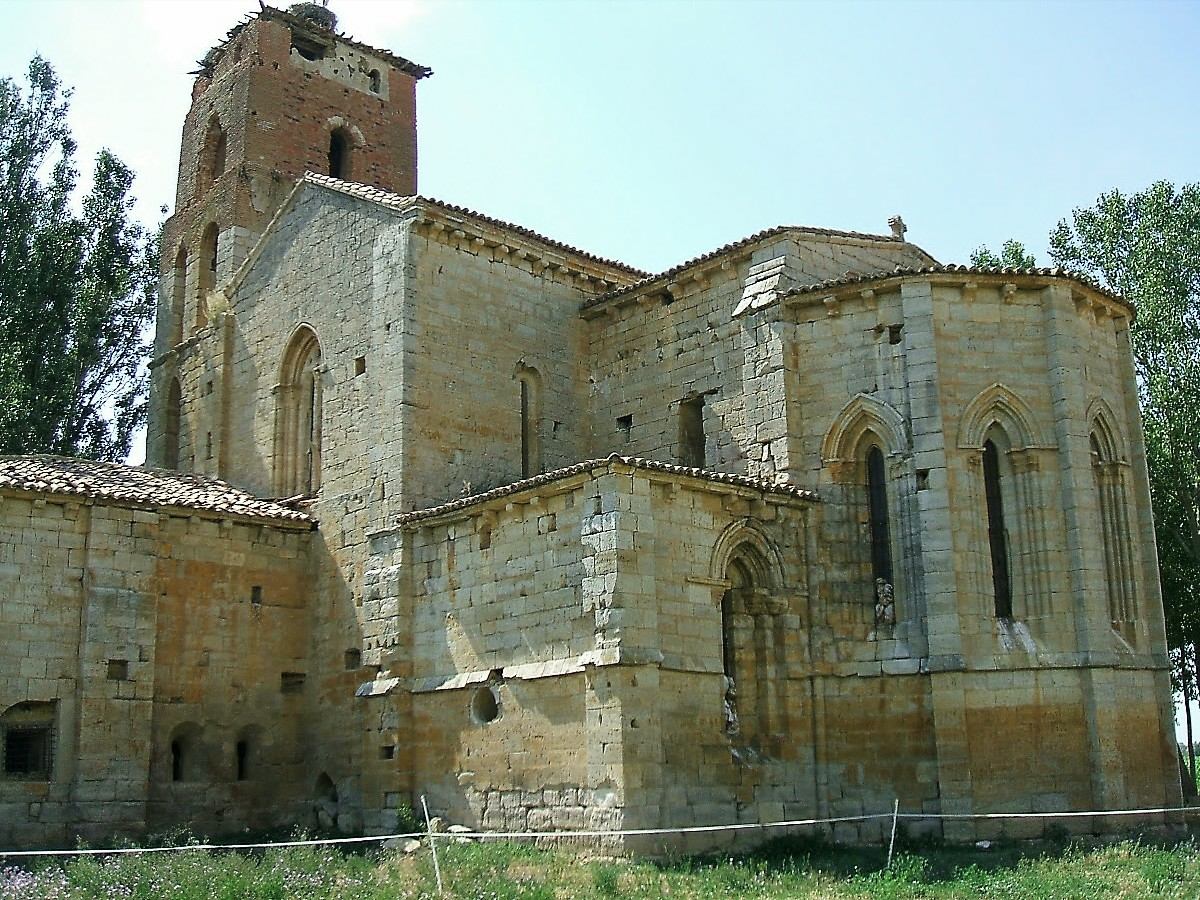
The church rises on the site of a castle built in 1379 by Admiral Fernando Sánchez de Tobar. The building itself is a late Gothic work: construction in ashlar stone began around 1530, and the stonemason Juan de Arce closed the main nave between 1547 and 1549. The tower at the head of the church was added in the early 18th century, and the classicist front portal bears the date 1705 — the result of nearly two centuries of building campaigns, still visible in the mix of styles on the façade.
Inside, a single nave divided into four bays leads to a polygonal choir, flanked by side chapels. Articulated walls and heavy buttresses support the structure, which is roofed with star-ribbed vaults typical of late Spanish Gothic architecture. The undisputed highlight is the main altarpiece, a late-15th-century Gothic work made up of twenty-nine painted panels in Hispano-Flemish style, depicting scenes from the life of the Virgin, Christ, and the Old Testament — one of the best-preserved panel painting ensembles in the region. The church has been listed as an Asset of Cultural Interest (Bien de Interés Cultural) since 1944, confirming its standing among Spain's protected religious monuments.
When to visit?
Spring (April to June) and early autumn (September to October) are the best times to visit, when temperatures across Castile are mild and pilgrim traffic along the Camino Francés is more manageable. Summer can be hot and busy, especially during peak pilgrimage season, while winter often brings reduced opening hours for regional sights. It's worth checking local visiting hours before arriving, since the church tends to open according to parish schedules rather than a fixed tourist timetable.
Frequently asked questions
Why is the church called "del Castillo"? Because it stands on the site of Frómista's former castle, built in 1379 by Admiral Fernando Sánchez de Tobar. No trace of the castle survives, but the church's name keeps its memory alive.
Is this the same church as the famous San Martín de Tours? No. They are two separate buildings in the same town — San Martín de Tours is a Romanesque landmark known throughout the Camino, while Santa María del Castillo is a late Gothic parish church from a different era with a distinct architectural character.
What is the most valuable feature inside? The late-15th-century Gothic main altarpiece, with twenty-nine painted panels in Hispano-Flemish style — one of the best-preserved examples of this kind of panel painting in the Palencia province.
Is it worth combining a visit with the Camino de Santiago route? Yes. Frómista is a classic stage on the French Way to Santiago, so visiting the church fits naturally into a walking or cycling itinerary through the region.
Nearby places

Earn badges for the places you visit
Download NextOnTrip, discover new places and check off your trails.