- Sacred Monuments
- Religious monuments
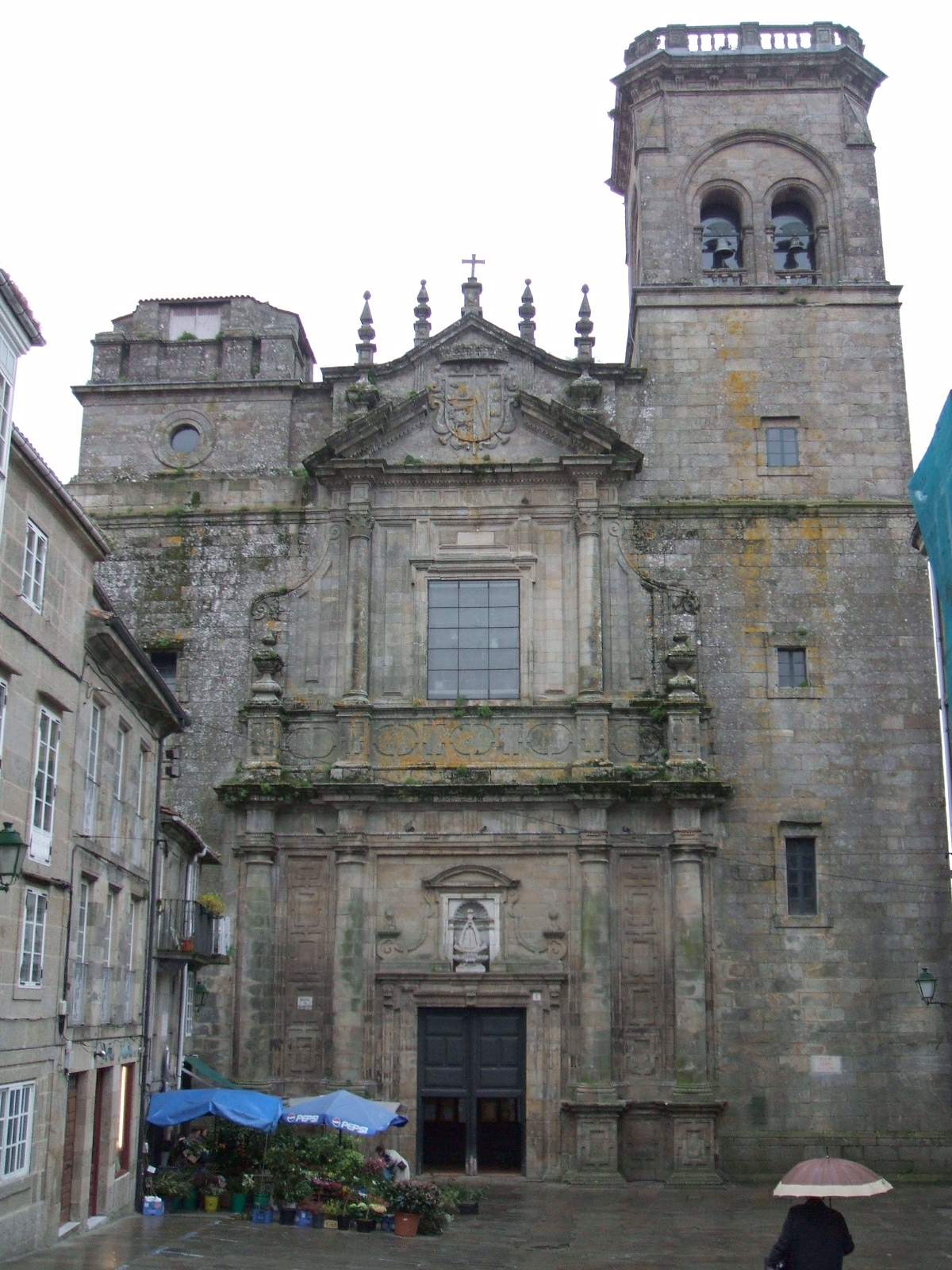
Church of Saint Dominic of Bonaval
About this place
The Church of Saint Dominic of Bonaval is a Gothic monastery church in Santiago de Compostela, Galicia, built alongside a former Dominican convent on the Bonaval hill. Today it forms part of the Museo do Pobo Galego complex and ranks among the city's most rewarding sights that most pilgrim-focused visitors overlook.
How do you get there?
The church sits on Costa de San Domingos, a short walk northeast of the cathedral and the historic centre of Santiago de Compostela. From Praza do Obradoiro it takes about ten minutes on foot through the narrow lanes of the UNESCO-listed old town. Because the bus and train stations are both nearby, the site is an easy add-on even for travellers with only a day or two in the city.
What will you see?
A first monastery on this site dates back to 1220, and tradition links its founding to a pilgrimage by Saint Dominic de Guzmán, though no solid historical evidence confirms the story. What is documented is that the convent already existed by 1228, originally dedicated to Santa María; only from the 15th century onward does it appear under the name Santo Domingo. The present church dates mainly from the 14th century and follows the austere, monumental style typical of mendicant-order architecture — plain in decoration, yet striking in the sheer scale of its sanctuary.
Most of the surviving monastic buildings, however, were raised later, at the turn of the 17th and 18th centuries, in a Baroque style overseen by the architect Domingo de Andrade, one of the leading figures of Galician Baroque. His signature contribution is the complex's best-known feature: a triple helical staircase linking the convent to the church, an engineering feat that still impresses visitors with its lightness and geometric precision.
Following secularisation in the mid-19th century, the building passed through a string of different uses — military barracks, a poorhouse, a school for the blind and deaf, and eventually a municipal museum. In 1976 the city council handed the site over to the institution that runs the Museo do Pobo Galego, dedicated to Galician folk culture and traditions. Inside the former church also stands the Panteón de Galegos Ilustres, a pantheon honouring notable figures of Galician history and culture.
When should you visit?
Santiago de Compostela can be visited year-round, but spring and early autumn offer the most comfortable conditions for exploring the church and museum, with mild Galician weather and fewer pilgrims than at the height of summer. Summer months bring large numbers of Camino de Santiago walkers into the city, so an early morning visit is worth planning. Since both the church interior and the museum galleries are indoors, the site also makes a solid rainy-day option in a region known for unpredictable weather.
Frequently asked questions
Who founded the monastery of Santo Domingo de Bonaval? Tradition credits Saint Dominic de Guzmán with founding it in 1220, though direct evidence is lacking. Documented sources confirm the convent's existence by 1228.
What is the site's most striking architectural feature? The triple helical staircase designed by Domingo de Andrade, connecting the convent to the church — one of the most distinctive works of Galician Baroque architecture.
What does the building house today? The monastic complex is now home to the Museo do Pobo Galego, and the church contains the Panteón de Galegos Ilustres, a pantheon for notable figures of Galician culture.
Is admission to the church and museum free? The Museo do Pobo Galego is open to visitors during its regular opening hours — it's worth checking current times locally or with the tourist information office before you go.
Nearby places
-

Church of Sant Mary of the Way
Santiago de Compostela
-
Capela de Ánimas
Santiago de Compostela
-
Church and Convent of Saint Augustine
Santiago de Compostela
-
Church of San Bieito do Campo
Santiago de Compostela
-
Convento de Santa Clara de Santiago de Compostela
Santiago de Compostela
-
Convento do Carme
Santiago de Compostela
Earn badges for the places you visit
Download NextOnTrip, discover new places and check off your trails.