About this place
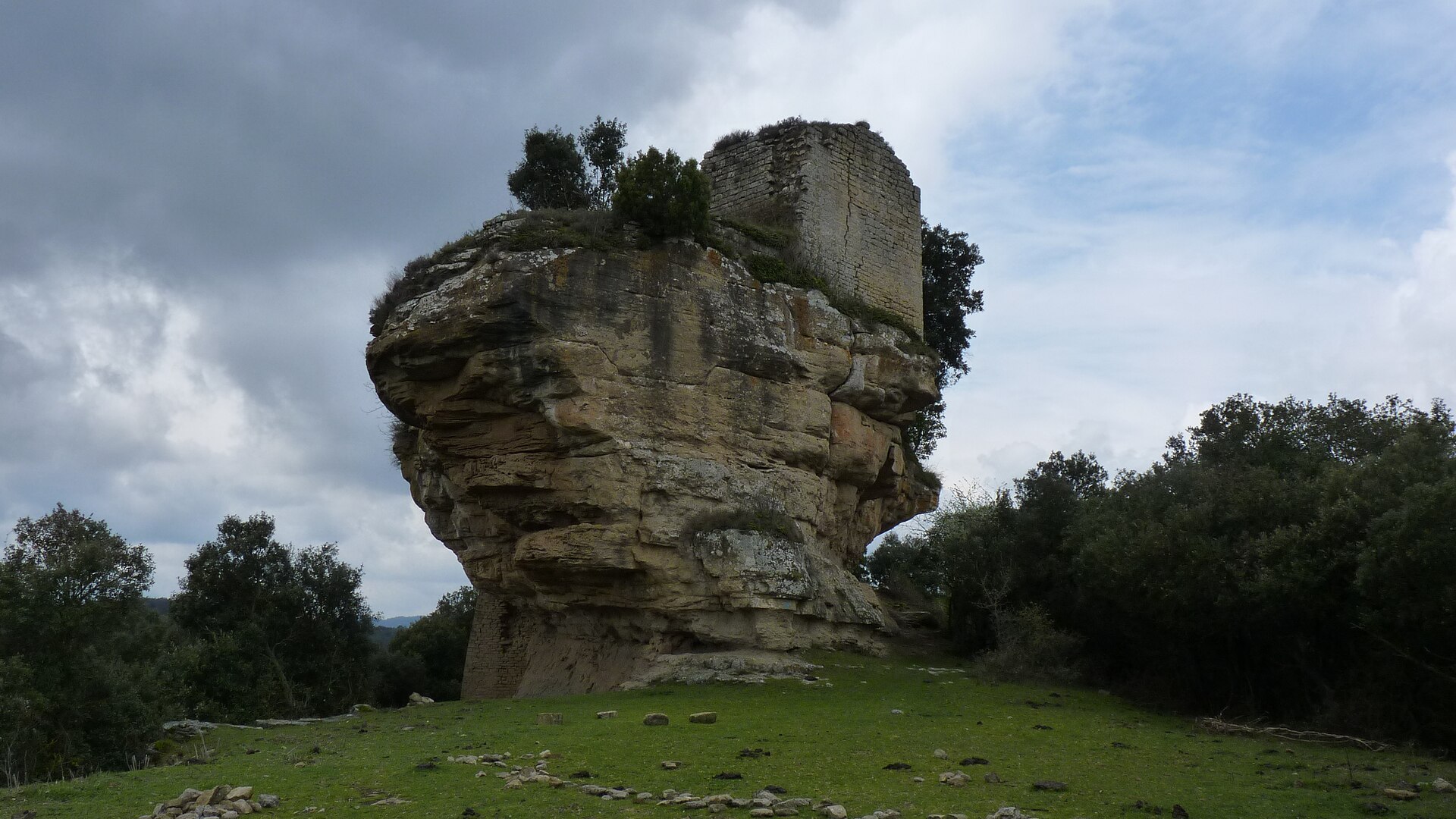
Castell de Centelles is a ruined medieval castle standing above the village of Sant Martí de Centelles, in the Catalan county (comarca) of Osona, close to the town of Centelles. Perched on a rocky outcrop, the fortress was once the seat of one of the region's most powerful noble families and today ranks among the more rewarding heritage stops in inland Catalonia.
How to get there?
Sant Martí de Centelles sits in central Catalonia, an easy drive from both Barcelona and Vic, the capital of the Osona district. The most practical route is by car, following local roads from the town of Centelles up into the hills that frame the valley. Because the castle occupies high ground above the village, the final stretch has to be covered on foot along a steep, rocky path leading directly to the ruins. Sturdy footwear is recommended, as the ground is uneven and requires careful footing in places.
What will you see?
The castle is split into two clearly separated sections. The upper enclosure, the Recinte Sobirà, crowns a barely accessible rock at the heart of the complex and served as the fortress's last line of defence. The much larger lower enclosure, the Recinte Jussà, holds the remains of a chapel dedicated to Saint Martin, patron of the surrounding parish. The surviving walls and towers show traces of successive rebuilding phases — in the 15th century the defences were reinforced to withstand firearms, a change still visible in the layout of the outer walls. From the ruins, sweeping views open over the valley and the surrounding hills of Osona, making the site as rewarding for history enthusiasts as for anyone simply after a good viewpoint.
The castle's roots go back to the Carolingian era: the fortress, then known as the castle of Saint Stephen, is first recorded at the end of the 9th century, during the period when the counts of Barcelona held sway over the area. Over time the stronghold passed into the hands of the Centelles family, from whom it took its present name, and it grew into the centre of an extensive barony covering several nearby settlements. The following centuries brought turbulent times: the castle suffered damage during the 17th-century Reapers' War, was garrisoned during the War of the Spanish Succession in the early 18th century, and was partly blown up by French troops during the Napoleonic Wars. The final blow came with the 19th-century Carlist Wars, after which the castle was abandoned and has remained a ruin ever since.
When to visit?
Since the site is unroofed and fully exposed on its hilltop, spring and autumn offer the most comfortable conditions, with mild temperatures and a cooler approach path. In summer, an early-morning visit is best to avoid the heat on the shadeless final climb. In winter the ground can turn damp and slippery after rain, so it is worth checking the forecast beforehand.
Frequently Asked Questions
Is there an entry fee for the castle? The site consists of open-air ruins with no official opening hours or ticket booth — visits are unrestricted and undertaken at one's own risk given the uneven terrain.
Can you reach the castle without a car? The most convenient way is to drive to Sant Martí de Centelles or Centelles and then continue on foot up the path to the ruins.
How long does a visit take? Exploring the ruins typically takes one to two hours, depending on your pace and how much time you spend enjoying the views from the upper enclosure.
What else is worth seeing nearby? Close to the castle lies the town of Centelles with its historic core, along with hiking trails through the Osona hills that are popular with walkers and cyclists.
Nearby places

Earn badges for the places you visit
Download NextOnTrip, discover new places and check off your trails.