About this place
Bara-Bahau Cave (Grotte de Bara-Bahau) is a compact but fascinating cave in the municipality of Le Bugue, in the heart of the Périgord Noir, right along the Vézère valley — the region that holds France's densest cluster of prehistoric rock art sites. The cave runs more than 100 metres into the hillside and is roughly 25 metres wide, combining odd geological formations with rare traces of human activity from thousands of years ago.
Where is the cave and how do you get there?
Bara-Bahau sits just a few minutes from central Le Bugue, close to the Bournat leisure park, surrounded by the limestone hills typical of the Vézère valley. It makes an easy addition to a day spent exploring the area's better-known caves, including Lascaux, without requiring a long detour.
What is there to see inside?
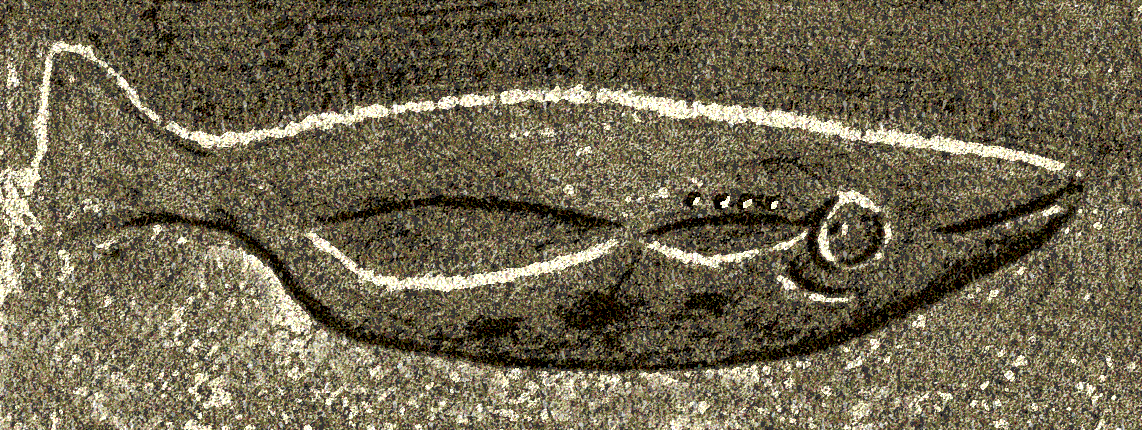
The passage first opens onto geological curiosities, notably eccentric concretions — calcite formations that twist and branch in directions that seem to defy gravity rather than growing straight down as stalactites normally do. Deeper inside lies the cave's main draw: a band of engraved animal figures spread across three overlapping registers. Horses, aurochs or bison, bears, reindeer and ibex appear here, carved directly into the rock rather than painted. The lower the figures sit, the smaller they become, likely because the artists had less room to maneuver near the ground and had to work standing, sitting, or almost lying down. Alongside the animals, the walls also carry a handful of harder-to-read signs and a single hand outline.
Who discovered the engravings, and when?
The deeper, engraved section of the cave was uncovered on 1 April 1951 by the noted French speleologist Norbert Casteret and his daughter Maud, who was the first to notice the carved outlines on the rock. A few months later, the prehistorian Abbé Henri Breuil, one of the leading authorities on Palaeolithic art, confirmed their authenticity. Specialists estimate the engravings to be around 15,000 years old.
Why is it called the "Bear Sanctuary"?
The cave is also known as the Sanctuaire de l'Ours, the Bear Sanctuary, because during the Ice Age it served cave bears (Ursus spelaeus) as a winter den. Deep claw marks are still visible on the walls, left by bears sharpening their claws against the rock after months of hibernation — the detail that gave the site its nickname.
What should visitors expect?
Bara-Bahau is a privately run site open to the public and listed as a historic monument since 1961. It draws around 10,000 visitors a year. An educational display near the entrance, with explanations and reproductions of the engravings, helps visitors make sense of what they are about to see further inside.
FAQ
Is Bara-Bahau suitable for children? The guided route is short, and the entrance display with reproduction engravings helps younger visitors follow along, though the natural, uneven cave floor is worth keeping in mind.
How is Bara-Bahau different from Lascaux? Bara-Bahau's animal figures are engraved into the rock rather than painted, making it a carving site rather than a painted one. Lascaux, famous for its coloured frescoes, lies in the same Vézère valley but showcases a different Palaeolithic technique.
How long does a visit take? Visits run in small guided groups; since the cave extends just over 100 metres, the tour is relatively short compared with other caves in the region.
Where does the cave's name come from? Beyond its official name, the cave is popularly nicknamed the Bear Sanctuary, a reference to the many claw marks left by hibernating cave bears thousands of years ago.
Nearby places

Earn badges for the places you visit
Download NextOnTrip, discover new places and check off your trails.