Sacred Monuments in Poland
A guide to 28 Sacred Monuments in Poland — with descriptions, photos and traveler visits from the NextOnTrip community. Locations spread across 15 cities and towns. Most visited by the community: Wawel Cathedral, Sanktuarium Bożego Miłosierdzia w Krakowie-Łagiewnikach, Cathedral in Pelplin.
-
 1 visits
Wawel Cathedral
Kraków
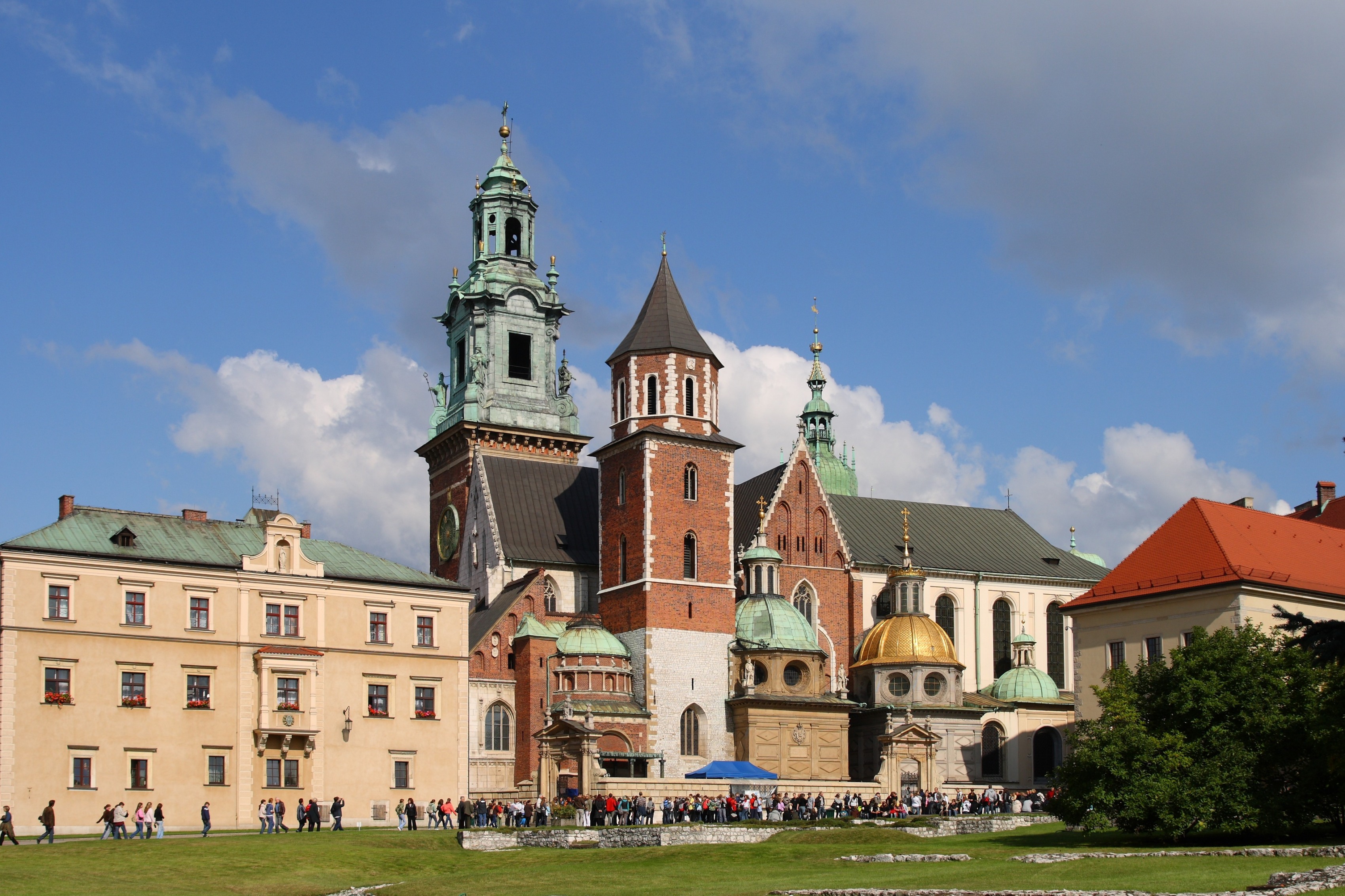
Wawel Cathedral, formally the Archcathedral Basilica of St Stanislaus and St Wenceslaus, crowns Wawel Hill in Kraków and is the mother church of the Archdiocese of Kraków. Polish kings were crowned and buried here for centuries, and from the 19th century national heroes and poets joined them. How did the present cathedral come about? The first cathedral most likely went up soon after the Kraków bishopric was founded in 1000. Its Romanesque successor, consecrated in 1142, was weakened by age and a fire in 1305, yet parts of it survive, above all St Leonard's Crypt and the base of the south tower. The Gothic basilica you see today was begun in 1320 and consecrated on 28 March 1364. Chapels were added along its walls in the 14th and 15th centuries, the Renaissance arrived in the 16th, and in the 17th and 18th centuries the interior was remodelled in Baroque taste. Why is it called the royal cathedral? The coronation of Władysław the Short on 20 January 1320 set a precedent: every later king was crowned here except Stanisław August Poniatowski and Stanisław Leszczyński. Royal weddings, christenings and funerals were also held before the high altar. Who is buried in the cathedral? Władysław the Short was the first king laid to rest on Wawel, and his Gothic tomb is the oldest royal monument. Nearby stand the tombs of Casimir the Great and Władysław Jagiełło. From Casimir IV Jagiellon onwards, kings were buried in separate chapels; his tomb in the Holy Cross Chapel is the work of Veit Stoss. Sigismund the Old and later monarchs lie with their families in the crypts below, among the cast sarcophagi of Sigismund Augustus, Stephen Báthory and Sigismund III Vasa. After Poland lost its independence, the funerals of Prince Józef Poniatowski in 1817 and Tadeusz Kościuszko a year later turned the church into a national pantheon. Both rest in St Leonard's Crypt with General Władysław Sikorski. Józef Piłsudski has had his own crypt beneath the Silver Bells Tower since 1936. The Romantic poets Adam Mickiewicz and Juliusz Słowacki rest side by side in the Poets' Crypt. What should you see inside? At the centre of the nave stands the confessio of St Stanislaus, the bishop murdered in 1079 and canonised in 1253, patron of the cathedral and of Poland. Its domed canopy of marble and gilded bronze dates from 1626–1629 and shelters a coffin-shaped silver reliquary made in Gdańsk. The bishops of Kraków are buried in a crypt beneath it. The Sigismund Chapel, built in 1519–1533 for Sigismund the Old to a design by Bartolomeo Berrecci, is known as a pearl of Central European Renaissance architecture. The Sigismund Bell and its tower Nuremberg bell-founder Hans Behem cast the bell in Kraków in 1520 for Sigismund the Old, and it first rang on 13 July 1521. With its fittings it weighs about 12.6 tonnes and takes twelve bell-ringers to swing. It rings only on major church and national feast days. It hangs in the Sigismund Tower, a former defensive tower raised in the 16th century to hold it, on an original oak frame that stands free of the walls. Royal Tombs and the Cathedral Museum The visitor route covers the cathedral with the bell, the Royal Tombs and the John Paul II Cathedral Museum, which displays the oldest Polish regalia alongside textiles, paintings and decorative art. Frequently asked questions Were Polish kings crowned in Wawel Cathedral? Yes. From Władysław the Short in 1320 onwards, almost every Polish king was crowned here. Who is buried here? Kings from Władysław the Short to John III Sobieski and their families, the bishops of Kraków with St Stanislaus, and Kościuszko, Prince Józef Poniatowski, Piłsudski, Sikorski, Mickiewicz and Słowacki. Can I see the Sigismund Bell up close? Yes. The climb up the tower stairs to the bell is a separate part of the visit. How much time should I allow? Around 1 to 1.5 hours for the cathedral, the bell, the Royal Tombs and the Cathedral Museum. Is it an active church? Yes, Mass is celebrated daily. On some feast days the cathedral is closed to sightseers.
-
 1 visits
Sanktuarium Bożego Miłosierdzia w Krakowie-Łagiewnikach
Kraków
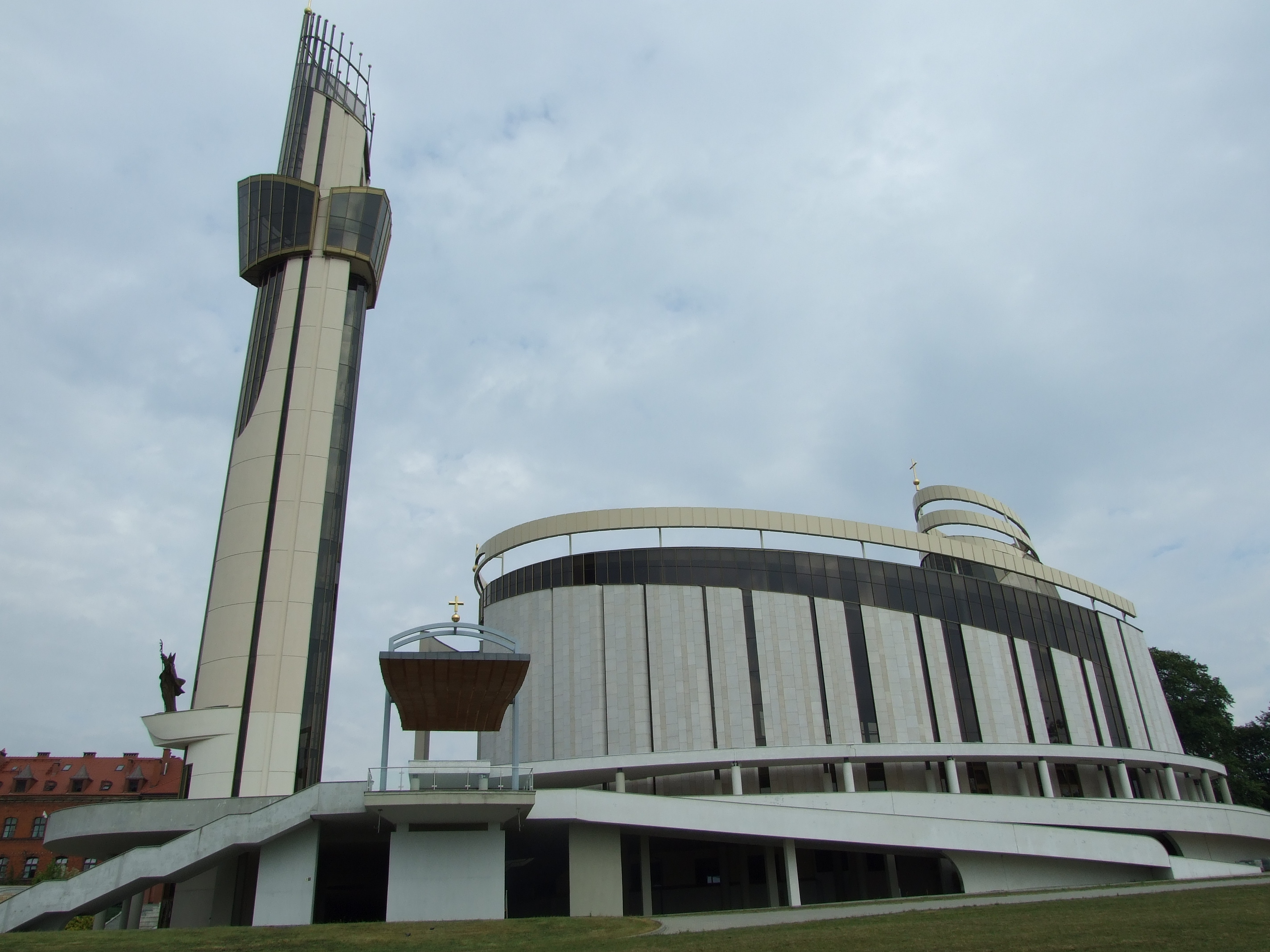
The Shrine of Divine Mercy in Kraków-Łagiewniki is one of the most important pilgrimage sites in Poland and the worldwide centre of the Divine Mercy devotion. The complex lies in the southern part of Kraków, on Siostry Faustyny Street, and combines an old convent with its chapel and a modern basilica built at the turn of the 21st century. Why does this place matter so much? Łagiewniki is bound up with the life and work of Saint Faustina Kowalska, a nun who lived in the convent of the Congregation of the Sisters of Our Lady of Mercy and died here. Her message of trust in God's mercy, recorded in her "Diary", became the foundation of a devotion that now reaches every continent. Since the 1940s pilgrims have come to Łagiewniki to pray at Faustina's tomb and before the image of the Merciful Jesus. History of the convent and chapel At the end of the 19th century a convent of the Sisters of Our Lady of Mercy was founded in Łagiewniki. A generous donation from Prince Aleksander Lubomirski made it possible to build a chapel, convent buildings and a home for girls. The sisters ran educational and charitable work here, and only later did the site become a destination for pilgrims from around the world. The heart of the shrine remains the convent chapel. It holds the image of the Merciful Jesus with the inscription "Jesus, I trust in You", painted by Adolf Hyła in line with Sister Faustina's visions. Thousands of the faithful pray before it, and the saint's tomb is in the chapel as well. The basilica and the Pope's visits Next to the chapel stands a large basilica, built to receive crowds of pilgrims that the old chapel could never hold. Pope John Paul II consecrated it on 17 August 2002 and, in that act, entrusted the entire world to Divine Mercy. Earlier, in 1997, he had said that the message of mercy in Sister Faustina's "Diary" had always been close and dear to him. What to see and how to visit The convent chapel with the image of the Merciful Jesus and the tomb of Saint Faustina. The basilica, a spacious church where the main services are held. The grounds, with places for prayer and quiet reflection, which also keep the memory of Saint John Paul II. The largest crowds gather on Divine Mercy Sunday, the first Sunday after Easter, and at the Hour of Mercy at three in the afternoon, when a special prayer is said. Expect crowds then. Weekday mornings are calmer. Frequently asked questions Is the shrine only for believers? No. Although it is above all a place of prayer, tourists interested in the history, architecture and culture of Kraków visit as well. Respect for those praying is expected: modest dress and silence in the chapel. Whom does the shrine commemorate? Mainly Saint Faustina Kowalska, the apostle of Divine Mercy, and Pope John Paul II, who consecrated the basilica and was a great advocate of this message. Where is the "Jesus, I trust in You" image? In the convent chapel, which is the heart of the whole complex. How much time should I set aside? To see the chapel, the basilica and the grounds without rushing, allow at least two hours, and more during religious celebrations. Can I get there from central Kraków by public transport? Yes, Łagiewniki is well connected to the city, and a visit fits well with exploring Kraków's southern districts.
-
Central Cemetery in Szczecin
Szczecin
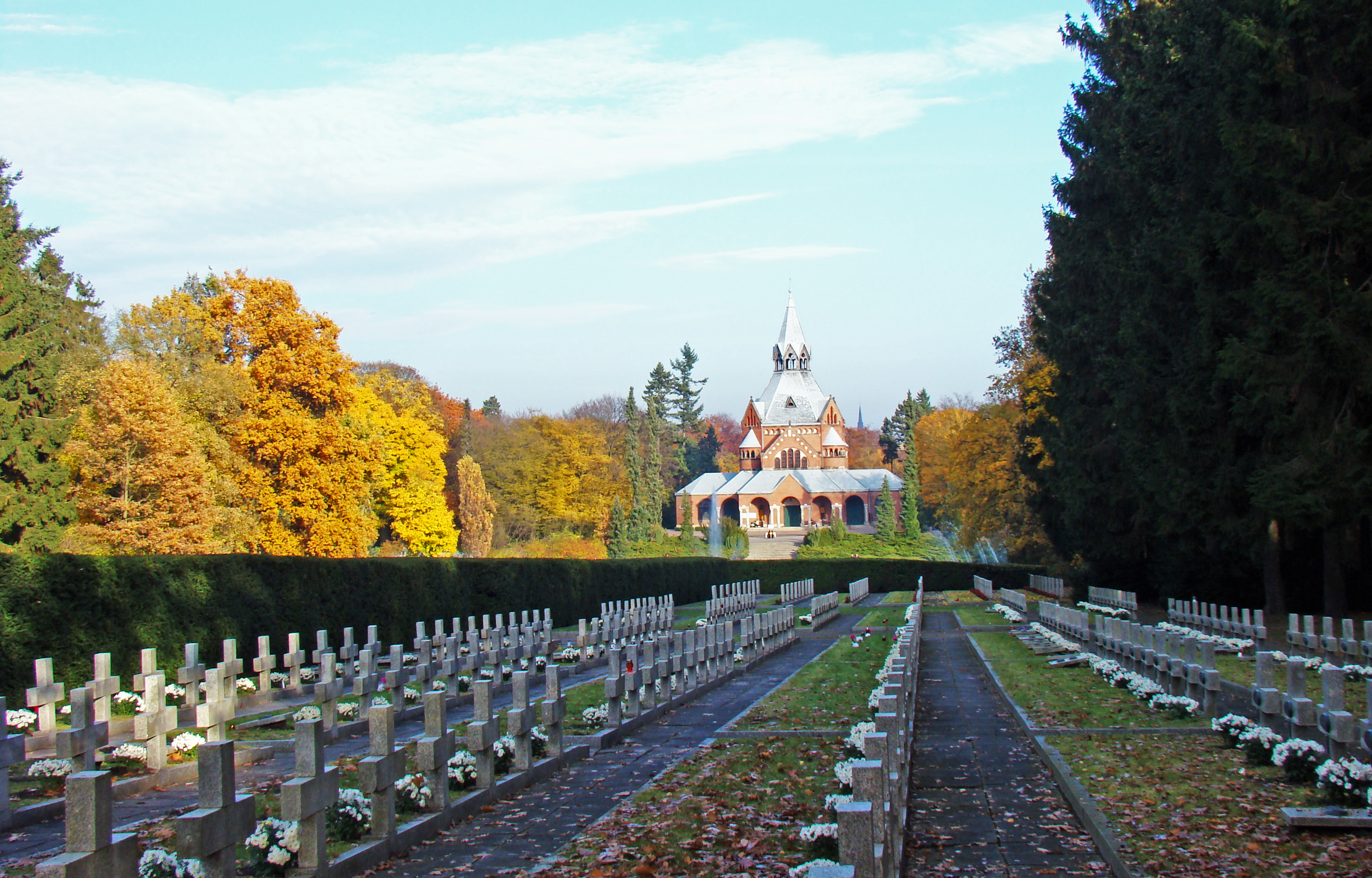
Central Cemetery in Szczecin is a municipal cemetery in Szczecin, Poland. Covering more than 167.8 hectares and still expanding, it is officially the largest cemetery in Poland and the third largest in Europe. It is a place for a quiet walk and a reflective visit. Its vast scale makes it one of the most impressive cemetery landscapes in the country, with long paths and a layout that invites slow exploration. As a municipal cemetery, it serves as an important public burial ground for Szczecin and stands out for its size alone, which places it among the largest in Europe. The fact that it is still expanding shows that it remains an active part of the city rather than only a historic site. For a visit, it is worth wearing comfortable shoes and allowing enough time to walk without rushing, especially if you want to appreciate the scale of the grounds. This is a good choice for travelers looking for a calm, respectful stop away from the busiest parts of the city.
-
Sanctuary of Our Lady of Fatima in Zakopane
Zakopane
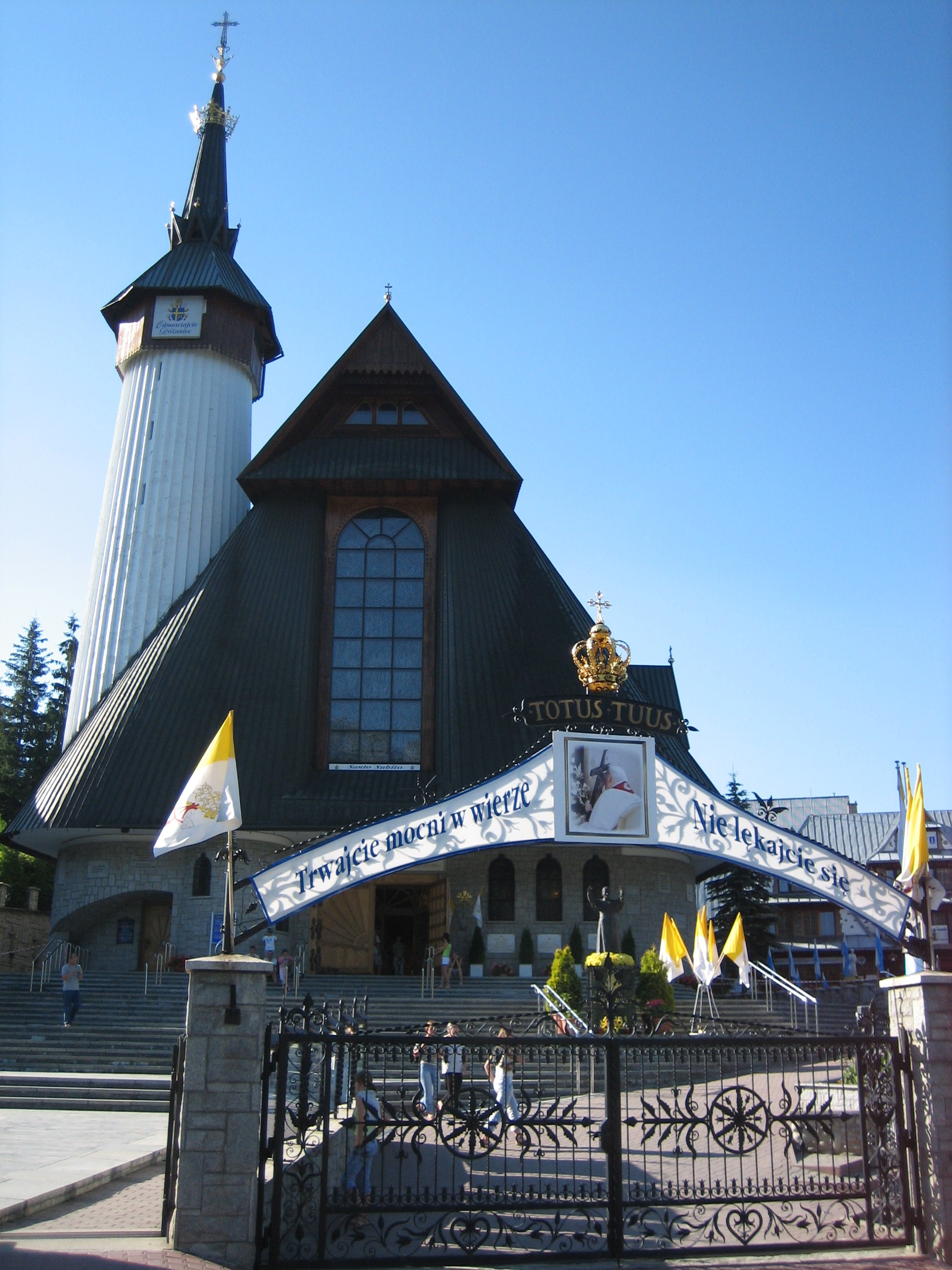
The Shrine of Our Lady of Fatima in Zakopane stands in the Krzeptówki district, at the foot of Mount Giewont, and is one of the most important pilgrimage sites in the Tatra region. It was built as a votive offering of thanks for the survival of Pope John Paul II after the assassination attempt of 13 May 1981. Today it draws believers and curious travellers alike, many of them drawn by its highland-style architecture. How did the shrine come to be? The story begins on the day of the attack. In Zakopane, worshippers prayed before the image of Our Lady of Fatima at Krzeptówki and made a promise: if the Pope survived, a church of thanksgiving would rise on that spot. He recovered, and the promise was kept. Construction ran from 1987 to 1992. In 1987, in Rome, John Paul II crowned the image of Our Lady of Fatima from Krzeptówki, and in 1997, during a pilgrimage to Poland, he personally consecrated the church. In time the church was given the status of a national shrine. The decision of the Polish Bishops' Conference was announced in Zakopane by the Metropolitan of Kraków. What does the church look like? Local highlanders, craftsmen and folk artists built the shrine, so the form of the church recalls a traditional highland shepherd's hut. Timber, regional ornament and artisan work shape an interior that feels very different from a typical masonry church. It is a fine example of how Podhale tradition merges with the spiritual meaning of the place. Why visit? It is a church tied directly to the story of John Paul II's papacy. The architecture and decoration showcase Podhale craftsmanship on a scale rarely seen in a sacred building. The surroundings open onto views of Giewont, so a visit combines easily with a walk. Over a million pilgrims and tourists come each year, a sign of how much the place matters. Frequently asked questions Where exactly is the shrine? In Zakopane, in the Krzeptówki district, on Krzeptówki street, below the Giewont massif. Why was it built? As a votive offering of thanks for saving the life of John Paul II after the assassination attempt of 13 May 1981. When was the church built? Between 1987 and 1992; the Pope consecrated it in 1997. Is it only for pilgrims? No. People interested in regional architecture and history also appreciate the building and its interior. Remember it is an active place of worship, so modest dress and quiet behaviour are expected, especially during services. How long should I plan for a visit? Half an hour to an hour is usually enough to see the interior and the grounds at an unhurried pace. Tips for visitors The shrine fits neatly into a day in Zakopane, especially if you are heading towards Giewont or strolling through the lower parts of town. If you want quiet, choose hours outside the main services and the peak summer season. On church holidays and anniversaries linked to the Pope the church can be very crowded, yet especially solemn. Bring warm clothing, because the weather at the foot of the Tatras can change fast. Together these elements make a place with a double character, both spiritual and cultural. It is a monument of gratitude for a life saved, of a man who visited the Tatras many times, and a testament to the skill of highlanders who built one of the region's best-known churches with their own hands.
-
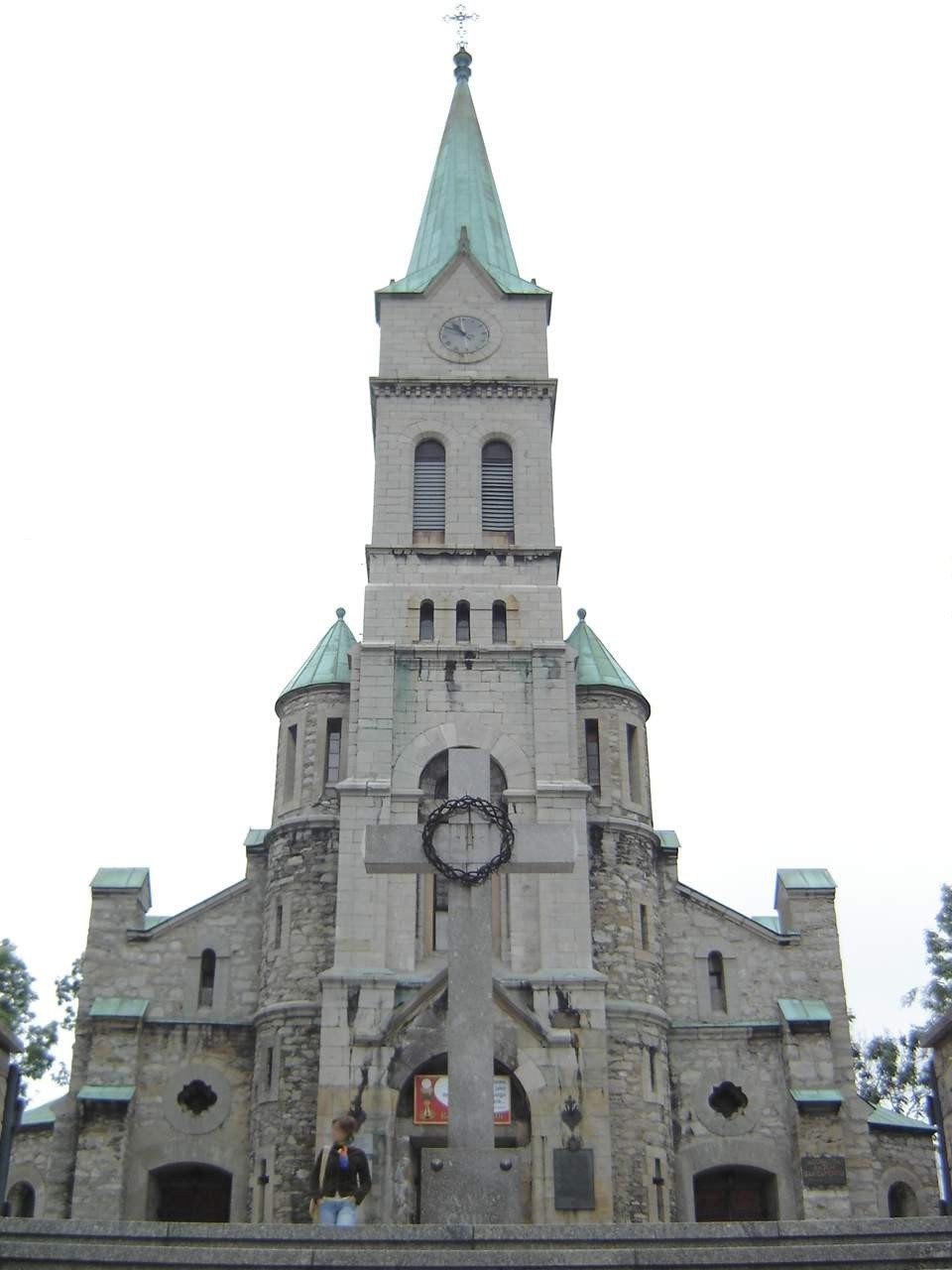
Church of the Holy Family in Zakopane
Zakopane
Church of the Holy Family is one of the most recognizable landmarks in Zakopane and a charming stop for anyone exploring the town. Built in the traditional Zakopane Style, it combines local wooden architecture with a peaceful atmosphere, making it worth a visit even if you are not especially interested in religious sites. Inside and around the church, you can admire its beautiful wooden details, stained glass, and quiet interior that contrasts with the lively mountain resort outside. The setting also makes it a nice place to pause while walking through the center of Zakopane. Visit in the morning or early evening for a calmer experience and softer light for photos. Dress respectfully, as it is an active place of worship. Combine your stop with a walk along Krupówki Street or other nearby sights in the town center.
-
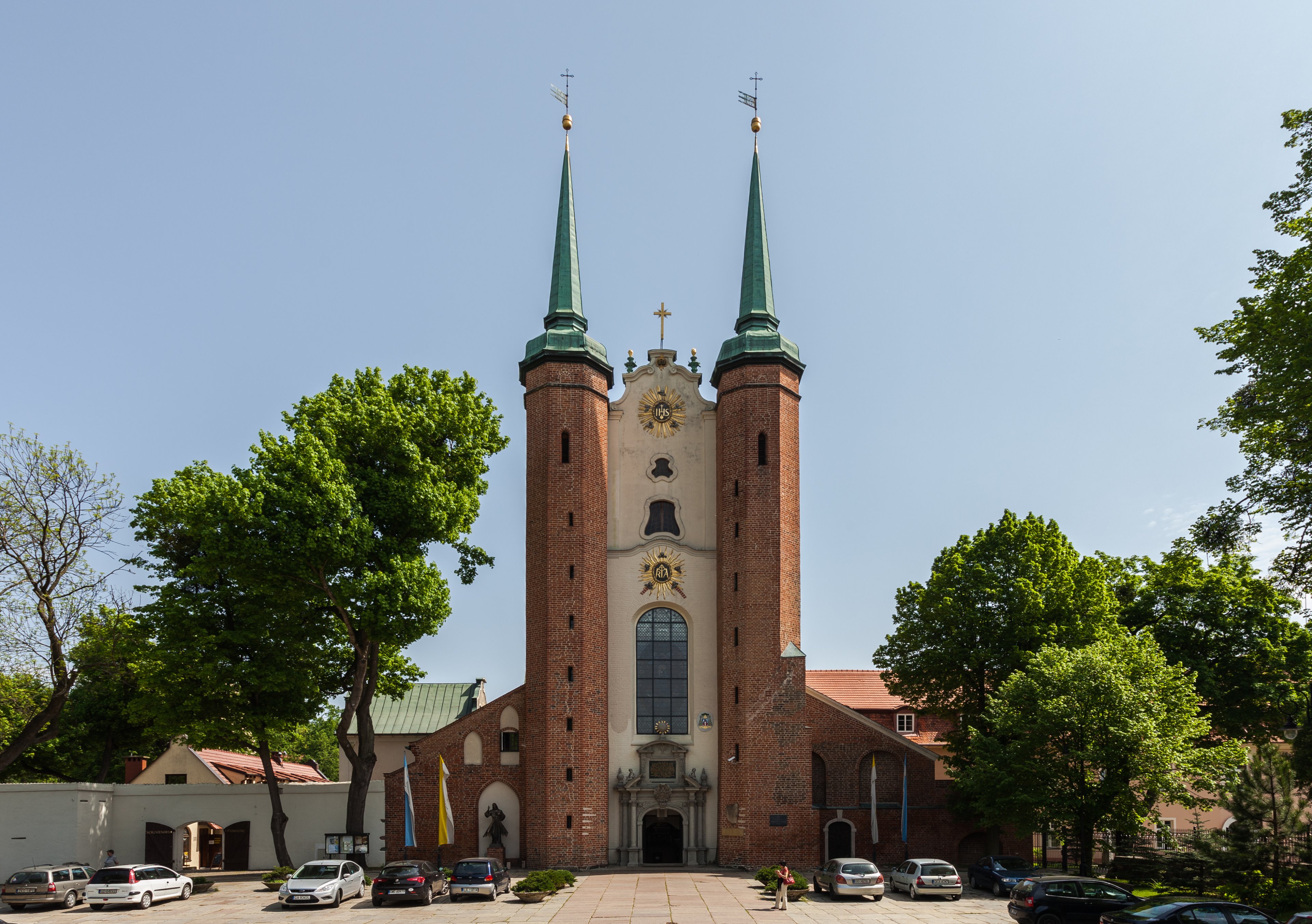
Oliwa Archcathedral
Gdańsk
Oliwa Cathedral (the Archcathedral Basilica of the Holy Trinity) is one of the most important churches in Gdańsk and among the best-known sacred landmarks on the Polish coast. It stands in the Oliwa district, next to a former Cistercian monastery and a green park that invites a stroll before or after your visit. Since 2017 the site has held the status of a Polish Historic Monument. How did the cathedral come to be? The story begins in the late twelfth century. In 1186 Sambor I, Duke of Pomerania, founded a Cistercian monastery in Oliwa, and the history of the church began with it. The monks brought farming know-how, mills and granaries to Pomerania, living by the rule "ora et labora", pray and work. Over the following centuries the abbey grew, and the church was rebuilt and reshaped several times after fires and destruction. The present church was consecrated in 1594. The twentieth century added new prestige. In 1976 Pope Paul VI raised the church to the dignity of a minor basilica, and in 1992 John Paul II established the Archdiocese of Gdańsk with its seat in Oliwa, making the basilica an archcathedral. Today it belongs to the Gdańsk Oliwa deanery and sits on Bishop Edmund Nowicki Street. What to see inside The star attraction is the Oliwa organ. Built between 1763 and 1788, it is impressively large: 83 stops, about 5,100 pipes, three manuals and a pedalboard, mechanical action and fourteen wedge-shaped bellows. It was created by the Cistercian monk and organ builder Johann Wilhelm Wulff, known as Brother Michael. The ornate Baroque organ case, with its moving angel figures, catches the eye from the moment you step inside. The interior also impresses with a long, slender nave, vaulting and numerous altars from different periods. A Gothic structure combined with later Rococo additions makes for an interesting blend of styles that shows how the church evolved over the centuries. Organ concerts Organ concerts and demonstrations of the instrument take place all year round. They are the main reason so many visitors come here every year. Check the schedule before you go and arrive a little early to get a good seat, because music in such a large, resonant space is a memorable experience. What else is nearby? The former monastery, now linked to the Gdańsk seminary, houses the collections of the Diocesan Museum. Oliwa Park lies next door and is ideal for a quiet walk after the church. Oliwa is well connected to central Gdańsk and Sopot, so the cathedral fits easily into a full day exploring the Tri-City. Frequently asked questions Is the cathedral a listed monument? Yes, since 2017 it has been designated a Polish Historic Monument. Who built the famous organ? It was built in the eighteenth century by the Cistercian organ builder Johann Wilhelm Wulff, also known as Brother Michael. Are concerts held here? Yes, organ concerts are held throughout the year, so check the current programme before you arrive. How much time should I plan? About an hour is enough for a relaxed look inside. If you add a concert, the museum and a walk in the park, plan half a day. Is it a working church? Yes, it is an active archcathedral, so sightseeing may be limited during services, and quiet and modest dress are expected.
-
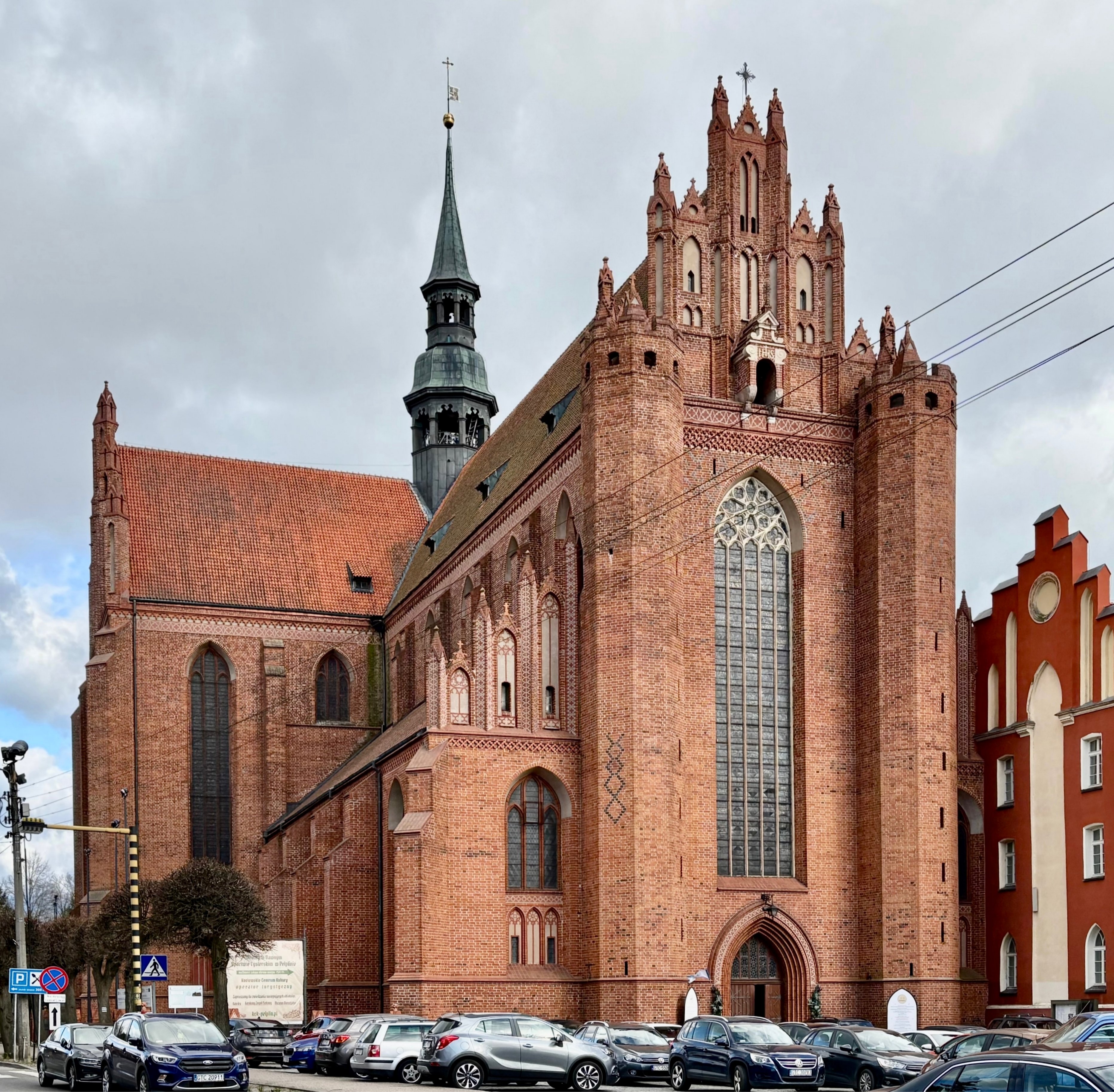
Cathedral in Pelplin
Pelplin
Pelplin Cathedral is the Cathedral Basilica of the Assumption of the Blessed Virgin Mary, one of the largest brick Gothic churches in Poland and the heart of a former Cistercian monastery complex. It has been the seat of the local bishop since 1824, and for many travellers it is the main reason to stop in the small town of Pelplin in the Kociewie region. How was Pelplin Cathedral built? Cistercian monks arrived in this remote spot before 1300, invited by the Pomeranian duke. The monastery church rose slowly, over nearly 250 years, and the original 13th-century architectural plan was followed with remarkable consistency. The result is a harmonious, unified building that shows the influence of English Gothic rather than being a simple copy of German models. The monastery later changed its role. In 1824 the church became a cathedral, yet part of the monastic buildings still survives around a square cloister garth. The whole former abbey is woven into the fabric of the town, so it is worth seeing as a complex and not only as a single nave. What is there to see inside? The interior is rich in furnishings from the 15th to the 18th centuries. The star attraction is the monumental main altar, 25 metres tall, made in 1623-24. It has five levels and is regarded as the largest Baroque altarpiece in this part of Europe. Its gilding stands out dramatically against the plain brick walls. Beyond the main altar you will find: numerous side altars, a set of choir stalls, the carved seats for the monks, a pulpit, two large organs, one Romantic and one Baroque. Music lovers should check whether a concert or a service with organ music is taking place during their visit, as the interior suits such events very well. Is Pelplin Cathedral big? Yes. It is the second largest brick church in Poland, after St. Mary's Basilica in Gdansk. The scale is obvious from a distance, but only inside do you feel the height of the nave and the weight of the brick structure. Plan at least an hour if you want to look at the altars, stalls and sculptural details without rushing. The Gutenberg Bible in Pelplin Pelplin is also home to a unique treasure: the only Gutenberg Bible in Poland. It is kept in the library of the Pelplin Theological Seminary, not in the cathedral itself, so seeing it requires separate arrangements. The copy was bought in the 15th century by Mikolaj Chrapicki, Bishop of Chelmno, for the Franciscans in Lubawa, and it reached Pelplin in 1833. If you are interested in the history of the book, it makes sense to combine the cathedral with this topic. Who is this place for? Architecture fans – a textbook example of brick Gothic with English influences. Lovers of sacred art – altars, stalls and the pulpit span several periods. Families and groups – a quiet walk around the cloister garth is a good break on a Pomeranian road trip. Music lovers – two organs are a good reason to check the events schedule. Frequently asked questions Is it a real cathedral? Yes. It has been the bishop's seat since 1824 and also holds the rank of basilica. Who built it? Cistercian monks, who settled here before 1300; construction took nearly 250 years. How tall is the main altar? It is 25 metres high and has five levels. Where is the Gutenberg Bible? In the library of the theological seminary in Pelplin, not in the cathedral. How long should I spend here? About an hour for the cathedral, longer if you want to explore the former monastery buildings and the town. Pelplin is a small town, but its cathedral ranks among the most important monuments of northern Poland. If you are travelling through Pomerania, make a stop here.
-
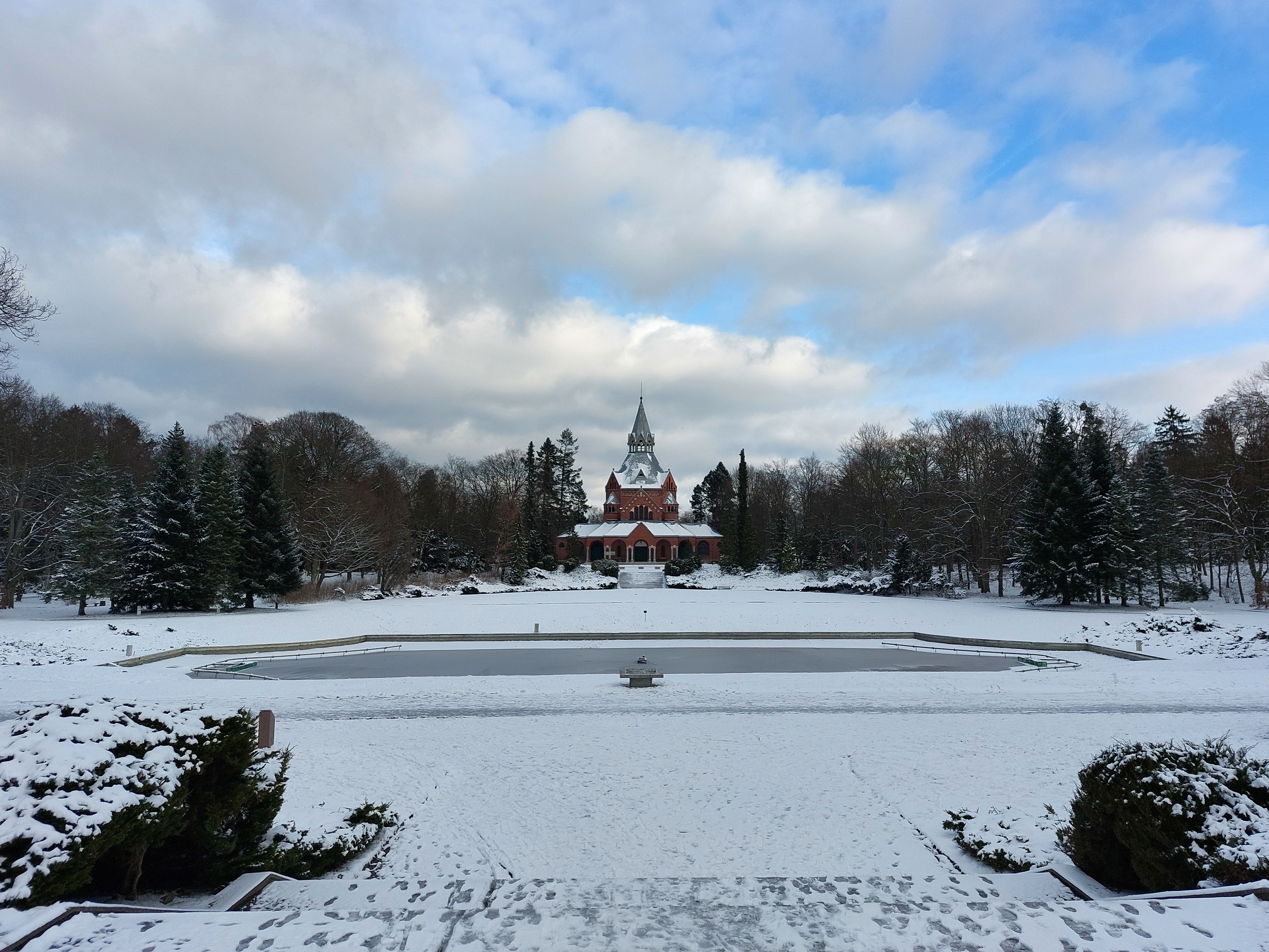
Cmentarz Centralny w Szczecinie
Szczecin
Szczecin Central Cemetery (Cmentarz Centralny) is the largest cemetery in Poland, the third largest in Europe and one of the biggest in the world. It lies in the eastern part of the Gumieńce district and covers almost 170 hectares. It is a burial ground, a vast landscaped park and a record of the city's history all at once, and it has shaped the face of Szczecin for more than a century. How did the Central Cemetery come about? The cemetery was founded at the turn of the 20th century, in 1899–1900, and the first burials took place at the end of 1901. At that stage it covered roughly 64 hectares. The concept for the oldest section came from Wilhelm Meyer-Schwartau, a Szczecin architect and urban planner who designed many of the city's showpiece buildings. The model was the great European necropolises, among them those of Hamburg and Vienna, combined with the park and garden art of the day. The layout received its final form in 1918 from Georg Hannig, the first cemetery director, a gardener and a theorist of cemetery design. He helped shape the planting scheme that makes the grounds feel like a landscape park, with long avenues, groups of trees and carefully planned sight lines. By 1918 the chapel, the main gate and the administration building were finished, and the principal visual axes had been laid out. What is worth seeing? The cemetery chapel, built in 1900–1902 to Meyer-Schwartau's design. A crematorium was added at the rear in 1925. A modernist chapel from the turn of the 1920s and 1930s, built to serve the new western part of the growing cemetery. The main gate and administration buildings, the oldest architectural group in the complex. Memorials, of which there are over a dozen. They honour, among others, the defenders of September 1939, victims of Stalinism and Siberian deportees. The avenues and greenery, which change with the seasons and suit a quiet walk. Who is it for? First of all, people visiting the graves of relatives, but also anyone interested in history, architecture and garden design. About 300,000 people are buried here, and the headstones trace the story of Szczecin, from the years when it was the German city of Stettin through the post-war period to the present. Graves ranging from historic to modern show changing styles and funeral customs. How to visit respectfully This is an active burial ground, so quiet and restraint are expected. When taking photographs, avoid framing people who are visiting graves. The grounds are very large, so plan a route in advance and wear comfortable shoes. Around All Saints' Day the cemetery draws large crowds and traffic arrangements often change, so a calmer walk is possible on another day. Frequently asked questions Is Szczecin Central Cemetery really the largest in Poland? Yes. It is the largest cemetery in the country, the third largest in Europe and among the largest in the world. Who designed it? Wilhelm Meyer-Schwartau created the concept for the oldest part, while Georg Hannig designed the planting and gave the layout its final form. When was it established? It was founded in 1899–1900, with the first burials at the end of 1901. Is it a good place for a walk? Yes, the park-like layout and mature trees mean many visitors also treat it as a place to stroll, as long as the solemn character of the site is respected. What stands near the main gate? The oldest buildings: the chapel, the gate and the administration building, completed by 1918.
-

Wolf Popper Synagogue
Krakow
The Popper Synagogue (Synagoga Poppera), also called the Bocian or Small Synagogue, stands at Szeroka 16 in Kraków's Kazimierz district, tucked behind a courtyard closed off by an openwork gate. It was founded in 1620 by Wolf Popper, one of the richest merchants in Jewish Kazimierz. Since 2017 it has housed the Austeria bookshop. Who was Wolf Popper? Wolf Popper, nicknamed Bocian (Polish for "stork"), was a merchant and financier. He built his fortune through a sharp head for business and through his marriage to Cyrla, daughter of the wealthy Kraków merchant Juda Leib Landau. He was widowed in 1621, and a few years later, after returning from a journey, he fell gravely ill and drew up his will. Popper furnished his synagogue lavishly, and its interior was considered the richest of all Kraków's synagogues. How did the community take it over? After Popper's death his heirs fought over the estate, and the cost of maintaining such a richly appointed synagogue proved too much for them. Around 1653 the building passed to the Jewish community of Kazimierz. It originally stood at the back of the Popper family's townhouse, and its east wall was formed by the town's defensive wall. How has the building changed? The most important rebuilding came in 1827, when a women's gallery was added, the roof and stairs were reworked, and the courtyard was separated from Szeroka Street by the gate that still stands today. Above its central passage is a reconstructed Hebrew plaque giving the founder's name, the founding year of 1620 and a renovation date of 1904. The building itself is simple: a single rectangular hall of brick and stone, propped up by heavy buttresses and covered by a barrel vault. What happened in the twentieth century? During the occupation the Germans badly damaged the synagogue, and its furnishings were lost. The only survivors were the carved and painted oak doors of the seventeenth-century Torah ark. They depict a lion, an eagle, a deer and a leopard, a reference to a passage in the Mishnah urging the faithful to do God's will with the strength and agility of these animals. In 1964 the doors were sent to a museum in Jerusalem. After the war, Jewish repatriates from the Soviet Union lived for several years in the former women's rooms. In 1956 the city authorities decided to turn the building into a community centre and ordered the congregation out. Kraków's Jewish congregation protested and kept the synagogue, in what was the largest protest by the Jewish community in postwar Poland. What did the 1960s renovation bring? Between 1964 and 1967 the building underwent a thorough overhaul that erased what was left of its historic interior. The niche for the Torah ark, a second entrance at the rear and the wooden annexes all disappeared. With the consent of the Jewish community, a branch of the Old Town Youth Cultural Centre occupied the building for many years. From 1996 it hosted the "Discovering Kazimierz" art workshops during the Jewish Culture Festival. In 2005 the façade was plastered and the windows were replaced with copies of the prewar ones. Who owns the synagogue, and what is there today? The building belongs to the Jewish Religious Community of Kraków. Since 2017 it has housed the Austeria bookshop, linked to a publishing house that specialises in Jewish-themed literature. The former synagogue is not used for worship. Frequently asked questions Where does the name come from? From its founder, the merchant Wolf Popper, known as Bocian, who established it in 1620. Are services held here? No. The building has not served a religious purpose for decades, and since 2017 it has been home to the Austeria bookshop. Who owns the building? The Jewish Religious Community of Kraków. What survives of the original furnishings? Only the seventeenth-century oak doors of the Torah ark, decorated with animal figures and kept in a museum in Jerusalem. What was the 1956 protest about? The Jewish congregation opposed handing the synagogue over for use as a community centre. It was the largest protest by the Jewish community in postwar Poland.
-
Kupa Synagogue
Krakow
Kupa Synagogue is one of the historic synagogues of Kraków's Kazimierz district, and the last one built while the separate Jewish town still existed. It stands at Miodowa Street 27, in the heart of the former Jewish quarter, with its rear wings reaching Warszauera Street. Why is it called Kupa? The name comes from the Hebrew kupat tzedakah, a charity box. The synagogue was built between 1635 and 1643 with donations from craftsmen and small traders, and the goldsmiths' guild helped fund its completion. The building also went by other names. It was called Szpitalna (Hospital Synagogue) because it stood next to the old Jewish hospital, and Ubogich (of the Poor) because the poorest members of the community prayed there. It was a modest everyday house of prayer for ordinary residents rather than a showpiece for wealthy merchants. How did the building develop? In the eighteenth century the synagogue was thoroughly rebuilt, with Baroque touches in a plain overall form. Between 1830 and 1834 a two-storey annexe was added, and in 1861 a west wing followed. Over time the building was joined to a neighbouring house that held the prayer room of the Ner Tamid Brotherhood. These additions give the complex an irregular, multi-part shape typical of Kazimierz. The interior is known for its paintings. The wooden ceiling shows views of cities in the Holy Land and biblical scenes, while a full cycle of zodiac signs runs along the women's gallery. It is one of the more interesting decorative schemes among Kraków's synagogues. What happened in the twentieth century? During the Second World War the synagogue was looted and much of its furnishing was destroyed, including the bimah, the platform from which the Torah is read. After the war, in 1945, an anti-Jewish pogrom broke out in Kraków, and the synagogue was among the places set on fire. In the following decades the building served secular purposes: it housed a matzah bakery, for many years a room was used for ritual poultry slaughter, and later it became home to warehouses and a shoe factory. Renovation and present-day life After the building was handed back to the Kraków Jewish community in the mid-1990s, renovation began and was completed in the early 2000s. The synagogue returned to its role as a gathering place for the community, and besides services it has hosted concerts, exhibitions and other cultural events. The interior is not regularly open to tourists, so the building is usually seen from the outside. Why include it in a walk through Kazimierz? Kupa Synagogue sits on the route of Jewish heritage sites, close to other synagogues, the former hospital and streets that are now full of cafés. Even from the outside it helps explain what daily life looked like for the less wealthy residents of the old Jewish town, and how much changed in this part of Kraków after the war. Frequently asked questions Where is Kupa Synagogue? At Miodowa Street 27 in Kazimierz, Kraków, in the Old Town district. Why is it called Kupa? The name comes from the Hebrew term for a charity box, as the building was funded by worshippers' donations. Is it the oldest synagogue in Kazimierz? No. It is rather the last synagogue built during the existence of the Jewish town in Kazimierz. Can I go inside? The interior is not regularly open to visitors, so plan to see the synagogue from the outside as part of a walk around Kazimierz.
-
High Synagogue, Kraków
Krakow
The High Synagogue in Kraków (Synagoga Wysoka) stands at Józefa 38 in the Kazimierz district and is the only synagogue in Poland whose prayer hall sits on an upper floor. That elevated position gave the building its name. It was built in the Renaissance style in the sixteenth century. Why is it called the High Synagogue? Rather than putting up a free-standing building, the founder placed the prayer hall above a ground floor occupied by shops. The ground floor and cellars were used for trade and had their own entrance on the east side, while worshippers came in from the west. It stood by a gate of the former Jewish town, close to Christian houses. This arrangement, with a prayer room added as an extra storey of a house, resembles the synagogues of the Venetian ghetto, and it is a rare solution in Central Europe. Who built it, and when? King Sigismund II Augustus granted permission for the project. The request came from a wealthy merchant known only by his first name, Israel, and construction lasted from 1556 to 1563. The stone and brick façade on Józefa Street is braced by four massive buttresses framing three tall round-headed windows, and a carved late Renaissance portal leads inside. How did the building change over the centuries? In 1657, during the Swedish invasion known as the Deluge, the synagogue was ransacked. After repairs it received rich new furnishings. A later renovation is marked by the date 1863, painted between the windows of the south wall next to a verse from Genesis about the house of God and the gate of heaven. In the late 1880s the synagogue was joined to the neighbouring house at Józefa 36, whose upper floor was fitted out with a women's gallery and an additional prayer room. In 1897 a small annex with another women's prayer room followed. What happened during the war? The German occupiers wrecked the interior and looted the liturgical furnishings. The barrel vault of the main hall was destroyed together with its paintings, the bimah was lost and the women's gallery ceased to exist. One large brass menorah survived because it was taken to Wawel Castle, where it decorated the rooms used by Hans Frank. What came after 1945? After the war the building was used as a warehouse. In 1966 the authorities handed it over to the state monument conservation workshops, which adapted it for their own use. They added a staircase and new entrances, changed the vault of the main hall and built the glazed structure on the roof that now sets the building apart. They also secured the old paintings and the ark, finishing in 1971. From 2005 the main hall hosted exhibitions on the history of Polish Jews, as well as concerts. In 2008 the Jewish Religious Community of Kraków recovered part of the building. On the fourth floor, in the community's section, is the Kraków branch of the Social and Cultural Association of Jews in Poland. What survives inside? On the axis of the east wall is the stone niche of the Torah ark, framed by two columns carrying an entablature. Its upper panel shows two griffins flanking the Hebrew words "Crown of the Torah". Before the war the ark was closed with openwork metal doors featuring a crowned eagle, two bear cubs holding shofars and the signature of the craftsmen, Zelaman and Chaim, sons of Aaron. Fragments of seventeenth-century wall paintings remain as well: inscriptions in decorative borders, the hands of priests raised in blessing beneath a Torah crown, and bouquets of flowers in vases. Frequently asked questions Why is it called the High Synagogue? Its prayer hall is on an upper floor, above former shops, rather than at street level. When was it built? Between 1556 and 1563, with the permission of King Sigismund II Augustus. Who owns the building? In 2008 the Jewish Religious Community of Kraków recovered part of it. What remains of the original furnishings? The stone frame of the Torah ark with its griffins, fragments of wall paintings and a menorah that survived the war at Wawel Castle.
-
Remuh Synagogue
Krakow
Remuh Synagogue is a small sixteenth-century synagogue in Kraków's Kazimierz district and the only one in the city where services are still held regularly. It stands on Szeroka Street, and right behind it lies one of the oldest Jewish cemeteries in Poland. Together they form a place that draws pilgrims from around the world. Who was the Remuh? The name comes from the Hebrew acronym of Rabbi Moses Isserles (c. 1525–1572), regarded as one of the leading authorities on Ashkenazi Jewish law. He wrote the "Mappah", a commentary that supplemented Joseph Karo's legal code with Ashkenazi customs, which is why he was sometimes called the Maimonides of Polish Jewry. The synagogue was founded by his father, Israel ben Josef, a merchant and royal banker who obtained permission from King Sigismund Augustus in 1556 to set up a house of prayer. How did the building evolve? The first building burned down in the great fire of the Jewish town in 1557. Construction of a masonry synagogue on the same spot began in 1558. It was altered during the 17th and 18th centuries, and its present look owes most to a restoration in 1829 and further work in 1933. During the German occupation the interior was devastated, but after the war the building was rebuilt and returned to use as a house of prayer. Among the oldest surviving elements are a stone Torah ark and a stone alms box. The interior is small, modest and intimate, very different from the grand synagogues of many other cities. What is the Remuh Cemetery? The adjoining cemetery dates from the 16th century. Its first burials are said to have been victims of an epidemic, and it remained in use until the end of the 18th century. Moses Isserles was buried here in 1572, and his grave is still a pilgrimage site, where visitors leave pebbles and handwritten prayers. Other renowned scholars rest here too, including the kabbalist Nathan Spira and Rabbi Joel Sirkes. During the occupation the cemetery was almost completely destroyed, and only a dozen or so gravestones survived in their original state. After the war the grounds were tidied and many tombstones were set in rows. Some Renaissance-era tombstones remain and are valued by researchers of funerary art. Conservation work has continued over the decades. How to visit The synagogue is an active house of prayer that is also open to visitors. Sightseeing is not possible on Saturdays, Jewish holidays or during prayers, and on Fridays it closes earlier. Modest dress is expected, and men should cover their heads. Please behave respectfully, because this is both a place of worship and a burial ground. Szeroka Street and the surroundings of the cemetery can be seen year-round, and a walk through the former Jewish quarter pairs well with visits to the nearby synagogues and museums. Frequently asked questions Is the Remuh Synagogue still active? Yes, it is the only synagogue in Kazimierz where services are held regularly. Who was the Remuh? Rabbi Moses Isserles, a distinguished Kraków scholar and author of a commentary on the code of Jewish law, who died in 1572. Is the cemetery part of the synagogue? The cemetery adjoins the synagogue and forms one complex with it, but they are two separate sites with different histories. Why are there pebbles on the graves? Leaving a pebble is a traditional Jewish way to honor the dead, used in place of flowers. Can I visit on the Sabbath? Usually not. The synagogue is closed to visitors on the Sabbath and holidays, so plan around the calendar.
-
Tempel Synagogue
Krakow
The Tempel Synagogue in Kraków is a Reform synagogue in the Kazimierz district, at 24 Miodowa Street. Built between 1860 and 1862, it was a flagship of the Progressive movement in Jewish life in the Polish lands. Today it is one of the district's most interesting landmarks and one of four active synagogues in the city. Who built the Tempel, and why? The architect was Ignacy Hercok, and the model was the Leopoldstädter Tempel in Vienna. The project came from progressive Jewish circles in Kraków, organized in the Association of Progressive Israelites and the Religious and Civilizational Society. The opening capped 17 years of effort to establish a Reform synagogue in the city. The building stands on a rectangular plan and was enlarged several times: in 1868, in the 1890s and in 1924. What does the Tempel look like? The architecture blends Moorish elements with neo-Romanesque and Renaissance Revival forms. The synagogue was admired for its rich decoration, and its prestige also rested on the role it played in community life. Its place in Kraków's story In the late 19th and early 20th centuries the Tempel became a center of Jewish modernity. Sermons were preached in Polish and German, and the building hosted patriotic ceremonies. It showed that part of Kraków's Jewish community combined religious tradition with active participation in Polish public and cultural life. War and postwar years During the German occupation the building was badly damaged. Its liturgical furnishings were removed, and the interior was used as a military warehouse and stable. The Tempel was among the few Kraków synagogues that survived the war. For decades afterwards it stood in poor condition. A thorough renovation, initiated and largely funded by the World Monuments Fund, ran from 1994 to 2000 and brought back much of its former splendor. The synagogue today The Tempel is an active synagogue, though services are held only occasionally. It also works as a cultural venue and hosts concerts, especially during the Jewish Culture Festival. It lies within Kraków's Historic Centre, a UNESCO World Heritage Site. Frequently asked questions Where is the Tempel Synagogue? In Kazimierz, Kraków, at 24 Miodowa Street, close to other landmarks of the former Jewish quarter. When was it built? Between 1860 and 1862, to a design by Ignacy Hercok. How does it differ from other synagogues in Kazimierz? It is a Reform synagogue. Sermons were delivered in Polish and German, and its form echoes large urban temples such as the Leopoldstädter Tempel in Vienna. Can visitors go inside? Yes, the synagogue is open to visitors. It is closed to tourists on Saturdays and Jewish holidays, and closes earlier on Fridays because of the Sabbath. What else is there to see nearby? A walk through Kazimierz can combine other synagogues, cemeteries and the streets of the old Jewish quarter with local cafés and galleries.
-
St. Mary's Basilica, Kraków
Kraków
St Mary's Basilica is one of Poland's most famous churches and an emblem of Kraków. It stands at the north-eastern corner of the Main Square, on St Mary's Square, and its two towers of unequal height are visible from many points of the Old Town. Since 1962 the church has held the title of minor basilica, and formally it is the archpresbyteral Church of the Assumption of the Blessed Virgin Mary. What does St Mary's Basilica look like? It is a Gothic brick building shaped by rebuilding that began in the 13th century. An earlier church once occupied the site, and the present structure took form in stages, reaching the shape we see today in the 14th century. The asymmetrical facade is the first thing visitors notice: the taller tower, known as the Hejnalica, is topped with a gilded crown, while the lower bell tower has a different roof. According to legend, two brothers built the towers in a rivalry, which supposedly explains the difference in height. That is a folk tale, not documented history. The interior is a surprise of colour. Walls and vaults are covered in rich polychrome decoration from the late 19th century, created to designs by Jan Matejko, dominated by blues, reds and gold. A deep blue ceiling scattered with stars arches over the main nave. What is the Veit Stoss altarpiece? The greatest treasure of the church is the Gothic high altarpiece by the Nuremberg sculptor Veit Stoss (known in Poland as Wit Stwosz). Work on it lasted roughly from 1477 to 1489. The altarpiece is about 13 metres tall and about 11 metres wide, and its largest figures stand nearly three metres high. It contains more than two hundred carved figures. The central scene is the Dormition of the Virgin Mary, surrounded by apostles in deeply folded robes. Above it are the Assumption and the Coronation of Mary, while the side wings show scenes from the lives of Mary and Jesus. Its importance is not only artistic. During the Second World War the altarpiece was dismantled and taken by the Germans to Nuremberg, and it returned to Kraków after the war. In recent years it went through a multi-year conservation, completed in 2021, which restored the brightness of the sculptures and gilding. The wings are opened and closed according to a set routine, so it is worth checking in advance when the altarpiece can be seen fully open. What is the Hejnał Mariacki? From the taller tower, the Hejnał Mariacki bugle call sounds every day, played on a trumpet by firefighter-buglers. At first the signal marked the opening and closing of the city gates, and later it was played every hour, towards the four points of the compass. The melody breaks off abruptly, mid-note. Legend says it commemorates a bugler who warned the city of a Tatar raid and was struck in the throat by an arrow. At noon the call is broadcast live on Polish radio, so listeners across the country hear it. Frequently asked questions Where is St Mary's Basilica? On Kraków's Main Square, at its north-eastern corner, next to St Mary's Square. Is it a working church? Yes, it is an active parish church. Sightseeing takes the liturgy into account, so access for visitors may be limited during services. Why do the two towers have different heights? A popular legend speaks of rivalry between two builder brothers, but the difference reflects the building's history and the towers' roles: the taller one served for lookout and the bugle call, the lower one as a bell tower. Why does the bugle call stop mid-melody? By tradition it honours a watchman who died from a Tatar arrow before finishing his warning signal. What else is worth seeing inside? The 19th-century polychromes, the starry vault, stained glass and the rich furnishings of many side chapels.
-
Izaak Synagogue
Krakow
The Isaac Synagogue (Synagoga Izaaka Jakubowicza) stands on the corner of Kupa and Izaaka streets in Kraków's Kazimierz district. This early Baroque house of prayer opened in 1644 and for a long time was regarded as the grandest synagogue in the city. Who founded the synagogue? The building was paid for by Isaac (Ajzyk) Jakubowicz, a wealthy merchant and banker who led the Kazimierz kahal, the Jewish community council. King Władysław IV granted permission for the project on 30 April 1638. An inscription on the synagogue wall records that the idea came from Jakubowicz's wife, Brajndla. The founder is buried in the Remuh Cemetery nearby. A well-known folk tale surrounds him. Poor Ajzyk dreamt that treasure lay waiting under a bridge in Prague. There a guard mocked him and told of his own dream about riches under the stove of one Ajzyk from Kazimierz. Jakubowicz went home, dismantled the stove and found the fortune that paid for the synagogue. Why was construction delayed? The project met resistance from Father Marcin Kłoczyński, provost of the Canons Regular of the Lateran at the nearby Corpus Christi Church. He argued that the synagogue would stand too close to Christian homes and to the route priests took when carrying the viaticum to the sick. The dispute halted work for a while, but Jakubowicz eventually secured approval, and the synagogue was ceremonially opened in 1644. Who designed it, and what is inside? The design is associated with the Italian architect Giovanni Trevano and with Jan Laitner. The prayer hall is covered by a barrel vault with lunettes, decorated with a geometric pattern of stucco ribs. The women's gallery upstairs opens onto the hall through a row of round arches. Fragments of seventeenth- and eighteenth-century wall paintings show prayers and liturgical texts set in painted frames. In the middle of the east wall stands a reconstructed early Baroque Torah ark, topped by raised tablets of the Ten Commandments beneath a crown. In 1924 a double staircase with an arcaded porch leading to the women's gallery was added in front of the west entrance. Against the north wall stands a small building that members of the religious Zionist Mizrachi movement put up as a separate synagogue. What happened here during and after the war? In December 1939 the Germans ordered Maksymilian Redlich, an official of the Jewish community, to burn the Torah scrolls. He refused and was shot outside the entrance. The occupiers destroyed the wrought-iron bimah and the ark, and the furnishings were lost. In 1943–1944 a theatre workshop operated inside, where the artist Tadeusz Kantor worked as a scenery painter. After the war the building served as a warehouse. A plan to turn it into a church of the Polish National Catholic Church collapsed after protests by Kraków's Jewish congregation. The Union of Polish Artists later used the hall as a sculpture studio. By the mid-1970s the building stood empty, and in 1981 a fire gutted the interior. Conservation began in 1983 and uncovered the old wall paintings. The synagogue went back to the Jewish community in 1989 and opened to visitors in 1997. What is its condition today? The building belongs to the Jewish Religious Community of Kraków, which is carrying out conservation work funded in part by the Social Committee for the Restoration of Kraków's Monuments. Access to the interior depends on the progress of this work. Like all the community's synagogues, it is closed on Saturdays and Jewish holidays. Frequently asked questions Who founded the Isaac Synagogue? Isaac Jakubowicz, a merchant, banker and head of the Kazimierz Jewish council, with royal permission granted in 1638. When did it open? In 1644, after a dispute with the provost of the monastery at Corpus Christi Church. Who was the architect? The design is associated with Giovanni Trevano and Jan Laitner. Can I see the interior? Conservation work is under way, so entry is not always possible. The building is closed on Saturdays and Jewish holidays. What is the link with Tadeusz Kantor? In 1943–1944 Kantor painted stage scenery here, in a theatre workshop set up during the occupation.
-
Old Synagogue in Kraków
Krakow
The Old Synagogue in Kraków (Stara Synagoga) is the oldest surviving synagogue in Poland and one of the most valuable examples of Jewish sacred architecture in Europe. It stands on Szeroka Street in the heart of the former town of Kazimierz and today houses a branch of the Museum of Kraków devoted to the history and culture of the city's Jews. How did the Old Synagogue come to be? The building's origins reach back to the 15th century. Its exact founding date is still debated, as sources give different years, from the start of the century to its close. What is certain is that in 1495 King John I Albert designated Kazimierz as a new district for the Jewish community, and a cluster of synagogues grew up around Szeroka Street. The Old Synagogue became its main house of prayer and a centre of religious and communal life. Fire, rebuilding and the Renaissance attic In 1557 a fire destroyed the original Gothic building. The Florentine architect Matteo Gucci was entrusted with the reconstruction and gave the synagogue its new form. The result was a two-nave prayer hall crowned with a tall Renaissance attic decorated with blind arcading. Thick walls, buttresses and high windows are a reminder that such a solid structure could also shelter people in times of danger. The work was completed in 1570. Women's sections and the former singers' room adjoin the main hall. The outcome is a blend of Gothic and Renaissance styles, regarded as a rare example of a synagogue with fortress-like features. War and restoration For centuries the synagogue stood at the centre of Jewish life in Kraków. During the Second World War the German occupiers looted the building and turned it into a warehouse, and its furnishings were destroyed. After the war a renovation carried out between 1956 and 1959 restored much of its former appearance. A museum has operated here since 1958. What will you see inside? The historic interiors host the exhibition "History and Culture of Kraków's Jews". It presents the most valuable pieces from the museum's Judaica collection: liturgical objects, vessels and keepsakes linked to the traditions and everyday life of the former community. The prayer hall itself, with its vaulting and the architecture of its naves, is impressive even if you are not interested in the finer points of the display. Against the east wall stands a late Renaissance stone aron ha-kodesh, the ark for the Torah scrolls. By the north-eastern corner of the building, a section of the medieval town wall that the synagogue once adjoined has been reconstructed. Frequently asked questions Where is the Old Synagogue? In Kazimierz, on Szeroka Street, close to other monuments of the former Jewish quarter. Is it still a working synagogue? No. Today the building is a museum, a branch of the Museum of Kraków. What else is worth seeing nearby? The Remuh Synagogue with its historic cemetery, the Tempel Synagogue, and the other sites of Kazimierz, which has kept the distinctive atmosphere of the old district. Why does this monument matter so much? As the oldest surviving synagogue in Poland, it helps you understand religious and everyday life among Kraków's Jews from the late Middle Ages into the modern era.
-
Church of Saints Peter and Paul, Kraków
Kraków
The Church of Saints Peter and Paul in Kraków is one of the most recognisable Baroque churches in the Old Town. It stands on Grodzka Street, part of the Royal Route, a short walk from the Main Market Square and at the foot of Wawel Hill. Its pale, monumental façade is visible from afar, and the row of apostle statues in front of the entrance is among the most photographed sights in this part of the city. Who built the church, and when? King Sigismund III Vasa founded the church for the Jesuits, who had been building up their religious and educational presence in Kraków since the later sixteenth century. Construction ran from 1597 to 1619. The plans are attributed to Giovanni de Rosis; Józef Britius carried them out at first, Giovanni Maria Bernardoni later modified them, and between 1610 and 1619 Giovanni Trevano gave the façade, dome and interior their final form. The church was consecrated in 1635. Why does it matter in architectural history? Its form and interior layout follow Il Gesù in Rome, the mother church of the Jesuit order. The Kraków church is regarded as the city's first Baroque building and as a model for later churches of this type. The plan is a Latin cross with a dome over the crossing, and the spacious nave impresses even next to Kraków's other landmarks. What is there to see inside? The interior combines Baroque features with later additions. The late Baroque high altar holds a painting of Christ handing the keys to Saint Peter, while the apse carries stucco scenes from the lives of Saints Peter and Paul. The crypt is the resting place of Father Piotr Skarga, the renowned Jesuit and royal preacher. It is a place where Church history, court life and national memory meet. How has the church's role changed? After the Jesuit order was dissolved in 1773, the church came under the National Education Commission. Over the following decades it changed hands, and from 1809 to 1815 it served as an Orthodox church. In 1830 the All Saints parish, whose former church no longer exists, moved here, and the church still serves it today. The apostles at the entrance Along the fence in front of the church stand figures of the twelve apostles. They frame the entrance dramatically and have become a symbol of the place. They are easy to see from Grodzka Street, so even a short stroll along the Royal Route is enough for a memorable photo. Frequently asked questions Where exactly is the church? On Grodzka Street in Kraków's Old Town, between the Main Market Square and Wawel. It fits naturally into a walk along the Royal Route. Can visitors go inside? It is an active parish church, so sightseeing may be limited during services. Please keep quiet and dress appropriately for a place of worship. Check with the parish for current arrangements. What period does the building belong to? It is Baroque, specifically the early Jesuit variety from the turn of the seventeenth century. Is Piotr Skarga buried here? Yes, his tomb is in the church's crypt, which makes the church an important memorial site in the history of the Polish Church. Is this the same church as the one in Tyniec? No. Kraków-Tyniec has a different church with the same dedication, linked to the Benedictine abbey. The church described here is in the heart of the Old Town. Why visit? The church combines the grand scale of the Baroque, the story of the Jesuits in Poland and memorials important to Polish culture. It sits on one of Kraków's busiest routes, so it is easy to include in an Old Town visit, especially on the way to Wawel.
-
St. Bridget's Church, Gdańsk
Gdańsk
St. Bridget's Basilica in Gdańsk is one of the most important churches of the Old Town and, for many Poles, a symbol of the Solidarity movement. This Gothic brick church stands close to St. Catherine's Church and brings together medieval history, wartime destruction and a striking modern work in amber. How did the church begin? The story starts in the middle of the 14th century, when a penitential chapel dedicated to St. Mary Magdalene was founded on this spot. The place is also linked with the memory of the funeral procession of St. Bridget of Sweden, whose remains passed through Gdańsk in 1374. Towards the end of the century the Bridgettine nuns settled in the city, and a larger convent church was raised beside their house. It was built of brick in the Gothic style, with three naves. What has it survived? Over the centuries the church was rebuilt several times. In the early modern period it received Baroque additions, including the tower. The twentieth century brought further blows: the church was heavily damaged in 1945, and fires in 1957 and 1969 deepened the ruin, bringing down much of the roof and vaulting. Only in 1970 did the authorities hand the ruins over to the diocese, and Father Henryk Jankowski became the parish priest. Reconstruction in the 1970s gave the building back its earlier form. Why is it called the Solidarity church? During the August 1980 strikes at the Gdańsk Shipyard the parish stood by the workers. After martial law was declared on 13 December 1981, the church became one of the main centres of resistance to the communist authorities. Masses for the homeland were held here, help was organised for internees and their families, and the interior became a place of remembrance for the persecuted. That is why the basilica is often described as a Solidarity sanctuary. It was given the status of a minor basilica in 1991. What is there to see inside? The main attraction is the monumental Amber Altar of the Homeland in the presbytery, designed by Professor Stanisław Radwański and amber artist Mariusz Drapikowski. It was unveiled in December 2017, and at its centre is a copy of the icon of Our Lady of Częstochowa. Amber, so closely tied to Gdańsk, gives the interior a warm, golden glow. The brick architecture and the commemorative elements honouring victims of the regime and Solidarity heroes are also worth a look. Planning a visit The basilica sits in the heart of the Old Town, so it combines easily with a walk around the area, for example with a visit to nearby St. Catherine's Church. It is a short walk from Gdańsk Główny railway station. Remember that this is a working place of worship: quiet and modest dress are expected, and sightseeing can be limited during services. Frequently asked questions Is the church connected with St. Bridget? Yes, it is named after St. Bridget of Sweden, and the Bridgettine convent played an important part in its history. Is there really an amber altar? Yes, it is one of the most distinctive features of the interior and was unveiled in 2017. Why are there so many Solidarity memorials? The parish supported the strikers in 1980 and underground activists during martial law, so its interior keeps the memory of those years.
-
Jasna Góra Monastery
Częstochowa
Jasna Góra Monastery in Częstochowa, Poland, is a major Marian shrine and one of the country’s best-known pilgrimage destinations. It is especially associated with the image of the Black Madonna of Częstochowa, also called Our Lady of Częstochowa, which is believed to have miraculous powers. For visitors, it offers a meaningful stop for sightseeing and reflection. Na miejscu można liczyć przede wszystkim na: the chance to see the shrine dedicated to the Virgin Mary, which is the spiritual heart of the monastery the famous image of the Black Madonna of Częstochowa, one of Jasna Góra’s most treasured objects an atmosphere shaped by its role as an important pilgrimage site in Poland, making it a place for quiet observation and respectful visiting If you plan to visit, it is worth choosing comfortable shoes and allowing enough time for a calm walk through the complex. This is a good choice for travelers interested in religious heritage, Polish history, and a more contemplative kind of outing.
-
Saint Andrew church in Lasowice Wielkie
Saint Andrew church in Lasowice Wielkie is a church building in the village of Lasowice Wielkie, in Poland’s Pomeranian Voivodeship. As a local landmark, it helps define the village’s character and gives visitors a sense of the area’s religious and architectural heritage. It is a good stop for a short visit and a quiet look around. Na miejscu można liczyć przede wszystkim na: a chance to see a local church that serves as one of the village’s recognizable landmarks an introduction to the religious heritage of Lasowice Wielkie and the surrounding area a simple architectural stop that fits well into a calm village walk If you plan to stop by, it is worth allowing a little time for a relaxed look at the building and bringing comfortable shoes for a short walk through the village. This is a good choice for travelers who enjoy small local landmarks, quiet sightseeing, and places tied to regional history.
-
Cukerman Synagogue in Będzin
Będzin
Cukerman Synagogue in Będzin is a former Jewish prayer house in Będzin, a town known for preserving traces of its Jewish heritage. It is closely tied to the history of the local Jewish community and stands as a reminder of the area’s pre-war religious and cultural life. For visitors, it offers a short stop focused on history and memory. Na miejscu można liczyć przede wszystkim na: a look at a former Jewish house of prayer connected with the story of Będzin’s local Jewish community, a visit in a town where Jewish heritage has been preserved, which gives the site a wider historical context, a chance to reflect on the pre-war religious and cultural life of the region’s inhabitants. If you plan to stop here, it is worth approaching the visit as a quiet, reflective outing rather than a long tour. Comfortable shoes and a bit of time for the surrounding area will make the visit easier, especially if you want to understand the broader Jewish history of Będzin.
-
Święta Góra
Gilewo
Święta Góra is a mountain in Poland, located in Gilewo and recorded in GeoNames under ID 3084006. It is not a major peak in the national landscape, but it can still be a worthwhile stop for travelers who enjoy local geography and quieter natural places. For visitors, it offers a short outing with a chance to get to know the area away from the main tourist routes. Na miejscu można liczyć przede wszystkim na: a simple mountain setting that works well for people interested in hiking and exploring less-visited terrain; a chance to observe the local landscape of the region and experience a more subdued side of Poland’s natural scenery; a stop that is best suited to a calm walk or a brief excursion rather than a demanding mountain trip. If you plan to visit, it is worth wearing comfortable shoes and checking the weather before you go, especially if you want to combine the stop with a walk in the surrounding area. This is a good choice for travelers looking for a quiet, low-key outing and for anyone interested in discovering places beyond the usual tourist spots.
-
Święta Góra
Lubawka
Święta Góra is a mountain in Poland, located near Lubawka. Its name means “Holy Mountain,” which gives it a bit of local character and makes it interesting for travelers who like to learn about Polish geography and place names. It is a straightforward place to include in a trip focused on the area’s natural landscape, and it works well for a short outing. Na miejscu można liczyć przede wszystkim na: a mountain setting that fits a simple stop for anyone exploring the surroundings of Lubawka the local meaning of the name, “Holy Mountain,” which adds cultural context to the visit a chance to connect with Poland’s geography in a quiet, unhurried way If you are planning a visit, it is worth checking the weather and wearing comfortable shoes, especially if you want to make the most of a short walk in the area. This is a good choice for travelers looking for a low-key trip with a touch of local history and landscape.
-
Cmentarz żydowski w Radzyminie
Radzymin
Cmentarz żydowski w Radzyminie is a former Jewish cemetery in Radzymin, near Warsaw. It stands as a historical reminder of the town’s prewar Jewish community and the people who once lived there. For visitors, it offers a quiet, reflective stop rather than a typical sightseeing attraction. Na miejscu można liczyć przede wszystkim na: a historical site connected with Radzymin’s Jewish heritage and the town’s prewar community possible traces of old graves and memorial elements, depending on the current condition of the grounds a place where access and preservation conditions may vary, so the visit can feel more like a respectful walk than a formal tour It is worth checking the site’s condition in advance and wearing comfortable shoes, especially if you plan a short visit on foot. This is a good choice for travelers interested in local history, remembrance, and quieter places tied to the past.
Earn badges for the places you visit
Download NextOnTrip, discover new places and check off your trails.