Save this place and discover nearby attractions with NextOnTrip
In the app you can add it to your favorites, see what else is worth visiting nearby on the map, and earn a badge for your visit.
The app is available for iPhone and Android.
About this place
Szczecin Central Cemetery (Cmentarz Centralny) is the largest cemetery in Poland, the third largest in Europe and one of the biggest in the world. It lies in the eastern part of the Gumieńce district and covers almost 170 hectares. It is a burial ground, a vast landscaped park and a record of the city's history all at once, and it has shaped the face of Szczecin for more than a century.
How did the Central Cemetery come about?
The cemetery was founded at the turn of the 20th century, in 1899–1900, and the first burials took place at the end of 1901. At that stage it covered roughly 64 hectares. The concept for the oldest section came from Wilhelm Meyer-Schwartau, a Szczecin architect and urban planner who designed many of the city's showpiece buildings. The model was the great European necropolises, among them those of Hamburg and Vienna, combined with the park and garden art of the day.
The layout received its final form in 1918 from Georg Hannig, the first cemetery director, a gardener and a theorist of cemetery design. He helped shape the planting scheme that makes the grounds feel like a landscape park, with long avenues, groups of trees and carefully planned sight lines. By 1918 the chapel, the main gate and the administration building were finished, and the principal visual axes had been laid out.
What is worth seeing?
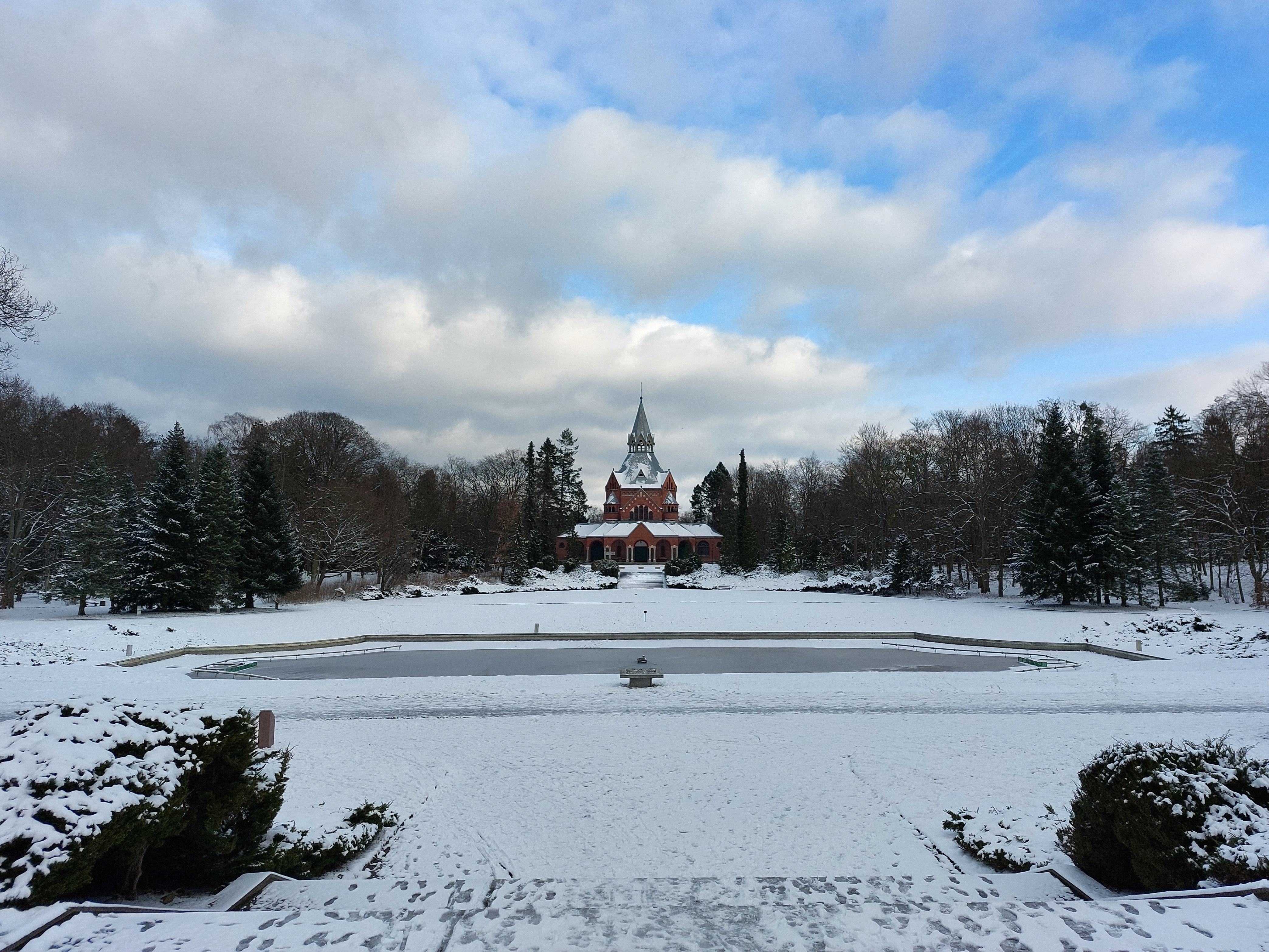
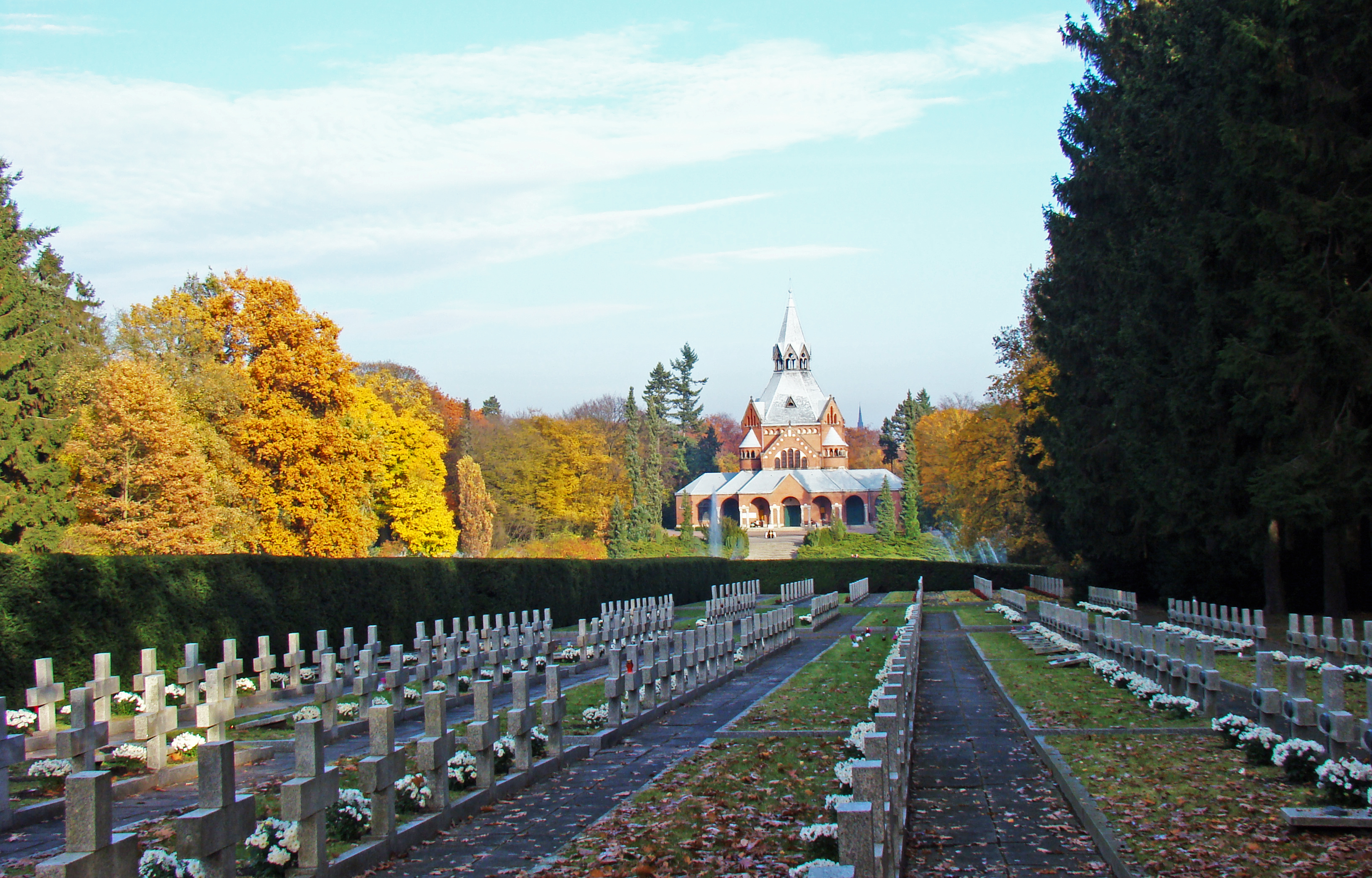
- The cemetery chapel, built in 1900–1902 to Meyer-Schwartau's design. A crematorium was added at the rear in 1925.
- A modernist chapel from the turn of the 1920s and 1930s, built to serve the new western part of the growing cemetery.
- The main gate and administration buildings, the oldest architectural group in the complex.
- Memorials, of which there are over a dozen. They honour, among others, the defenders of September 1939, victims of Stalinism and Siberian deportees.
- The avenues and greenery, which change with the seasons and suit a quiet walk.
Who is it for?
First of all, people visiting the graves of relatives, but also anyone interested in history, architecture and garden design. About 300,000 people are buried here, and the headstones trace the story of Szczecin, from the years when it was the German city of Stettin through the post-war period to the present. Graves ranging from historic to modern show changing styles and funeral customs.
How to visit respectfully
This is an active burial ground, so quiet and restraint are expected. When taking photographs, avoid framing people who are visiting graves. The grounds are very large, so plan a route in advance and wear comfortable shoes. Around All Saints' Day the cemetery draws large crowds and traffic arrangements often change, so a calmer walk is possible on another day.
Frequently asked questions
Is Szczecin Central Cemetery really the largest in Poland? Yes. It is the largest cemetery in the country, the third largest in Europe and among the largest in the world.
Who designed it? Wilhelm Meyer-Schwartau created the concept for the oldest part, while Georg Hannig designed the planting and gave the layout its final form.
When was it established? It was founded in 1899–1900, with the first burials at the end of 1901.
Is it a good place for a walk? Yes, the park-like layout and mature trees mean many visitors also treat it as a place to stroll, as long as the solemn character of the site is respected.
What stands near the main gate? The oldest buildings: the chapel, the gate and the administration building, completed by 1918.
Nearby places

Earn badges for the places you visit
Download NextOnTrip, discover new places and check off your trails.