Save this place and discover nearby attractions with NextOnTrip
In the app you can add it to your favorites, see what else is worth visiting nearby on the map, and earn a badge for your visit.
The app is available for iPhone and Android.
About this place
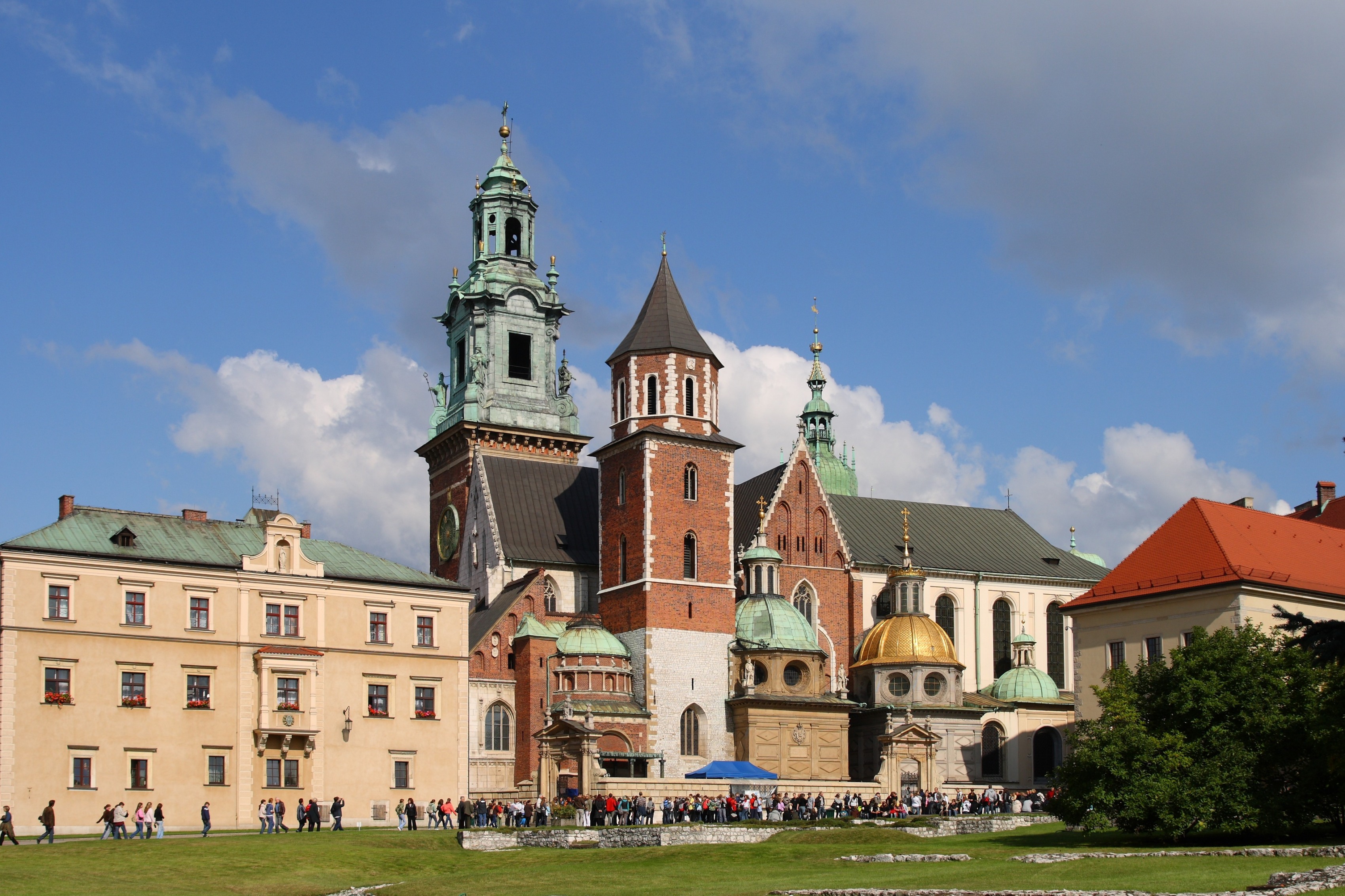
Wawel Cathedral, formally the Archcathedral Basilica of St Stanislaus and St Wenceslaus, crowns Wawel Hill in Kraków and is the mother church of the Archdiocese of Kraków. Polish kings were crowned and buried here for centuries, and from the 19th century national heroes and poets joined them.
How did the present cathedral come about?
The first cathedral most likely went up soon after the Kraków bishopric was founded in 1000. Its Romanesque successor, consecrated in 1142, was weakened by age and a fire in 1305, yet parts of it survive, above all St Leonard's Crypt and the base of the south tower.
The Gothic basilica you see today was begun in 1320 and consecrated on 28 March 1364. Chapels were added along its walls in the 14th and 15th centuries, the Renaissance arrived in the 16th, and in the 17th and 18th centuries the interior was remodelled in Baroque taste.
Why is it called the royal cathedral?
The coronation of Władysław the Short on 20 January 1320 set a precedent: every later king was crowned here except Stanisław August Poniatowski and Stanisław Leszczyński. Royal weddings, christenings and funerals were also held before the high altar.
Who is buried in the cathedral?
Władysław the Short was the first king laid to rest on Wawel, and his Gothic tomb is the oldest royal monument. Nearby stand the tombs of Casimir the Great and Władysław Jagiełło. From Casimir IV Jagiellon onwards, kings were buried in separate chapels; his tomb in the Holy Cross Chapel is the work of Veit Stoss. Sigismund the Old and later monarchs lie with their families in the crypts below, among the cast sarcophagi of Sigismund Augustus, Stephen Báthory and Sigismund III Vasa.
After Poland lost its independence, the funerals of Prince Józef Poniatowski in 1817 and Tadeusz Kościuszko a year later turned the church into a national pantheon. Both rest in St Leonard's Crypt with General Władysław Sikorski. Józef Piłsudski has had his own crypt beneath the Silver Bells Tower since 1936. The Romantic poets Adam Mickiewicz and Juliusz Słowacki rest side by side in the Poets' Crypt.
What should you see inside?
At the centre of the nave stands the confessio of St Stanislaus, the bishop murdered in 1079 and canonised in 1253, patron of the cathedral and of Poland. Its domed canopy of marble and gilded bronze dates from 1626–1629 and shelters a coffin-shaped silver reliquary made in Gdańsk. The bishops of Kraków are buried in a crypt beneath it.
The Sigismund Chapel, built in 1519–1533 for Sigismund the Old to a design by Bartolomeo Berrecci, is known as a pearl of Central European Renaissance architecture.
The Sigismund Bell and its tower
Nuremberg bell-founder Hans Behem cast the bell in Kraków in 1520 for Sigismund the Old, and it first rang on 13 July 1521. With its fittings it weighs about 12.6 tonnes and takes twelve bell-ringers to swing. It rings only on major church and national feast days. It hangs in the Sigismund Tower, a former defensive tower raised in the 16th century to hold it, on an original oak frame that stands free of the walls.
Royal Tombs and the Cathedral Museum
The visitor route covers the cathedral with the bell, the Royal Tombs and the John Paul II Cathedral Museum, which displays the oldest Polish regalia alongside textiles, paintings and decorative art.
Frequently asked questions
Were Polish kings crowned in Wawel Cathedral? Yes. From Władysław the Short in 1320 onwards, almost every Polish king was crowned here.
Who is buried here? Kings from Władysław the Short to John III Sobieski and their families, the bishops of Kraków with St Stanislaus, and Kościuszko, Prince Józef Poniatowski, Piłsudski, Sikorski, Mickiewicz and Słowacki.
Can I see the Sigismund Bell up close? Yes. The climb up the tower stairs to the bell is a separate part of the visit.
How much time should I allow? Around 1 to 1.5 hours for the cathedral, the bell, the Royal Tombs and the Cathedral Museum.
Is it an active church? Yes, Mass is celebrated daily. On some feast days the cathedral is closed to sightseers.


Nearby places

Earn badges for the places you visit
Download NextOnTrip, discover new places and check off your trails.