Save this place and discover nearby attractions with NextOnTrip
In the app you can add it to your favorites, see what else is worth visiting nearby on the map, and earn a badge for your visit.
The app is available for iPhone and Android.
About this place
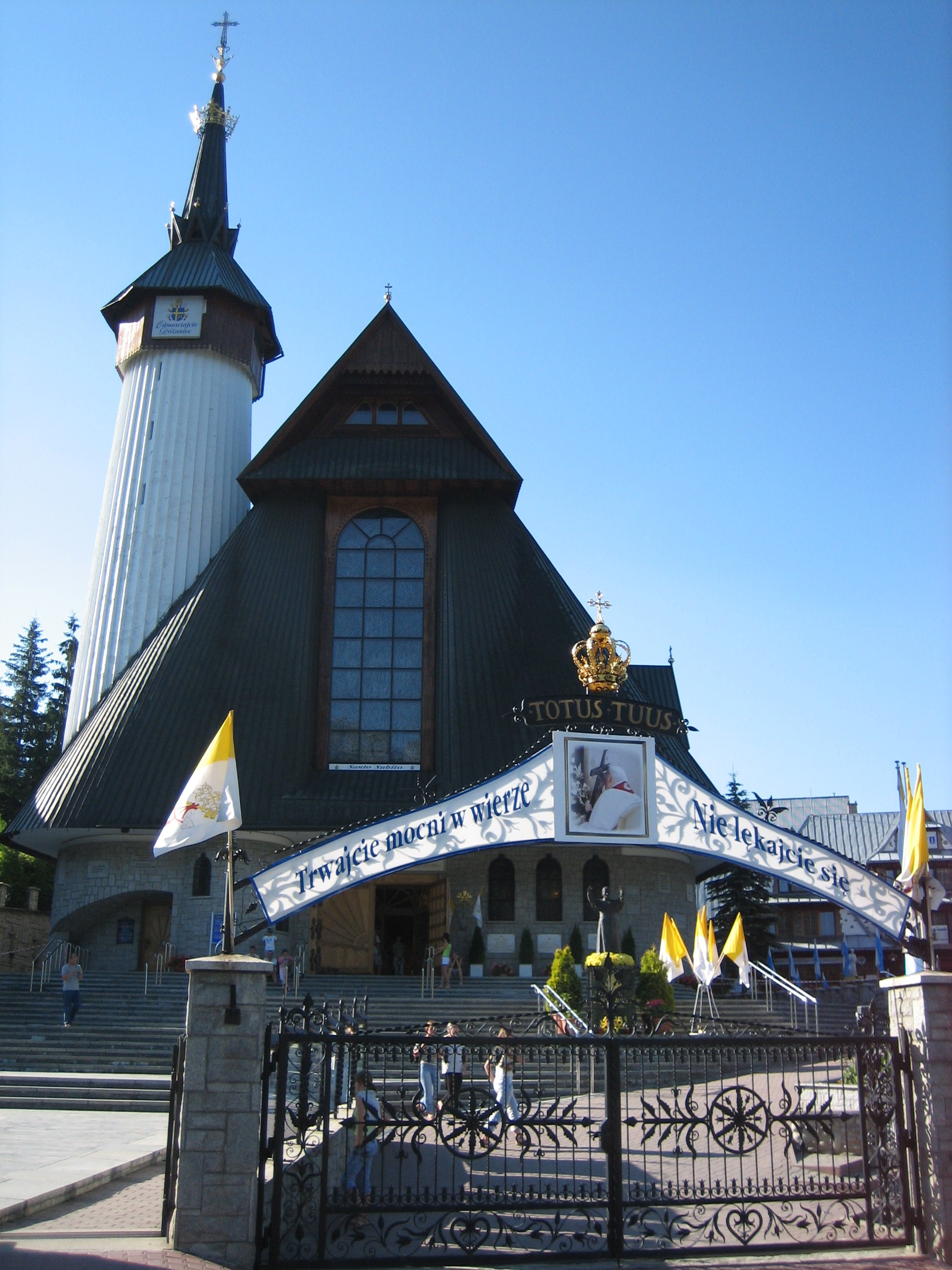
The Shrine of Our Lady of Fatima in Zakopane stands in the Krzeptówki district, at the foot of Mount Giewont, and is one of the most important pilgrimage sites in the Tatra region. It was built as a votive offering of thanks for the survival of Pope John Paul II after the assassination attempt of 13 May 1981. Today it draws believers and curious travellers alike, many of them drawn by its highland-style architecture.
How did the shrine come to be?
The story begins on the day of the attack. In Zakopane, worshippers prayed before the image of Our Lady of Fatima at Krzeptówki and made a promise: if the Pope survived, a church of thanksgiving would rise on that spot. He recovered, and the promise was kept. Construction ran from 1987 to 1992. In 1987, in Rome, John Paul II crowned the image of Our Lady of Fatima from Krzeptówki, and in 1997, during a pilgrimage to Poland, he personally consecrated the church.
In time the church was given the status of a national shrine. The decision of the Polish Bishops' Conference was announced in Zakopane by the Metropolitan of Kraków.
What does the church look like?
Local highlanders, craftsmen and folk artists built the shrine, so the form of the church recalls a traditional highland shepherd's hut. Timber, regional ornament and artisan work shape an interior that feels very different from a typical masonry church. It is a fine example of how Podhale tradition merges with the spiritual meaning of the place.
Why visit?
- It is a church tied directly to the story of John Paul II's papacy.
- The architecture and decoration showcase Podhale craftsmanship on a scale rarely seen in a sacred building.
- The surroundings open onto views of Giewont, so a visit combines easily with a walk.
- Over a million pilgrims and tourists come each year, a sign of how much the place matters.
Frequently asked questions
Where exactly is the shrine? In Zakopane, in the Krzeptówki district, on Krzeptówki street, below the Giewont massif.
Why was it built? As a votive offering of thanks for saving the life of John Paul II after the assassination attempt of 13 May 1981.
When was the church built? Between 1987 and 1992; the Pope consecrated it in 1997.
Is it only for pilgrims? No. People interested in regional architecture and history also appreciate the building and its interior. Remember it is an active place of worship, so modest dress and quiet behaviour are expected, especially during services.
How long should I plan for a visit? Half an hour to an hour is usually enough to see the interior and the grounds at an unhurried pace.
Tips for visitors
The shrine fits neatly into a day in Zakopane, especially if you are heading towards Giewont or strolling through the lower parts of town. If you want quiet, choose hours outside the main services and the peak summer season. On church holidays and anniversaries linked to the Pope the church can be very crowded, yet especially solemn. Bring warm clothing, because the weather at the foot of the Tatras can change fast.
Together these elements make a place with a double character, both spiritual and cultural. It is a monument of gratitude for a life saved, of a man who visited the Tatras many times, and a testament to the skill of highlanders who built one of the region's best-known churches with their own hands.
Nearby places
Earn badges for the places you visit
Download NextOnTrip, discover new places and check off your trails.