About this place
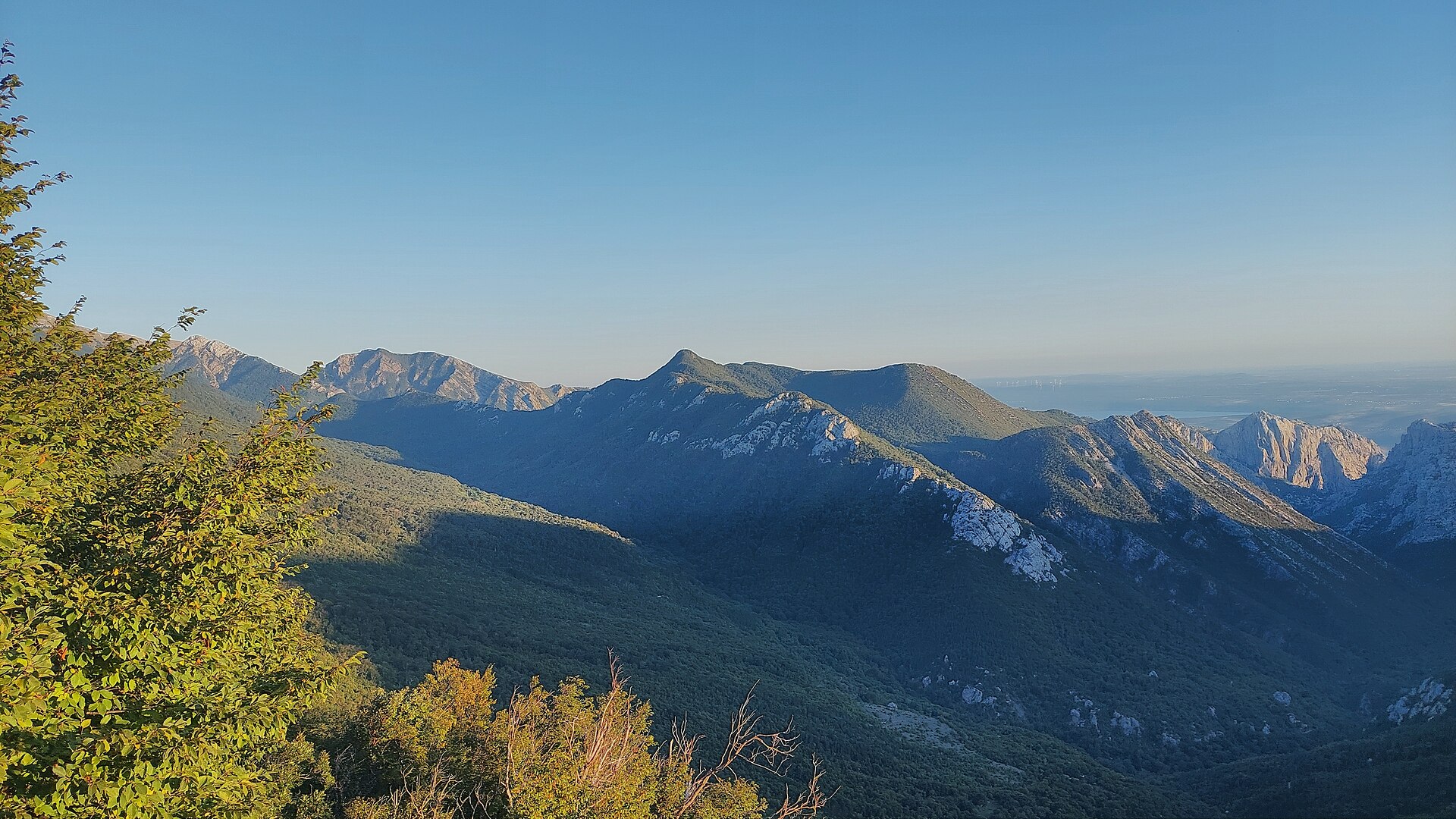
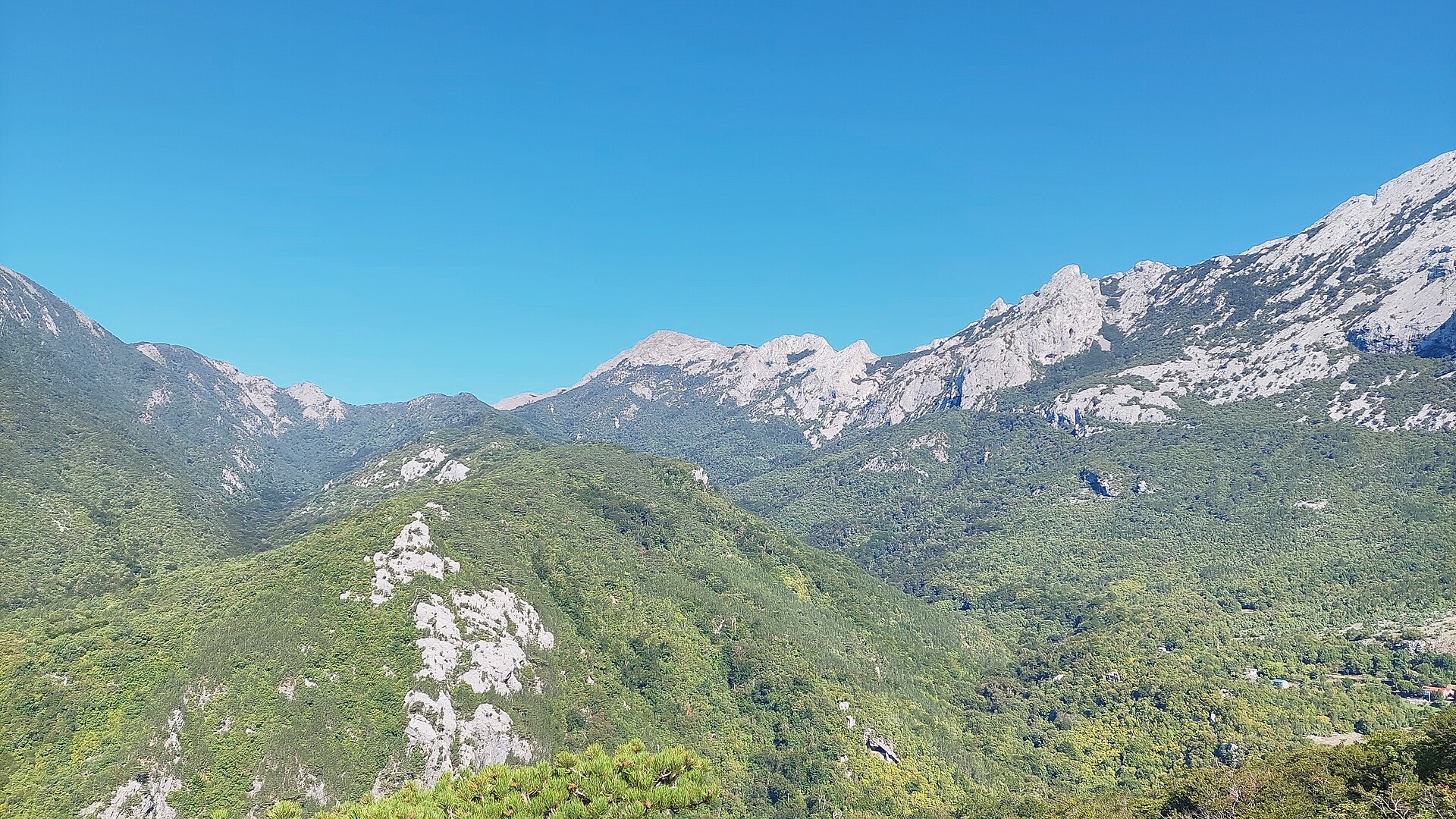
Veliki kuk is a rocky shoulder of the Crni vrh summit in the Velebit mountains, rising above Starigrad on Croatia's Dalmatian coast. It sits within Paklenica National Park, one of Croatia's oldest and best-known mountain parks, established to protect two major karst gorges — Velika and Mala Paklenica.
What exactly is Veliki kuk?
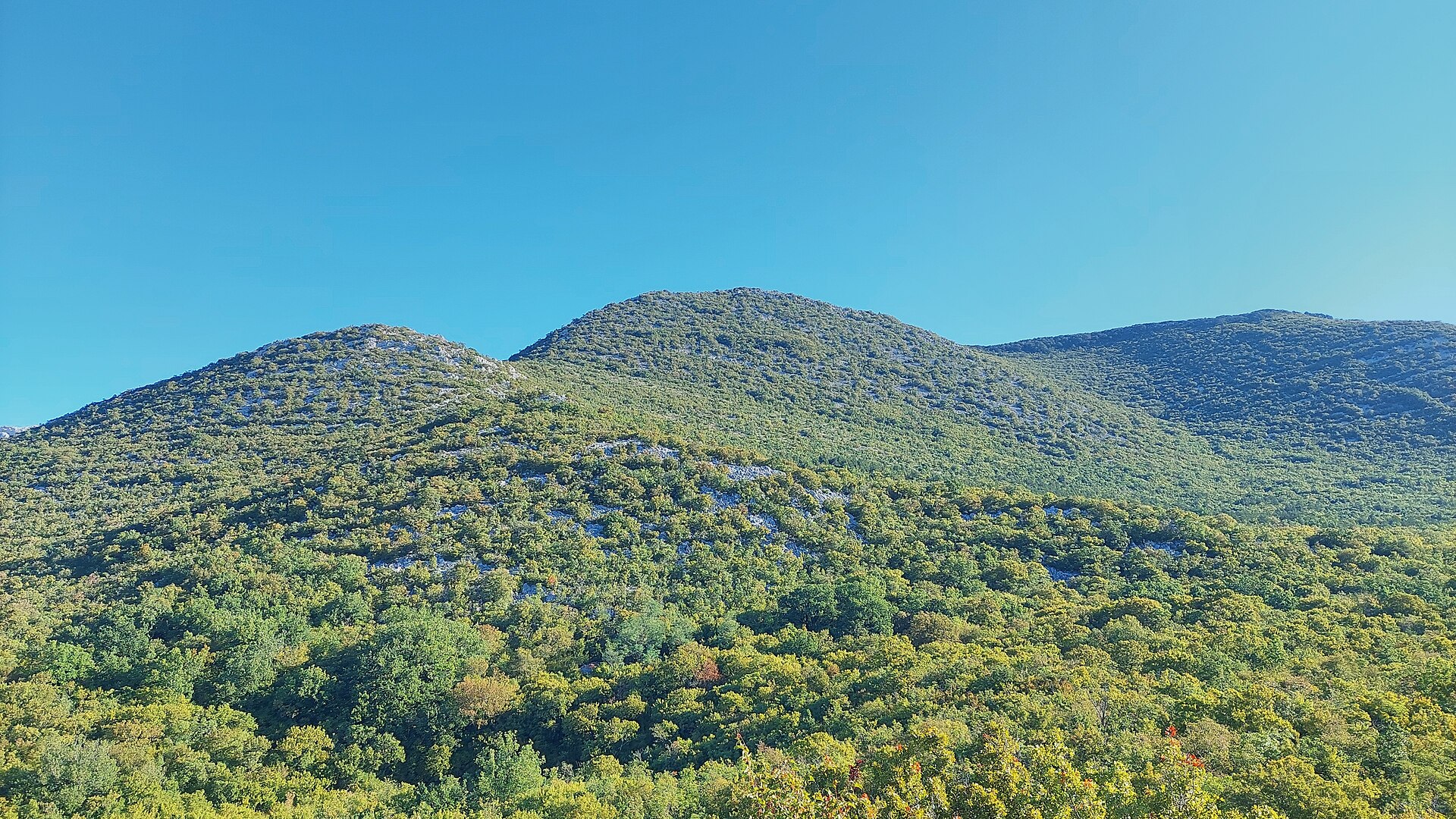
In Dalmatian dialect and in Croatian mountain naming, "kuk" describes a steep, rocky spur or side ridge — and that is precisely the landform Veliki kuk represents. It projects from the Crni vrh summit, which rises to roughly 1,110 metres within the group of peaks forming South Velebit. Karst rock outcrops alternate here with forests of black pine, beech and hornbeam, while a nearby terrace known as Veliko Mocilo opens onto broad mountain meadows framed by old-growth woodland.
How do you get there?
Starigrad, the coastal town at the foot of Velebit, is the natural starting point, sitting right at the main entrance to Paklenica National Park. From the mouth of the Velika Paklenica canyon, a network of marked mountain trails climbs into the massif toward Crni vrh and its neighbouring ridges, Veliki kuk among them. The ground underfoot is rocky and at times exposed, so sturdy hiking boots, solid fitness and confident mountain navigation are essential.
What's worth seeing nearby?
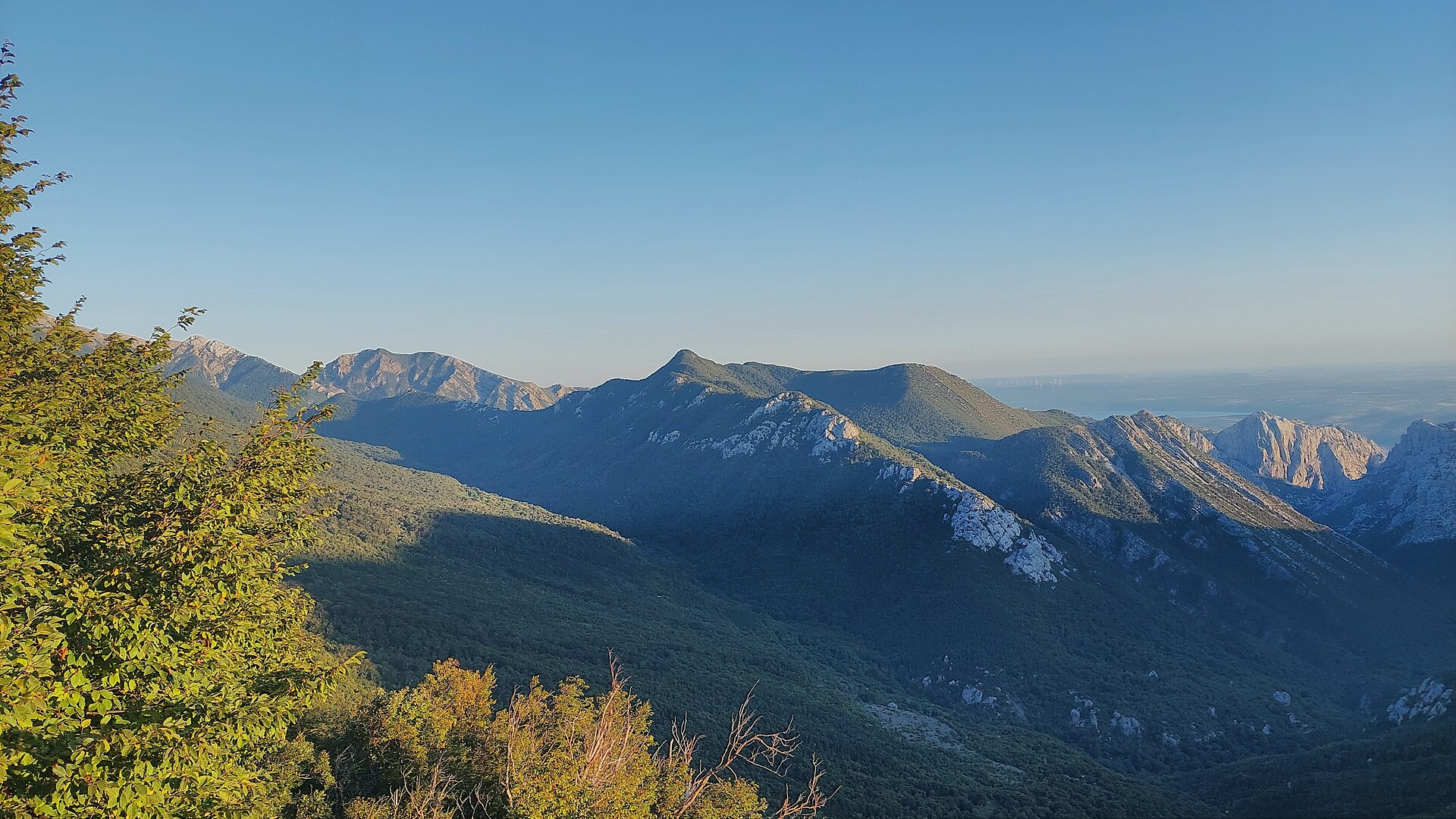
Paklenica National Park is best known for the Velika Paklenica canyon itself — a karst gorge stretching 14 kilometres long and, in places, 500 to 800 metres wide, ranked among the standout landscapes of the Croatian mountains. Close by stands Anića kuk (712 m), a rock face rated among the finest climbing venues in this part of Europe and a draw for climbers from across the continent. Higher up, toward the Crni vrh ridge, sits Vidakov kuk (866 m). The wider area is a patchwork of sharp karst rock formations known locally as škrape, dark pine forest and sunlit meadows, with viewpoints opening out over the Adriatic and the islands of Pag and Rab.
When is the best time to visit?
Spring and autumn offer the best hiking conditions, when temperatures on the exposed, rocky terrain stay manageable and trails are quieter than in peak summer. In summer the rock surfaces heat up considerably, so it pays to start early and carry plenty of water. The climbing season on nearby walls, including Anića kuk, generally runs from spring through autumn, with a natural lull during the hottest weeks of July and August.
Frequently asked questions
What exactly is Veliki kuk? It's a side shoulder, or ridge, of the Crni vrh summit in the Velebit range, located within Paklenica National Park near Starigrad.
Do you need climbing skills to reach it? The Veliki kuk area itself is hiking terrain rather than technical climbing ground — good fitness and confidence on rocky, exposed paths are enough. Climbers looking for a technical challenge head instead to the nearby Anića kuk wall.
How should you plan a trip from Starigrad? Enter the park at the Velika Paklenica canyon entrance, pick up a trail map there, and set off early in the morning, especially during summer.
Are there other viewpoints in the area? Yes — the ridges of South Velebit, including Crni vrh and the neighbouring Vidakov kuk, offer views over the Paklenica canyon and the coastline with the islands of Pag and Rab.
Nearby places
Earn badges for the places you visit
Download NextOnTrip, discover new places and check off your trails.